
The developmental physics written across every fingertip
What to know
- Fingerprints are friction-ridge skin, not ink patterns.
- Volar-pad shape and developmental timing influence arches, loops and whorls.
- Identical twins have related but non-identical ridge details.
- Scars can alter local ridges without replacing the original overall pattern.
Friction ridges have a function
Raised ridges cover fingers, palms, toes and soles. The central mechanism is surface geometry supports grip and tactile interaction. Researchers investigate it through anatomy and biomechanics. The method matters because an observation becomes an explanation only when the proposed process makes predictions that can be checked.
Grip depends on moisture and material. A careful interpretation therefore separates what was measured from what was inferred. Ridges are part of a wider skin system. Strong evidence usually joins several methods whose limitations are not identical.
Scale, timing and context also shape the result. A process demonstrated in one specimen, site, season or instrument can be genuine without dominating every case. Replication tests whether the underlying pattern survives reasonable changes in method, while disagreement can reveal a hidden variable and improve the next study.
Skin develops in layers
The epidermis grows above the dermis with an undulating boundary. The central mechanism is interactions between layers organize ridge units. Researchers investigate it through fetal histology and microscopy. The method matters because an observation becomes an explanation only when the proposed process makes predictions that can be checked.
Developmental stages overlap. A careful interpretation therefore separates what was measured from what was inferred. A finished print hides its formation sequence. Strong evidence usually joins several methods whose limitations are not identical.
Scale, timing and context also shape the result. A process demonstrated in one specimen, site, season or instrument can be genuine without dominating every case. Replication tests whether the underlying pattern survives reasonable changes in method, while disagreement can reveal a hidden variable and improve the next study.
Volar pads appear temporarily
Rounded tissue pads form on developing fingertips. The central mechanism is their height and regression timing shape the surface where ridges emerge. Researchers investigate it through embryological specimens and imaging. The method matters because an observation becomes an explanation only when the proposed process makes predictions that can be checked.
Pads are not permanent fingertip cushions. A careful interpretation therefore separates what was measured from what was inferred. Temporary geometry influences lasting patterns. Strong evidence usually joins several methods whose limitations are not identical.
Scale, timing and context also shape the result. A process demonstrated in one specimen, site, season or instrument can be genuine without dominating every case. Replication tests whether the underlying pattern survives reasonable changes in method, while disagreement can reveal a hidden variable and improve the next study.
Primary ridges begin
Early ridge formations appear along the epidermal–dermal boundary. The central mechanism is growth instabilities organize repeated parallel structures. Researchers investigate it through histology and developmental models. The method matters because an observation becomes an explanation only when the proposed process makes predictions that can be checked.
Exact molecular control remains under study. A careful interpretation therefore separates what was measured from what was inferred. Pattern can emerge from rules rather than a drawn template. Strong evidence usually joins several methods whose limitations are not identical.
Scale, timing and context also shape the result. A process demonstrated in one specimen, site, season or instrument can be genuine without dominating every case. Replication tests whether the underlying pattern survives reasonable changes in method, while disagreement can reveal a hidden variable and improve the next study.
Ridges spread across a field
Formation advances from several regions across the fingertip. The central mechanism is meeting fronts bend, terminate or divide according to local geometry. Researchers investigate it through pattern maps and mathematical simulations. The method matters because an observation becomes an explanation only when the proposed process makes predictions that can be checked.
Models simplify living tissue. A careful interpretation therefore separates what was measured from what was inferred. Minutiae arise where organized fields interact. Strong evidence usually joins several methods whose limitations are not identical.
Scale, timing and context also shape the result. A process demonstrated in one specimen, site, season or instrument can be genuine without dominating every case. Replication tests whether the underlying pattern survives reasonable changes in method, while disagreement can reveal a hidden variable and improve the next study.
Arches follow lower pads
Broadly flatter developmental geometry often favors ridge flow across the finger. The central mechanism is surface curvature guides the advancing pattern. Researchers investigate it through population anatomy and models. The method matters because an observation becomes an explanation only when the proposed process makes predictions that can be checked.
Pad shape does not determine every detail. A careful interpretation therefore separates what was measured from what was inferred. Pattern classes are tendencies, not destinies. Strong evidence usually joins several methods whose limitations are not identical.
Scale, timing and context also shape the result. A process demonstrated in one specimen, site, season or instrument can be genuine without dominating every case. Replication tests whether the underlying pattern survives reasonable changes in method, while disagreement can reveal a hidden variable and improve the next study.
Loops reflect asymmetry
Offset pads and growth centers can curve ridge flow back toward one side. The central mechanism is asymmetric geometry redirects the field. Researchers investigate it through developmental reconstruction. The method matters because an observation becomes an explanation only when the proposed process makes predictions that can be checked.
Handedness labels are descriptive. A careful interpretation therefore separates what was measured from what was inferred. Local timing contributes alongside shape. Strong evidence usually joins several methods whose limitations are not identical.
Scale, timing and context also shape the result. A process demonstrated in one specimen, site, season or instrument can be genuine without dominating every case. Replication tests whether the underlying pattern survives reasonable changes in method, while disagreement can reveal a hidden variable and improve the next study.
Whorls form around prominent centers
More centered raised pads can support circular or spiral ridge flow. The central mechanism is fronts organize around a central region. Researchers investigate it through comparative pattern analysis. The method matters because an observation becomes an explanation only when the proposed process makes predictions that can be checked.
Many intermediate patterns exist. A careful interpretation therefore separates what was measured from what was inferred. Three broad classes cannot capture all variation. Strong evidence usually joins several methods whose limitations are not identical.
Scale, timing and context also shape the result. A process demonstrated in one specimen, site, season or instrument can be genuine without dominating every case. Replication tests whether the underlying pattern survives reasonable changes in method, while disagreement can reveal a hidden variable and improve the next study.
Genes influence the landscape
Inherited variants affect limb development, skin structure and signaling. The central mechanism is genes shape probabilities for pattern type and ridge traits. Researchers investigate it through family and genome studies. The method matters because an observation becomes an explanation only when the proposed process makes predictions that can be checked.
No single fingerprint gene specifies a complete print. A careful interpretation therefore separates what was measured from what was inferred. Inheritance acts through development. Strong evidence usually joins several methods whose limitations are not identical.
Scale, timing and context also shape the result. A process demonstrated in one specimen, site, season or instrument can be genuine without dominating every case. Replication tests whether the underlying pattern survives reasonable changes in method, while disagreement can reveal a hidden variable and improve the next study.
Local differences create individuality
Tiny variations in pressure, growth rate and tissue mechanics occur even within one pregnancy. The central mechanism is sensitive pattern formation amplifies small local differences. Researchers investigate it through twin comparisons and developmental models. The method matters because an observation becomes an explanation only when the proposed process makes predictions that can be checked.
The exact contribution of each factor cannot be reconstructed afterward. A careful interpretation therefore separates what was measured from what was inferred. Individuality does not require randomness alone. Strong evidence usually joins several methods whose limitations are not identical.
Scale, timing and context also shape the result. A process demonstrated in one specimen, site, season or instrument can be genuine without dominating every case. Replication tests whether the underlying pattern survives reasonable changes in method, while disagreement can reveal a hidden variable and improve the next study.
Identical twins are not identical prints
Twins share nearly the same DNA but develop separate ridge detail. The central mechanism is shared genes influence broad similarity while local development diverges. Researchers investigate it through paired fingerprint studies. The method matters because an observation becomes an explanation only when the proposed process makes predictions that can be checked.
Twins may show related pattern classes. A careful interpretation therefore separates what was measured from what was inferred. Minutiae still differ. Strong evidence usually joins several methods whose limitations are not identical.
Scale, timing and context also shape the result. A process demonstrated in one specimen, site, season or instrument can be genuine without dominating every case. Replication tests whether the underlying pattern survives reasonable changes in method, while disagreement can reveal a hidden variable and improve the next study.
Sweat-gland openings align with ridges
Eccrine glands develop ducts that open along ridge crests. The central mechanism is skin appendages integrate with the growing ridge system. Researchers investigate it through microscopic anatomy. The method matters because an observation becomes an explanation only when the proposed process makes predictions that can be checked.
Pore visibility depends on print quality. A careful interpretation therefore separates what was measured from what was inferred. A fingerprint contains multiple scales of information. Strong evidence usually joins several methods whose limitations are not identical.
Scale, timing and context also shape the result. A process demonstrated in one specimen, site, season or instrument can be genuine without dominating every case. Replication tests whether the underlying pattern survives reasonable changes in method, while disagreement can reveal a hidden variable and improve the next study.
The pattern stabilizes before birth
Once ridge architecture is established, later growth enlarges it proportionally. The central mechanism is deep anchoring preserves arrangement as the hand grows. Researchers investigate it through longitudinal prints and skin anatomy. The method matters because an observation becomes an explanation only when the proposed process makes predictions that can be checked.
Surface wear can temporarily blur detail. A careful interpretation therefore separates what was measured from what was inferred. Stable does not mean indestructible. Strong evidence usually joins several methods whose limitations are not identical.
Scale, timing and context also shape the result. A process demonstrated in one specimen, site, season or instrument can be genuine without dominating every case. Replication tests whether the underlying pattern survives reasonable changes in method, while disagreement can reveal a hidden variable and improve the next study.
Ordinary wear repairs in pattern
Shallow injury affects upper epidermis that renews from deeper layers. The central mechanism is regrowth follows the existing ridge architecture. Researchers investigate it through wound observation. The method matters because an observation becomes an explanation only when the proposed process makes predictions that can be checked.
Deeper damage can scar. A careful interpretation therefore separates what was measured from what was inferred. The depth of injury determines persistence. Strong evidence usually joins several methods whose limitations are not identical.
Scale, timing and context also shape the result. A process demonstrated in one specimen, site, season or instrument can be genuine without dominating every case. Replication tests whether the underlying pattern survives reasonable changes in method, while disagreement can reveal a hidden variable and improve the next study.
Scars become new landmarks
Damage reaching ridge-forming structures can permanently interrupt lines. The central mechanism is fibrous repair reorganizes local surface anatomy. Researchers investigate it through clinical observation. The method matters because an observation becomes an explanation only when the proposed process makes predictions that can be checked.
Scar shape can change with time. A careful interpretation therefore separates what was measured from what was inferred. Alteration is local rather than a new fingerprint. Strong evidence usually joins several methods whose limitations are not identical.
Scale, timing and context also shape the result. A process demonstrated in one specimen, site, season or instrument can be genuine without dominating every case. Replication tests whether the underlying pattern survives reasonable changes in method, while disagreement can reveal a hidden variable and improve the next study.
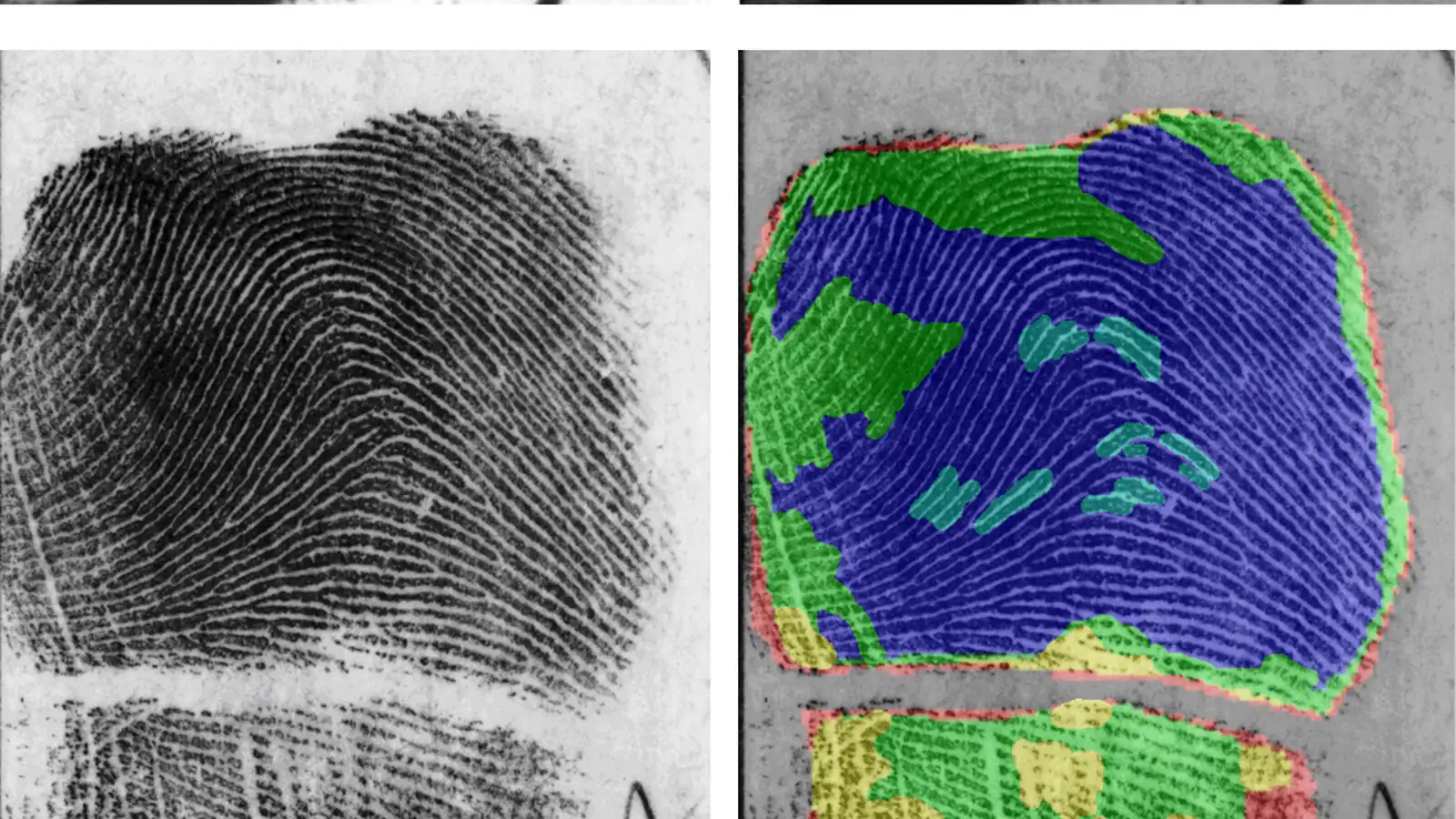
Prints are impressions
A latent print is material transferred from ridge skin to a surface. The central mechanism is contact pressure and movement distort the recorded geometry. Researchers investigate it through controlled deposition studies. The method matters because an observation becomes an explanation only when the proposed process makes predictions that can be checked.
The impression is not a perfect photograph. A careful interpretation therefore separates what was measured from what was inferred. Comparison must account for distortion and missing area. Strong evidence usually joins several methods whose limitations are not identical.
Scale, timing and context also shape the result. A process demonstrated in one specimen, site, season or instrument can be genuine without dominating every case. Replication tests whether the underlying pattern survives reasonable changes in method, while disagreement can reveal a hidden variable and improve the next study.
Sensors capture different signals
Optical, capacitive and ultrasonic readers measure different properties. The central mechanism is each converts contact or subsurface structure into data. Researchers investigate it through device testing. The method matters because an observation becomes an explanation only when the proposed process makes predictions that can be checked.
Performance varies with moisture and damage. A careful interpretation therefore separates what was measured from what was inferred. A digital template is not the finger itself. Strong evidence usually joins several methods whose limitations are not identical.
Scale, timing and context also shape the result. A process demonstrated in one specimen, site, season or instrument can be genuine without dominating every case. Replication tests whether the underlying pattern survives reasonable changes in method, while disagreement can reveal a hidden variable and improve the next study.
Forensic conclusions need safeguards
Examiners compare ridge flow and detail under quality limitations. The central mechanism is training, documentation and verification reduce error. Researchers investigate it through proficiency tests and blind review. The method matters because an observation becomes an explanation only when the proposed process makes predictions that can be checked.
Uniqueness does not guarantee perfect human comparison. A careful interpretation therefore separates what was measured from what was inferred. Biology and evidentiary practice are separate questions. Strong evidence usually joins several methods whose limitations are not identical.
Scale, timing and context also shape the result. A process demonstrated in one specimen, site, season or instrument can be genuine without dominating every case. Replication tests whether the underlying pattern survives reasonable changes in method, while disagreement can reveal a hidden variable and improve the next study.
How to read the evidence
This feature combines primary research with authoritative institutional context. Dates, samples, calibrations and definitions determine how far a conclusion travels. A precise measurement may still answer only a narrow question, while a broad model can remain useful even when local exceptions exist.
Barnakle keeps the specialist-review requirement open until a qualified reviewer checks the interpretation against the cited literature. The evidence boundary records what the article does not establish, and the source list lets future editors revisit the account when methods or knowledge improve.
Sources and further reading
- Smithsonian, The Science of Fingerprints
- National Institute of Standards and Technology, Fingerprint Research
- Kücken and Newell, fingerprint formation
- Holder et al., The Fingerprint Sourcebook
How Barnakle selects and verifies sources · Corrections and updates
Keep exploring.
One remarkable idea at a time—nature, science, history and beyond.
Sources and further reading
Barnakle uses credible primary and authoritative sources wherever possible.
- Smithsonian, The Science of Fingerprints
- https://www.si.edu/
- National Institute of Standards and Technology, Fingerprint Research
- https://www.nist.gov/topics/forensic-science/fingerprints-and-pattern-evidence
- Kücken and Newell, fingerprint formation
- https://doi.org/10.1209/epl/i2005-10084-8
- Holder et al., The Fingerprint Sourcebook
- https://www.ojp.gov/pdffiles1/nij/225320.pdf
Last reviewed September 18, 2026.

Barnakle Editorial Team
A member of the Barnakle editorial team, exploring remarkable ideas with clarity, curiosity and care.
More from this author →