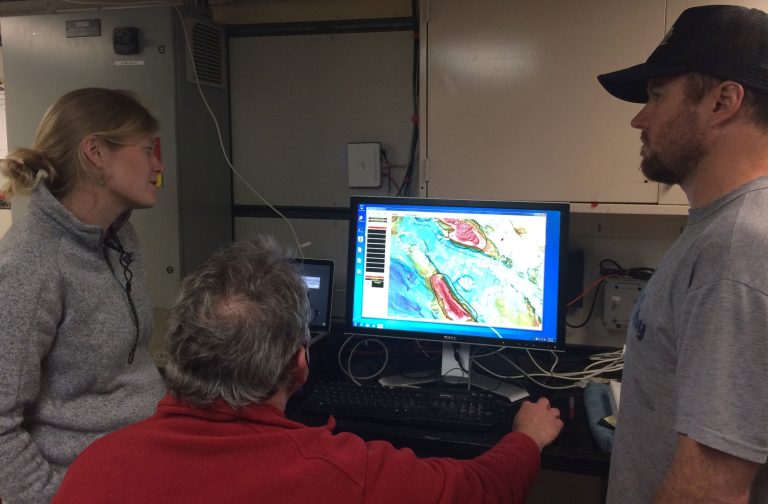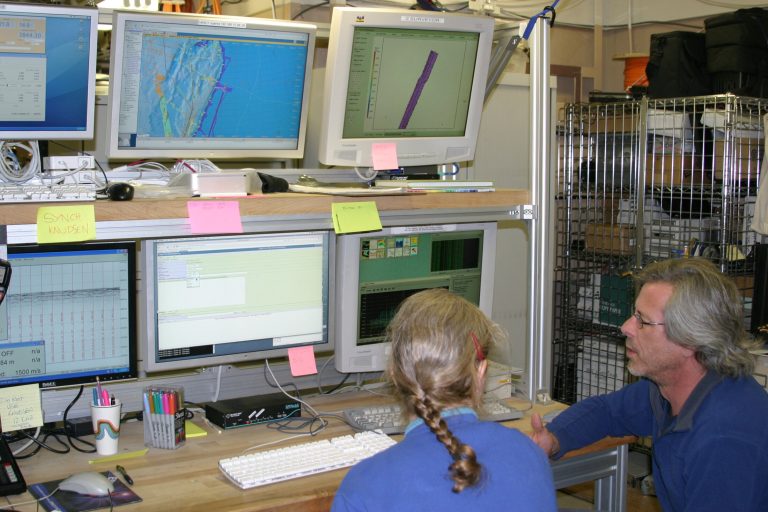

There is a tidy version of science that fits neatly into a school diagram: question, hypothesis, experiment, conclusion. Real discovery is more interesting. It loops. It stalls. It changes direction when an instrument improves or a result refuses to repeat. At its best, science is not a collection of final answers. It is a public method for finding and correcting mistakes.
Scientific discovery is a process, not a moment
The word discovery suggests a dramatic instant—a new particle appears in a detector, a fossil emerges from stone, a telescope catches an unfamiliar world. Those moments matter, but they sit inside a longer chain of reasoning. Researchers must decide whether an observation is real, whether another explanation fits it better and how far the result can be generalized.
Different fields do this differently. Astronomers cannot move a galaxy into a laboratory. Geologists cannot rerun Earth’s history. Ecologists, historians of climate, physicists and medical researchers use different tools and study designs. What connects them is disciplined contact with evidence: claims must be open to testing, methods must be described, uncertainty must be acknowledged and conclusions must be revisable.
- ObserveNotice a pattern or problem
- ExplainBuild a testable idea or model
- TestDesign a fair comparison
- AnalyzeEstimate effects and uncertainty
- ScrutinizeShare methods, data and criticism
- ReviseUpdate the explanation
1. Begin with a question that evidence can reach
Good research questions are specific enough to investigate. “Why is nature complicated?” cannot be tested as written. “Does this population change its feeding time when nighttime light increases?” points toward measurements, comparisons and competing explanations.
A question may arise from a surprising observation, a gap in an existing theory, a new instrument or a failed prediction. Exploratory work can reveal patterns before researchers know what hypothesis to test. That is legitimate, provided later claims distinguish exploration from confirmation. Finding a pattern and testing a prediction made in advance are not the same evidential task.
2. Turn an explanation into predictions
A hypothesis is not a guess dressed in technical language. It is an explanation that implies observable consequences. If the explanation is right, what should we expect to see? If it is wrong, what result would count against it?
Scientists often compare several plausible explanations rather than testing one idea in isolation. Models can be verbal, mathematical or computational. Every model simplifies reality; the important question is whether its assumptions are appropriate for the problem and whether its predictions match observations better than alternatives.
3. Design a test that can separate signal from noise
Evidence becomes persuasive through design. Researchers think about what they will measure, what comparison is fair and which factors could produce a misleading pattern. In an experiment, a control or comparison group can show what happens without the tested intervention. Random assignment can reduce systematic differences between groups. Blinding can reduce the chance that expectations influence treatment or measurement.
Not every question permits a randomized experiment. Observational studies can be indispensable, especially when experiments would be impossible or unethical. Their conclusions require careful attention to confounding: a third factor that may help explain an apparent relationship. Strong observational research may use natural experiments, repeated measurements, matching, sensitivity analyses and evidence from several methods.
| Choice | What it helps researchers ask | What it cannot guarantee |
|---|---|---|
| Control or comparison group | What would likely happen without the tested condition? | That the groups are otherwise identical |
| Random assignment | Are known and unknown differences distributed more fairly? | A large, representative or perfectly executed study |
| Blinding | Could expectations affect behavior, care or measurement? | That every source of bias disappears |
| Preregistration | Were key questions and analyses specified before results were known? | That the plan or study is automatically good |
| Replication | Does fresh evidence support the finding? | That the original explanation is the only possible one |
4. Measure carefully—and document the mess
A measurement is a bridge between an idea and data. Sometimes that bridge is direct, such as temperature recorded by a calibrated sensor. Often it is indirect: a questionnaire stands in for an attitude, a blood marker for a biological process or a satellite signal for conditions on the ground. Researchers must explain how a concept was defined and how reliably it was measured.
Missing observations, instrument limits, coding decisions and excluded data can all change a result. Rigorous work does not pretend those complications vanished. It records procedures, preserves an audit trail and reports decisions clearly enough for others to understand what happened.
5. Analyze the evidence without confusing a number for an answer
Analysis asks how compatible the observed data are with different explanations. It may estimate the size of an effect, the range of plausible values and how sensitive the result is to assumptions. Statistical tools are useful, but no single threshold turns a complicated finding into truth.
A small p-value, by itself, does not measure the importance of a result or the probability that a hypothesis is true. A confidence interval is not a decorative bracket; it helps show the precision of an estimate. A result can be statistically noticeable yet too small to matter in practice. Conversely, an important effect may remain uncertain when a study is small.
6. Peer review is a checkpoint, not a certificate of truth
Before many studies appear in journals, editors send them to researchers with relevant knowledge. Reviewers may identify weak controls, unclear reporting, unsupported claims or missing context. Authors can revise the paper; editors can reject it.
Peer review improves many papers, but it cannot rerun every experiment or guarantee that data and analysis are error-free. Reviewers can disagree or miss problems. A peer-reviewed paper is therefore evidence that work passed a particular screening process—not proof that its conclusion will never change.
Preprints make research available before formal peer review. They can accelerate scientific discussion, but readers should label them accurately and expect the paper to change. Barnakle identifies preprints and does not describe them as peer-reviewed.
7. Reproduction and replication test different parts of the chain
The terms are sometimes used inconsistently. The U.S. National Academies distinguishes reproducibility—obtaining consistent computational results with the same data, code and procedures—from replicability—obtaining consistent results in a new study aimed at the same scientific question. Both reveal information.
If an analysis cannot be reproduced, the problem may involve unavailable code, ambiguous steps or an error. If a new study does not replicate an earlier result, that does not automatically prove misconduct or incompetence. The studies may differ in population, measurement, conditions or statistical power. The disagreement becomes a new question to investigate.
8. Confidence comes from convergence
One study can be excellent and still be only one study. Scientific confidence usually grows when evidence converges: independent teams, different methods, multiple populations, better instruments and predictions that continue to succeed. Systematic reviews can gather studies using explicit methods; meta-analyses may combine compatible numerical results. Their strength still depends on the quality and comparability of the included work.
Consensus is not a vote taken instead of evidence. It is a description of where qualified communities judge the accumulated evidence to point. Consensus can change when better evidence arrives. The key questions are how broad it is, how it was assessed and what uncertainties remain.
Why scientific conclusions change
A changed conclusion is often presented as science “getting it wrong.” Sometimes a study really was flawed. More often, revision is the system working: a larger sample narrows an estimate, a new instrument sees what older tools missed, or evidence shows that a result applies only under certain conditions.
Responsible reporting distinguishes three levels: what the study directly observed, what the authors infer and what remains speculation. It also dates conclusions. “The best current evidence suggests” is not evasive language; it accurately describes knowledge that can improve.
A reader’s six-question check
- What was the exact question? Look past the headline to the claim the study actually tested.
- What kind of evidence was collected? Experiment, observation, model, survey and review answer different questions.
- Compared with what? A result without a meaningful baseline can be difficult to interpret.
- How large and precise was the effect? Importance and uncertainty matter alongside statistical tests.
- Have others found something similar? Place a new result inside the wider body of evidence.
- What would change the conclusion? Strong claims should expose their limits and possible tests.
How Barnakle uses this framework
For research coverage, Barnakle looks for the original study, identifies its publication status, checks the design and compares the result with authoritative context. Our Research, Sources and Fact-Checking Policy explains how sources are selected. Our Editorial Standards describe the line between evidence and interpretation, and our Corrections and Updates Policy explains how the record is amended.
Next, use the companion guide: How to Evaluate New Scientific Discoveries and Headlines.
Keep exploring.
One remarkable idea at a time—nature, science, history and beyond.
Sources and further reading
Barnakle uses credible primary and authoritative sources wherever possible.
- National Academies of Sciences, Engineering, and Medicine — Reproducibility and Replicability in Science
- https://nap.nationalacademies.org/catalog/25303/reproducibility-and-replicability-in-science
- National Institutes of Health — Rigor and Reproducibility
- https://www.nih.gov/research-training/rigor-reproducibility
- National Academies — Communicating Science Effectively
- https://nap.nationalacademies.org/catalog/23674/communicating-science-effectively-a-research-agenda
- EQUATOR Network — Reporting guidelines
- https://www.equator-network.org/
- Cochrane — Handbook for Systematic Reviews of Interventions
- https://training.cochrane.org/handbook/current
Last reviewed September 12, 2026.

Barnakle Editorial Team
A member of the Barnakle editorial team, exploring remarkable ideas with clarity, curiosity and care.
More from this author →