Mangroves occupy the shifting boundary between land and sea. Their roots interact with tides, sediment and waves, helping build a habitat that can also reduce erosion. The benefit is substantial, but a mangrove forest is not an impenetrable wall against every storm.
Understanding how the protection works starts below the canopy, where water moves through a dense and irregular structure.
Roots change how water moves
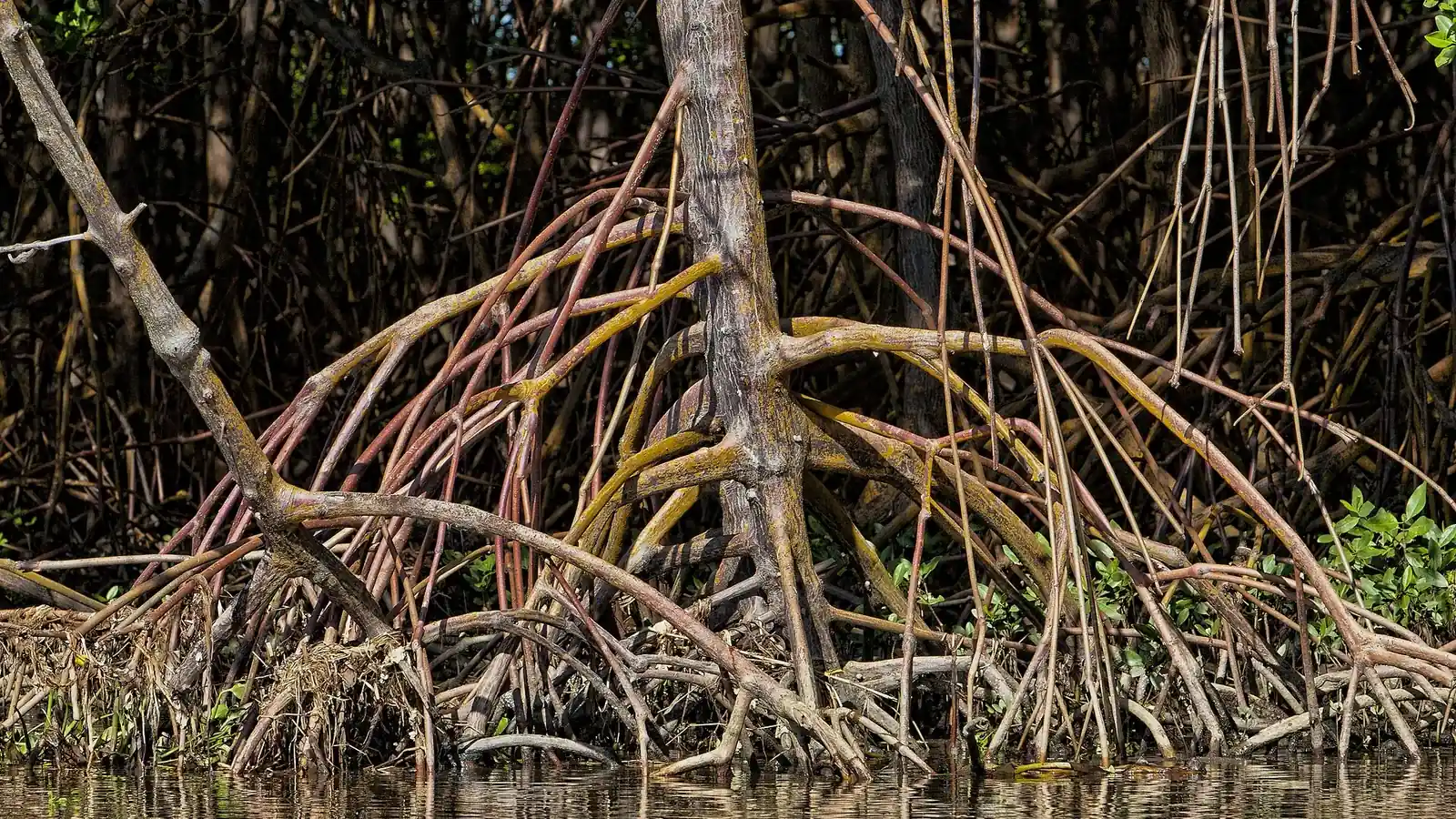
Many mangroves have conspicuous above-ground root structures. Red mangrove prop roots are one familiar example, although different species have different architectures. These structures increase resistance to flowing water and provide surfaces and spaces used by other organisms.
As water slows, suspended sediment may settle. Roots can also help stabilise material already present. NOAA describes these interactions as part of how mangrove forests reduce coastal erosion and build muddy substrates.
Wave reduction depends on context
A forest's width, density, root structure and water depth affect how it interacts with waves. The shape of the coast and the characteristics of a storm matter too. A statement that mangroves reduce wave energy does not establish one universal percentage of protection.
This is especially important when discussing storm surge. Changes in water level and changes in individual waves are related coastal hazards, but they are not the same measurement. A forest can provide useful protection without stopping all flooding.
Building sediment is not the same as gaining elevation
A mangrove surface reflects several processes: sediment deposition, root growth, decomposition, compaction and changes in water level. USGS research distinguishes longer-term sediment records from shorter-term measurements of surface elevation.
Material can accumulate while subsurface compaction offsets some of the gain. Comparing sediment depth alone with sea-level change can therefore miss part of the story. The important question is how the wetland surface changes relative to the water over time.
Habitat and protection grow together
The root network provides places for fish and invertebrates to shelter and feed. Mangroves are consequently more than engineered roughness along a shore. Their ecological role and physical structure are linked.
Loss of a forest can remove both habitat and protection. Conversely, planting trees does not guarantee that a damaged shoreline will recover if tidal exchange, sediment supply or space for movement remains unsuitable.
Why restoration needs the right setting
A successful project must fit the local hydrology and species rather than treating any coastal mudflat as an empty planting area. Monitoring should ask whether trees survive, whether the habitat functions and how the shoreline changes.
Mangroves help coasts by working within a living sediment-and-water system. Protecting that system gives a more realistic account of their value than promising that roots alone can defeat every future storm.
Explore a related question
How Kelp Forests Reshape Coastal Ecosystems
Sources and further reading
Keep exploring.
We’ll email you when the first edition is ready.
Last updated October 27, 2026.

Barnakle Editorial Team
Barnakle Editorial Team is the collective byline used for Barnakle’s editorial articles. The contributor profile explains the team identity and links to the publication’s editorial policies.
More from the editorial team →