Aerodynamics, a drivetrain and a generator convert moving air into electricity
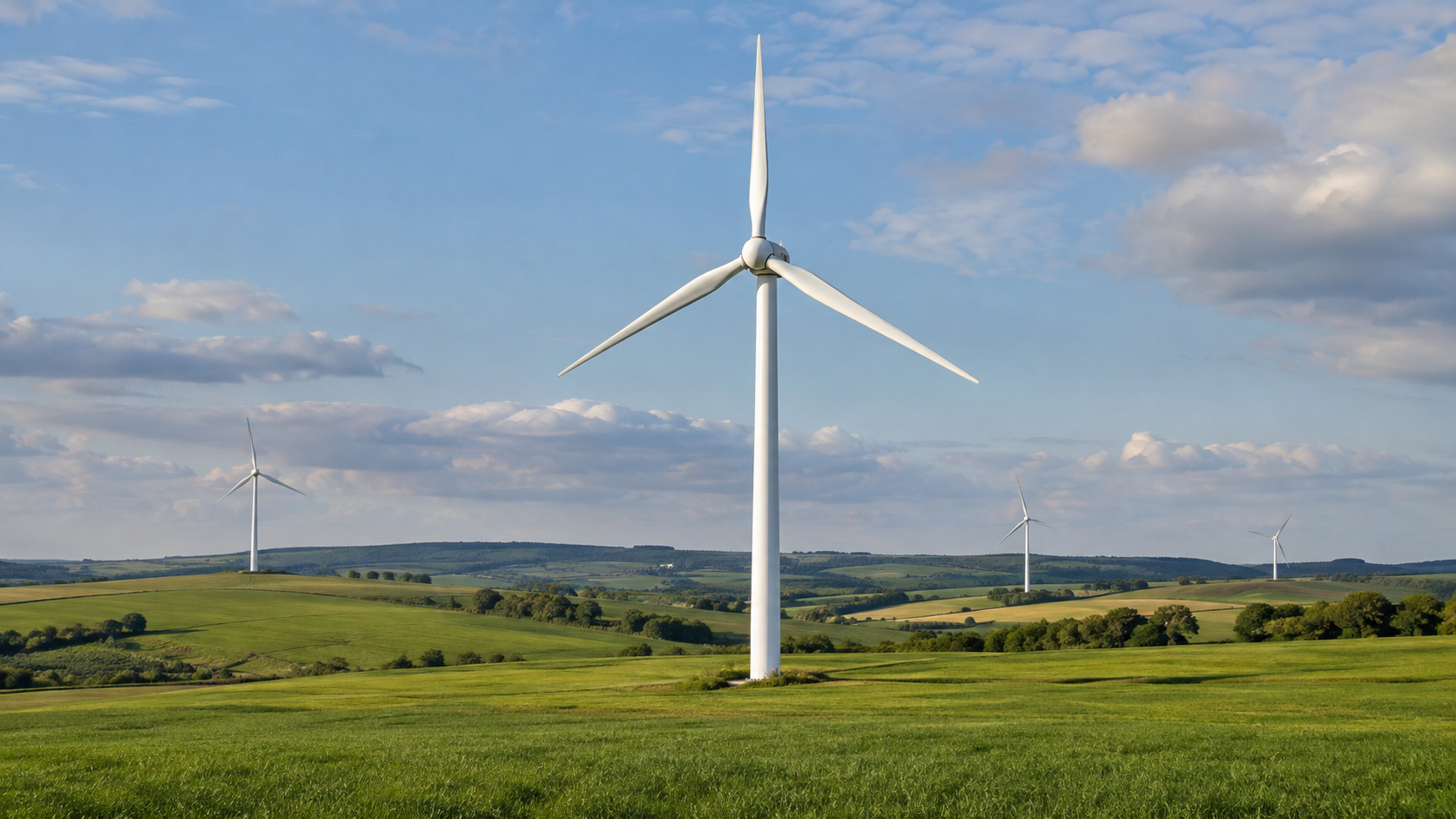
From the road, a wind turbine looks like three slow blades attached to a tall tower. Its useful work is less obvious: moving air exerts forces, the rotor turns, a generator converts energy and electrical equipment delivers the output to a usable system.
Following that chain avoids two common shortcuts. The blades do not generate electricity merely by looking like propellers, and the turbine does not make the same power whenever it happens to be turning.
Follow the mechanism
- Wind flows relative to shaped blades and produces aerodynamic forces.
- Those forces create torque that turns the rotor.
- The drivetrain delivers mechanical power to a generator.
- Controls and electrical equipment manage operation and power delivery.
The blades extract energy from moving air
Wind carries kinetic energy. A turbine rotor interacts with that moving air and extracts part of its energy as mechanical work. The air downstream is therefore not identical to the undisturbed incoming stream.
The US Energy Information Administration describes the connection between blade lift, a drive shaft and an electrical generator. This is an energy-conversion chain, not an extra source of energy hidden in the blade material.
An important distinction follows: a turbine cannot remove all the wind’s motion while expecting the same air stream to continue through unchanged. The rotor, the pressure field and the downstream wake belong to one flow system. Useful extraction must be understood in that wider setting.
Sources: [1]
Lift can produce rotation
A modern lift-based turbine blade is shaped so that airflow produces an aerodynamic force. Part of the force contributes to turning the rotor. The US Department of Energy compares the blade’s aerodynamic role with an aircraft wing, while the rotor’s geometry turns that interaction into torque.
The relative flow at a rotating blade combines the incoming wind with the blade’s own motion. Conditions differ along the span, so a blade is not simply one uniform plank placed in a breeze.
This explains why saying “the wind pushes the blades” is only a starting point. Direction, shape and motion determine the useful turning component. A rotor is an aerodynamic machine whose parts move through the flow they help change.
Sources: [2]
The drivetrain connects the rotor to the generator
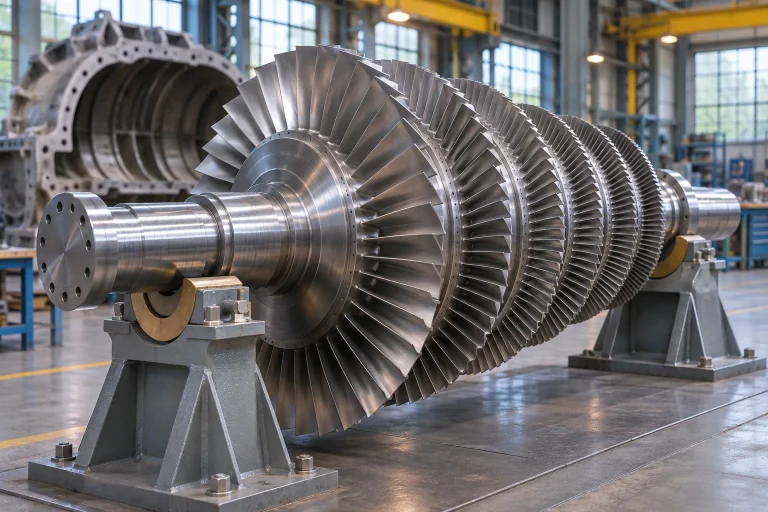
The rotor turns relatively slowly compared with the speed used by some generator designs. A geared turbine uses a gearbox to change that rotational relationship. A direct-drive design uses a generator suited to the rotor’s lower speed without that gearbox.
DOE’s drivetrain account describes the tradeoff: removing a gearbox changes the component arrangement and can require a different, often larger generator. Fewer moving parts in one section does not mean the entire machine has become mechanically trivial.
The phrase “all turbines have a gearbox” is therefore incorrect. The path from blades to electrical output should name which drivetrain is being described. A diagram of one common design is not a complete inventory of the technology.
Sources: [3]
| Part or idea | What it does | Common misunderstanding |
|---|---|---|
| Rotor blades | Convert an aerodynamic interaction into rotor torque. | The blades themselves supply unlimited energy. |
| Drivetrain | Transfers and, in geared designs, changes the rotational speed relationship. | Every turbine requires the same gearbox. |
| Generator | Converts mechanical input into electrical output. | Turning any shaft guarantees a fixed electrical output. |
| Controls and electrical system | Manage operating conditions and power delivery. | A turning rotor tells the whole production story. |
The generator converts mechanical power into electrical power
The generator uses electromagnetic interactions to convert the drivetrain’s mechanical input. DOE’s turbine component guide describes a direct-drive example in which rotating magnets and stationary coils form part of that conversion system.
That example should not be broadened into a claim that every turbine uses the same magnets, winding arrangement or electrical architecture. Generator families and associated power electronics differ. The shared role is conversion from mechanical to electrical power.
The connection with an electric motor is useful: electromagnetic machinery can exchange energy between motion and electricity. In this article the useful flow is from wind-driven rotation toward electrical output, with the rest of the turbine designed to supply and manage that input.
Sources: [4]
Why rotor size and wind speed matter
The available power in an undisturbed wind stream through a defined area can be expressed as one-half times air density times area times wind speed cubed. The swept area and local wind therefore matter substantially.
Under the formula’s assumptions, changing speed from 5 to 10 metres per second multiplies the available stream power by eight. These are teaching values and a comparison of available wind power, not a claim that a particular turbine’s electrical output always rises eightfold.
The turbine has its own efficiency, control limits and power curve. Above rated operation, or outside permitted operating conditions, the simple stream-power comparison does not predict the electrical response. The distinction between available input and delivered output is essential.
Sources: [5]
Controls change how the machine meets the wind
DOE’s component guide describes yaw control, which turns the nacelle on suitable turbines to follow wind direction, and pitch control, which changes blade angle. Pitch can regulate the aerodynamic interaction and feather the blades when needed.
The operating system also determines when a machine starts, limits output or shuts down. Exact thresholds vary by turbine; one manufacturer’s values should not become a universal specification.
This is why a stationary rotor does not immediately reveal the cause. Wind conditions, maintenance, controls or other operating constraints can be involved. A distant photograph is not a diagnostic report. The visible state is one observation within a controlled machine’s operation.
Sources: [4]
Power is a rate; energy is an accumulated amount
A power rating describes a rate of energy conversion under stated conditions. Electrical energy production accumulates over time. The units differ: kilowatts measure power and kilowatt-hours measure energy.
Suppose an imaginary turbine delivers a constant 2 kilowatts for 3 hours. The electrical energy is 6 kilowatt-hours. If it delivers nothing for the next 3 hours, the six-hour average power is 1 kilowatt, even though the earlier output was 2 kilowatts.
Those invented values are deliberately simple. Real production varies through time, so a nameplate rating alone does not tell you annual energy. A useful estimate needs the wind distribution and a turbine-specific response, rather than multiplying a maximum rating by every hour of the year.
Sources: [5]
A site is more than its average breeze
DOE’s Small Wind Guidebook explains that energy estimates depend on a turbine’s power curve, the wind at the site, tower height and local siting factors. The distribution of wind speeds matters, not just one comfortable afternoon’s impression.
Two places can share an average speed while experiencing different patterns of calm and strong wind. Because the response is nonlinear and controlled, those patterns need not produce identical energy totals. Terrain, obstructions and the way conditions vary with height can also matter.
This is an explanation of the mechanism, not a site-design calculation or investment forecast. The appropriate conclusion is that output must be estimated from the actual machine and location. A picturesque turbine image cannot establish either.
Sources: [5]
Questions readers ask
Do wind turbines need a gearbox?
Some do; direct-drive designs use generators that work without the same speed-increasing gearbox arrangement.
Are the blades where electricity is made?
The blades create mechanical rotation from aerodynamic forces. The generator is the stage that converts mechanical input into electrical output.
Does twice the wind always mean eight times the electricity?
No. Available stream power follows a cubic speed relationship under its assumptions, but turbine electrical output also depends on controls, efficiency and the power curve.
Why are turbines sometimes stopped?
Several operating conditions can require or permit a stop, including maintenance and wind limits. A visual observation alone does not identify the reason.
Does a power rating tell me annual production?
No. Energy depends on the output through time, so site conditions and the turbine’s response are needed.
The blades are the start of a controlled conversion chain
A wind turbine joins aerodynamics, rotating machinery, electromagnetic conversion and control. Each stage has a different job, and each affects the useful output.
The slow motion seen from a road is the beginning of that chain, not its complete measurement. Following energy from moving air to electrical delivery makes the technology clearer and explains why its performance depends on more than the number of visible blades.
Continue exploring
Sources and further reading
Keep exploring.
One remarkable idea at a time—nature, science, history and beyond.
Last updated November 6, 2026.

Barnakle Editorial Team
Barnakle Editorial Team is the collective byline used for Barnakle’s editorial articles. The contributor profile explains the team identity and links to the publication’s editorial policies.
More from the editorial team →