Albrecht Dürer drew his own face in 1484, when he was thirteen. The sheet, now in the Albertina in Vienna, shows a young figure in a cap looking to one side. Some of the fine grey lines could pass for pencil in a reproduction. The National Gallery of Art identifies a much more particular combination of materials, silverpoint on prepared paper. Tiny pieces of the drawing tool itself remain on the sheet. The paper needed a special surface to get them there.[2, 5]
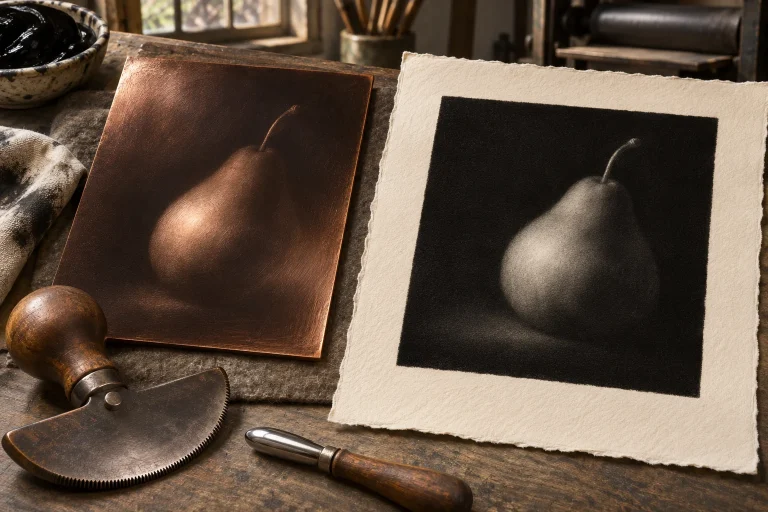
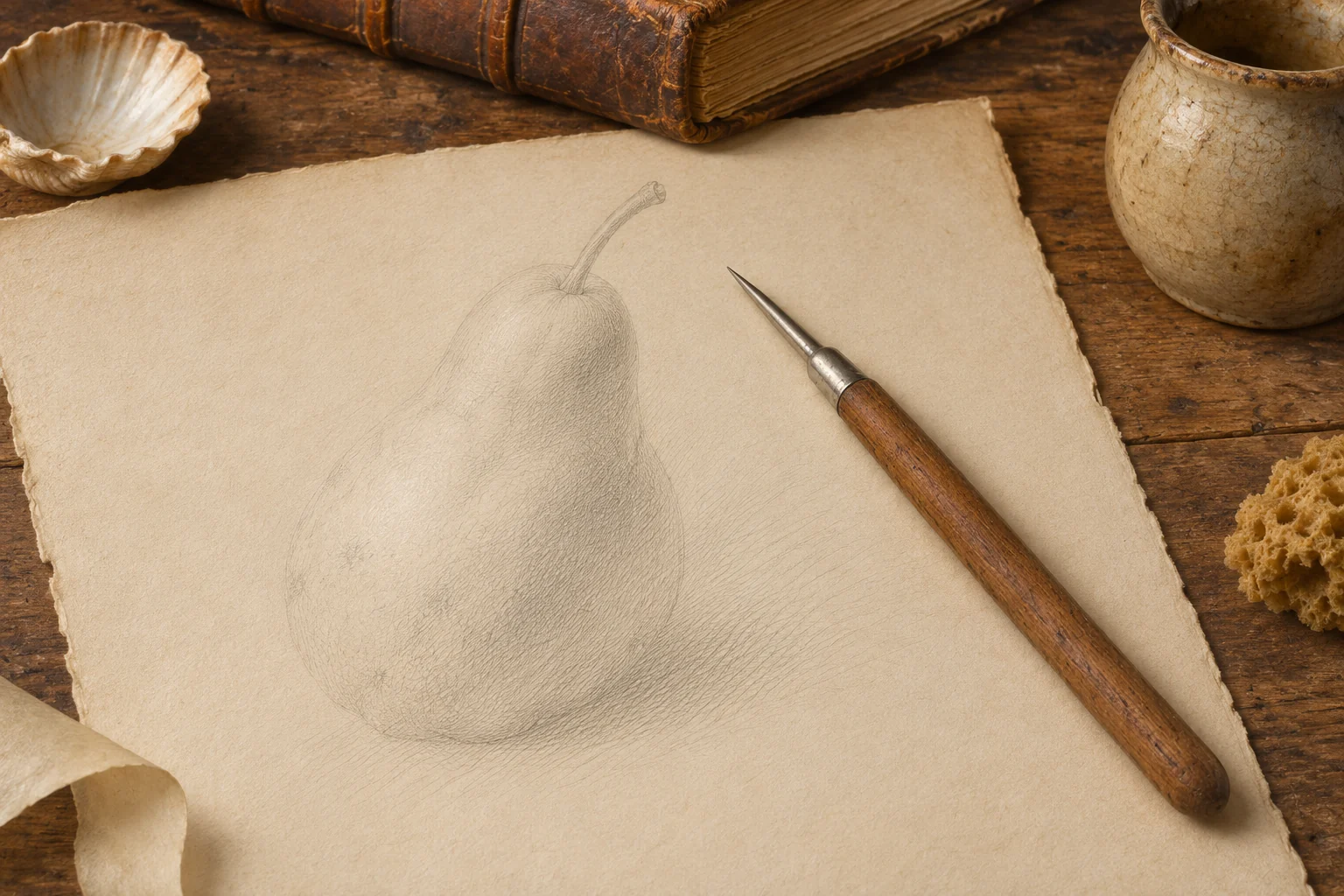
The principle is easier to grasp if you start with the support instead of the artist’s hand. A thread of silver held in a stylus can glide over a smooth surface with little to show for the journey. Give the sheet a fine abrasive coating and the same movement pulls minute particles from the tip. They lodge along its path. Nothing has to flow from a reservoir, and the mark can be narrower than a casual observer expects from looking at the blunt end of a piece of wire.[1, 3]
The part of the drawing made before the first stroke
The coating is called a ground. Historical recipes varied, but a preparation might combine finely ground bone ash with a binder and be brushed across paper, panel or parchment. The dry surface could then be smoothed. There is a balance to strike. Large irregularities would throw a fine point off course. A surface with no grip would take little metal. A carefully prepared ground could feel smooth enough for a precise contour and still be abrasive at the scale of the silver particles.[1, 3, 4]
The ground could also be coloured. That decision sets the starting brightness for every untouched part of the sheet. Imagine a drawing of a folded sleeve on pale tinted paper. The artist can reserve the colour of the paper for the middle tones, hatch into the hollows with metalpoint and, in a mixed-media drawing, add an opaque light where the fabric catches the most light. A catalogue that lists the tint of the preparation is describing an active part of the image.[1, 3]
How a pale line makes a shadow
A silver point tends to leave a relatively even stroke. Pressing harder gives the artist less additional darkness than someone accustomed to soft graphite might expect. Change the distance between strokes, though, and the effect can be substantial. Place fine lines far apart and much of the pale ground remains visible. Pack them close together and less light ground shows through. Viewed from a short distance, the eye combines many separate deposits into one area of tone.[2, 4]
Consider the turn from a cheek into the shadow under a chin. An artist can make the hatching follow the curve of the cheek, narrow the gaps as the face turns away from the light, then add a second set crossing the first in the deepest shadow. An individual stroke might vary very little along its length. The collective spacing changes the apparent weight of the form. The same drawing repays two viewing distances. Up close you see decisions about placement. A step back, you see a face.[3, 4]
That narrow range also helps explain the medium’s unforgiving reputation. An eraser that easily lifts a pencil mark may leave silver caught in the coating. More vigorous rubbing can alter the ground that gives the next stroke its character. Ease of correction varies with the preparation, so the familiar claim that a silverpoint mark can never be erased goes too far. What the artist cannot count on is restoring the original surface wherever a line has been removed. A lightly placed first contour leaves more room to adjust a form.[2, 4]
Why old silver marks can look brown
A polished silver spoon reflects its surroundings. A drawn line consists of tiny scattered particles and looks grey when fresh. With exposure the silver can tarnish, often acquiring a warm brown appearance. Alloy and surroundings affect the result. An observer comparing an old drawing with a modern reconstruction is comparing two histories of exposure as well as two hands. A freshly made silverpoint study need not have the brown cast that makes an older sheet look familiar.[2, 4]
That is also a caution about naming the metal by eye. Metalpoint is the general term for a drawing made with a metal stylus. Silver was common, but gold and other metals could serve as well. A fresh goldpoint line can look grey too, and gold remains comparatively stable as the sheet ages. Research on fifteenth-century drawings describes a range of colours even among marks made with silver alloys. The appearance of a single line supplies a clue. It rarely supplies the whole materials identification.[2, 4]
What the tool offered a travelling artist
Once the ground had been prepared, a sketchbook and stylus made a compact outfit. A person drawing on the road could put a line down, close the book and move on without waiting for ink to dry. The deposited marks are relatively resistant to smearing. For a finished study that quality aids survival. For someone filling a small sketchbook, it also makes the next blank page usable as soon as a subject appears. Preparation shifts effort to an earlier moment and buys convenience in the field.[2, 3]
Look again at Dürer’s early self-portrait with those properties in mind. Follow a contour, then look into the passages where a group of fine strokes changes the tone of the clothing. The paper carries part of the light, the ground supplies the grip, and the silver records the movement. The trained hand of the young artist is apparent, but the sheet is also a record of how well a set of materials allowed very small differences between strokes to survive.[2, 5]
The term silverpoint sounds as though it names one object you could pick up and put down. In practice the point and the page share the work. The line visible centuries later is the trace of their brief contact, changed again by the air around it. That is why the few words following the title in a museum catalogue can explain so much of what you see.[1, 2, 4]
Related reading
Sources
- National Galleries of Scotland — Metalpoint
- National Gallery of Art — Drawing in Silver and Gold
- Metropolitan Museum of Art — Metalpoint
- The Use of Goldpoint and Silverpoint in the Fifteenth Century
- National Gallery of Art — Albrecht Dürer, master drawings from the Albertina
Keep exploring.
One remarkable idea at a time—nature, science, history and beyond.
Last updated November 21, 2026.

Barnakle Editorial Team
Barnakle Editorial Team is the collective byline used for Barnakle’s editorial articles. The contributor profile explains the team identity and links to the publication’s editorial policies.
More from the editorial team →