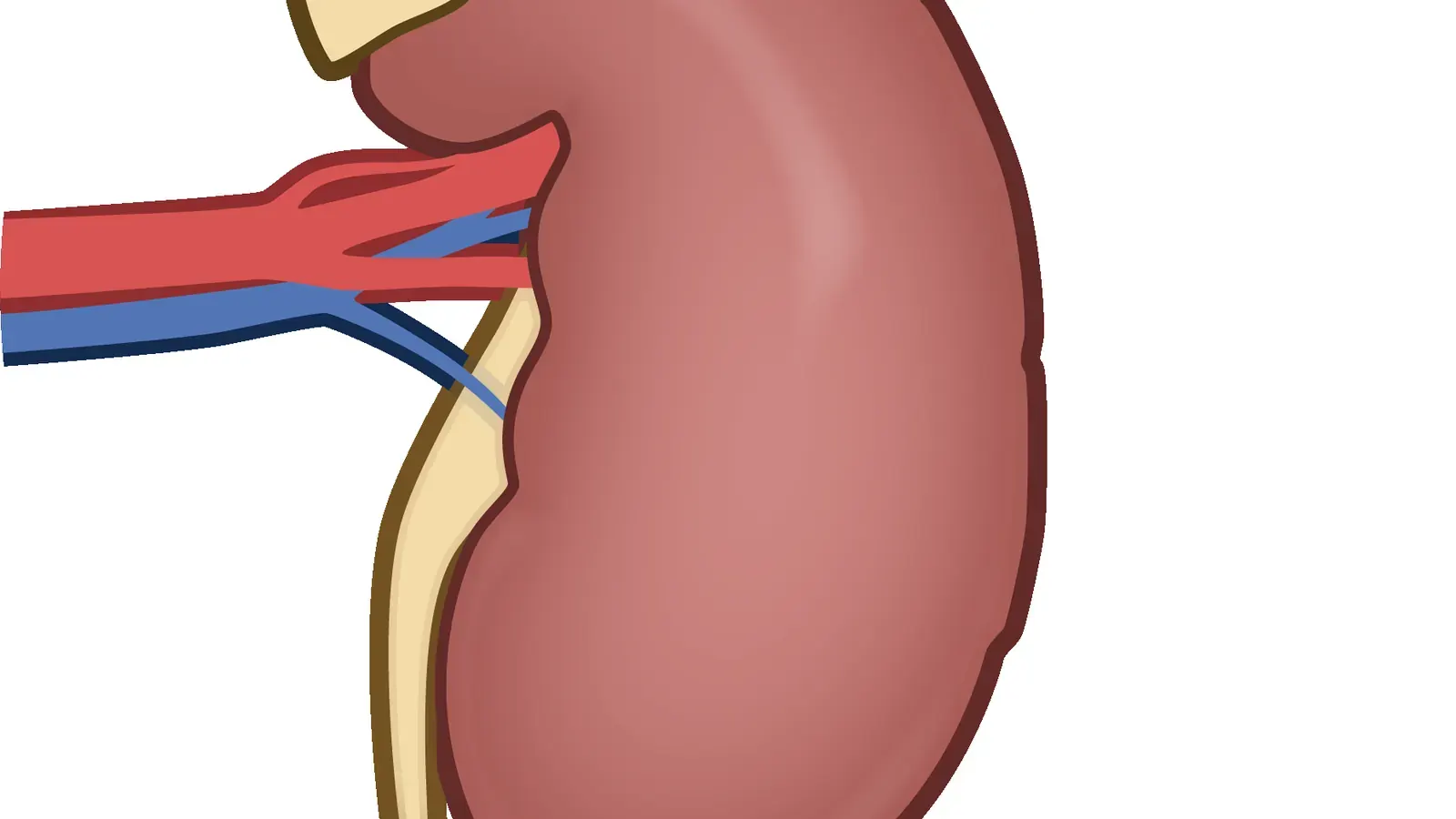
Kidney water balance
Filtration starts the process, not the final urine
Each kidney contains many nephrons. A cluster of small blood vessels called a glomerulus filters water and small dissolved substances into a tubule while normally retaining blood cells and most large proteins. The filtered fluid contains useful substances as well as wastes. If the kidney simply excreted it unchanged, the body would lose essential water and solutes rapidly.
Tubules recover and exchange selected substances
Cells lining the tubule move sodium and other solutes between the filtered fluid and surrounding tissue. Water follows osmotic gradients where the tubule wall permits it. Glucose and other useful molecules are normally reclaimed, while secretion adds certain substances to the tubular fluid. Different segments have different transport properties, so the nephron performs a sequence of adjustments rather than one uniform straining operation.
Hormones alter how much water is conserved
The loop of Henle and associated tissues help establish a concentration gradient in the kidney. Collecting ducts use that environment to adjust water recovery. Vasopressin, also called antidiuretic hormone, changes water permeability in these ducts. Other hormonal systems influence sodium handling and circulation. The result is coordinated regulation of water and dissolved material, not an unlimited ability to compensate for any intake or illness.
Urine appearance is only a limited clue
Urine volume and concentration vary with recent intake, sweating, hormones, medicines and kidney function. Colour cannot by itself establish normal filtration or diagnose a disorder. Clinical assessment combines circumstances with blood and urine testing when appropriate. A general description of kidney physiology is therefore not a personalized recommendation for how much water or salt someone should consume.
Sources and further reading
Keep exploring.
We’ll email you when the first edition is ready.
Last updated October 27, 2026.

Barnakle Editorial Team
Barnakle Editorial Team is the collective byline used for Barnakle’s editorial articles. The contributor profile explains the team identity and links to the publication’s editorial policies.
More from the editorial team →