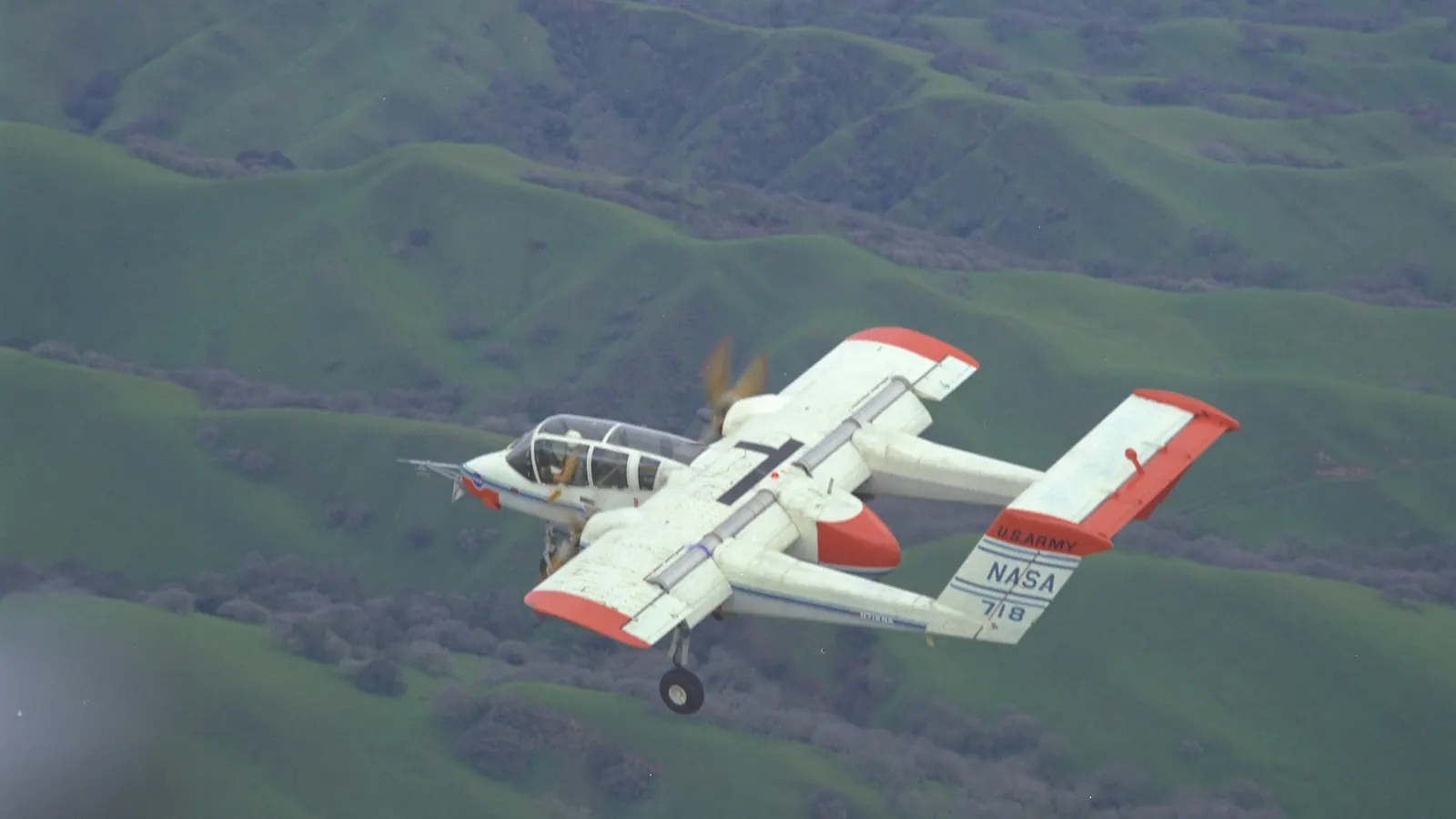
Lift, weight, thrust and drag
How Do Airplanes Stay in the Air?
The short answer
Wings moving through air create an aerodynamic force with an upward component called lift. In steady level flight, lift approximately balances weight.
Thrust approximately balances drag at constant speed. Changing any force changes the aircraft’s motion until a new balance is reached.
The four forces
Weight acts toward Earth through the aircraft’s centre of mass. Lift is defined perpendicular to the relative airflow.
Drag acts generally opposite the aircraft’s motion through the air. Thrust is produced by propellers, jets or other propulsion systems.
A wing changes the airflow
An airfoil’s shape and angle influence how air moves around it. The wing creates a pressure distribution across its surfaces.
It also turns the surrounding airflow downward overall. The integrated pressure and shear forces produce lift and drag.
Bernoulli and Newton belong together
Lower pressure is associated with faster flow in the appropriate streamline analysis. The wing also imparts downward momentum to air, which receives an equal and opposite reaction.
These are compatible descriptions of the same flow, not rival causes. A complete calculation must satisfy conservation of mass, momentum and energy.
Why equal-transit-time is wrong
Air parcels divided at the leading edge have no rule requiring them to meet simultaneously at the trailing edge. The upper-surface flow often arrives sooner, not at an imposed equal time.
Saying the top is curved is therefore not a complete explanation. NASA identifies equal-transit-time as a common incorrect lift theory.
Angle of attack
Angle of attack is the angle between a reference line on the wing and the oncoming airflow. Increasing it usually increases lift over a useful range.
It also changes drag and pressure distribution. Beyond a critical condition, separated flow can cause a stall.
What a stall really is
A stall is a loss of lift associated mainly with excessive angle of attack, not simply low engine power. It can occur at different speeds, attitudes and power settings.
Reducing angle of attack is fundamental to restoring attached flow. Aircraft design and operating procedures provide warnings and margins.
Why speed matters
Dynamic pressure increases strongly with airspeed. More airflow over a given wing can generate more lift when other factors remain comparable.
Takeoff requires reaching a speed at which available lift supports the aircraft. Landing manages decreasing speed while maintaining controlled lift.
Flaps and slats
High-lift devices change wing geometry and sometimes effective area. Flaps can increase lift and drag for takeoff and landing.
Leading-edge slats help manage airflow at higher lift conditions. They are retracted in cruise because extra drag would reduce efficiency.
How engines help
Engines do not normally hold an airplane up directly; they produce thrust that maintains motion through air. A propeller accelerates a mass of air backward.
A jet engine produces thrust by accelerating exhaust relative to the incoming flow. The wings then use the resulting airflow to generate most of an airliner’s lift.
How pilots control direction
Ailerons help control roll around the aircraft’s longitudinal axis. The elevator or stabilator influences pitch.
The rudder influences yaw. Coordinated flight combines controls rather than treating each axis in isolation.
Climbing and descending
A climb requires an energy change, commonly supported by excess thrust and an adjusted flight path. A descent does not mean lift disappears.
Gliding aircraft exchange altitude for continued forward motion while producing lift. Flight-path angle depends on the force and energy balance.
Why heavy airplanes can fly
Greater weight requires greater lift for the same steady level condition. Designers provide wing area, speed and lift capability appropriate to the aircraft.
Large size alone does not prevent flight when forces scale together. Loading limits matter because structure, runway distance and performance are finite.
Turbulence and stability
Turbulence changes local airflow and can produce bumps or attitude changes. Aircraft are designed and certified for specified operating conditions.
Stability describes tendencies after a disturbance, while control describes the ability to command motion. Weather avoidance and operating procedures remain important even in robust designs.
How engineers verify flight
Wind tunnels reveal pressure, flow and force under controlled conditions. Computational fluid dynamics solves approximations to governing flow equations.
Instrumented flight tests measure real aircraft performance. Agreement across theory, experiments and flight data makes aerodynamic explanations reliable.
Can the appearance change without the underlying physics changing?
Yes.
What should a reader remember?
Keep the geometry and the energy pathway in view.
Key takeaways
- An airplane stays aloft when motion through the air and the shape and angle of its wings create enough aerodynamic lift to balance its weight. Engines provide thrust to overcome drag and maintain the airflow, while control surfaces let the pilot change the aircraft’s attitude and path.
- The observed appearance is evidence of a physical process, but it is also shaped by viewing geometry and detection.
- Authoritative measurements support the central mechanism while leaving room to refine details.
- Related phenomena may share part of the physics without being the same event.
Continue exploring
What researchers will test next
When several independent tests agree, confidence can grow.
Sources and further reading
Keep exploring.
One remarkable idea at a time—nature, science, history and beyond.
Last updated October 29, 2026.

Barnakle Editorial Team
Barnakle Editorial Team is the collective byline used for Barnakle’s editorial articles. The contributor profile explains the team identity and links to the publication’s editorial policies.
More from the editorial team →