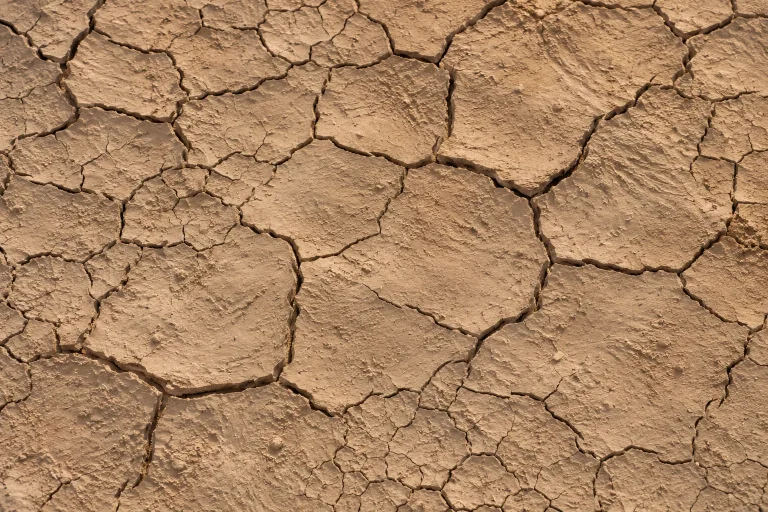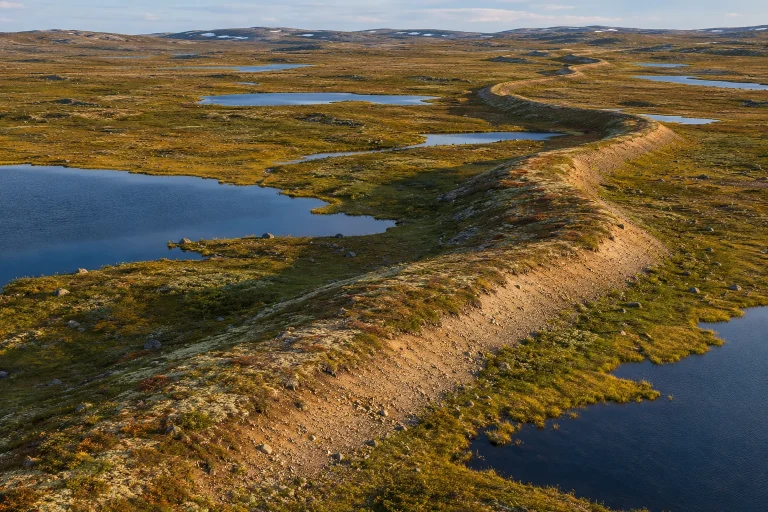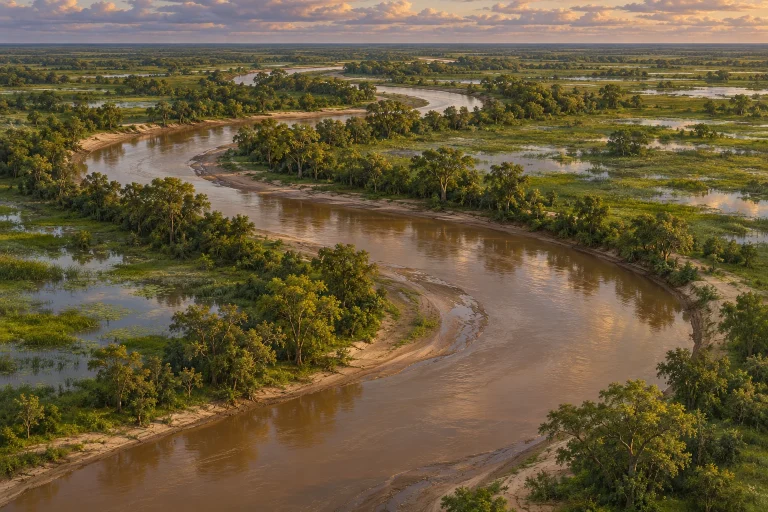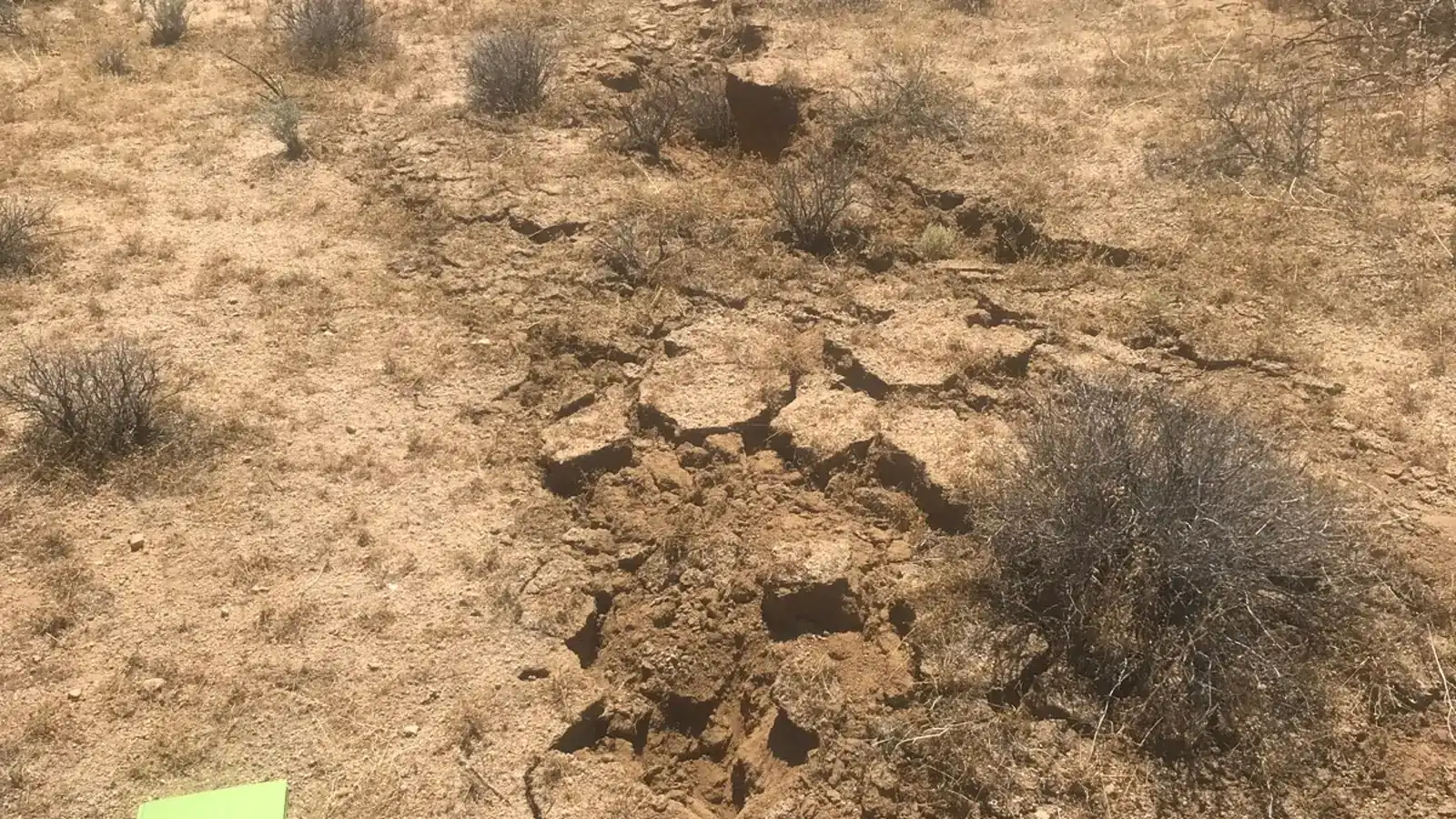
Stress builds along faults until friction can no longer hold the rocks still
The short answer
Plate motion supplies the long-term loading, but an earthquake is the rupture itself: a moving front of failure that begins at a focus underground and spreads across part of a fault. Its effects depend on magnitude, depth, distance, local geology, rupture direction and the vulnerability of structures above it.
Faults are fractures that move
A fault is a surface or zone where blocks of crust have slipped relative to one another. Strike-slip, normal and reverse faults reflect different directions of stress and motion.
Plate motion loads many faults
Earth’s plates move centimetres per year, but boundaries are not smooth seams. Their motion distributes stress across networks of faults, including structures far from the most obvious plate edge.
Friction can lock a fault
Rough rock surfaces and pressure resist sliding. While deeper or nearby material continues moving, a locked section bends elastically and stores energy rather than creeping freely.
Rupture begins at the hypocentre
Failure starts at a point underground called the hypocentre or focus. The epicentre is the point on the surface directly above it, not necessarily the place of strongest damage.
Rupture can cascade across a fault
Once slip begins, stresses concentrate near the rupture edge and may drive failure into adjacent locked patches. The final rupture area and slip determine much of the earthquake’s size.
Seismic waves carry energy
P waves compress material, S waves shear it and surface waves travel along the exterior. Their speeds and motions differ, allowing seismologists to locate events and infer Earth’s interior.
Magnitude is not intensity
Magnitude estimates the event’s size from recorded waves and source properties. Intensity describes shaking and damage at a particular place, which change with distance, soil and buildings.
Shallow events can be destructive
A moderate shallow earthquake beneath a city may shake structures strongly, while a larger deep or distant event may cause less local damage. Exposure and construction are central to risk.
Soft sediment can amplify shaking
Loose basins may trap and strengthen certain wave frequencies. Water-saturated sediment can lose strength during liquefaction, damaging foundations, roads and buried infrastructure.
Aftershocks reflect readjustment
The main rupture changes stress around the fault. Numerous smaller events commonly follow, generally declining with time but sometimes damaging already weakened structures.
Prediction remains out of reach
Scientists map hazards and estimate probabilities, but they cannot reliably specify the exact time, place and magnitude of a future earthquake. Short-term claims require extraordinary evidence.
Early warning is not prediction
Sensors can detect fast P waves and send alerts before stronger shaking reaches more distant locations. The lead time may be seconds, but it can trigger protective actions.
Common misconceptions
Hot weather, ordinary cloud patterns and unusual animal behaviour do not provide a reproducible earthquake forecast. Faults do not usually open into vast chasms, and small earthquakes do not safely release enough energy to prevent larger ones.
How scientists know
Seismometer networks locate ruptures from wave arrival times and amplitudes. GPS and satellite radar measure crustal deformation, geologists map displaced landforms, laboratories test rock friction, and numerical models examine how stress transfers along fault systems.
Can humans cause earthquakes?
Fluid injection, reservoir loading, mining and geothermal activity can alter stress and trigger induced seismicity in some settings.
What is the biggest possible magnitude?
Magnitude depends on available fault area and slip; USGS notes that magnitude 10 events are not physically plausible on Earth’s known faults.
Do all earthquakes cause tsunamis?
No. A damaging tsunami usually requires substantial rapid displacement of the seafloor or another large movement of water.
Why do earthquakes happen inside continents?
Ancient faults can be reactivated when broad plate stresses reach weaknesses far from present boundaries.
What should people do during shaking?
Follow local emergency guidance; in many indoor settings the standard advice is Drop, Cover and Hold On.
Key takeaways
- Locked faults store elastic strain.
- Sudden fault slip radiates seismic waves.
- Magnitude and local intensity are different quantities.
- Hazard probabilities and early warnings are not exact predictions.
Continue exploring
Sources and further reading
Keep exploring.
We’ll email you when the first edition is ready.
Last updated October 29, 2026.

Barnakle Editorial Team
Barnakle Editorial Team is the collective byline used for Barnakle’s editorial articles. The contributor profile explains the team identity and links to the publication’s editorial policies.
More from the editorial team →