
Freezing organizes water molecules into an open crystal structure that takes up more space
The short answer
Ice floats because ordinary ice is less dense than liquid water. When water freezes, hydrogen bonds arrange its molecules into an open hexagonal crystal lattice. The same mass occupies more volume, so its density falls below that of the surrounding liquid. Buoyancy then supports the ice, leaving roughly one-tenth of a freshwater ice block above the surface.
Most substances become denser when they freeze, making water’s behaviour seem exceptional. Frozen water does not lose mass. Molecular geometry creates extra space, an anomaly that shapes lakes, sea ice, weathering and aquatic survival through winter.
Density compares mass with volume
A kilogram of ice and a kilogram of water have equal mass, but ice occupies more volume. It floats after displacing enough denser water for buoyancy to balance its weight.
Understanding Density compares mass with volume requires separating the immediate mechanism from the conditions that make it stronger, weaker or easier to observe. Researchers measure those variables independently, compare natural examples and test whether the same explanation predicts new results. This turns a plausible story into an evidence-based account.
The evidence for Density compares mass with volume comes from methods that fail in different ways. Direct observation establishes what occurs, instruments quantify timing or structure, experiments isolate candidate causes and models test whether known rules reproduce the pattern. Agreement across methods is more persuasive than repetition of one memorable example.
Context also matters for Density compares mass with volume. Scale, species, location, temperature, geometry and measurement limits can change the result without overturning the underlying process. Careful reporting preserves that variation, states uncertainty and prevents a useful explanation from becoming an exaggerated universal rule.
A practical explanation should also answer what would change the observation. Following that question reveals the limits of the evidence and identifies the next measurement needed.
Hydrogen bonds organize water
The polar sides of neighbouring water molecules attract. In liquid water these connections continually rearrange; during freezing they settle into a more persistent network with characteristic angles.
Understanding Hydrogen bonds organize water requires separating the immediate mechanism from the conditions that make it stronger, weaker or easier to observe. Researchers measure those variables independently, compare natural examples and test whether the same explanation predicts new results. This turns a plausible story into an evidence-based account.
The evidence for Hydrogen bonds organize water comes from methods that fail in different ways. Direct observation establishes what occurs, instruments quantify timing or structure, experiments isolate candidate causes and models test whether known rules reproduce the pattern. Agreement across methods is more persuasive than repetition of one memorable example.
Context also matters for Hydrogen bonds organize water. Scale, species, location, temperature, geometry and measurement limits can change the result without overturning the underlying process. Careful reporting preserves that variation, states uncertainty and prevents a useful explanation from becoming an exaggerated universal rule.
A practical explanation should also answer what would change the observation. Following that question reveals the limits of the evidence and identifies the next measurement needed.
The crystal lattice contains open space
Common ice Ih has a hexagonal, tetrahedrally bonded structure. Molecules sit farther apart on average than in liquid water, increasing volume by about nine percent.
Understanding The crystal lattice contains open space requires separating the immediate mechanism from the conditions that make it stronger, weaker or easier to observe. Researchers measure those variables independently, compare natural examples and test whether the same explanation predicts new results. This turns a plausible story into an evidence-based account.
The evidence for The crystal lattice contains open space comes from methods that fail in different ways. Direct observation establishes what occurs, instruments quantify timing or structure, experiments isolate candidate causes and models test whether known rules reproduce the pattern. Agreement across methods is more persuasive than repetition of one memorable example.
Context also matters for The crystal lattice contains open space. Scale, species, location, temperature, geometry and measurement limits can change the result without overturning the underlying process. Careful reporting preserves that variation, states uncertainty and prevents a useful explanation from becoming an exaggerated universal rule.
A practical explanation should also answer what would change the observation. Following that question reveals the limits of the evidence and identifies the next measurement needed.
Water is densest near four degrees
Cooling first makes freshwater denser, but below about four degrees Celsius hydrogen-bonded structures reverse the trend. The coldest water rises and freezes at the surface.
Understanding Water is densest near four degrees requires separating the immediate mechanism from the conditions that make it stronger, weaker or easier to observe. Researchers measure those variables independently, compare natural examples and test whether the same explanation predicts new results. This turns a plausible story into an evidence-based account.
The evidence for Water is densest near four degrees comes from methods that fail in different ways. Direct observation establishes what occurs, instruments quantify timing or structure, experiments isolate candidate causes and models test whether known rules reproduce the pattern. Agreement across methods is more persuasive than repetition of one memorable example.
Context also matters for Water is densest near four degrees. Scale, species, location, temperature, geometry and measurement limits can change the result without overturning the underlying process. Careful reporting preserves that variation, states uncertainty and prevents a useful explanation from becoming an exaggerated universal rule.
A practical explanation should also answer what would change the observation. Following that question reveals the limits of the evidence and identifies the next measurement needed.
Archimedes sets the floating level
A floating object displaces its own weight of fluid. Freshwater ice is roughly 92 percent as dense as liquid water near freezing, so most remains submerged.
Understanding Archimedes sets the floating level requires separating the immediate mechanism from the conditions that make it stronger, weaker or easier to observe. Researchers measure those variables independently, compare natural examples and test whether the same explanation predicts new results. This turns a plausible story into an evidence-based account.
The evidence for Archimedes sets the floating level comes from methods that fail in different ways. Direct observation establishes what occurs, instruments quantify timing or structure, experiments isolate candidate causes and models test whether known rules reproduce the pattern. Agreement across methods is more persuasive than repetition of one memorable example.
Context also matters for Archimedes sets the floating level. Scale, species, location, temperature, geometry and measurement limits can change the result without overturning the underlying process. Careful reporting preserves that variation, states uncertainty and prevents a useful explanation from becoming an exaggerated universal rule.
A practical explanation should also answer what would change the observation. Following that question reveals the limits of the evidence and identifies the next measurement needed.
Salt changes the calculation
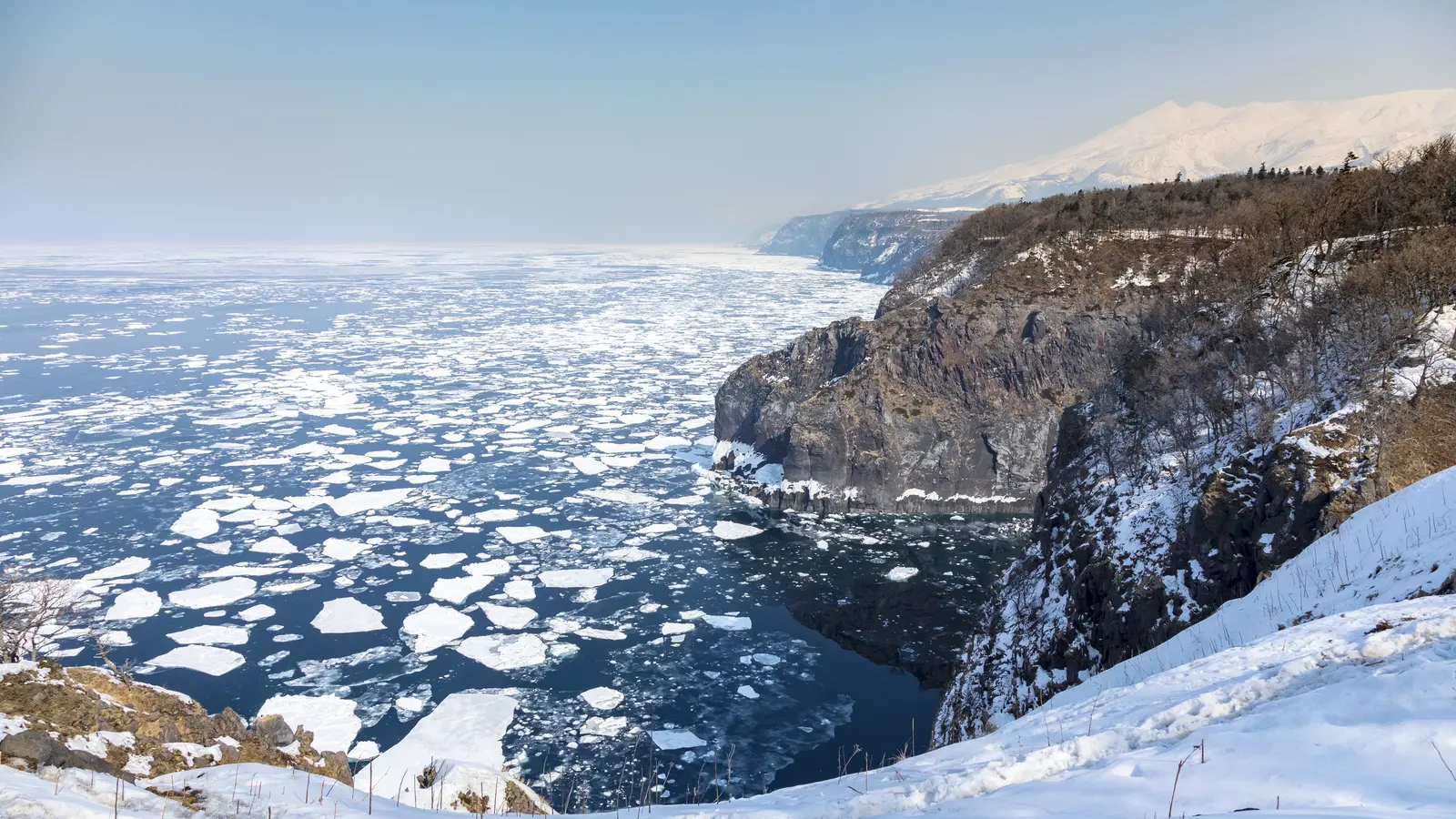
Salts make seawater denser and lower its freezing point. Forming sea ice rejects much of that salt, changing both ice density and the fraction visible above water.
Understanding Salt changes the calculation requires separating the immediate mechanism from the conditions that make it stronger, weaker or easier to observe. Researchers measure those variables independently, compare natural examples and test whether the same explanation predicts new results. This turns a plausible story into an evidence-based account.
The evidence for Salt changes the calculation comes from methods that fail in different ways. Direct observation establishes what occurs, instruments quantify timing or structure, experiments isolate candidate causes and models test whether known rules reproduce the pattern. Agreement across methods is more persuasive than repetition of one memorable example.
Context also matters for Salt changes the calculation. Scale, species, location, temperature, geometry and measurement limits can change the result without overturning the underlying process. Careful reporting preserves that variation, states uncertainty and prevents a useful explanation from becoming an exaggerated universal rule.
A practical explanation should also answer what would change the observation. Following that question reveals the limits of the evidence and identifies the next measurement needed.
Pressure creates other ice phases
Extreme pressure produces crystalline forms with different molecular packing. Some are denser than liquid water, showing that floating is a property of familiar low-pressure ice.
Understanding Pressure creates other ice phases requires separating the immediate mechanism from the conditions that make it stronger, weaker or easier to observe. Researchers measure those variables independently, compare natural examples and test whether the same explanation predicts new results. This turns a plausible story into an evidence-based account.
The evidence for Pressure creates other ice phases comes from methods that fail in different ways. Direct observation establishes what occurs, instruments quantify timing or structure, experiments isolate candidate causes and models test whether known rules reproduce the pattern. Agreement across methods is more persuasive than repetition of one memorable example.
Context also matters for Pressure creates other ice phases. Scale, species, location, temperature, geometry and measurement limits can change the result without overturning the underlying process. Careful reporting preserves that variation, states uncertainty and prevents a useful explanation from becoming an exaggerated universal rule.
A practical explanation should also answer what would change the observation. Following that question reveals the limits of the evidence and identifies the next measurement needed.
Surface ice insulates lakes
Floating ice forms a lid and slows heat loss. Denser liquid water remains below, allowing aquatic organisms to survive even when air stays below freezing.
Understanding Surface ice insulates lakes requires separating the immediate mechanism from the conditions that make it stronger, weaker or easier to observe. Researchers measure those variables independently, compare natural examples and test whether the same explanation predicts new results. This turns a plausible story into an evidence-based account.
The evidence for Surface ice insulates lakes comes from methods that fail in different ways. Direct observation establishes what occurs, instruments quantify timing or structure, experiments isolate candidate causes and models test whether known rules reproduce the pattern. Agreement across methods is more persuasive than repetition of one memorable example.
Context also matters for Surface ice insulates lakes. Scale, species, location, temperature, geometry and measurement limits can change the result without overturning the underlying process. Careful reporting preserves that variation, states uncertainty and prevents a useful explanation from becoming an exaggerated universal rule.
A practical explanation should also answer what would change the observation. Following that question reveals the limits of the evidence and identifies the next measurement needed.
Freeze-thaw can fracture rock
Water entering cracks can expand during freezing and create stress, especially with repeated water supply. Frost weathering involves this expansion plus pressure and cycling.
Understanding Freeze-thaw can fracture rock requires separating the immediate mechanism from the conditions that make it stronger, weaker or easier to observe. Researchers measure those variables independently, compare natural examples and test whether the same explanation predicts new results. This turns a plausible story into an evidence-based account.
The evidence for Freeze-thaw can fracture rock comes from methods that fail in different ways. Direct observation establishes what occurs, instruments quantify timing or structure, experiments isolate candidate causes and models test whether known rules reproduce the pattern. Agreement across methods is more persuasive than repetition of one memorable example.
Context also matters for Freeze-thaw can fracture rock. Scale, species, location, temperature, geometry and measurement limits can change the result without overturning the underlying process. Careful reporting preserves that variation, states uncertainty and prevents a useful explanation from becoming an exaggerated universal rule.
A practical explanation should also answer what would change the observation. Following that question reveals the limits of the evidence and identifies the next measurement needed.
Floating ice already displaces water
Melting sea ice has little direct effect on sea level because it already displaces water. Melting land ice adds mass that was not previously floating.
Understanding Floating ice already displaces water requires separating the immediate mechanism from the conditions that make it stronger, weaker or easier to observe. Researchers measure those variables independently, compare natural examples and test whether the same explanation predicts new results. This turns a plausible story into an evidence-based account.
The evidence for Floating ice already displaces water comes from methods that fail in different ways. Direct observation establishes what occurs, instruments quantify timing or structure, experiments isolate candidate causes and models test whether known rules reproduce the pattern. Agreement across methods is more persuasive than repetition of one memorable example.
Context also matters for Floating ice already displaces water. Scale, species, location, temperature, geometry and measurement limits can change the result without overturning the underlying process. Careful reporting preserves that variation, states uncertainty and prevents a useful explanation from becoming an exaggerated universal rule.
A practical explanation should also answer what would change the observation. Following that question reveals the limits of the evidence and identifies the next measurement needed.
Bubbles are not the main reason
Air bubbles can lower average density, but clear bubble-free ice floats too. Its molecular lattice, not trapped air, provides the decisive density difference.
Understanding Bubbles are not the main reason requires separating the immediate mechanism from the conditions that make it stronger, weaker or easier to observe. Researchers measure those variables independently, compare natural examples and test whether the same explanation predicts new results. This turns a plausible story into an evidence-based account.
The evidence for Bubbles are not the main reason comes from methods that fail in different ways. Direct observation establishes what occurs, instruments quantify timing or structure, experiments isolate candidate causes and models test whether known rules reproduce the pattern. Agreement across methods is more persuasive than repetition of one memorable example.
Context also matters for Bubbles are not the main reason. Scale, species, location, temperature, geometry and measurement limits can change the result without overturning the underlying process. Careful reporting preserves that variation, states uncertainty and prevents a useful explanation from becoming an exaggerated universal rule.
A practical explanation should also answer what would change the observation. Following that question reveals the limits of the evidence and identifies the next measurement needed.
A molecular anomaly scales upward
Water’s density curve affects lake circulation, polar oceans, sea-ice growth and climate feedbacks. Bond geometry at atomic scale has planetary consequences.
Understanding A molecular anomaly scales upward requires separating the immediate mechanism from the conditions that make it stronger, weaker or easier to observe. Researchers measure those variables independently, compare natural examples and test whether the same explanation predicts new results. This turns a plausible story into an evidence-based account.
The evidence for A molecular anomaly scales upward comes from methods that fail in different ways. Direct observation establishes what occurs, instruments quantify timing or structure, experiments isolate candidate causes and models test whether known rules reproduce the pattern. Agreement across methods is more persuasive than repetition of one memorable example.
Context also matters for A molecular anomaly scales upward. Scale, species, location, temperature, geometry and measurement limits can change the result without overturning the underlying process. Careful reporting preserves that variation, states uncertainty and prevents a useful explanation from becoming an exaggerated universal rule.
A practical explanation should also answer what would change the observation. Following that question reveals the limits of the evidence and identifies the next measurement needed.
Common misconceptions
Ice does not float because it contains air, loses weight or rests on surface tension. Bubble-free ice floats through buoyancy because its molecular structure gives it lower density than liquid water. Floating sea ice and grounded land ice also affect sea level differently.
A concise explanation is useful only when it preserves the causal chain. It becomes misleading when it substitutes a familiar label for a mechanism, confuses association with cause or extends evidence beyond the conditions actually studied.
How scientists know
Scientists measure precise masses and volumes, determine ice structure using diffraction, and model hydrogen bonds with thermodynamics and molecular simulations. Field instruments track temperature, salinity, thickness and heat exchange in lakes and polar seas.
No single measurement carries the conclusion. Observations, experiments, physical theory and repeated records provide independent checks, while disagreement points to an uncontrolled variable or a question that still needs a better test.
Frequently asked questions
How much of an iceberg is underwater?
Close to nine-tenths, with the exact fraction depending on ice density and seawater salinity.
Why does water expand in a freezer?
The open crystal lattice occupies more volume than the same molecules in liquid form.
Can ice sink in another liquid?
Yes. It sinks if the surrounding liquid is less dense than the ice.
Does hot water freeze faster?
Sometimes under particular conditions, but evaporation, convection and containers strongly affect the result.
Why is glacier ice blue?
Dense ice absorbs red wavelengths more strongly, leaving transmitted or scattered light relatively blue.
Key takeaways
- Ordinary ice floats because it is less dense than liquid water.
- Hydrogen bonds build an open hexagonal lattice.
- Buoyancy, not trapped air, supports ice.
- The anomaly protects winter lakes and influences climate.
Continue exploring
Sources and further reading
Keep exploring.
One remarkable idea at a time—nature, science, history and beyond.
Sources and further reading
Barnakle uses credible primary and authoritative sources wherever possible.
- USGS — Water density
- https://www.usgs.gov/special-topics/water-science-school/science/water-density
- NOAA — Sea level and floating ice
- https://oceanservice.noaa.gov/facts/sea-level.html
- NIST Chemistry WebBook — Water
- https://webbook.nist.gov/cgi/cbook.cgi?ID=C7732185
- NSIDC — All About Sea Ice
- https://nsidc.org/learn/parts-cryosphere/sea-ice
Last reviewed October 5, 2026.

Barnakle Editorial Team
A member of the Barnakle editorial team, exploring remarkable ideas with clarity, curiosity and care.
More from this author →