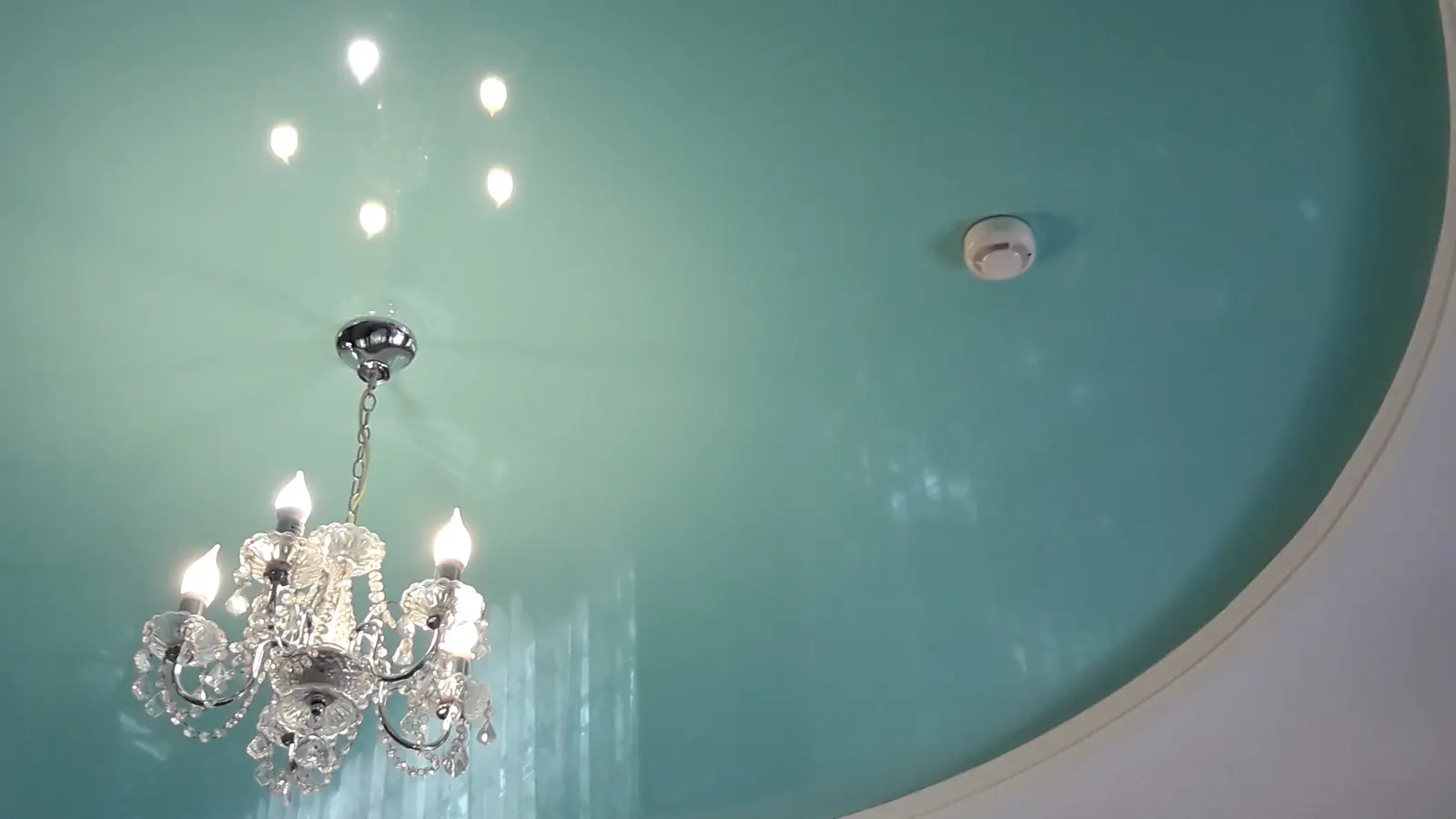
Tiny airborne combustion particles disturb either a beam of light or an electric current inside the alarm
The short answer
A smoke alarm is an early-warning instrument, not a miniature camera or nose. Its location, sensor design, sensitivity, power supply and the type of fire all influence how soon it can provide useful warning.
Fire produces an evolving aerosol
Smoke contains solid and liquid particles, gases and water vapour whose sizes and concentrations change with fuel, oxygen supply, temperature and whether combustion is flaming or smouldering.
Photoelectric alarms measure scattered light
A light source and photodiode are arranged so little direct light reaches the detector. Entering particles redirect some light into the photodiode, raising its signal above a calibrated baseline.
Particle size affects optical response
Larger particles associated with many smouldering fires can scatter light efficiently. Chamber geometry, wavelength and particle composition also influence the detected signal.
Ionization alarms measure an electrical current
A tiny radioactive source ionizes air molecules between electrodes, allowing a small current. Smoke attaches to ions and changes their mobility, reducing current enough to activate the circuit.
Different fires favour different sensors
Fast flaming fires and slow smouldering fires create different aerosol populations. No simple ranking covers every room, fuel, ventilation pattern and sensitivity setting.
Alarm electronics interpret the sensor
Amplifiers, comparators and microcontrollers track the signal, apply thresholds and sometimes require persistence across several samples. The aim is fast detection without constant nuisance alarms.
Airflow and placement shape response time
Smoke must travel from the fire to the sensing chamber. Closed doors, ceiling geometry, dead-air spaces, ventilation and distance can delay or redirect the plume.
Power and supervision are part of detection
Batteries, mains power, low-power warnings, interconnection and end-of-life signals determine whether a functioning sensor can actually alert occupants when needed.
Testing uses repeatable fire scenarios
Standards expose alarms to specified aerosols and fires, but full-scale studies add rooms, furnishings and realistic airflow. Those tests reveal trade-offs hidden by a single bench measurement.
Common misconceptions
A smoke alarm does not wait until a room is visibly full of smoke, and pressing its test button usually checks power, electronics and the horn rather than recreating every real fire. A heat alarm is also not interchangeable with a smoke alarm: it responds to temperature conditions and may warn later in many residential fires.
How scientists know
Fire researchers use optical density meters, particle counters, gas analysers, thermocouples and synchronized alarm outputs inside full-scale rooms. They vary fuel, ignition mode, ventilation, alarm type and placement, then compare activation time with developing visibility, toxicity and heat hazards.
Why does cooking set an alarm off?
Cooking aerosols can scatter light or disturb ion current much like combustion particles, especially near the sensor.
What is a dual-sensor alarm?
It combines two sensing approaches, commonly photoelectric and ionization, with logic that interprets their signals.
Does the test button prove the chamber is clean?
Not necessarily; follow the manufacturer’s cleaning, replacement and testing instructions.
Why do alarms chirp?
A periodic chirp commonly signals low battery, fault or end of service life, but patterns vary by model.
Where should alarms be installed?
Follow current local fire-code and manufacturer guidance; placement is a safety decision, not merely a convenience.
Key takeaways
- Smoke alarms sense airborne combustion particles.
- Photoelectric sensors detect scattered light.
- Ionization sensors detect a change in electrical current.
- Placement, maintenance and fire type affect warning time.
Continue exploring
- What keeps fire burning
- Why fog forms
Sources and further reading
Keep exploring.
One remarkable idea at a time—nature, science, history and beyond.
Last updated October 29, 2026.

Barnakle Editorial Team
Barnakle Editorial Team is the collective byline used for Barnakle’s editorial articles. The contributor profile explains the team identity and links to the publication’s editorial policies.
More from the editorial team →