
Genes set the conditions; growth and pressure shape the final ridge map
The short answer
Fingerprints form before birth as the outer skin and deeper tissue grow at different rates over temporary pads on the fingertips. Genes influence ridge features and broad pattern tendencies, while timing, fetal growth, local pressure and microscopic developmental variation help determine the exact arrangement. The resulting friction ridges persist because their pattern is anchored in living skin below the surface.
The loops, whorls and arches on a fingertip look printed onto the surface, but they are products of a moving developmental landscape. During gestation, raised volar pads change shape while primary ridges emerge near the boundary between epidermis and dermis. Closely related people can share broad tendencies, yet even identical twins differ in fine detail because development includes local physical variation that a shared genome does not specify point by point.
Friction ridge skin is specialized
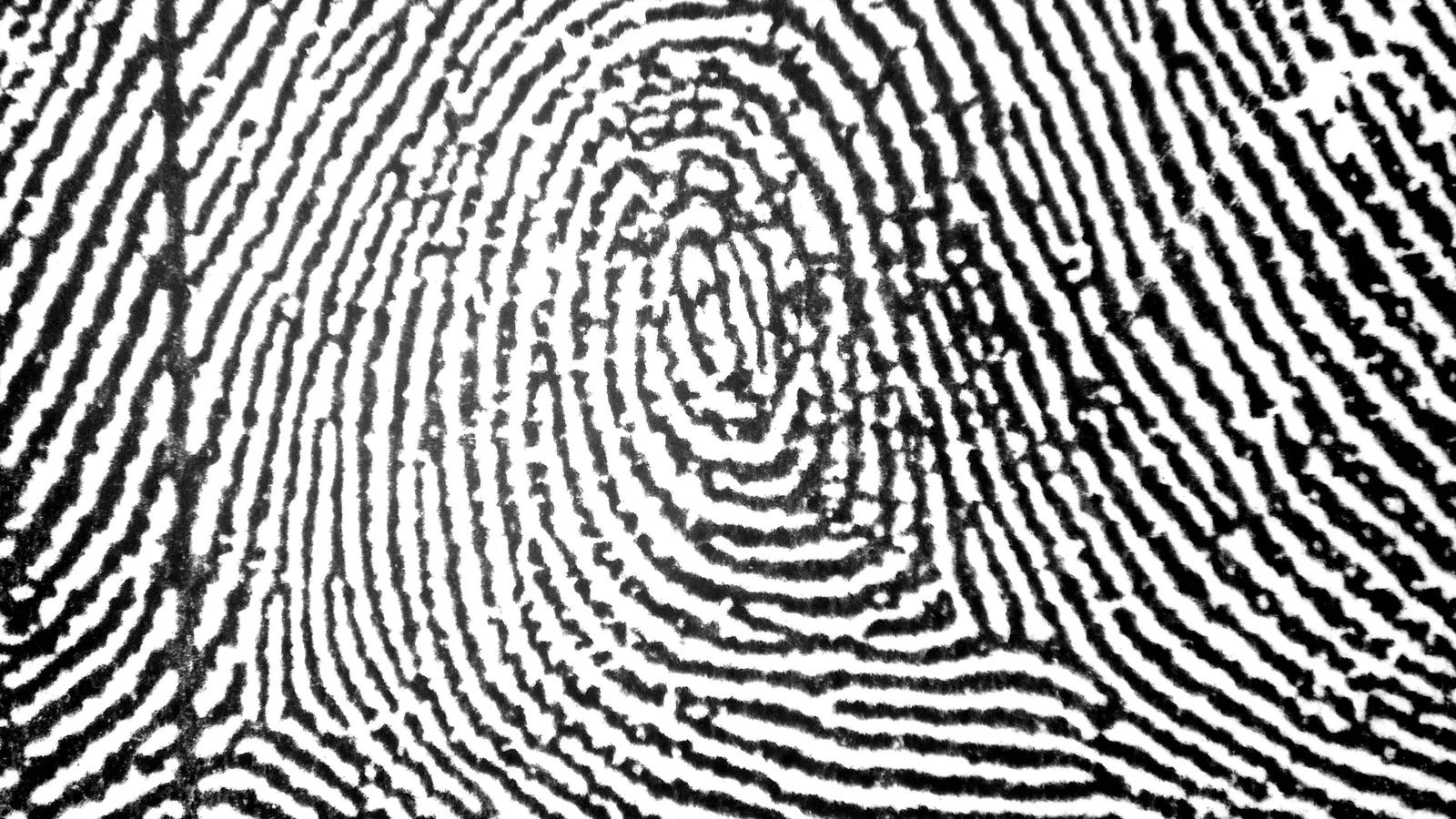
Palms, fingertips and soles carry parallel epidermal ridges rather than hair follicles. Sweat pores open along ridge tops, and the patterned surface increases contact complexity. The same architecture that assists grip and touch can leave an impression when sweat or another residue transfers to a surface.
A fingerprint is therefore an image of friction ridge skin, not a substance manufactured for identification. Pattern and impression must be distinguished because pressure, motion and the receiving surface can distort what is recorded.
For evidence about friction ridge skin is specialized within how fingerprints form, the useful test is to separate direct observation from interpretation. Researchers compare repeated measurements, control relevant conditions and ask whether a competing explanation predicts a different result. That approach matters because a familiar experience can still have several interacting causes. The strongest conclusion is the one that fits the mechanism, timing and limits of the available evidence without claiming more precision than the study can support.
The evidence behind “friction ridge skin is specialized” has limits. Scale, variation and observation method can change what is visible, so recording those conditions is essential for reproduction and comparison.
Development begins early in gestation
Hands form during the first trimester, and temporary swellings called volar pads become prominent on the fingers. Primary epidermal ridges begin developing later, during a limited prenatal interval when the pads are changing relative height and shape.
Timing links growth to pattern. A ridge system forming over a high, rounded pad tends to organize differently from one forming after the pad has flattened. The sequence helps explain broad classes without treating them as rigid genetic instructions.
For evidence about development begins early in gestation within how fingerprints form, the useful test is to separate direct observation from interpretation. Researchers compare repeated measurements, control relevant conditions and ask whether a competing explanation predicts a different result. That approach matters because a familiar experience can still have several interacting causes. The strongest conclusion is the one that fits the mechanism, timing and limits of the available evidence without claiming more precision than the study can support.
The evidence behind “development begins early in gestation” has limits. Scale, variation and observation method can change what is visible, so recording those conditions is essential for reproduction and comparison.
Volar pads influence loops, whorls and arches
Volar pads are mesenchymal elevations on the fetal palm and digits. Their symmetry, height and regression at the onset of ridge formation influence the direction fields from which ridges organize. More symmetrical, persistent pads are associated with whorl tendencies, while flatter pads favour arches.
These are statistical developmental relationships, not a lookup table. The position of ridge initiation, digit geometry and growth of surrounding tissue also matter, so similar pad shapes can still yield different fine arrangements.
For evidence about volar pads influence loops, whorls and arches within how fingerprints form, the useful test is to separate direct observation from interpretation. Researchers compare repeated measurements, control relevant conditions and ask whether a competing explanation predicts a different result. That approach matters because a familiar experience can still have several interacting causes. The strongest conclusion is the one that fits the mechanism, timing and limits of the available evidence without claiming more precision than the study can support.
The evidence behind “volar pads influence loops, whorls and arches” has limits. Scale, variation and observation method can change what is visible, so recording those conditions is essential for reproduction and comparison.
Primary ridges arise at the epidermal–dermal boundary
The first ridge units form in the basal layer of the epidermis, where dividing cells meet underlying dermal tissue. They appear in multiple regions and spread until local ridge fields meet. Later surface ridges correspond to this deeper organization.
Formation is a patterning process across growing tissue. Mathematical models can reproduce ridge-like flows when growth, curvature and local signalling interact, but a model must still be tested against real developmental anatomy.
For evidence about primary ridges arise at the epidermal–dermal boundary within how fingerprints form, the useful test is to separate direct observation from interpretation. Researchers compare repeated measurements, control relevant conditions and ask whether a competing explanation predicts a different result. That approach matters because a familiar experience can still have several interacting causes. The strongest conclusion is the one that fits the mechanism, timing and limits of the available evidence without claiming more precision than the study can support.
The evidence behind “primary ridges arise at the epidermal–dermal boundary” has limits. Scale, variation and observation method can change what is visible, so recording those conditions is essential for reproduction and comparison.
Ridges branch when fields must fill space
As separate ridge systems expand over a three-dimensional fingertip, they join, end or divide. These events produce minutiae such as ridge endings and bifurcations. The exact locations depend on small differences in geometry and growth.
Minutiae are not randomly sprinkled after the main pattern appears. They are part of how a continuous ridge network resolves spatial constraints while the finger changes shape.
For evidence about ridges branch when fields must fill space within how fingerprints form, the useful test is to separate direct observation from interpretation. Researchers compare repeated measurements, control relevant conditions and ask whether a competing explanation predicts a different result. That approach matters because a familiar experience can still have several interacting causes. The strongest conclusion is the one that fits the mechanism, timing and limits of the available evidence without claiming more precision than the study can support.
The evidence behind “ridges branch when fields must fill space” has limits. Scale, variation and observation method can change what is visible, so recording those conditions is essential for reproduction and comparison.
Genes influence but do not dictate every ridge
Twin and family studies show heritable effects on pattern type, ridge count and other dermatoglyphic traits. Genes that affect limb development, skin growth and signalling alter the conditions under which ridges form.
Heritability does not mean a DNA sequence contains a complete fingerprint map. It means genetic variation explains part of population variation in measurable traits. Fine detail still emerges from development.
For evidence about genes influence but do not dictate every ridge within how fingerprints form, the useful test is to separate direct observation from interpretation. Researchers compare repeated measurements, control relevant conditions and ask whether a competing explanation predicts a different result. That approach matters because a familiar experience can still have several interacting causes. The strongest conclusion is the one that fits the mechanism, timing and limits of the available evidence without claiming more precision than the study can support.
The evidence behind “genes influence but do not dictate every ridge” has limits. Scale, variation and observation method can change what is visible, so recording those conditions is essential for reproduction and comparison.
Identical twins do not have identical fingerprints
Monozygotic twins share nearly the same inherited DNA and often show similar overall patterns. Their ridge endings, bifurcations, pore positions and local paths differ, however, because each finger experiences a distinct microscopic history.
The comparison illustrates developmental noise: small fluctuations can be amplified while tissue grows. Unique detail does not require dramatic external events or different genes.
For evidence about identical twins do not have identical fingerprints within how fingerprints form, the useful test is to separate direct observation from interpretation. Researchers compare repeated measurements, control relevant conditions and ask whether a competing explanation predicts a different result. That approach matters because a familiar experience can still have several interacting causes. The strongest conclusion is the one that fits the mechanism, timing and limits of the available evidence without claiming more precision than the study can support.
The evidence behind “identical twins do not have identical fingerprints” has limits. Scale, variation and observation method can change what is visible, so recording those conditions is essential for reproduction and comparison.
Pressure and motion contribute locally
The fetal hand contacts surrounding tissues and fluid while fingers flex and grow. Mechanical stress may influence local ridge orientation and spacing, although popular accounts often overstate a single pressure event as the cause of uniqueness.
Mechanical conditions operate continuously alongside biochemical patterning. Evidence supports a coupled system rather than a fingerprint being stamped by the uterine wall or created by one moment of touch.
For evidence about pressure and motion contribute locally within how fingerprints form, the useful test is to separate direct observation from interpretation. Researchers compare repeated measurements, control relevant conditions and ask whether a competing explanation predicts a different result. That approach matters because a familiar experience can still have several interacting causes. The strongest conclusion is the one that fits the mechanism, timing and limits of the available evidence without claiming more precision than the study can support.
The evidence behind “pressure and motion contribute locally” has limits. Scale, variation and observation method can change what is visible, so recording those conditions is essential for reproduction and comparison.
Secondary ridges support the mature structure
After primary ridges establish the main pattern, secondary ridges develop between them and contribute to the deep architecture of friction ridge skin. Dermal papillae, sweat glands and connective tissue mature around this framework.
The layered structure helps preserve the ridge arrangement during ordinary surface renewal. New epidermal cells move outward while the deeper template remains organized.
For evidence about secondary ridges support the mature structure within how fingerprints form, the useful test is to separate direct observation from interpretation. Researchers compare repeated measurements, control relevant conditions and ask whether a competing explanation predicts a different result. That approach matters because a familiar experience can still have several interacting causes. The strongest conclusion is the one that fits the mechanism, timing and limits of the available evidence without claiming more precision than the study can support.
The evidence behind “secondary ridges support the mature structure” has limits. Scale, variation and observation method can change what is visible, so recording those conditions is essential for reproduction and comparison.
Fingerprints grow with the person
The distances between landmarks increase as a child’s fingers enlarge, but the topological relationships among ridges remain broadly stable. Growth stretches the pattern rather than replacing it with a new one.
Forensic comparison must account for scale, skin flexibility and pressure. Persistence means durable organization, not that every impression has identical dimensions.
For evidence about fingerprints grow with the person within how fingerprints form, the useful test is to separate direct observation from interpretation. Researchers compare repeated measurements, control relevant conditions and ask whether a competing explanation predicts a different result. That approach matters because a familiar experience can still have several interacting causes. The strongest conclusion is the one that fits the mechanism, timing and limits of the available evidence without claiming more precision than the study can support.
The evidence behind “fingerprints grow with the person” has limits. Scale, variation and observation method can change what is visible, so recording those conditions is essential for reproduction and comparison.
Deep injury can alter a fingerprint
A shallow abrasion affecting only outer epidermis usually heals with the previous ridge flow restored. Damage that reaches the basal layer and dermal architecture can create a permanent scar that interrupts ridges.
A scar becomes an additional persistent feature, but deliberate attempts to erase prints can fail and may make the finger more distinctive. Medical conditions can also reduce ridge clarity.
For evidence about deep injury can alter a fingerprint within how fingerprints form, the useful test is to separate direct observation from interpretation. Researchers compare repeated measurements, control relevant conditions and ask whether a competing explanation predicts a different result. That approach matters because a familiar experience can still have several interacting causes. The strongest conclusion is the one that fits the mechanism, timing and limits of the available evidence without claiming more precision than the study can support.
The evidence behind “deep injury can alter a fingerprint” has limits. Scale, variation and observation method can change what is visible, so recording those conditions is essential for reproduction and comparison.
An impression is not the finger itself
Latent prints may contain only part of a fingertip and can be stretched, smeared or interrupted by dry skin. Examiners compare ridge flow and detail while considering substrate, deposition pressure and development method. Automated systems rank candidates rather than making a biological identity claim by themselves.
This distinction is essential for responsible reporting. The uniqueness of living ridge skin does not guarantee that every partial mark contains enough reliable information for a definitive conclusion.
For evidence about an impression is not the finger itself within how fingerprints form, the useful test is to separate direct observation from interpretation. Researchers compare repeated measurements, control relevant conditions and ask whether a competing explanation predicts a different result. That approach matters because a familiar experience can still have several interacting causes. The strongest conclusion is the one that fits the mechanism, timing and limits of the available evidence without claiming more precision than the study can support.
The evidence behind “an impression is not the finger itself” has limits. Scale, variation and observation method can change what is visible, so recording those conditions is essential for reproduction and comparison.
Common misconceptions
Fingerprints are not formed because a fetus touches the uterine wall once, and they are not encoded in DNA as exact pictures. Genes influence the developmental system, while local growth and mechanics shape fine detail. Another misconception is that fingerprints never change at all: the underlying pattern persists, but age, dryness, pressure, disease and scars can alter how an impression looks.
Simple explanations are valuable when they preserve the causal chain. They become misleading when they turn a tendency into an absolute rule, confuse correlation with mechanism or extend a laboratory finding beyond the conditions actually tested. In this case, context changes the strength of the effect but does not erase the underlying physical or biological process.
How scientists know
Researchers examine fetal histology, high-resolution images of friction ridge skin, family and twin data, and mathematical growth models. Forensic scientists test impression reproducibility and quantify examiner performance. NIST standards emphasize embryology, skin mechanics, distortion and human factors because identification depends on both biology and the quality of the recorded mark.
No single measurement carries the entire argument. Agreement among anatomy, experiments, field observations and quantitative models is more persuasive because each method fails in a different way. Disagreement is useful too: it can identify an uncontrolled variable, a sampling problem or a mechanism that needs revision.
Frequently asked questions
When are fingerprints finished?
The principal ridge arrangement forms before birth, during the middle months of gestation. Skin and sweat structures continue maturing afterward.
Are fingerprints truly unique?
No two people are known to share an entire detailed ridge arrangement, including identical twins. In practice, an individual partial impression may still be too limited or distorted for a strong conclusion.
Do toes have comparable patterns?
Yes. Toes and soles also have friction ridge skin formed by related developmental processes.
Can fingerprints regrow?
After superficial injury, the ridge pattern usually returns. A deep injury can scar the basal and dermal structure permanently.
Why do fingers leave marks?
Sweat and skin residues transfer from ridge tops to a surface. Dust, blood, paint or other materials can also create visible or latent impressions.
Key takeaways
- Fingerprints arise prenatally from growth at the epidermal–dermal boundary.
- Genes influence broad tendencies, while local developmental variation shapes exact details.
- The deep ridge architecture persists as the surface skin renews and the finger grows.
- A partial fingerprint impression can be distorted and must not be confused with the complete ridge pattern.
Continue exploring
Sources and further reading
Keep exploring.
One remarkable idea at a time—nature, science, history and beyond.
Sources and further reading
Barnakle uses credible primary and authoritative sources wherever possible.
- NIST — Standard for Friction Ridge Examination Training Program
- https://www.nist.gov/document/standard-friction-ridge-examination-training-program
- National Institute of Justice — The Fingerprint Sourcebook
- https://nij.ojp.gov/library/publications/fingerprint-sourcebook
- NIST — Latent print examination and human factors
- https://www.nist.gov/publications/latent-print-examination-and-human-factors-improving-practice-through-systems
- PNAS — Accuracy and reliability of forensic latent fingerprint decisions
- https://www.pnas.org/doi/10.1073/pnas.1018707108
Last reviewed October 3, 2026.

Barnakle Editorial Team
A member of the Barnakle editorial team, exploring remarkable ideas with clarity, curiosity and care.
More from this author →