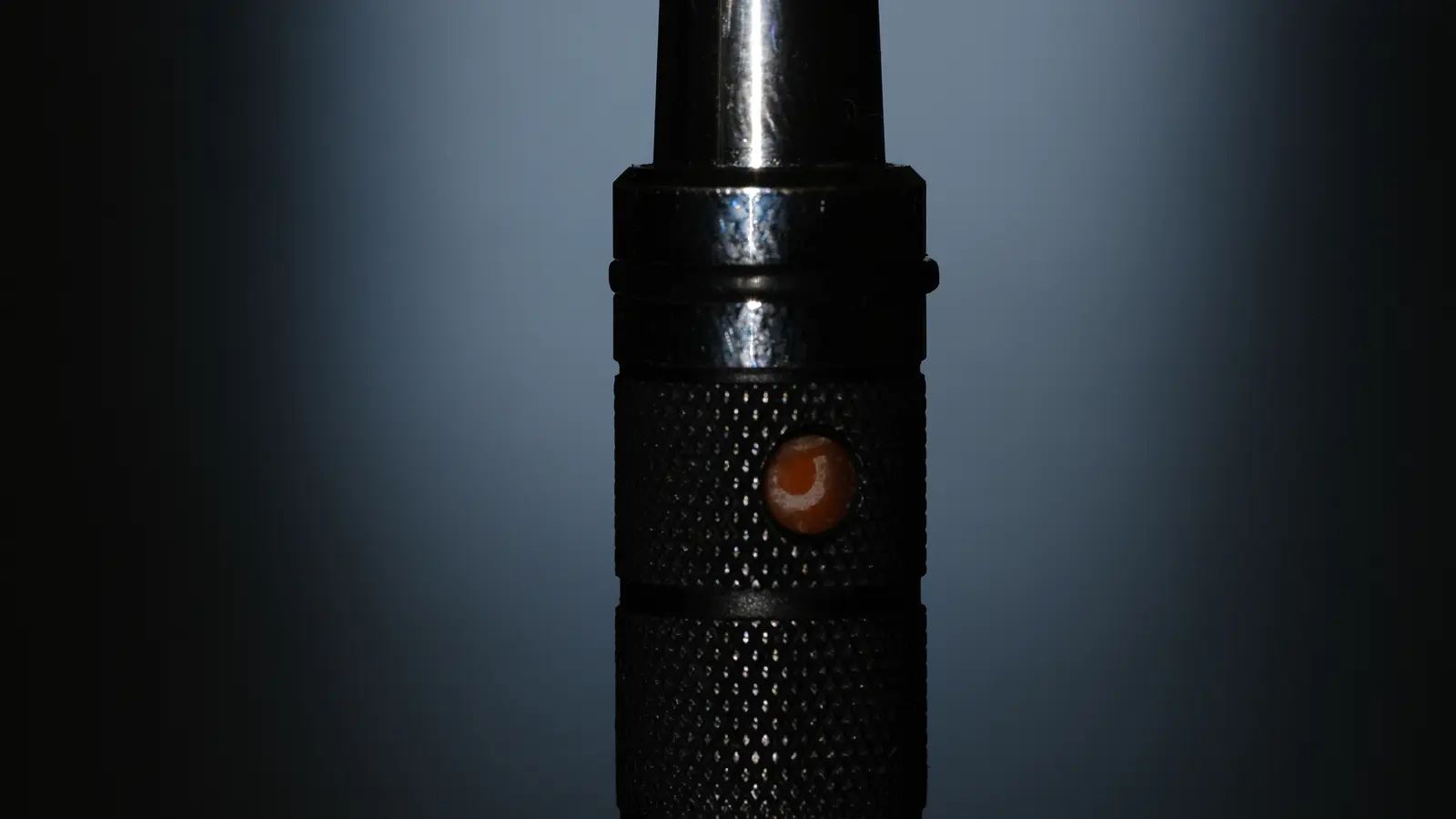
A spring-loaded clutch grips a thin graphite core and releases a measured length with each click
The short answer
The writing core is commonly called lead, but it is a composite based mainly on graphite and clay or polymers. The pencil’s mechanism must move this fragile rod forward, hold it against writing forces and still permit refilling.
The reservoir stores several leads
A hollow barrel aligns spare graphite cores behind the active one. Gravity and gentle motion help the next core enter the feed channel.
A button moves an internal rod
Pressing the top compresses a spring and transmits motion along the pencil. The eraser cap often doubles as the actuator and refill opening.
The clutch has flexible jaws
Two or three narrow metal or plastic jaws surround the lead. Their geometry converts axial motion into gripping and releasing.
A clutch ring controls opening
A surrounding collar keeps the jaws closed in the resting position. Forward movement lets them spread, temporarily reducing friction on the lead.
A retainer prevents uncontrolled sliding
A small rubber or polymer retainer near the tip grips the core lightly. It keeps the advanced lead in position during parts of the cycle when the chuck is open.
The spring resets the mechanism
The spring resets the moving components after a click. The chuck and collar return to a gripping state so writing pressure cannot simply push the core back into the barrel.
The guide pipe supports the core
A metal sleeve constrains the thin graphite close to the paper, reducing bending length and improving visibility and line placement.
Lead diameter changes design tolerances
A 0.3-millimetre core requires smaller clearances and greater protection than a 0.9-millimetre core. Clutch, pipe and retainer must match the labelled size.
Automatic mechanisms sense writing movement
Some pencils use tip pressure, ratchets or sliding sleeves to advance lead without a separate click. Their control sequence differs but still balances grip and release.
Common misconceptions
Mechanical pencil lead does not contain metallic lead, and clicking harder does not make the line darker. Darkness depends mainly on graphite formulation, grade, pressure and paper. Loading the wrong diameter can jam the clutch or fail to grip.
How scientists know
Designers use force gauges, displacement measurements, cycle testing and microscopy to evaluate advance length, grip force, wear, breakage and dimensional tolerance. Cutaway models and high-speed imaging reveal the jaw, collar and retainer sequence.
Why does the lead slide back inside?
The clutch may be worn, dirty, mismatched to the diameter or unable to close fully.
Why does lead break near the tip?
Too much extension creates a long unsupported lever that bends under writing force.
How much lead should one click advance?
Only enough for the tip and writing angle; repeated clicks increase breakage risk.
Can a jam be cleared?
Many pencils include a clean-out pin, but follow the model instructions and avoid forcing oversized material.
Why are there different grades?
Graphite, clay and polymer ratios change hardness, darkness, friction and strength.
Key takeaways
- A spring-loaded clutch alternately releases and grips graphite.
- A tip retainer limits each advance.
- The guide pipe supports the fragile core.
- Correct diameter and limited extension prevent many jams and breaks.
Continue exploring
- How ballpoint pens work
- Why pencils leave a mark
Sources and further reading
Keep exploring.
One remarkable idea at a time—nature, science, history and beyond.
Last updated October 29, 2026.

Barnakle Editorial Team
Barnakle Editorial Team is the collective byline used for Barnakle’s editorial articles. The contributor profile explains the team identity and links to the publication’s editorial policies.
More from the editorial team →