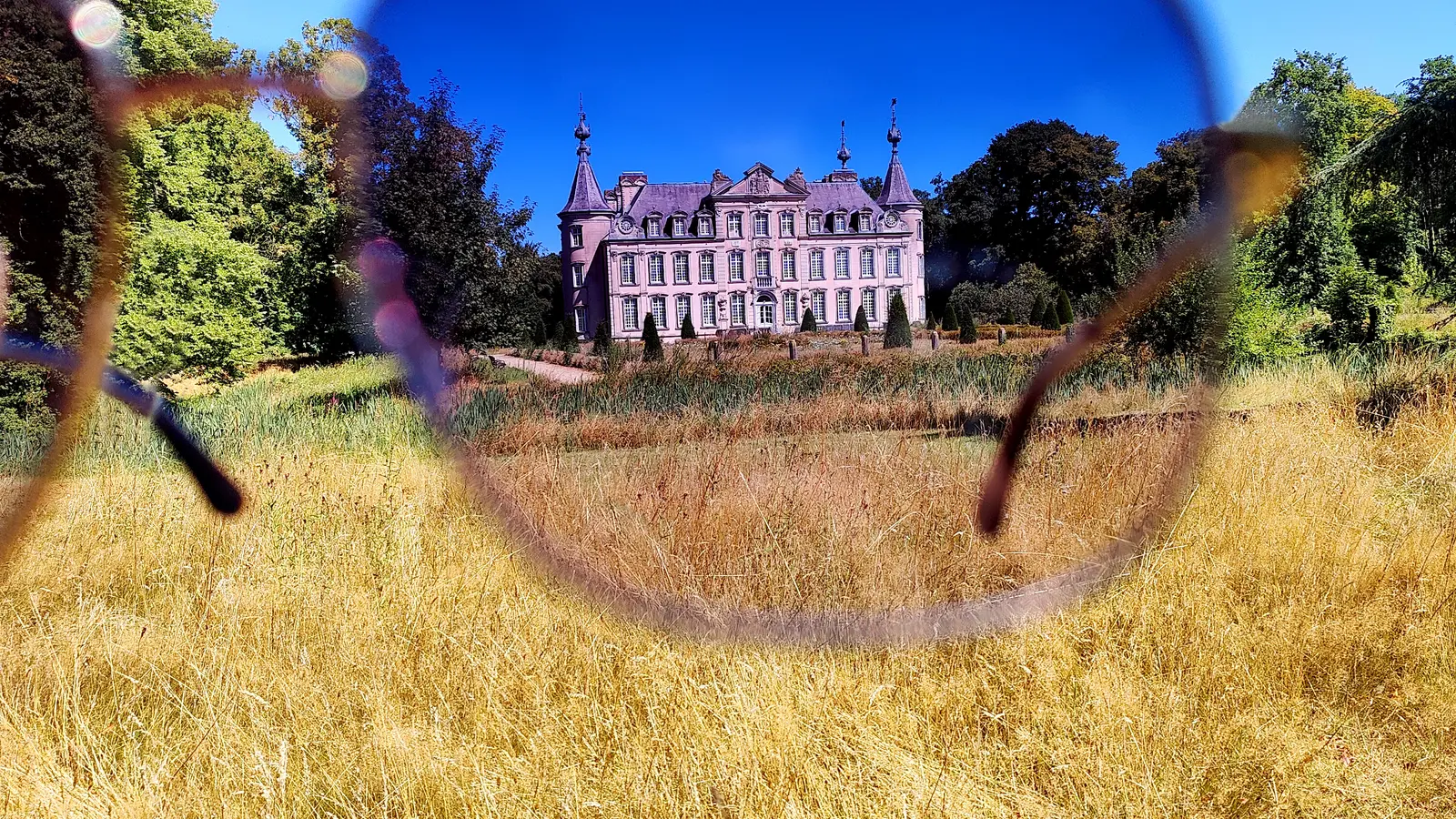
An aligned molecular filter blocks much of the horizontally polarized light reflected from roads, water and snow
The short answer
Polarized sunglasses reduce glare by transmitting light that oscillates mainly in one orientation while absorbing the perpendicular component. Reflection from horizontal non-metallic surfaces such as water or a road tends to concentrate electric-field oscillations in a horizontal direction. Most sunglasses orient their polarizing transmission axis vertically, so they block much of that horizontally polarized reflection while allowing other useful light through. Tint and ultraviolet protection are separate properties.
Ordinary sunglasses reduce brightness across many directions. Polarized lenses are more selective: their internal structure responds to the orientation of light’s electric field, which can improve contrast when glare is strongly polarized.
Light is a transverse electromagnetic wave
The electric and magnetic fields oscillate perpendicular to the direction of travel. Polarization describes the orientation and evolution of the electric-field oscillation.
Understanding Light is a transverse electromagnetic wave requires separating the immediate mechanism from the conditions that change its strength, timing or visibility. Researchers measure those variables independently, compare real examples and test whether the explanation predicts new observations. That turns a plausible story into an evidence-based account.
The evidence comes from methods that fail in different ways. Direct observation establishes what occurs, instruments quantify structure or timing, experiments isolate candidate causes and models test whether known physical, chemical or biological rules reproduce the pattern. Agreement among methods is stronger than repetition of one memorable example.
Context also matters. Scale, material, temperature, geometry, environment and measurement limits can change an outcome without overturning the underlying process. Accurate reporting preserves this variation, states uncertainty and avoids turning a useful explanation into a universal rule.
A practical explanation should identify what would change the observation. Following that question reveals the limits of present evidence and the next measurement needed.
This mechanism connects a familiar question with a broader scientific principle. Following matter, energy or information through each stage shows where the explanation is established, where natural variation enters and why a superficially similar event may have another cause.
Scientists also test alternatives rather than stopping at the first plausible account. A strong explanation predicts several linked observations, survives controlled comparison and specifies where it should fail. That approach keeps a clear answer accurate without hiding complexity.
Ordinary sources produce many orientations
Sunlight reaching a surface is often approximately unpolarized because its electric field varies among many directions over time. Scattering can introduce partial polarization before reflection occurs.
Understanding Ordinary sources produce many orientations requires separating the immediate mechanism from the conditions that change its strength, timing or visibility. Researchers measure those variables independently, compare real examples and test whether the explanation predicts new observations. That turns a plausible story into an evidence-based account.
The evidence comes from methods that fail in different ways. Direct observation establishes what occurs, instruments quantify structure or timing, experiments isolate candidate causes and models test whether known physical, chemical or biological rules reproduce the pattern. Agreement among methods is stronger than repetition of one memorable example.
Context also matters. Scale, material, temperature, geometry, environment and measurement limits can change an outcome without overturning the underlying process. Accurate reporting preserves this variation, states uncertainty and avoids turning a useful explanation into a universal rule.
A practical explanation should identify what would change the observation. Following that question reveals the limits of present evidence and the next measurement needed.
This mechanism connects a familiar question with a broader scientific principle. Following matter, energy or information through each stage shows where the explanation is established, where natural variation enters and why a superficially similar event may have another cause.
Scientists also test alternatives rather than stopping at the first plausible account. A strong explanation predicts several linked observations, survives controlled comparison and specifies where it should fail. That approach keeps a clear answer accurate without hiding complexity.
Reflection can favour one polarization
At a dielectric boundary, horizontal and vertical field components reflect by different amounts. Near Brewster’s angle, the reflected beam can be strongly linearly polarized parallel to the surface.
Understanding Reflection can favour one polarization requires separating the immediate mechanism from the conditions that change its strength, timing or visibility. Researchers measure those variables independently, compare real examples and test whether the explanation predicts new observations. That turns a plausible story into an evidence-based account.
The evidence comes from methods that fail in different ways. Direct observation establishes what occurs, instruments quantify structure or timing, experiments isolate candidate causes and models test whether known physical, chemical or biological rules reproduce the pattern. Agreement among methods is stronger than repetition of one memorable example.
Context also matters. Scale, material, temperature, geometry, environment and measurement limits can change an outcome without overturning the underlying process. Accurate reporting preserves this variation, states uncertainty and avoids turning a useful explanation into a universal rule.
A practical explanation should identify what would change the observation. Following that question reveals the limits of present evidence and the next measurement needed.
This mechanism connects a familiar question with a broader scientific principle. Following matter, energy or information through each stage shows where the explanation is established, where natural variation enters and why a superficially similar event may have another cause.
Scientists also test alternatives rather than stopping at the first plausible account. A strong explanation predicts several linked observations, survives controlled comparison and specifies where it should fail. That approach keeps a clear answer accurate without hiding complexity.
Road and water glare is often horizontal
Broad horizontal surfaces create intense reflections whose electric field is concentrated sideways relative to an upright viewer. This directional bias gives a polarizer something specific to reject.
Understanding Road and water glare is often horizontal requires separating the immediate mechanism from the conditions that change its strength, timing or visibility. Researchers measure those variables independently, compare real examples and test whether the explanation predicts new observations. That turns a plausible story into an evidence-based account.
The evidence comes from methods that fail in different ways. Direct observation establishes what occurs, instruments quantify structure or timing, experiments isolate candidate causes and models test whether known physical, chemical or biological rules reproduce the pattern. Agreement among methods is stronger than repetition of one memorable example.
Context also matters. Scale, material, temperature, geometry, environment and measurement limits can change an outcome without overturning the underlying process. Accurate reporting preserves this variation, states uncertainty and avoids turning a useful explanation into a universal rule.
A practical explanation should identify what would change the observation. Following that question reveals the limits of present evidence and the next measurement needed.
This mechanism connects a familiar question with a broader scientific principle. Following matter, energy or information through each stage shows where the explanation is established, where natural variation enters and why a superficially similar event may have another cause.
Scientists also test alternatives rather than stopping at the first plausible account. A strong explanation predicts several linked observations, survives controlled comparison and specifies where it should fail. That approach keeps a clear answer accurate without hiding complexity.
A polarizing film has an aligned structure
Manufacturing stretches or aligns light-absorbing molecules so one electric-field orientation drives charge motion and loses energy, while the perpendicular orientation passes more readily.
Understanding A polarizing film has an aligned structure requires separating the immediate mechanism from the conditions that change its strength, timing or visibility. Researchers measure those variables independently, compare real examples and test whether the explanation predicts new observations. That turns a plausible story into an evidence-based account.
The evidence comes from methods that fail in different ways. Direct observation establishes what occurs, instruments quantify structure or timing, experiments isolate candidate causes and models test whether known physical, chemical or biological rules reproduce the pattern. Agreement among methods is stronger than repetition of one memorable example.
Context also matters. Scale, material, temperature, geometry, environment and measurement limits can change an outcome without overturning the underlying process. Accurate reporting preserves this variation, states uncertainty and avoids turning a useful explanation into a universal rule.
A practical explanation should identify what would change the observation. Following that question reveals the limits of present evidence and the next measurement needed.
This mechanism connects a familiar question with a broader scientific principle. Following matter, energy or information through each stage shows where the explanation is established, where natural variation enters and why a superficially similar event may have another cause.
Scientists also test alternatives rather than stopping at the first plausible account. A strong explanation predicts several linked observations, survives controlled comparison and specifies where it should fail. That approach keeps a clear answer accurate without hiding complexity.
Lens orientation is deliberate
Eyewear commonly places the transmission axis close to vertical. Rotating the lens changes what passes; two polarizers crossed near 90 degrees can become dramatically darker.
Understanding Lens orientation is deliberate requires separating the immediate mechanism from the conditions that change its strength, timing or visibility. Researchers measure those variables independently, compare real examples and test whether the explanation predicts new observations. That turns a plausible story into an evidence-based account.
The evidence comes from methods that fail in different ways. Direct observation establishes what occurs, instruments quantify structure or timing, experiments isolate candidate causes and models test whether known physical, chemical or biological rules reproduce the pattern. Agreement among methods is stronger than repetition of one memorable example.
Context also matters. Scale, material, temperature, geometry, environment and measurement limits can change an outcome without overturning the underlying process. Accurate reporting preserves this variation, states uncertainty and avoids turning a useful explanation into a universal rule.
A practical explanation should identify what would change the observation. Following that question reveals the limits of present evidence and the next measurement needed.
This mechanism connects a familiar question with a broader scientific principle. Following matter, energy or information through each stage shows where the explanation is established, where natural variation enters and why a superficially similar event may have another cause.
Scientists also test alternatives rather than stopping at the first plausible account. A strong explanation predicts several linked observations, survives controlled comparison and specifies where it should fail. That approach keeps a clear answer accurate without hiding complexity.
Malus’s law predicts transmitted intensity
For ideal linearly polarized light and an ideal filter, transmitted intensity varies with the square of the cosine of the angle between polarization and transmission axes.
Understanding Malus’s law predicts transmitted intensity requires separating the immediate mechanism from the conditions that change its strength, timing or visibility. Researchers measure those variables independently, compare real examples and test whether the explanation predicts new observations. That turns a plausible story into an evidence-based account.
The evidence comes from methods that fail in different ways. Direct observation establishes what occurs, instruments quantify structure or timing, experiments isolate candidate causes and models test whether known physical, chemical or biological rules reproduce the pattern. Agreement among methods is stronger than repetition of one memorable example.
Context also matters. Scale, material, temperature, geometry, environment and measurement limits can change an outcome without overturning the underlying process. Accurate reporting preserves this variation, states uncertainty and avoids turning a useful explanation into a universal rule.
A practical explanation should identify what would change the observation. Following that question reveals the limits of present evidence and the next measurement needed.
This mechanism connects a familiar question with a broader scientific principle. Following matter, energy or information through each stage shows where the explanation is established, where natural variation enters and why a superficially similar event may have another cause.
Scientists also test alternatives rather than stopping at the first plausible account. A strong explanation predicts several linked observations, survives controlled comparison and specifies where it should fail. That approach keeps a clear answer accurate without hiding complexity.
LCD screens can interact with polarized lenses
Liquid-crystal displays already use polarizers. Tilting a head or rotating a device can make a screen dark or show coloured patterns because the eyewear and display axes combine.
Understanding LCD screens can interact with polarized lenses requires separating the immediate mechanism from the conditions that change its strength, timing or visibility. Researchers measure those variables independently, compare real examples and test whether the explanation predicts new observations. That turns a plausible story into an evidence-based account.
The evidence comes from methods that fail in different ways. Direct observation establishes what occurs, instruments quantify structure or timing, experiments isolate candidate causes and models test whether known physical, chemical or biological rules reproduce the pattern. Agreement among methods is stronger than repetition of one memorable example.
Context also matters. Scale, material, temperature, geometry, environment and measurement limits can change an outcome without overturning the underlying process. Accurate reporting preserves this variation, states uncertainty and avoids turning a useful explanation into a universal rule.
A practical explanation should identify what would change the observation. Following that question reveals the limits of present evidence and the next measurement needed.
This mechanism connects a familiar question with a broader scientific principle. Following matter, energy or information through each stage shows where the explanation is established, where natural variation enters and why a superficially similar event may have another cause.
Scientists also test alternatives rather than stopping at the first plausible account. A strong explanation predicts several linked observations, survives controlled comparison and specifies where it should fail. That approach keeps a clear answer accurate without hiding complexity.
UV protection is a different specification
A lens can be dark without adequate ultraviolet filtering and can block UV without being polarized. Consumers should rely on verified product standards rather than tint or polarization alone.
Understanding UV protection is a different specification requires separating the immediate mechanism from the conditions that change its strength, timing or visibility. Researchers measure those variables independently, compare real examples and test whether the explanation predicts new observations. That turns a plausible story into an evidence-based account.
The evidence comes from methods that fail in different ways. Direct observation establishes what occurs, instruments quantify structure or timing, experiments isolate candidate causes and models test whether known physical, chemical or biological rules reproduce the pattern. Agreement among methods is stronger than repetition of one memorable example.
Context also matters. Scale, material, temperature, geometry, environment and measurement limits can change an outcome without overturning the underlying process. Accurate reporting preserves this variation, states uncertainty and avoids turning a useful explanation into a universal rule.
A practical explanation should identify what would change the observation. Following that question reveals the limits of present evidence and the next measurement needed.
This mechanism connects a familiar question with a broader scientific principle. Following matter, energy or information through each stage shows where the explanation is established, where natural variation enters and why a superficially similar event may have another cause.
Scientists also test alternatives rather than stopping at the first plausible account. A strong explanation predicts several linked observations, survives controlled comparison and specifies where it should fail. That approach keeps a clear answer accurate without hiding complexity.
Common misconceptions
Polarized sunglasses do not eliminate every reflection, automatically make all lenses safer or work by simply being darker. Metallic reflections, scattered light and surfaces at different angles may remain. They can also make some instrument panels, windscreens and displays harder to read, which matters in aviation, driving and specialized work.
Clear shorthand is valuable only when it preserves the causal chain. It becomes misleading when it substitutes a label for a mechanism, confuses association with cause or extends evidence beyond tested conditions.
How scientists know
Optical laboratories rotate polarizers, measure spectral transmission and reflection, map polarization states with Stokes parameters and use calibrated radiometers or cameras to quantify glare. Experiments vary incidence angle, surface material, roughness, wavelength and lens orientation to test Fresnel predictions.
No single measurement carries the conclusion. Observations, experiments, theory and repeated records provide independent checks, while disagreement can reveal an uncontrolled variable or a question requiring a better test.
Frequently asked questions
How can I tell whether lenses are polarized?
Viewed through another known polarizer, rotation toward 90 degrees should make the overlap much darker.
Why does tilting my head change glare?
Tilting rotates the lens transmission axis relative to the reflected light’s polarization.
Do polarized lenses block ultraviolet light?
Only if they also include verified UV-absorbing materials or coatings; polarization alone does not guarantee it.
Why do car windows show patterns?
Stress in tempered or laminated glass changes polarization locally, becoming visible through a polarizer.
Are polarized lenses always best?
They are excellent for many outdoor settings but can interfere with displays and specialized visual tasks.
Key takeaways
- Polarization describes light’s electric-field orientation.
- Horizontal reflections often contain strong horizontal polarization.
- Vertically oriented filters suppress much of that glare.
- Tint, polarization and UV protection are separate lens properties.
Continue exploring
Sources and further reading
Keep exploring.
One remarkable idea at a time—nature, science, history and beyond.
Sources and further reading
Barnakle uses credible primary and authoritative sources wherever possible.
- NASA Science — The electromagnetic spectrum: visible light
- https://science.nasa.gov/ems/07_visiblelight/
- NIST — Polarization measurement and calibration
- https://www.nist.gov/programs-projects/polarization-calibration
- PubMed — Principles of disability glare measurement
- https://pubmed.ncbi.nlm.nih.gov/17313443/
Last reviewed October 13, 2026.

Barnakle Editorial Team
A member of the Barnakle editorial team, exploring remarkable ideas with clarity, curiosity and care.
More from this author →