
Familiarity without a matching memory
Déjà vu is the striking feeling that a new situation has been experienced before even while a person recognises that the familiarity is misplaced. Research suggests it can arise from a brief mismatch between familiarity signals and memory-monitoring systems, although no single mechanism explains every episode.
What Causes Déjà Vu? is a simple question with a layered answer. The sections below move from the central mechanism to the colours, timing, viewing conditions and misconceptions that generate the most common follow-up questions. Where a simplified classroom explanation leaves out an important qualification, the qualification is included rather than hidden.
The short answer
Déjà vu combines strong familiarity with awareness that the familiarity is inappropriate. Memory systems can generate a feeling of knowing before specific details are retrieved. This distinction matters because the familiar appearance is the final result of several linked physical steps, not a single isolated event.
A temporary mismatch may produce familiarity without an identifiable source. Several cognitive and neurological mechanisms may create similar experiences. The mechanism also predicts what should change when one part of the system changes, which makes the account scientifically useful rather than merely descriptive.
For readers asking about the short answer, the practical point is that observations depend on position, timing and conditions. A photograph or brief glance captures only one configuration, whereas the scientific explanation must account for the full range of repeatable appearances. That is why authoritative explanations combine direct observation with models, calibrated instruments and predictions that can be checked independently.
What déjà vu feels like
The French phrase means already seen, though the experience can involve an entire situation. A person usually knows the present event is new despite the compelling feeling. Researchers test the explanation by comparing measurements made under different geometries, conditions and observing methods.
The episode is typically brief and difficult to reproduce on command. That insight separates ordinary déjà vu from a fixed false belief. Scale is important here: processes that happen at the level of atoms or charged particles can create patterns visible across an entire sky.
For readers asking about what déjà vu feels like, the practical point is that observations depend on position, timing and conditions. A photograph or brief glance captures only one configuration, whereas the scientific explanation must account for the full range of repeatable appearances. That is why authoritative explanations combine direct observation with models, calibrated instruments and predictions that can be checked independently.
Familiarity and recollection
Recognition memory includes at least partially separable processes. Familiarity is a sense that something has been encountered. The mechanism also predicts what should change when one part of the system changes, which makes the account scientifically useful rather than merely descriptive.
Recollection retrieves contextual details such as where and when. Déjà vu may occur when familiarity is triggered without successful contextual retrieval. Careful wording prevents a common mistake—confusing what an observer sees with the underlying object or process that produced the view.
For readers asking about familiarity and recollection, the practical point is that observations depend on position, timing and conditions. A photograph or brief glance captures only one configuration, whereas the scientific explanation must account for the full range of repeatable appearances. That is why authoritative explanations combine direct observation with models, calibrated instruments and predictions that can be checked independently.
Recognition without identification
A scene can resemble a forgotten earlier layout or pattern. The similarity may activate familiarity even when the source cannot be identified. Scale is important here: processes that happen at the level of atoms or charged particles can create patterns visible across an entire sky.
Laboratory studies use hidden structural resemblance to investigate this effect. Such experiments model part of déjà vu without recreating every spontaneous experience. This distinction matters because the familiar appearance is the final result of several linked physical steps, not a single isolated event.
For readers asking about recognition without identification, the practical point is that observations depend on position, timing and conditions. A photograph or brief glance captures only one configuration, whereas the scientific explanation must account for the full range of repeatable appearances. That is why authoritative explanations combine direct observation with models, calibrated instruments and predictions that can be checked independently.
Memory monitoring
The brain evaluates whether a familiarity signal is trustworthy. Ordinary déjà vu includes awareness that the signal conflicts with known circumstances. Careful wording prevents a common mistake—confusing what an observer sees with the underlying object or process that produced the view.
Researchers describe this as a mismatch between familiarity and monitoring. The feeling is powerful precisely because both signals are present together. Researchers test the explanation by comparing measurements made under different geometries, conditions and observing methods.
For readers asking about memory monitoring, the practical point is that observations depend on position, timing and conditions. A photograph or brief glance captures only one configuration, whereas the scientific explanation must account for the full range of repeatable appearances. That is why authoritative explanations combine direct observation with models, calibrated instruments and predictions that can be checked independently.
Why it is hard to study
Episodes are brief, unpredictable and subjective. Retrospective surveys depend on memory and interpretation. This distinction matters because the familiar appearance is the final result of several linked physical steps, not a single isolated event.
Laboratory analogues may produce familiarity but not the full uncanny feeling. Converging evidence is needed from experiments, surveys and clinical observations. The mechanism also predicts what should change when one part of the system changes, which makes the account scientifically useful rather than merely descriptive.
For readers asking about why it is hard to study, the practical point is that observations depend on position, timing and conditions. A photograph or brief glance captures only one configuration, whereas the scientific explanation must account for the full range of repeatable appearances. That is why authoritative explanations combine direct observation with models, calibrated instruments and predictions that can be checked independently.
Who experiences it
Surveys suggest déjà vu is common in healthy people. Reports are often more frequent in younger adults and may decline with age. Researchers test the explanation by comparing measurements made under different geometries, conditions and observing methods.
Travel, attention, fatigue or stress have been associated in some studies. Associations do not prove that one factor directly causes an episode. Scale is important here: processes that happen at the level of atoms or charged particles can create patterns visible across an entire sky.
For readers asking about who experiences it, the practical point is that observations depend on position, timing and conditions. A photograph or brief glance captures only one configuration, whereas the scientific explanation must account for the full range of repeatable appearances. That is why authoritative explanations combine direct observation with models, calibrated instruments and predictions that can be checked independently.
The role of attention
A scene processed briefly or without full attention may leave a weak trace. A second, fuller perception can then feel unexpectedly familiar. The mechanism also predicts what should change when one part of the system changes, which makes the account scientifically useful rather than merely descriptive.
This divided-attention account is plausible for some episodes. It does not demonstrate that every déjà vu began with an unnoticed first look. Careful wording prevents a common mistake—confusing what an observer sees with the underlying object or process that produced the view.
For readers asking about the role of attention, the practical point is that observations depend on position, timing and conditions. A photograph or brief glance captures only one configuration, whereas the scientific explanation must account for the full range of repeatable appearances. That is why authoritative explanations combine direct observation with models, calibrated instruments and predictions that can be checked independently.
Temporal-lobe involvement
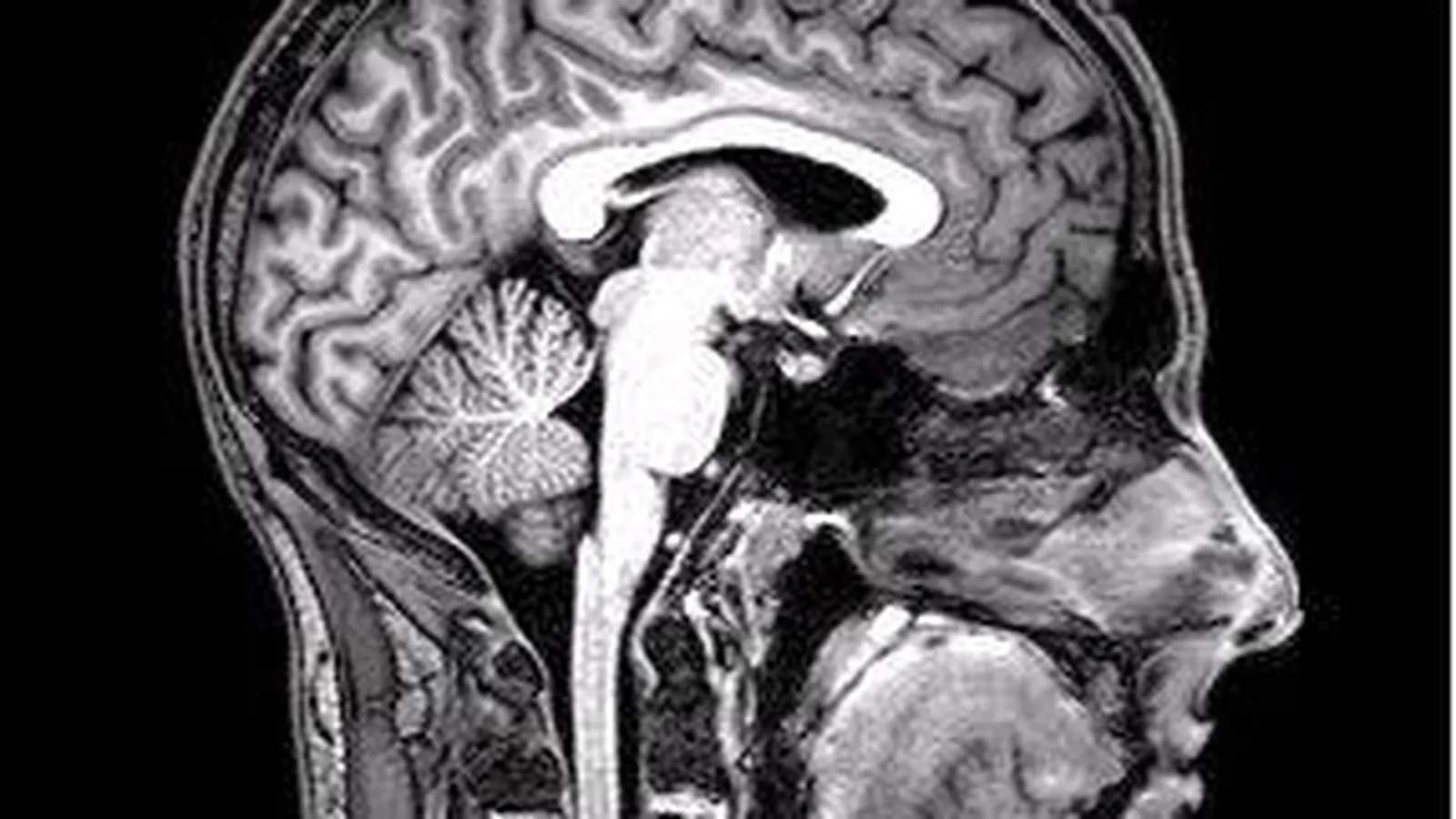
Medial temporal structures are important for familiarity and recollection. Some people with temporal-lobe epilepsy report déjà vu as part of a seizure aura. Scale is important here: processes that happen at the level of atoms or charged particles can create patterns visible across an entire sky.
Clinical episodes can differ in frequency, accompanying sensations and context. The existence of seizure-related déjà vu does not make ordinary occasional déjà vu a seizure. This distinction matters because the familiar appearance is the final result of several linked physical steps, not a single isolated event.
For readers asking about temporal-lobe involvement, the practical point is that observations depend on position, timing and conditions. A photograph or brief glance captures only one configuration, whereas the scientific explanation must account for the full range of repeatable appearances. That is why authoritative explanations combine direct observation with models, calibrated instruments and predictions that can be checked independently.
Healthy and clinical experiences
Occasional brief déjà vu without other symptoms is widely reported. Frequent, prolonged or distressing episodes accompanied by altered awareness require medical assessment. Careful wording prevents a common mistake—confusing what an observer sees with the underlying object or process that produced the view.
A clinician evaluates the complete symptom pattern rather than the phrase déjà vu alone. Barnakle’s article is educational and cannot diagnose an individual event. Researchers test the explanation by comparing measurements made under different geometries, conditions and observing methods.
For readers asking about healthy and clinical experiences, the practical point is that observations depend on position, timing and conditions. A photograph or brief glance captures only one configuration, whereas the scientific explanation must account for the full range of repeatable appearances. That is why authoritative explanations combine direct observation with models, calibrated instruments and predictions that can be checked independently.
Is déjà vu a prediction?
The feeling can create a sense that the next moment is known. Experiments do not show that it provides paranormal foresight. This distinction matters because the familiar appearance is the final result of several linked physical steps, not a single isolated event.
Familiarity can increase subjective confidence without improving prediction accuracy. The brain’s interpretation of a signal is not evidence that the future was previously experienced. The mechanism also predicts what should change when one part of the system changes, which makes the account scientifically useful rather than merely descriptive.
For readers asking about is déjà vu a prediction?, the practical point is that observations depend on position, timing and conditions. A photograph or brief glance captures only one configuration, whereas the scientific explanation must account for the full range of repeatable appearances. That is why authoritative explanations combine direct observation with models, calibrated instruments and predictions that can be checked independently.
Déjà vécu and related experiences
Researchers distinguish déjà vu from déjà vécu, a stronger sense of reliving an event. Jamais vu is an unusual feeling that something familiar is unfamiliar. Researchers test the explanation by comparing measurements made under different geometries, conditions and observing methods.
Definitions vary across studies and languages. Careful terminology matters when comparing healthy reports with clinical cases. Scale is important here: processes that happen at the level of atoms or charged particles can create patterns visible across an entire sky.
For readers asking about déjà vécu and related experiences, the practical point is that observations depend on position, timing and conditions. A photograph or brief glance captures only one configuration, whereas the scientific explanation must account for the full range of repeatable appearances. That is why authoritative explanations combine direct observation with models, calibrated instruments and predictions that can be checked independently.
Why dreams are often blamed
A current scene may resemble a forgotten dream or an imagined scenario. Because dream memory is fragmentary, matching can feel mysterious. The mechanism also predicts what should change when one part of the system changes, which makes the account scientifically useful rather than merely descriptive.
A dream explanation is difficult to verify after the fact. The association does not establish that déjà vu generally predicts or repeats dreams. Careful wording prevents a common mistake—confusing what an observer sees with the underlying object or process that produced the view.
For readers asking about why dreams are often blamed, the practical point is that observations depend on position, timing and conditions. A photograph or brief glance captures only one configuration, whereas the scientific explanation must account for the full range of repeatable appearances. That is why authoritative explanations combine direct observation with models, calibrated instruments and predictions that can be checked independently.
What brain imaging can and cannot show
Imaging identifies networks active during memory tasks. Spontaneous déjà vu rarely occurs at a convenient moment inside a scanner. Scale is important here: processes that happen at the level of atoms or charged particles can create patterns visible across an entire sky.
Activation patterns do not translate into a complete readout of subjective experience. Brain evidence must be connected to behaviour and first-person reports carefully. This distinction matters because the familiar appearance is the final result of several linked physical steps, not a single isolated event.
For readers asking about what brain imaging can and cannot show, the practical point is that observations depend on position, timing and conditions. A photograph or brief glance captures only one configuration, whereas the scientific explanation must account for the full range of repeatable appearances. That is why authoritative explanations combine direct observation with models, calibrated instruments and predictions that can be checked independently.
What remains unknown
Déjà vu may be a family of experiences with multiple triggers. Researchers still debate how familiarity, conflict detection and monitoring combine. Careful wording prevents a common mistake—confusing what an observer sees with the underlying object or process that produced the view.
Better experimental methods aim to induce reliable analogues while preserving insight. The mystery is narrower than a paranormal claim but not yet reduced to one final mechanism. Researchers test the explanation by comparing measurements made under different geometries, conditions and observing methods.
For readers asking about what remains unknown, the practical point is that observations depend on position, timing and conditions. A photograph or brief glance captures only one configuration, whereas the scientific explanation must account for the full range of repeatable appearances. That is why authoritative explanations combine direct observation with models, calibrated instruments and predictions that can be checked independently.
Frequently asked questions
What is the simplest correct explanation?
Déjà vu is the striking feeling that a new situation has been experienced before even while a person recognises that the familiarity is misplaced. Research suggests it can arise from a brief mismatch between familiarity signals and memory-monitoring systems, although no single mechanism explains every episode.
Can the appearance change without the underlying physics changing?
Yes. Viewing angle, distance, atmospheric conditions, brightness, local surroundings and the sensitivity of human vision or cameras can change what is perceived even when the governing physical process remains the same.
Why do photographs sometimes look different from direct observation?
Cameras collect and process light differently from the human visual system. Exposure time, sensor response, white balance, contrast and computational processing can reveal faint structure or amplify colour, so an image should be interpreted with its capture method in mind.
How do scientists know the explanation is reliable?
The explanation connects independently measured quantities and makes predictions across changing conditions. Spectroscopy, imaging, timing, field measurements, laboratory physics and observations from different locations provide checks with different strengths and limitations.
What should a reader remember?
Keep the geometry and the energy pathway in view. Ask where the light or sound began, what it interacted with, how it travelled and why the observer received that particular signal at that particular time.
Key takeaways
- Déjà vu is the striking feeling that a new situation has been experienced before even while a person recognises that the familiarity is misplaced. Research suggests it can arise from a brief mismatch between familiarity signals and memory-monitoring systems, although no single mechanism explains every episode.
- A strong explanation follows the mechanism step by step instead of relying on a slogan.
- Authoritative measurements support the central account while leaving room to refine unresolved details.
- Related phenomena may share part of the mechanism without being the same event.
Continue exploring
What researchers will test next
Progress now depends on measurements that connect controlled experiments with the complexity of the wider world. Researchers need observations collected across different locations, instruments and timescales, with methods described clearly enough for independent teams to repeat them. Larger samples can reveal whether an apparent pattern is widespread or driven by a few unusual cases. Longer records can separate temporary variation from a durable change.
New instruments may improve precision, but precision alone does not guarantee a better explanation. Scientists must still test alternative causes, disclose uncertainty and check whether an analysis gives the same answer when reasonable assumptions change. Open data and carefully documented methods allow other researchers to find errors, reproduce results and combine evidence that was gathered for different purposes.
The most useful future studies will make competing explanations face distinct predictions. When several independent tests agree, confidence can grow. When they disagree, the mismatch becomes evidence about what the original account was missing. Barnakle treats this process as a strength of science: conclusions can be reliable without being final, and responsible reporting should explain both what is known and what observation could change the picture.
Sources and further reading
Keep exploring.
One remarkable idea at a time—nature, science, history and beyond.
Sources and further reading
Barnakle uses credible primary and authoritative sources wherever possible.
- NIH/PMC — Déjà Vu in Healthy Subjects
- https://pmc.ncbi.nlm.nih.gov/articles/PMC3842028/
- PubMed — A Review of the Déjà Vu Experience
- https://pubmed.ncbi.nlm.nih.gov/12784936/
- PubMed — Recognition Without Identification
- https://pubmed.ncbi.nlm.nih.gov/20425276/
- NIH/PMC — Non-ictal, Interictal and Ictal Déjà Vu
- https://pmc.ncbi.nlm.nih.gov/articles/PMC11223632/
Last reviewed September 29, 2026.

Barnakle Editorial Team
A member of the Barnakle editorial team, exploring remarkable ideas with clarity, curiosity and care.
More from this author →