Living skeleton
Strength comes from an organized composite
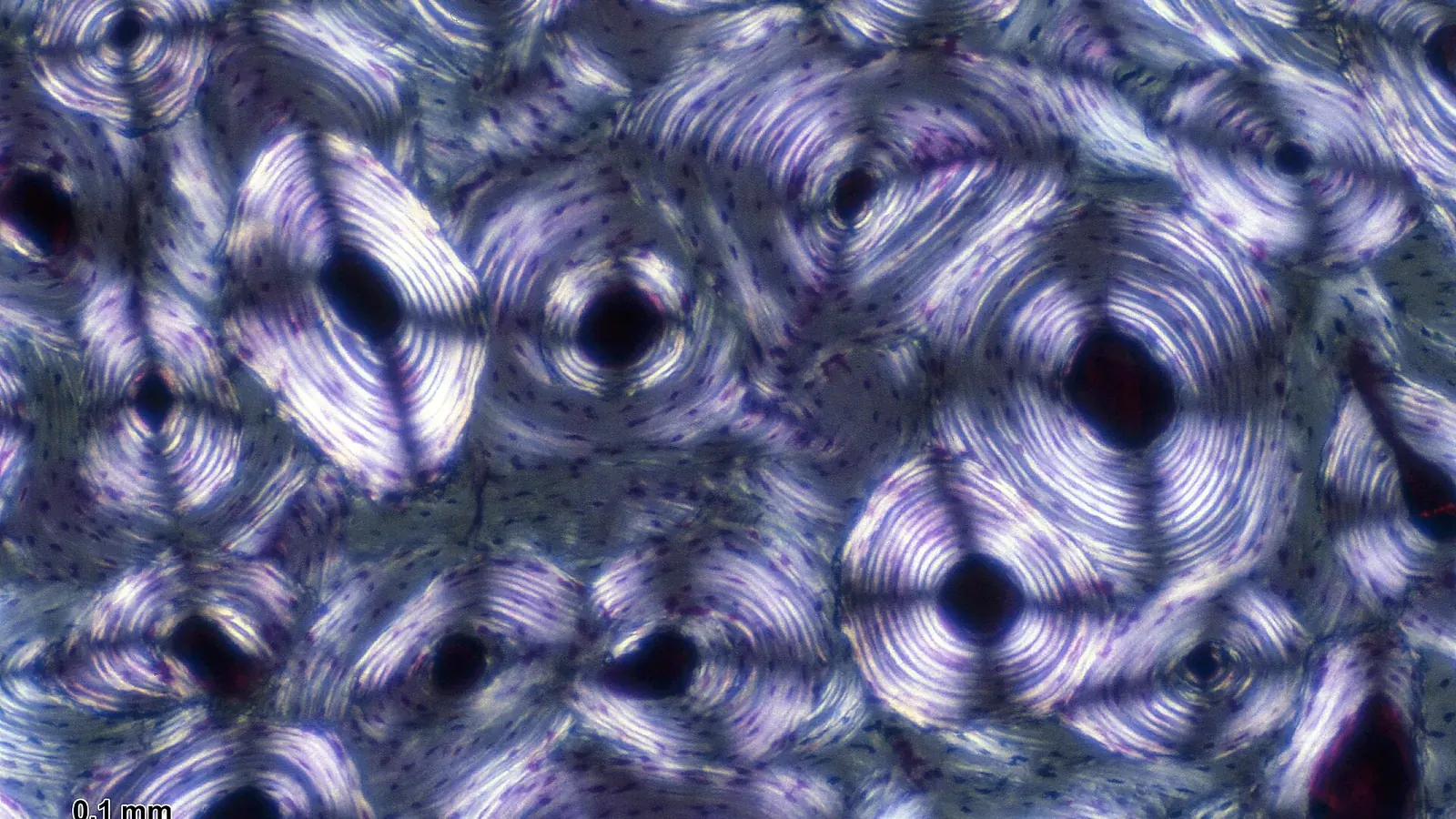
Bone combines a collagen-rich organic matrix with mineral, arranged into structures suited to different loads. Cells and blood vessels occupy that tissue rather than sitting outside a dead support frame. Small cracks and changes in loading create reasons to renew or reshape it. The ability to carry force depends on architecture and material quality as well as the amount of mineral present.
Removal and replacement are linked stages
Osteoclasts create a specialized environment that dissolves mineral and breaks down matrix. Osteoblasts then lay down new organic material, which mineralizes over time. These activities are coupled through communication among cells, but they do not happen everywhere simultaneously or at the same speed. Bone modelling that changes shape and remodelling that renews tissue are related but distinct processes.
Osteocytes help the tissue respond to use
Many former osteoblasts become embedded osteocytes, connected through a network of cellular processes. They sense aspects of mechanical loading and help regulate formation and resorption. Hormones, nutrition, age and disease also influence turnover. A skeleton adapts within biological limits; more loading is not automatically better, and adaptation takes longer than one demanding activity session.
An imbalance can reduce strength
If removal persistently exceeds effective replacement, bone quantity or structure can deteriorate. Conversely, a dense measurement alone does not guarantee normal material quality. Clinicians interpret fracture history and appropriate tests alongside the person’s circumstances. Researchers study turnover markers, imaging and tissue samples to understand these processes; a general account of remodelling is not a personal supplement or exercise prescription.
Sources and further reading
Keep exploring.
One remarkable idea at a time—nature, science, history and beyond.
Last updated October 27, 2026.

Barnakle Editorial Team
Barnakle Editorial Team is the collective byline used for Barnakle’s editorial articles. The contributor profile explains the team identity and links to the publication’s editorial policies.
More from the editorial team →