A painter working on a face has reached the edge of the day’s fresh plaster. There may be plenty of ochre left in the bowl and plenty of daylight on the wall. What is running short is the surface’s ability to take another stroke. In buon fresco, the technique used for many Italian Renaissance murals, the wall supplies the binder for the colour. Preparing the right patch of plaster is as much a part of making the picture as choosing where the brush should go.[1, 2, 5]
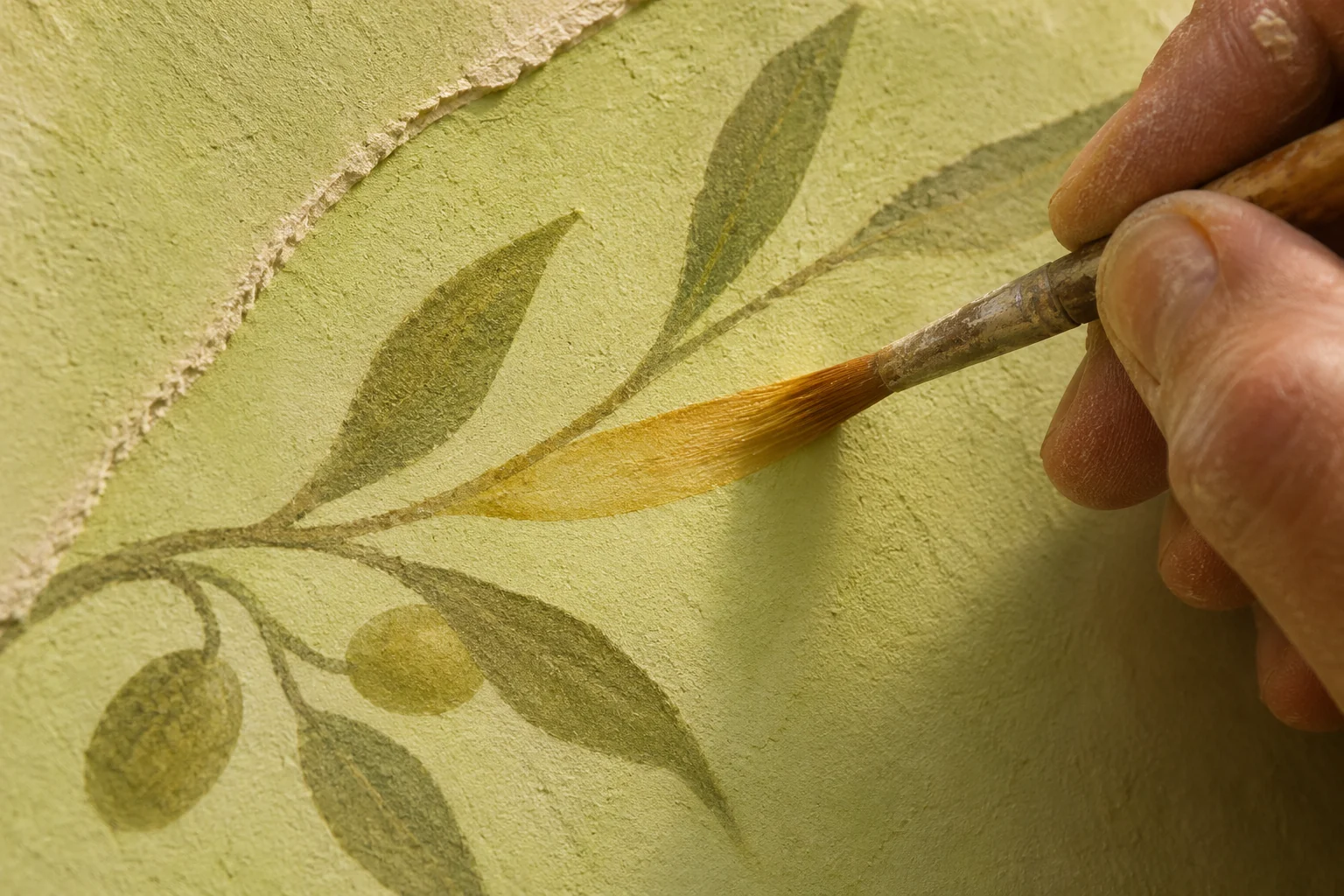
The painter works with pigment dispersed in water on freshly laid lime plaster. As the plaster hardens, lime reacts with carbon dioxide from the air to form calcium carbonate. The developing mineral surface holds the pigment particles in place. This is why putting the same watery colour on the same wall a day later can give a different result. A wet brush can restore moisture to a patch. It cannot make fully set plaster freshly laid again.[1, 5]
Where the painting actually sits
Behind the smooth visible surface there can be several layers. Rougher plaster helps prepare the masonry. A coat called the arriccio provides a base, while the finer finishing coat, the intonaco, gives the brush a surface on which a face, hand or fold of cloth can be described. The finished painting is extraordinarily shallow compared with the wall that carries it. The whole structure matters, however. A beautiful surface is of little comfort if the plaster supporting it starts to detach.[1, 2, 3]
The distinction between water and binder is worth pausing over. Water lets a brush pick up pigment particles and carry them to the chosen spot. Some of that water evaporates. The developing calcium carbonate holds colour at and near the surface after the water has gone. The pigment needn’t dissolve or become a different chemical substance to stay on the wall. Indeed the painter needs colours that will hold up in the alkaline conditions of fresh lime plaster.[2, 5]
One day's work has a shape
Rather than coat an entire room at once, painters prepared a manageable portion of the final layer for a working session. The Italian term giornata means a day’s work and also names the patch itself. A large area of plain background might be a manageable giornata. A closely modelled head could demand a smaller one. Counting the square metres on the wall would tell you very little about the number of faces, gestures and small decisions that had to fit into the working time.[1, 2, 3]
Where should one day’s plaster meet the next? A boundary drawn straight through a smooth cheek could be conspicuous if the new surface differed ever so slightly in level or colour. Along a hairline, a sleeve or the silhouette of a figure, the join can follow a change the eye expects to see anyway. In a photograph with light skimming the wall, a small ridge may cast a shadow. A map of the joins can reveal how a painter divided up a scene that reads as one continuous space from the floor.[1, 3]
Getting a large drawing onto a small fresh patch
A cartoon in this setting is a full-size preparatory drawing. It lets an artist solve problems of proportion and composition before the plaster is on the clock. A standing figure can be worked out from head to foot even though the painter will finish its head on one area of fresh plaster and much of the body on another. Columbia University’s material on Raphael’s School of Athens pairs the mural with preparatory drawings and an account of the working terms.[2]
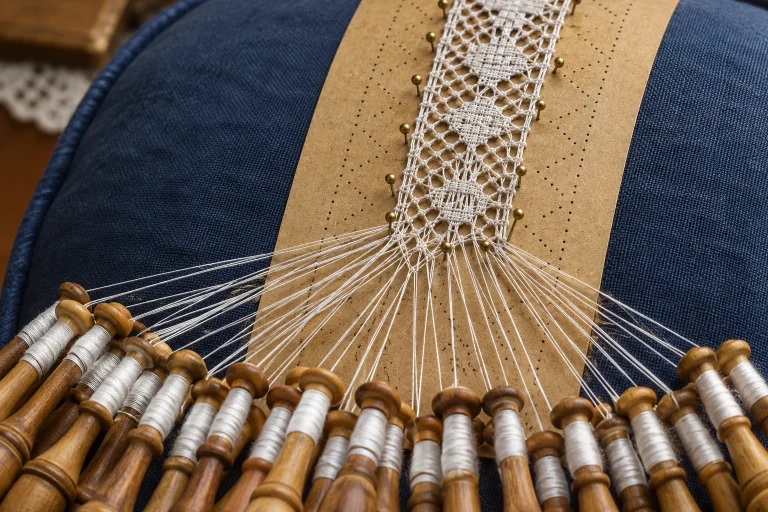
One way to transfer a design is pouncing. Small holes are made along selected lines in the drawing. Fine powder tapped through the holes leaves a dotted guide on the working surface. Once the paper comes away, a line of dots can show where a leaf turns or a sleeve ends. A continuous painted outline may conceal much of that guide. Where faint marks survive beside a stroke, they can preserve a moment in the making of the picture that the finished composition was never meant to feature.[2, 3, 4]
What if the plaster has already set?
Painters could return to a dry wall and add colour using a different binder. That work is described as a secco, meaning on dry plaster. A mural can therefore contain areas worked fresh and details supplied later with a binder such as egg or glue. Those layers have different relationships to the support and can weather differently. A missing highlight or a patch of bare-looking undercolour may give an incomplete impression of what a viewer saw when the painting was new.[1, 3, 5]
Here is a useful question to ask of a museum label that says simply “wall painting.” Is the identification based on what the subject looks like, or on evidence about how the artist attached the colour? A brushstroke can look fluid in either technique. Looking for plaster joins, examining the pigment layer and investigating possible binders give conservators ways to separate the making of the surface from the subject it represents. Even so, a single observation may permit several interpretations.[1, 4, 5]
A peacock that prompted a second look
At the Getty, researchers examining a painted peacock expected that Egyptian blue might account for some of its bright plumage. Eleven of twelve wall paintings they examined showed that pigment’s characteristic response in infrared imaging. The peacock did not. Further analysis identified modern pigments, including synthetic ultramarine and chrome oxide green, in the bird. A pointed question about one colour changed what researchers could say about the date of the painted image.[4]
The sequence is instructive. An unexpected result from one imaging method prompted new tests. It took evidence about the materials themselves to support a conclusion about the painting’s history. A feather on a wall can tell you what the artist wanted to depict. A few particles in the feather can tell you something else entirely. And a faint ridge beside it can still mark the edge of the piece of wet plaster a painter once judged small enough to finish before stopping work.[1, 3, 4]
Related reading
- How Archaeologists Identify the Colours of the Ancient World
- How Do Japanese Woodblock Printers Line Up Different Colours?
Sources
- National Gallery — Fresco
- Columbia University — The School of Athens, technique
- Linda Bien — Guido Nincheri fresco glossary
- Getty Research Journal — The Getty Peacock Fresco
- UNESCO World Heritage Centre — The technique of fresco painting
Keep exploring.
One remarkable idea at a time—nature, science, history and beyond.
Last updated November 21, 2026.

Barnakle Editorial Team
Barnakle Editorial Team is the collective byline used for Barnakle’s editorial articles. The contributor profile explains the team identity and links to the publication’s editorial policies.
More from the editorial team →