
How water filters and redirects sunlight
The ocean usually looks blue because water absorbs longer red, orange and yellow wavelengths more strongly while blue light penetrates farther and is scattered back toward observers. Reflections from the sky contribute at some angles, but they are not the primary reason deep clear water is blue.
Why Is the Ocean Blue? is a simple question with a layered answer. The sections below move from the central mechanism to the colours, timing, viewing conditions and misconceptions that generate the most common follow-up questions. Where a simplified classroom explanation leaves out an important qualification, the qualification is included rather than hidden.
The short answer
Sunlight contains a range of visible wavelengths. Water absorbs red light more readily than blue light over distance. This distinction matters because the familiar appearance is the final result of several linked physical steps, not a single isolated event.
Some surviving blue light is redirected back out of the water toward an observer. Particles and dissolved material can shift the apparent colour toward green, brown, turquoise or red. The mechanism also predicts what should change when one part of the system changes, which makes the account scientifically useful rather than merely descriptive.
For readers asking about the short answer, the practical point is that observations depend on position, timing and conditions. A photograph or brief glance captures only one configuration, whereas the scientific explanation must account for the full range of repeatable appearances. That is why authoritative explanations combine direct observation with models, calibrated instruments and predictions that can be checked independently.
White sunlight meets water
Sunlight that appears white is a mixture of wavelengths. At the sea surface, some light reflects and some enters the water. Researchers test the explanation by comparing measurements made under different geometries, conditions and observing methods.
The proportion depends on the Sun angle, surface waves and viewing direction. Once light enters, absorption and scattering begin changing its spectrum. Scale is important here: processes that happen at the level of atoms or charged particles can create patterns visible across an entire sky.
For readers asking about white sunlight meets water, the practical point is that observations depend on position, timing and conditions. A photograph or brief glance captures only one configuration, whereas the scientific explanation must account for the full range of repeatable appearances. That is why authoritative explanations combine direct observation with models, calibrated instruments and predictions that can be checked independently.
Selective absorption
Water molecules do not absorb every visible wavelength equally. Longer red wavelengths are removed over relatively short paths. The mechanism also predicts what should change when one part of the system changes, which makes the account scientifically useful rather than merely descriptive.
Blue-green wavelengths can travel farther through clear water. The remaining light is therefore increasingly weighted toward blue. Careful wording prevents a common mistake—confusing what an observer sees with the underlying object or process that produced the view.
For readers asking about selective absorption, the practical point is that observations depend on position, timing and conditions. A photograph or brief glance captures only one configuration, whereas the scientific explanation must account for the full range of repeatable appearances. That is why authoritative explanations combine direct observation with models, calibrated instruments and predictions that can be checked independently.
Scattering back to the eye
Light must leave the water and reach an observer for the ocean to appear coloured. Molecules and small particles redirect some light into new directions. Scale is important here: processes that happen at the level of atoms or charged particles can create patterns visible across an entire sky.
Backscattered blue light can return toward the surface. Ocean colour is the result of absorption and scattering together, not one isolated effect. This distinction matters because the familiar appearance is the final result of several linked physical steps, not a single isolated event.
For readers asking about scattering back to the eye, the practical point is that observations depend on position, timing and conditions. A photograph or brief glance captures only one configuration, whereas the scientific explanation must account for the full range of repeatable appearances. That is why authoritative explanations combine direct observation with models, calibrated instruments and predictions that can be checked independently.
The sky-reflection misconception
A calm surface can reflect the sky and nearby scenery. That reflection changes with angle and can be obvious near the horizon. Careful wording prevents a common mistake—confusing what an observer sees with the underlying object or process that produced the view.
Water remains intrinsically blue in a white container when the optical path is long enough. The ocean is therefore not merely a giant mirror of the blue sky. Researchers test the explanation by comparing measurements made under different geometries, conditions and observing methods.
For readers asking about the sky-reflection misconception, the practical point is that observations depend on position, timing and conditions. A photograph or brief glance captures only one configuration, whereas the scientific explanation must account for the full range of repeatable appearances. That is why authoritative explanations combine direct observation with models, calibrated instruments and predictions that can be checked independently.
Why shallow tropical water looks turquoise
A bright sandy bottom reflects light back through shallow clear water. The shorter path preserves more green as well as blue wavelengths. This distinction matters because the familiar appearance is the final result of several linked physical steps, not a single isolated event.
Suspended carbonate particles can add scattering. Depth, bottom colour and water clarity combine to create turquoise lagoons. The mechanism also predicts what should change when one part of the system changes, which makes the account scientifically useful rather than merely descriptive.
For readers asking about why shallow tropical water looks turquoise, the practical point is that observations depend on position, timing and conditions. A photograph or brief glance captures only one configuration, whereas the scientific explanation must account for the full range of repeatable appearances. That is why authoritative explanations combine direct observation with models, calibrated instruments and predictions that can be checked independently.
Why some coastal water looks green
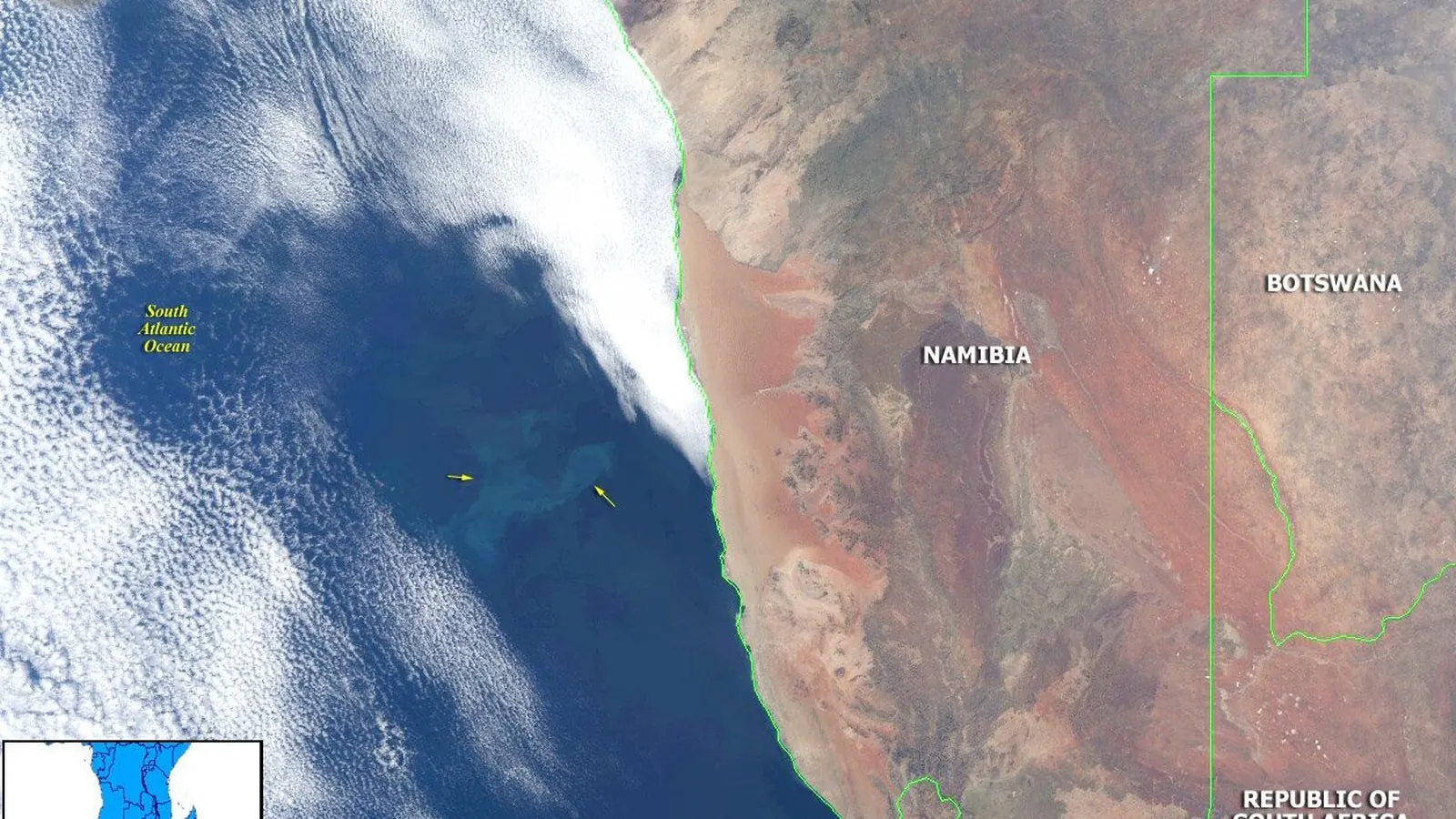
Phytoplankton contain chlorophyll and accessory pigments that alter absorption and scattering. Chlorophyll absorbs strongly in blue and red portions of the spectrum. Researchers test the explanation by comparing measurements made under different geometries, conditions and observing methods.
Green wavelengths can become more prominent in productive water. A green sea is not automatically polluted, though colour alone cannot establish water quality. Scale is important here: processes that happen at the level of atoms or charged particles can create patterns visible across an entire sky.
For readers asking about why some coastal water looks green, the practical point is that observations depend on position, timing and conditions. A photograph or brief glance captures only one configuration, whereas the scientific explanation must account for the full range of repeatable appearances. That is why authoritative explanations combine direct observation with models, calibrated instruments and predictions that can be checked independently.
Why rivers and coasts can look brown
Sediment carried by rivers scatters and absorbs light. Fine mineral particles can make coastal water tan or brown. The mechanism also predicts what should change when one part of the system changes, which makes the account scientifically useful rather than merely descriptive.
Coloured dissolved organic matter also absorbs blue light strongly. Storms, runoff and tidal mixing can rapidly change the visible colour. Careful wording prevents a common mistake—confusing what an observer sees with the underlying object or process that produced the view.
For readers asking about why rivers and coasts can look brown, the practical point is that observations depend on position, timing and conditions. A photograph or brief glance captures only one configuration, whereas the scientific explanation must account for the full range of repeatable appearances. That is why authoritative explanations combine direct observation with models, calibrated instruments and predictions that can be checked independently.
Red tides are not ordinary tides
Some phytoplankton blooms contain pigments that discolour water red, rust, brown or green. The name red tide does not mean the event is caused by astronomical tides. Scale is important here: processes that happen at the level of atoms or charged particles can create patterns visible across an entire sky.
Not every discoloured bloom is toxic, and harmful blooms are not always visibly red. Laboratory identification and monitoring are needed to assess risk. This distinction matters because the familiar appearance is the final result of several linked physical steps, not a single isolated event.
For readers asking about red tides are not ordinary tides, the practical point is that observations depend on position, timing and conditions. A photograph or brief glance captures only one configuration, whereas the scientific explanation must account for the full range of repeatable appearances. That is why authoritative explanations combine direct observation with models, calibrated instruments and predictions that can be checked independently.
Why the deep ocean becomes dark
Light intensity decreases as photons are absorbed or scattered. Red disappears first, followed by other colours with depth. Careful wording prevents a common mistake—confusing what an observer sees with the underlying object or process that produced the view.
Only a small fraction of surface light reaches the deep photic zone. Below that, sunlight is too weak for human vision and photosynthesis becomes limited. Researchers test the explanation by comparing measurements made under different geometries, conditions and observing methods.
For readers asking about why the deep ocean becomes dark, the practical point is that observations depend on position, timing and conditions. A photograph or brief glance captures only one configuration, whereas the scientific explanation must account for the full range of repeatable appearances. That is why authoritative explanations combine direct observation with models, calibrated instruments and predictions that can be checked independently.
Why underwater colours change
A red object reflects red light, but little red illumination remains at depth. It can therefore appear dark or colourless unless lit by a nearby lamp. This distinction matters because the familiar appearance is the final result of several linked physical steps, not a single isolated event.
Artificial light restores wavelengths that the water removed along the long path. Underwater photography requires careful white balance and often supplemental lighting. The mechanism also predicts what should change when one part of the system changes, which makes the account scientifically useful rather than merely descriptive.
For readers asking about why underwater colours change, the practical point is that observations depend on position, timing and conditions. A photograph or brief glance captures only one configuration, whereas the scientific explanation must account for the full range of repeatable appearances. That is why authoritative explanations combine direct observation with models, calibrated instruments and predictions that can be checked independently.
How satellites measure ocean colour
Satellite sensors measure light leaving the ocean in multiple wavelength bands. Atmospheric scattering must be separated from the weaker water signal. Researchers test the explanation by comparing measurements made under different geometries, conditions and observing methods.
Algorithms estimate chlorophyll, suspended material and other properties. Validation from ships, buoys and autonomous instruments checks the remote measurements. Scale is important here: processes that happen at the level of atoms or charged particles can create patterns visible across an entire sky.
For readers asking about how satellites measure ocean colour, the practical point is that observations depend on position, timing and conditions. A photograph or brief glance captures only one configuration, whereas the scientific explanation must account for the full range of repeatable appearances. That is why authoritative explanations combine direct observation with models, calibrated instruments and predictions that can be checked independently.
Why colour changes with weather
Clouds reduce direct illumination and alter the balance of diffuse light. Wind roughens the surface and changes reflection patterns. The mechanism also predicts what should change when one part of the system changes, which makes the account scientifically useful rather than merely descriptive.
Rain and runoff can deliver sediment and dissolved material. A photograph records these conditions as well as the underlying water optics. Careful wording prevents a common mistake—confusing what an observer sees with the underlying object or process that produced the view.
For readers asking about why colour changes with weather, the practical point is that observations depend on position, timing and conditions. A photograph or brief glance captures only one configuration, whereas the scientific explanation must account for the full range of repeatable appearances. That is why authoritative explanations combine direct observation with models, calibrated instruments and predictions that can be checked independently.
Ocean colour and climate science
Phytoplankton influence marine food webs and carbon cycling. Long records of ocean colour help researchers track broad biological patterns. Scale is important here: processes that happen at the level of atoms or charged particles can create patterns visible across an entire sky.
Sensor changes and atmospheric correction complicate comparisons across decades. Colour is a powerful indicator, but it must be interpreted with models and field observations. This distinction matters because the familiar appearance is the final result of several linked physical steps, not a single isolated event.
For readers asking about ocean colour and climate science, the practical point is that observations depend on position, timing and conditions. A photograph or brief glance captures only one configuration, whereas the scientific explanation must account for the full range of repeatable appearances. That is why authoritative explanations combine direct observation with models, calibrated instruments and predictions that can be checked independently.
The larger lesson
The familiar blue sea is an optical measurement made by the eye. It reveals which wavelengths survived a path through water and returned. Careful wording prevents a common mistake—confusing what an observer sees with the underlying object or process that produced the view.
The same principles explain turquoise reefs, green productive seas and brown sediment plumes. Ocean colour connects basic physics with biology, geology and climate. Researchers test the explanation by comparing measurements made under different geometries, conditions and observing methods.
For readers asking about the larger lesson, the practical point is that observations depend on position, timing and conditions. A photograph or brief glance captures only one configuration, whereas the scientific explanation must account for the full range of repeatable appearances. That is why authoritative explanations combine direct observation with models, calibrated instruments and predictions that can be checked independently.
Frequently asked questions
What is the simplest correct explanation?
The ocean usually looks blue because water absorbs longer red, orange and yellow wavelengths more strongly while blue light penetrates farther and is scattered back toward observers. Reflections from the sky contribute at some angles, but they are not the primary reason deep clear water is blue.
Can the appearance change without the underlying physics changing?
Yes. Viewing angle, distance, atmospheric conditions, brightness, local surroundings and the sensitivity of human vision or cameras can change what is perceived even when the governing physical process remains the same.
Why do photographs sometimes look different from direct observation?
Cameras collect and process light differently from the human visual system. Exposure time, sensor response, white balance, contrast and computational processing can reveal faint structure or amplify colour, so an image should be interpreted with its capture method in mind.
How do scientists know the explanation is reliable?
The explanation connects independently measured quantities and makes predictions across changing conditions. Spectroscopy, imaging, timing, field measurements, laboratory physics and observations from different locations provide checks with different strengths and limitations.
What should a reader remember?
Keep the geometry and the energy pathway in view. Ask where the light or sound began, what it interacted with, how it travelled and why the observer received that particular signal at that particular time.
Key takeaways
- The ocean usually looks blue because water absorbs longer red, orange and yellow wavelengths more strongly while blue light penetrates farther and is scattered back toward observers. Reflections from the sky contribute at some angles, but they are not the primary reason deep clear water is blue.
- A strong explanation follows the mechanism step by step instead of relying on a slogan.
- Authoritative measurements support the central account while leaving room to refine unresolved details.
- Related phenomena may share part of the mechanism without being the same event.
Continue exploring
What researchers will test next
Progress now depends on measurements that connect controlled experiments with the complexity of the wider world. Researchers need observations collected across different locations, instruments and timescales, with methods described clearly enough for independent teams to repeat them. Larger samples can reveal whether an apparent pattern is widespread or driven by a few unusual cases. Longer records can separate temporary variation from a durable change.
New instruments may improve precision, but precision alone does not guarantee a better explanation. Scientists must still test alternative causes, disclose uncertainty and check whether an analysis gives the same answer when reasonable assumptions change. Open data and carefully documented methods allow other researchers to find errors, reproduce results and combine evidence that was gathered for different purposes.
The most useful future studies will make competing explanations face distinct predictions. When several independent tests agree, confidence can grow. When they disagree, the mismatch becomes evidence about what the original account was missing. Barnakle treats this process as a strength of science: conclusions can be reliable without being final, and responsible reporting should explain both what is known and what observation could change the picture.
Sources and further reading
Keep exploring.
One remarkable idea at a time—nature, science, history and beyond.
Sources and further reading
Barnakle uses credible primary and authoritative sources wherever possible.
- NOAA — Why Is the Ocean Blue?
- https://oceanservice.noaa.gov/facts/oceanblue.html
- NOAA Ocean Exploration — Light and Color in the Deep Sea
- https://oceanexplorer.noaa.gov/wp-content/uploads/2025/04/light-and-color-fact-sheet.pdf
- NASA Earth Observatory — Ocean Color
- https://earthobservatory.nasa.gov/global-maps/MY1DMM_CHLORA
- NOAA — Ocean Color Research
- https://www.aoml.noaa.gov/ocd/
Last reviewed September 29, 2026.

Barnakle Editorial Team
A member of the Barnakle editorial team, exploring remarkable ideas with clarity, curiosity and care.
More from this author →