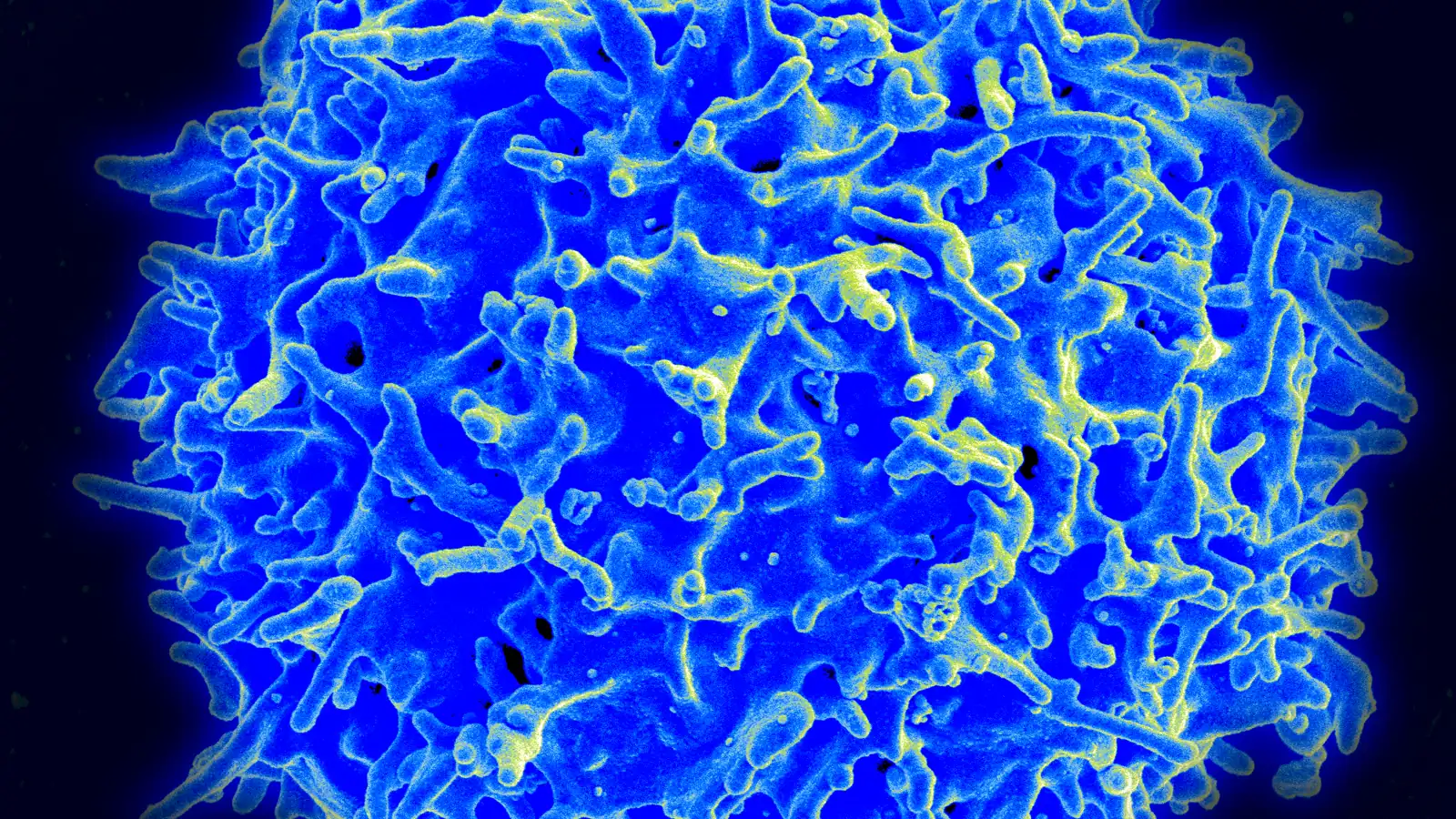
The recognition problem every immune system must solve
What to know
- Innate immunity recognizes patterns and damage context.
- Adaptive receptors are generated before their exact targets are known.
- Central and peripheral tolerance remove, edit or restrain risky cells.
- Autoimmunity reflects failures across several safeguards, not one switch.
No single security scanner
Immunity is a network of cells, tissues and soluble signals. Different layers recognize patterns, molecular fragments and tissue context. Researchers examine it with genetics, cell culture and clinical observation.
Metaphors can imply more central control than exists. That limitation does not erase the result, but it narrows what can responsibly be claimed. The strongest interpretation compares independent methods, reports uncertainty and distinguishes a measured outcome from a broader inference. The system is distributed and conditional.
Physical barriers act first
Skin and mucosal surfaces limit entry while moving or neutralizing material. Tight junctions, mucus, cilia and antimicrobial molecules reduce exposure. Researchers examine it with tissue imaging and barrier-function tests.
A barrier is an active ecosystem, not a wall alone. That limitation does not erase the result, but it narrows what can responsibly be claimed. The strongest interpretation compares independent methods, reports uncertainty and distinguishes a measured outcome from a broader inference. Prevention reduces the need for inflammation.
Innate receptors detect patterns
Cells carry receptors tuned to recurring microbial structures and signs of cell damage. Germline-encoded recognition initiates rapid signaling. Researchers examine it with receptor knockouts and ligand assays.
The same pathway can respond differently by tissue. That limitation does not erase the result, but it narrows what can responsibly be claimed. The strongest interpretation compares independent methods, reports uncertainty and distinguishes a measured outcome from a broader inference. Pattern recognition is broad rather than species-specific.
Danger and location change meaning
A molecule can be harmless in one compartment and alarming in another. Cell damage exposes or releases material normally hidden. Researchers examine it with controlled injury models and localization studies.
Damage signals are not exclusive to infection. That limitation does not erase the result, but it narrows what can responsibly be claimed. The strongest interpretation compares independent methods, reports uncertainty and distinguishes a measured outcome from a broader inference. Context helps explain sterile inflammation.
Antigen presentation displays fragments
Specialized molecules show peptide fragments at cell surfaces. T cells inspect these complexes rather than whole pathogens. Researchers examine it with structural biology and peptide-binding assays.
Presentation differs by cell type and genetic background. That limitation does not erase the result, but it narrows what can responsibly be claimed. The strongest interpretation compares independent methods, reports uncertainty and distinguishes a measured outcome from a broader inference. Display is necessary but not always sufficient for activation.
Receptors are generated by recombination
Developing lymphocytes rearrange gene segments to create enormous receptor diversity. Randomized assembly prepares the population for unknown targets. Researchers examine it with sequencing immune-receptor repertoires.
Random generation also creates self-reactive receptors. That limitation does not erase the result, but it narrows what can responsibly be claimed. The strongest interpretation compares independent methods, reports uncertainty and distinguishes a measured outcome from a broader inference. Tolerance is required because diversity comes first.
T cells are educated in the thymus
Developing T cells encounter self molecules presented in a specialized organ. Cells must recognize presentation machinery yet avoid excessively strong self recognition. Researchers examine it with thymic-cell genetics and lineage tracking.
Laboratory thresholds simplify a graded process. That limitation does not erase the result, but it narrows what can responsibly be claimed. The strongest interpretation compares independent methods, reports uncertainty and distinguishes a measured outcome from a broader inference. Selection balances usefulness against risk.
Negative selection removes some risks
Strongly self-reactive developing cells can be deleted. Apoptotic programs reduce dangerous clones before circulation. Researchers examine it with transgenic receptors and cell-fate measurements.
Deletion is incomplete because not every self molecule is displayed equally. That limitation does not erase the result, but it narrows what can responsibly be claimed. The strongest interpretation compares independent methods, reports uncertainty and distinguishes a measured outcome from a broader inference. Central tolerance is powerful but not perfect.
AIRE broadens the lesson
Certain thymic cells express proteins normally associated with other tissues. AIRE-dependent expression exposes developing T cells to a wider self library. Researchers examine it with human genetics and mouse models.
AIRE is not the only regulator of tissue-specific display. That limitation does not erase the result, but it narrows what can responsibly be claimed. The strongest interpretation compares independent methods, reports uncertainty and distinguishes a measured outcome from a broader inference. Rare disorders reveal the importance of the pathway.
B cells can edit receptors
Immature B cells that bind self strongly may rearrange receptor genes again. Receptor editing offers another chance to reduce self reactivity. Researchers examine it with single-cell receptor analysis.
Some cells instead become inactive or are deleted. That limitation does not erase the result, but it narrows what can responsibly be claimed. The strongest interpretation compares independent methods, reports uncertainty and distinguishes a measured outcome from a broader inference. Tolerance uses several possible outcomes.
Peripheral tolerance continues the work
Mature self-reactive cells can escape central checkpoints. Lack of costimulation, inhibitory receptors and controlled cell death restrain them. Researchers examine it with activation assays and genetic deficiencies.
Peripheral brakes can also limit useful responses. That limitation does not erase the result, but it narrows what can responsibly be claimed. The strongest interpretation compares independent methods, reports uncertainty and distinguishes a measured outcome from a broader inference. Tolerance and defense require balance.
Regulatory T cells suppress excess
Regulatory T cells help limit activation and maintain tissue tolerance. Cell contact and suppressive cytokines alter nearby immune behavior. Researchers examine it with depletion studies and human immune disorders.
Regulation is context-dependent rather than universal shutdown. That limitation does not erase the result, but it narrows what can responsibly be claimed. The strongest interpretation compares independent methods, reports uncertainty and distinguishes a measured outcome from a broader inference. These cells form an active brake.
Costimulation supplies context
T-cell receptor binding alone does not always produce full activation. Additional signals from activated antigen-presenting cells confirm inflammatory context. Researchers examine it with blocking antibodies and receptor-deficient models.
Pathogens and tumors can manipulate these pathways. That limitation does not erase the result, but it narrows what can responsibly be claimed. The strongest interpretation compares independent methods, reports uncertainty and distinguishes a measured outcome from a broader inference. Multiple signals reduce accidental activation.
Immune checkpoints tune responses
Inhibitory receptors such as CTLA-4 and PD-1 restrain ongoing activation. Signals limit proliferation and tissue damage. Researchers examine it with clinical genetics and therapeutic blockade.
Blocking a brake can improve antitumor responses but increase immune side effects. That limitation does not erase the result, but it narrows what can responsibly be claimed. The strongest interpretation compares independent methods, reports uncertainty and distinguishes a measured outcome from a broader inference. The trade-off demonstrates why regulation exists.
The microbiome complicates nonself
The body coexists with enormous microbial communities. Barriers, location and regulatory signaling permit tolerance while retaining surveillance. Researchers examine it with germ-free models and microbiome studies.
Association does not prove a microbe caused a disease. That limitation does not erase the result, but it narrows what can responsibly be claimed. The strongest interpretation compares independent methods, reports uncertainty and distinguishes a measured outcome from a broader inference. Nonself is not automatically dangerous.
Pregnancy requires specialized tolerance
Maternal immunity accommodates fetal and placental tissues with distinct genetics. Local immune regulation and placental biology reshape responses. Researchers examine it with human tissue studies and reproductive immunology.
Pregnancy is not global immune suppression. That limitation does not erase the result, but it narrows what can responsibly be claimed. The strongest interpretation compares independent methods, reports uncertainty and distinguishes a measured outcome from a broader inference. Tolerance can be local and actively maintained.
Autoimmunity has many routes
Genes, infections, tissue injury and regulatory failures can combine to target self. Risk emerges when several safeguards and environmental contexts align. Researchers examine it with population genetics and longitudinal clinical studies.
One trigger rarely explains every patient. That limitation does not erase the result, but it narrows what can responsibly be claimed. The strongest interpretation compares independent methods, reports uncertainty and distinguishes a measured outcome from a broader inference. Disease names group mechanisms that may differ.
Cancer reveals the opposite problem
Tumor cells arise from self and may evade immune recognition. Altered antigens, inhibitory signals and local environments reduce attack. Researchers examine it with tumor sequencing and immunotherapy trials.
Immune activation can also harm healthy tissue. That limitation does not erase the result, but it narrows what can responsibly be claimed. The strongest interpretation compares independent methods, reports uncertainty and distinguishes a measured outcome from a broader inference. Treatment seeks a narrower balance, not maximum immunity.
How to read the evidence
Specialist review of this explanation remains pending.
Sources and further reading
- NIAID — Immune cells
- Review — Central and peripheral immune tolerance
- Research review — Breakdown of immune tolerance
How Barnakle selects and verifies sources · Corrections and updates
Keep exploring.
We’ll email you when the first edition is ready.
Last updated October 29, 2026.

Barnakle Editorial Team
Barnakle Editorial Team is the collective byline used for Barnakle’s editorial articles. The contributor profile explains the team identity and links to the publication’s editorial policies.
More from the editorial team →