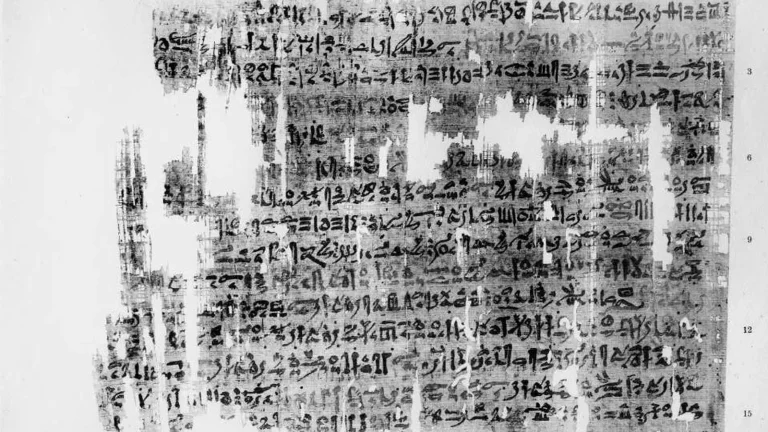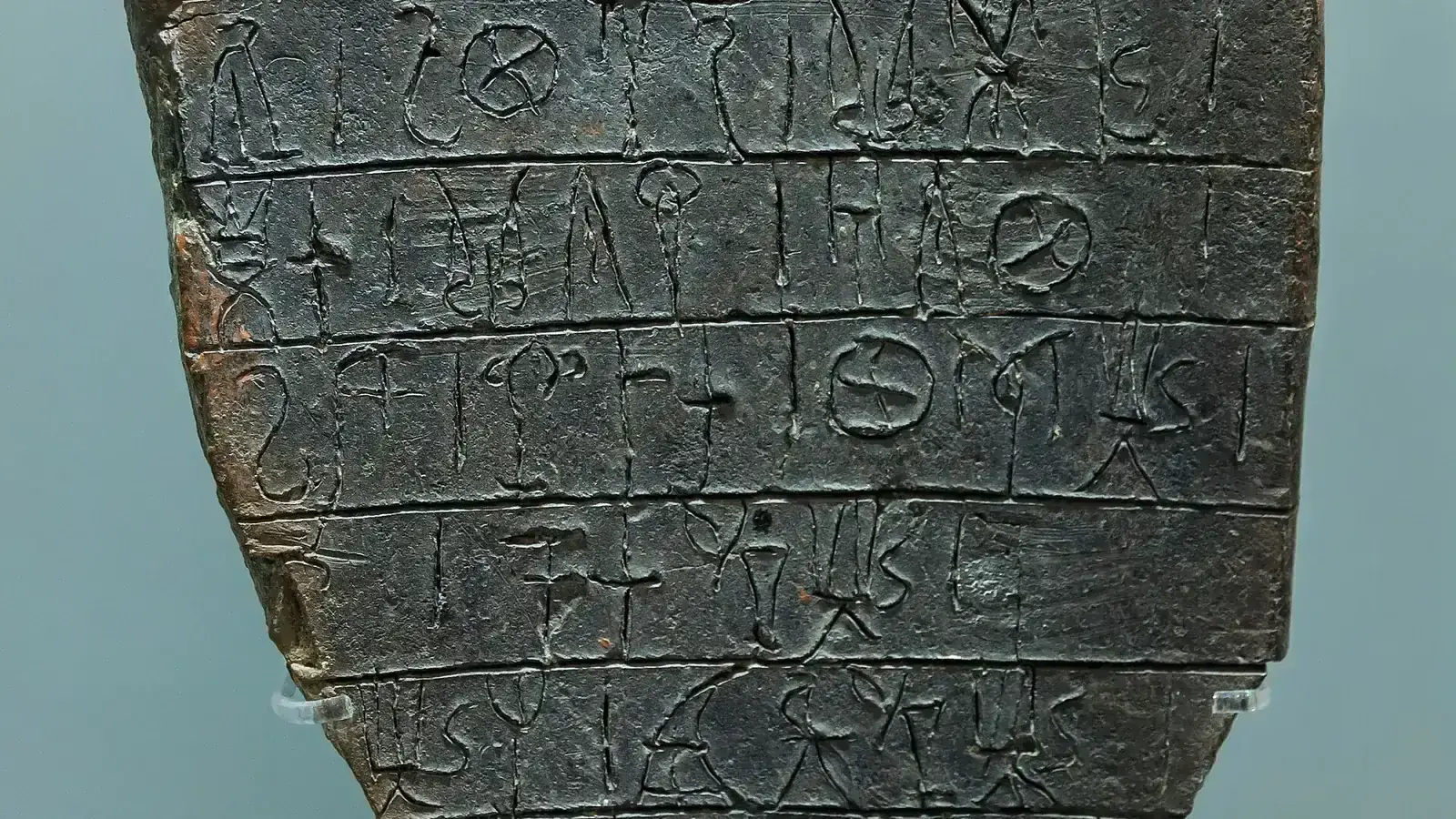
Linear B records an early form of Greek, but nobody could simply recognise its words when the tablets first came to modern scholarly attention. The script used signs unfamiliar to readers of the later Greek alphabet. Decipherment required working out how those signs represented language, then testing the proposed readings against additional documents.
The tablets offered several kinds of clue
Many surviving Linear B tablets are administrative records. Numbers and commodity signs could suggest a document's subject even before its words were readable. Yet recognising a picture of an animal is different from knowing the sounds of a nearby personal name.
The script's phonetic signs represent syllables, rather than operating like the letters of an alphabet. This matters when comparing a proposed ancient place name with a group of signs: the name must fit the writing system's conventions, not merely resemble an English transliteration.
Organisation came before a convincing translation
Emmett Bennett helped establish a reliable inventory of signs and their variants. Without that groundwork, a researcher could mistake two handwriting forms of one sign for two separate syllables, corrupting any count of recurring patterns.
Alice Kober analysed related word forms and their changing endings. Her work revealed grammatical relationships without first requiring the language to be identified. A useful modern analogy is recognising that several unfamiliar words share a stem while their endings change in an orderly way. The pattern constrains possible readings even before a dictionary is available.
Ventris tested the place-name idea
Michael Ventris built on this earlier analysis. Proposed Cretan place names helped connect signs with possible syllabic values, and the resulting readings increasingly pointed towards Greek. In 1952 he announced the breakthrough, despite previously favouring a different language family.
John Chadwick brought expertise in Greek linguistics to assessing and developing the interpretation. Their collaboration led to the 1953 scholarly publication and subsequently to Documents in Mycenaean Greek. Cambridge's archive preserves correspondence showing a decipherment being checked and refined, rather than appearing as an unsupported flash of certainty.
How do you tell a solution from a lucky guess?
A guessed name is a starting hypothesis. A useful decipherment must explain more than the inscription that inspired it. Sign values should work consistently across words, while grammar, quantities and depicted commodities should fit the proposed reading.
This is the difference between fitting a password once and recovering a writing system. Linear B opened a body of Bronze Age records to study because the method could be applied beyond its initial clues. It did not automatically solve Linear A: related-looking scripts need not encode the same language or yield to the same assignments.
Explore a related question
How Scholars Learned to Read Cuneiform Again
Sources and further reading
Keep exploring.
One remarkable idea at a time—nature, science, history and beyond.
Last updated October 27, 2026.

Barnakle Editorial Team
Barnakle Editorial Team is the collective byline used for Barnakle’s editorial articles. The contributor profile explains the team identity and links to the publication’s editorial policies.
More from the editorial team →