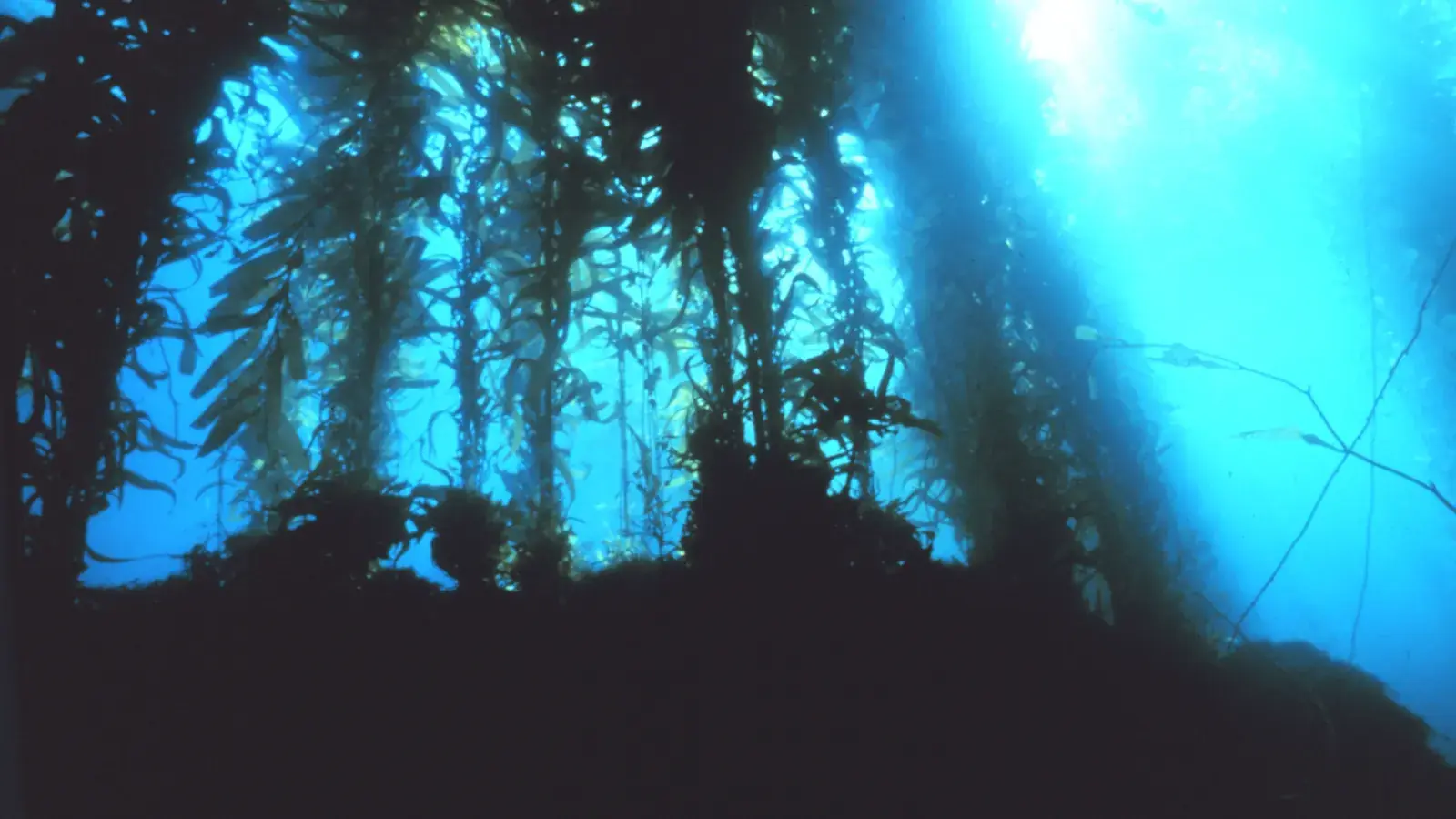
A kelp forest is built by large brown algae rather than trees. Nevertheless, the comparison with a forest is useful: kelp creates a three-dimensional habitat, changes the conditions around it and supports organisms that use different parts of its structure.
Its influence extends from the rocky seabed to the canopy and beyond the forest's edge. Understanding that influence means following both the physical structure and the food web it supports.
Holdfast, stipe and blade
A holdfast anchors kelp to a suitable surface. It resembles a tangled root system, but it is primarily an attachment structure rather than a soil-feeding root. The stipe supports blades that capture light, and some kelps use gas-filled structures to help lift their tissues towards the surface.
The spaces within a holdfast offer small animals shelter. Higher up, blades and branching structure provide places to hide, feed and move. Different kelp species form different architectures, so there is no single design shared by every kelp forest.
Habitat changes the neighbourhood
Kelp provides food directly to grazers and indirectly through food webs and detached material. Fish and invertebrates use the forest as habitat; larger predators may visit to feed. NOAA notes that species outside the forest can also benefit from organisms produced within it.
A canopy changes how light reaches lower layers. Moving kelp also interacts with water flow, although the effect depends on the forest and the conditions. A forest's ecological role therefore cannot be reduced to a count of its large visible fronds.
When grazing changes the whole system
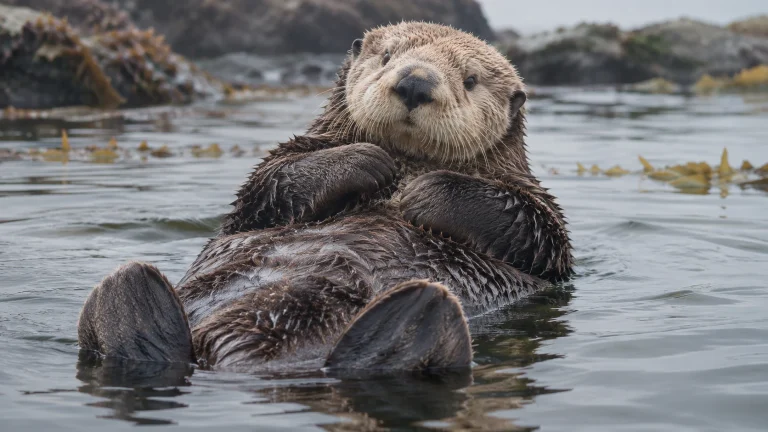
Sea urchins can consume enough kelp to remove a forest. Predators including sea otters, some fishes and sea stars can limit grazing pressure in particular ecosystems. These relationships are often discussed as trophic cascades: changes in predators affect grazers, which affect habitat-forming algae.
The familiar otter–urchin–kelp example is valuable, but it is not a rule that one predator controls every coast. Species present, environmental stress and local history all influence the outcome. An urchin barren is an ecological state with consequences for many animals, not simply an untidy patch of seabed.
Why recovery can be difficult
Marine heat, storms, sediment, pollution and grazing can interact. Removing one pressure may not immediately restore a forest if other conditions still prevent young kelp from surviving. NOAA's ecosystem guidance emphasises this range of influences.
Monitoring must therefore distinguish canopy appearance from longer-term recovery of the habitat and its community. Repeated surveys of the same places help reveal change through time. The central lesson is that kelp forests are living systems maintained by interactions, and their resilience depends on more than the growth rate of the algae alone.
Explore a related question
How Mangrove Roots Protect and Rebuild Coastlines
Sources and further reading
Keep exploring.
One remarkable idea at a time—nature, science, history and beyond.
Last updated October 27, 2026.

Barnakle Editorial Team
Barnakle Editorial Team is the collective byline used for Barnakle’s editorial articles. The contributor profile explains the team identity and links to the publication’s editorial policies.
More from the editorial team →