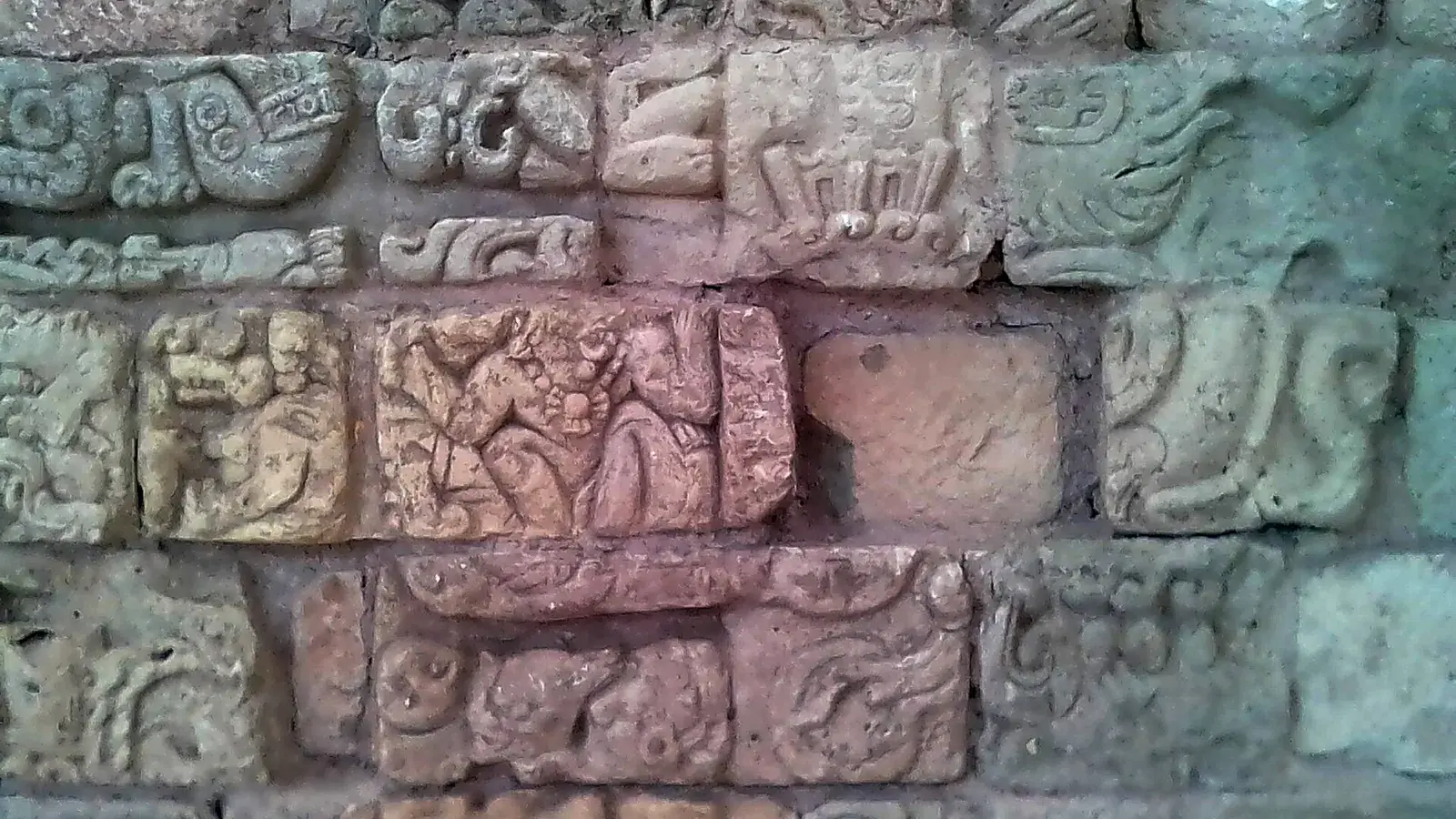
Ancient Maya inscriptions can look like intricate pictures arranged in blocks, but their visual richness should not obscure their role as writing. Signs can represent words or syllables, and a block may combine several signs to record a name, title or other expression.
Learning to read this system required several kinds of evidence. Calendar knowledge helped establish dates, while phonetic analysis and the recognition of historical narratives opened much more of the texts.
A date does not read the whole sentence
Researchers could understand aspects of Maya calendrical notation before they could read most surrounding language. A series of dates supplied a structure, but not necessarily the identity of an event or the sounds of a person's name.
This distinction mattered because inscriptions were once interpreted too narrowly as records concerned principally with calendars and ritual. The possibility that they described individual lives and political events needed to be tested against repeated patterns.
Historical sequences changed the questions
Tatiana Proskouriakoff identified patterns of dates and associated signs at Piedras Negras consistent with events in rulers' lives. Tulane's history of decipherment explains the importance of this work for recognising biography and history in the inscriptions.
The inference came from relationships among dates and repeated signs, rather than one isolated image. If a proposed sequence represents a life, the intervals and event order should make historical sense across more than one monument.
Phonetic readings gave the signs a voice
Yuri Knorozov argued for a phonetic component in the script. Syllabic signs could help spell words rather than merely illustrate concepts. Later work developed these readings and tested how different combinations expressed the same or related sounds.
Maya writing can use both a word sign and accompanying phonetic information. That flexibility creates opportunities to check a reading against alternative spellings. It also explains why counting pictures or assigning one English word to each decorative form cannot decode the system.
A decipherment needs a body of texts
Accurate drawings, photographs and comparisons among inscriptions are essential. A damaged or unusually arranged sign can be difficult to recognise, and a reading that looks plausible in one location may fail elsewhere.
The ClassicMayan project describes decipherment as a cumulative process involving many researchers and advances across decades. A proposed reading gains strength when it works in additional names, grammatical contexts or related spellings without changing the rules arbitrarily.
The work continues
Substantial portions of Maya writing are readable, but that does not mean every surviving passage is settled. Damage, rare signs and uncertainty about particular words still create questions. Maya communities and living Maya languages are central to the cultural and linguistic setting of this work; the civilisation should not be described as a vanished people simply because an ancient inscription required decipherment.
Explore a related question
Sources and further reading
Keep exploring.
One remarkable idea at a time—nature, science, history and beyond.
Last updated October 27, 2026.

Barnakle Editorial Team
Barnakle Editorial Team is the collective byline used for Barnakle’s editorial articles. The contributor profile explains the team identity and links to the publication’s editorial policies.
More from the editorial team →