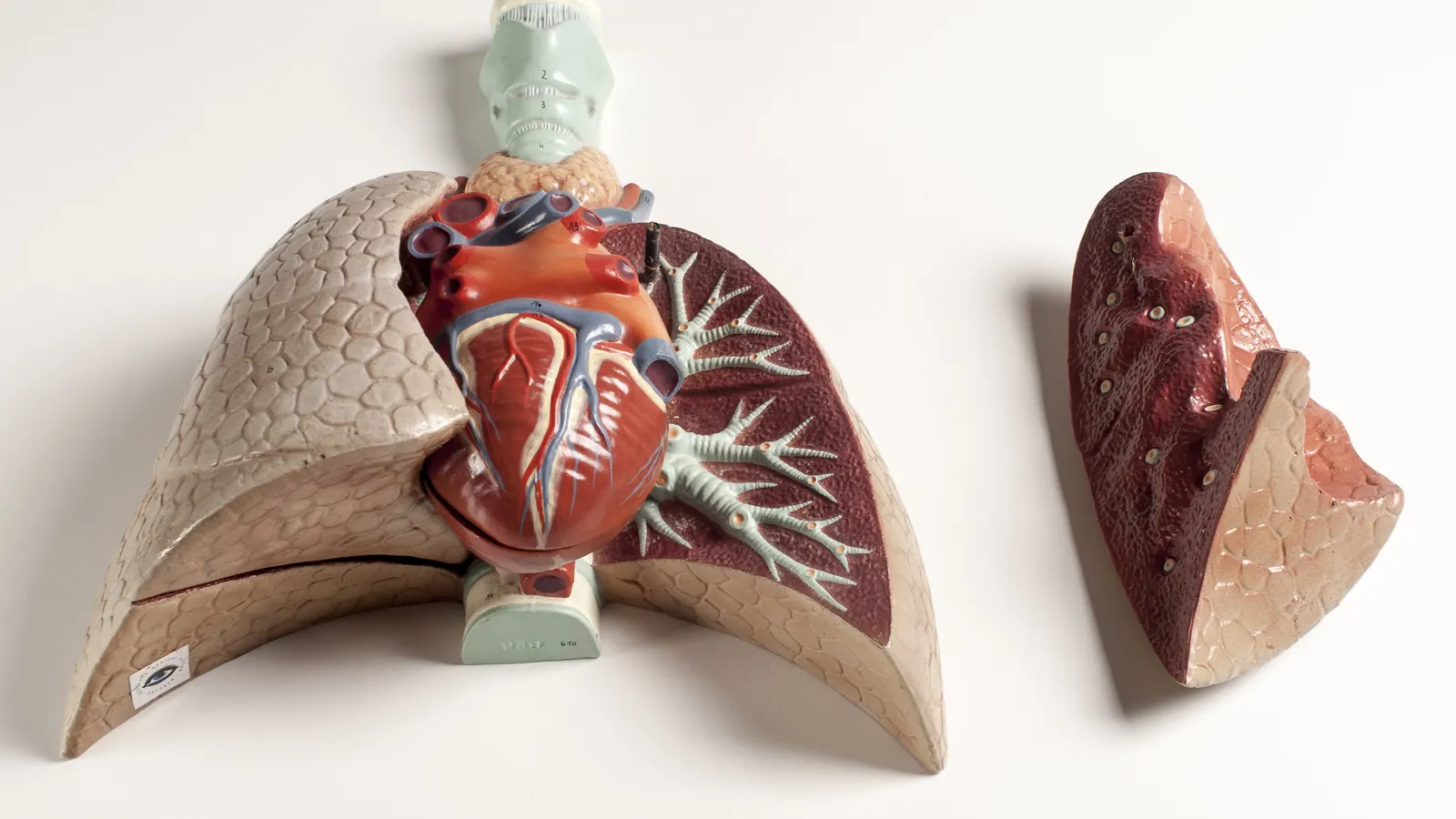
A hiccup begins as an involuntary contraction of the diaphragm, the main breathing muscle beneath the lungs. The vocal folds then close abruptly, interrupting the incoming breath and making the characteristic sound. The movement and sound are separate parts of one reflex.
What happens during a hiccup?
During an ordinary breath, the diaphragm contracts to expand the chest and help draw air into the lungs. A hiccup briefly interrupts that rhythm. It is not a pocket of air getting stuck, and the sound does not come from the diaphragm rubbing against another organ.
The National Library of Medicine’s MedlinePlus explanation describes this two-stage event: involuntary movement followed by rapid vocal-cord closure. Because breathing muscles, nerves and the voice box participate, a hiccup can be felt in the chest as well as heard.
Why do meals, fizzy drinks and excitement trigger them?
Common triggers include eating quickly, eating a large meal, carbonated drinks, alcohol and hot or spicy food. A bloated stomach can also accompany a bout. These triggers do not produce hiccups in everyone, and many episodes start without an obvious explanation.
Nervousness and excitement are also reported triggers. That does not make the movement imaginary: an emotional situation can accompany a physical reflex. Equally, having hiccups after one particular food does not establish an allergy or diagnose a digestive disorder.
Why do hiccups stop—and do remedies work?
Most bouts fade after a few minutes. This makes a household remedy difficult to judge: an episode that stops immediately after a sip of water might have been about to end anyway. A convincing treatment needs comparison with what would happen without it.
The NHS hiccups guide notes that suggested remedies do not work for everyone. Small sips of cold water are one commonly suggested option for an adult who can swallow normally. Avoid rapid eating, large amounts of alcohol or fizzy drinks if they repeatedly precede your episodes. Do not force water or food on someone who is having difficulty swallowing.
Why do babies hiccup?
Hiccups also occur before birth and in newborns. Their possible developmental role remains a research question rather than an established explanation for every adult hiccup.
A 2019 UCL-led study recorded brain activity and breathing movements in 13 newborn infants who hiccupped. The researchers observed brain responses associated with the contractions and proposed that the sensory feedback might help the developing brain learn about breathing muscles. That small observational study did not demonstrate that hiccups are essential for development or prove a remedy for persistent hiccups.
When should hiccups be checked?
The NHS advises contacting a clinician when hiccups last longer than 48 hours, or when frequent returning episodes affect daily life. Persistent hiccups can interfere with eating, drinking and sleep. Medicines and underlying medical conditions are among the possible explanations, so treatment depends on the individual cause.
This is a reason for assessment, not a reason to assume a rare disease from an ordinary short bout. Do not stop a prescribed medicine on your own because you suspect it is involved. Tell the clinician when the hiccups began, how long they last, associated symptoms and what medicines you take.
What should you remember?
The sound comes from sudden closure at the voice box after a breathing-muscle contraction. Brief hiccups are common and usually self-limiting. The important distinction is between a passing annoyance and episodes that persist or repeatedly disrupt normal activities.
Sources and further reading
Keep exploring.
One remarkable idea at a time—nature, science, history and beyond.
Last updated October 19, 2026.

Barnakle Editorial Team
Barnakle Editorial Team is the collective byline used for Barnakle’s editorial articles. The contributor profile explains the team identity and links to the publication’s editorial policies.
More from the editorial team →