
Fifty million years of changing bodies, habitats and diets
The short answer
Horses did not evolve in a straight line from a tiny ancestor into the modern animal. Their family tree branched repeatedly as climates and habitats changed. Many lineages disappeared; one surviving genus, Equus, later spread widely and was domesticated by people.
The explanation of horse evolution becomes clearer when the process is followed in order: initial conditions establish what is possible, interactions change matter or energy, and the resulting structure leaves measurements that can be compared with predictions. That sequence is more reliable than a single slogan because it explains both the familiar result and the exceptions.
Scientists test claims about horse evolution at several scales. Direct observations establish what happens, laboratory or computational models isolate mechanisms, and comparisons across environments reveal which factors matter most. Where evidence remains incomplete, this article distinguishes a working explanation from a settled measurement.
The family tree is a bush, not a ladder
Horse evolution produced many coexisting branches. Fossil genera are not a parade in which each species neatly transformed into the next. Researchers reconstruct relationships from shared anatomy, dated rock layers and, for recent populations, DNA. The modern genus Equus is the surviving twig of a once much richer family.
In the context of the family tree is a bush, not a ladder, this evidence matters because it links an observable feature to a process that can be tested independently. A useful explanation also makes a prediction: changing the relevant condition should change the outcome in a specific direction.
For readers evaluating the family tree is a bush, not a ladder, the best question is not merely whether the claim sounds plausible, but what observation would distinguish it from a competing explanation. Here, the combination of structure, environment and measured response provides that test. The conclusion remains open to refinement without making the core evidence arbitrary.
The earliest relatives were small forest browsers
Early Eocene equids lived more than 50 million years ago in North America. They were much smaller than living horses and had several functional toes. Their low-crowned teeth suited leaves and soft vegetation. Calling them miniature horses can be convenient, but it hides how different their bodies and environments were.
In the context of the earliest relatives were small forest browsers, the important qualification is that one pattern can have several contributing causes, so context and scale must be recorded. Natural variation is informative rather than inconvenient, because limits and exceptions reveal which part of the mechanism is essential.
For readers evaluating the earliest relatives were small forest browsers, the best question is not merely whether the claim sounds plausible, but what observation would distinguish it from a competing explanation. Here, the combination of structure, environment and measured response provides that test. The conclusion remains open to refinement without making the core evidence arbitrary.
Why toes changed
Early forms bore weight across multiple digits. Later open-country equids increasingly emphasized the enlarged middle digit while side toes shrank. Longer lower limbs and altered joints supported efficient travel. This was a mosaic process: limb proportions, toe reduction and body size did not all change at one instant or for one simple reason.
In the context of why toes changed, researchers therefore compare multiple lines of evidence rather than treating one striking example as the whole story. The chronology matters. Similar-looking endpoints can arise by different routes, and only dated or time-resolved evidence can separate them.
For readers evaluating why toes changed, the best question is not merely whether the claim sounds plausible, but what observation would distinguish it from a competing explanation. Here, the combination of structure, environment and measured response provides that test. The conclusion remains open to refinement without making the core evidence arbitrary.
Grasslands changed the menu
As climates cooled and dried, grasslands expanded in many regions. Grasses contain abrasive silica bodies and often carry windblown grit. Many grazing equids evolved high-crowned teeth that could tolerate greater wear. Browsing lineages continued too, showing that environmental change opened several ecological paths rather than commanding one inevitable outcome.
In the context of grasslands changed the menu, seen this way, the feature is not an isolated curiosity but the outcome of physical and biological constraints acting together. Measurements are strongest when sampling, calibration and uncertainty are reported, allowing another team to check the inference.
For readers evaluating grasslands changed the menu, the best question is not merely whether the claim sounds plausible, but what observation would distinguish it from a competing explanation. Here, the combination of structure, environment and measured response provides that test. The conclusion remains open to refinement without making the core evidence arbitrary.
Teeth preserve dietary evidence
Palaeontologists compare crown height, enamel shape and microscopic wear. Scratches and pits record how food contacted a tooth shortly before death, while chemical isotopes can reflect longer-term diet and habitat. Each signal covers a different timescale, so agreement among them is stronger than any single measurement.
In the context of teeth preserve dietary evidence, this evidence matters because it links an observable feature to a process that can be tested independently. A useful explanation also makes a prediction: changing the relevant condition should change the outcome in a specific direction.
For readers evaluating teeth preserve dietary evidence, the best question is not merely whether the claim sounds plausible, but what observation would distinguish it from a competing explanation. Here, the combination of structure, environment and measured response provides that test. The conclusion remains open to refinement without making the core evidence arbitrary.
North America was the evolutionary centre
The horse family originated and diversified in North America. Various lineages crossed land connections into Eurasia and Africa when sea level and geography permitted. Equids later disappeared from the Americas near the end of the Pleistocene, thousands of years before Europeans reintroduced domestic horses.
In the context of north america was the evolutionary centre, the important qualification is that one pattern can have several contributing causes, so context and scale must be recorded. Natural variation is informative rather than inconvenient, because limits and exceptions reveal which part of the mechanism is essential.
For readers evaluating north america was the evolutionary centre, the best question is not merely whether the claim sounds plausible, but what observation would distinguish it from a competing explanation. Here, the combination of structure, environment and measured response provides that test. The conclusion remains open to refinement without making the core evidence arbitrary.
Equus appears
The genus Equus emerged several million years ago and includes living horses, asses and zebras. Fossils attributed to early Equus combine single-toed limbs, grazing-adapted teeth and skull traits. Boundaries between named fossil species can change as new specimens and quantitative analyses reveal variation.
In the context of equus appears, researchers therefore compare multiple lines of evidence rather than treating one striking example as the whole story. The chronology matters. Similar-looking endpoints can arise by different routes, and only dated or time-resolved evidence can separate them.
For readers evaluating equus appears, the best question is not merely whether the claim sounds plausible, but what observation would distinguish it from a competing explanation. Here, the combination of structure, environment and measured response provides that test. The conclusion remains open to refinement without making the core evidence arbitrary.
Extinction removed most branches
Climate shifts, habitat changes and ecological competition repeatedly altered equid diversity. The terminal Pleistocene losses in the Americas occurred amid rapid warming and human expansion. Evidence supports serious consideration of both environmental and human pressures; a single universal cause is difficult to demonstrate across every region.
In the context of extinction removed most branches, seen this way, the feature is not an isolated curiosity but the outcome of physical and biological constraints acting together. Measurements are strongest when sampling, calibration and uncertainty are reported, allowing another team to check the inference.
For readers evaluating extinction removed most branches, the best question is not merely whether the claim sounds plausible, but what observation would distinguish it from a competing explanation. Here, the combination of structure, environment and measured response provides that test. The conclusion remains open to refinement without making the core evidence arbitrary.
Ancient DNA redraws recent history
DNA recovered from bones and teeth can test relationships that anatomy alone leaves ambiguous. Genomes have revealed extinct horse groups and extensive gene flow among populations. Ancient DNA is powerful but preservation is uneven, contamination must be controlled and genetic samples represent particular animals, places and dates.
In the context of ancient dna redraws recent history, this evidence matters because it links an observable feature to a process that can be tested independently. A useful explanation also makes a prediction: changing the relevant condition should change the outcome in a specific direction.
For readers evaluating ancient dna redraws recent history, the best question is not merely whether the claim sounds plausible, but what observation would distinguish it from a competing explanation. Here, the combination of structure, environment and measured response provides that test. The conclusion remains open to refinement without making the core evidence arbitrary.
Domestication was recent
The evolutionary history of Equidae spans tens of millions of years; domestication occupies only the latest portion. Genomic and archaeological evidence links the main ancestry of modern domestic horses to western Eurasian populations that expanded about 4,200 years ago. Management, transport and selective breeding then changed their distribution rapidly.
In the context of domestication was recent, the important qualification is that one pattern can have several contributing causes, so context and scale must be recorded. Natural variation is informative rather than inconvenient, because limits and exceptions reveal which part of the mechanism is essential.
For readers evaluating domestication was recent, the best question is not merely whether the claim sounds plausible, but what observation would distinguish it from a competing explanation. Here, the combination of structure, environment and measured response provides that test. The conclusion remains open to refinement without making the core evidence arbitrary.
Selective breeding is not a new species
People intensified traits such as size, speed, temperament, gait and coat colour. Breeds can look dramatically different yet remain members of the same species and exchange genes. Artificial selection works with inherited variation, but it does not compress deep evolutionary change into a few historical centuries.
In the context of selective breeding is not a new species, researchers therefore compare multiple lines of evidence rather than treating one striking example as the whole story. The chronology matters. Similar-looking endpoints can arise by different routes, and only dated or time-resolved evidence can separate them.
For readers evaluating selective breeding is not a new species, the best question is not merely whether the claim sounds plausible, but what observation would distinguish it from a competing explanation. Here, the combination of structure, environment and measured response provides that test. The conclusion remains open to refinement without making the core evidence arbitrary.
What fossils can and cannot say
A fossil records one organism and part of its anatomy. A sequence of well-dated fossils can reveal population-level trends, geographic movement and branching, but gaps remain. Absence from a rock unit may reflect true absence, poor preservation or insufficient collecting, so researchers state confidence and alternatives.
In the context of what fossils can and cannot say, seen this way, the feature is not an isolated curiosity but the outcome of physical and biological constraints acting together. Measurements are strongest when sampling, calibration and uncertainty are reported, allowing another team to check the inference.
For readers evaluating what fossils can and cannot say, the best question is not merely whether the claim sounds plausible, but what observation would distinguish it from a competing explanation. Here, the combination of structure, environment and measured response provides that test. The conclusion remains open to refinement without making the core evidence arbitrary.
Common myths about horse evolution
Modern horses did not descend from modern hyraxes, tapirs or zebras. Evolution is not a march toward perfection, and the single hoof was not destined from the beginning. Traits persist when they work well enough in particular environments and genetic backgrounds, while chance, development and extinction shape which branches survive.
In the context of common myths about horse evolution, this evidence matters because it links an observable feature to a process that can be tested independently. A useful explanation also makes a prediction: changing the relevant condition should change the outcome in a specific direction.
For readers evaluating common myths about horse evolution, the best question is not merely whether the claim sounds plausible, but what observation would distinguish it from a competing explanation. Here, the combination of structure, environment and measured response provides that test. The conclusion remains open to refinement without making the core evidence arbitrary.
How scientists test the story
Researchers date volcanic layers, map fossil distributions, measure bones and teeth, analyse wear and isotopes, and compare ancient and modern genomes. Independent methods have different biases. When chronology, anatomy, chemistry and DNA converge, the resulting account is more reliable than a museum diagram treated as a literal chain.
In the context of how scientists test the story, the important qualification is that one pattern can have several contributing causes, so context and scale must be recorded. Natural variation is informative rather than inconvenient, because limits and exceptions reveal which part of the mechanism is essential.
For readers evaluating how scientists test the story, the best question is not merely whether the claim sounds plausible, but what observation would distinguish it from a competing explanation. Here, the combination of structure, environment and measured response provides that test. The conclusion remains open to refinement without making the core evidence arbitrary.
How to evaluate new claims about horse evolution
New discoveries about horse evolution are often announced with a dramatic headline, but the durable question is whether the new result changes the mechanism described above. Check what was actually measured, how large and representative the sample was, whether the work passed expert review, and whether the uncertainty is visible. A result can be interesting without overturning everything previously known. Replication, improved instruments and a better chronological or environmental record usually strengthen knowledge by degrees.
For horse evolution, source type matters as well. A research paper reports methods and results, an institution may provide accessible context, and a news story interprets the work for a broad audience. These roles are useful but not interchangeable. Barnakle links to the most authoritative available records so readers can follow the evidence beyond the summary. When later measurements disagree, the responsible response is to examine methods and scope—not to choose whichever claim sounds more surprising.
Frequently asked questions
What is the simplest accurate explanation?
In brief: Horses did not evolve in a straight line from a tiny ancestor into the modern animal. Their family tree branched repeatedly as climates and habitats changed. Many lineages disappeared; one surviving genus, Equus, later spread widely and was domesticated by people.
Is there one cause?
Usually not. For horse evolution, the central mechanism operates within a system whose history, environment and geometry affect the result. A good explanation names the dominant cause without pretending that secondary influences disappear.
How do scientists know?
Researchers studying horse evolution combine observation with measurements that test specific predictions. Independent methods have different sources of error, so agreement among them is more persuasive than repetition of the same method.
Can photographs be misleading?
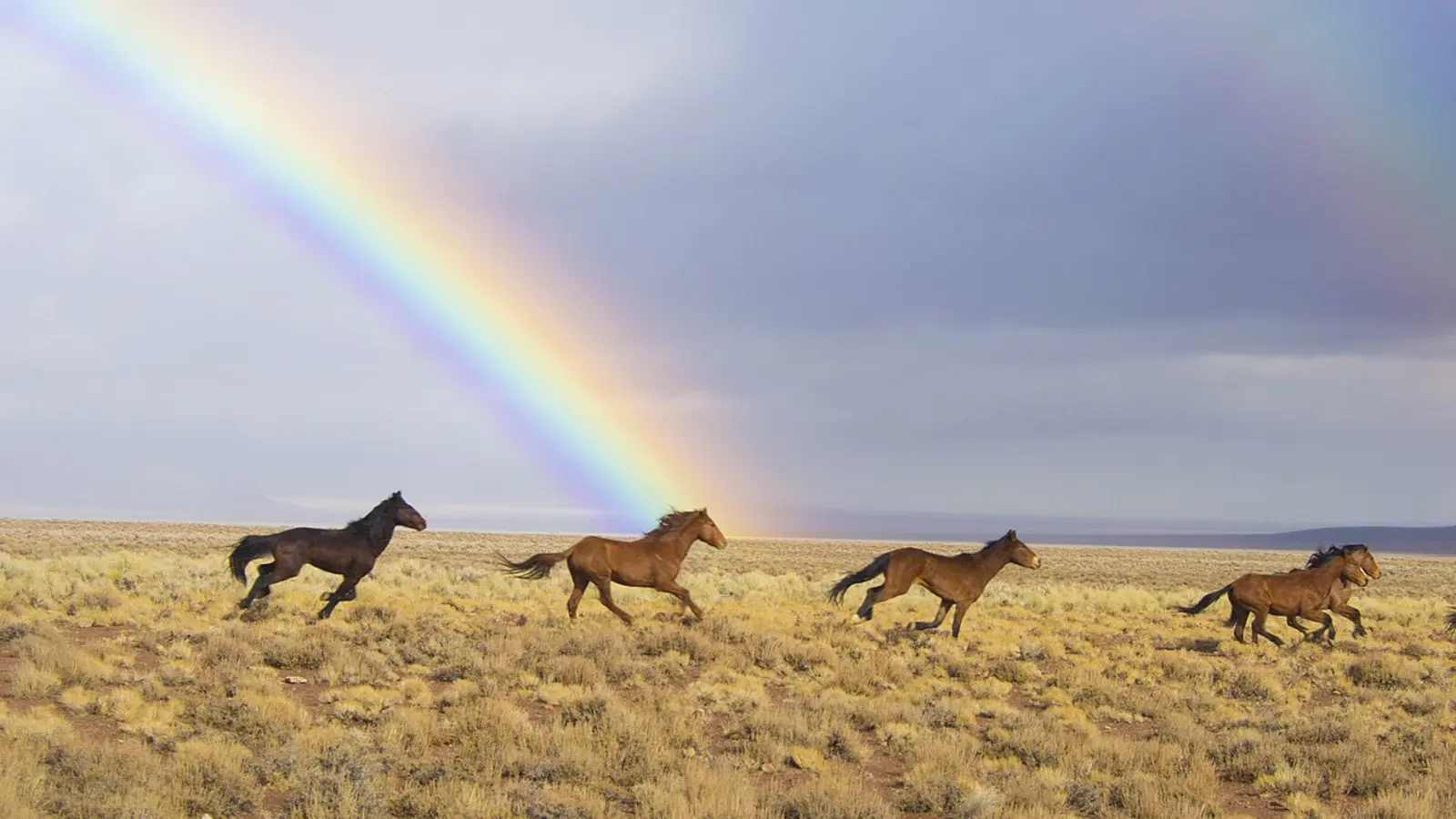
A photograph related to horse evolution records a particular place, time, scale and processing choice. It can document real evidence while still omitting motion, depth, invisible wavelengths or surrounding conditions. Captions and source records provide essential context.
What remains uncertain?
For horse evolution, fine details, boundary cases and historical reconstruction remain active research areas. Uncertainty is not equivalent to ignorance: well-supported mechanisms can coexist with unanswered questions about timing, variation or relative importance.
Key takeaways
- Horses did not evolve in a straight line from a tiny ancestor into the modern animal. Their family tree branched repeatedly as climates and habitats changed. Many lineages disappeared; one surviving genus, Equus, later spread widely and was domesticated by people.
- The mechanism is supported by multiple forms of evidence rather than appearance alone.
- Variation and exceptions help researchers test where simplified explanations stop working.
- Source quality, scale and uncertainty should travel with every scientific claim.
Continue exploring
What researchers will test next
Progress now depends on measurements that connect controlled experiments with the complexity of the wider world. Researchers need observations collected across different locations, instruments and timescales, with methods described clearly enough for independent teams to repeat them. Larger samples can reveal whether an apparent pattern is widespread or driven by a few unusual cases. Longer records can separate temporary variation from a durable change.
New instruments may improve precision, but precision alone does not guarantee a better explanation. Scientists must still test alternative causes, disclose uncertainty and check whether an analysis gives the same answer when reasonable assumptions change. Open data and carefully documented methods allow other researchers to find errors, reproduce results and combine evidence that was gathered for different purposes.
The most useful future studies will make competing explanations face distinct predictions. When several independent tests agree, confidence can grow. When they disagree, the mismatch becomes evidence about what the original account was missing. Barnakle treats this process as a strength of science: conclusions can be reliable without being final, and responsible reporting should explain both what is known and what observation could change the picture.
Sources and further reading
Keep exploring.
One remarkable idea at a time—nature, science, history and beyond.
Sources and further reading
Barnakle uses credible primary and authoritative sources wherever possible.
- University of California Museum of Paleontology — Evolution of the Horse
- https://evolution.berkeley.edu/evolution-101/the-history-of-life-looking-at-the-patterns/how-we-know-what-happened-when/
- Smithsonian National Museum of Natural History — Horses
- https://naturalhistory.si.edu/education/teaching-resources/anthropology-and-social-studies/domestication
- Nature — Origins and spread of domestic horses
- https://doi.org/10.1038/s41586-021-04018-9
- Science — Ancient genomes revisit the ancestry of domestic horses
- https://doi.org/10.1126/science.aao3297
- Encyclopedia of Life — Equus
- https://eol.org/pages/1905
Last reviewed October 1, 2026.

Barnakle Editorial Team
A member of the Barnakle editorial team, exploring remarkable ideas with clarity, curiosity and care.
More from this author →