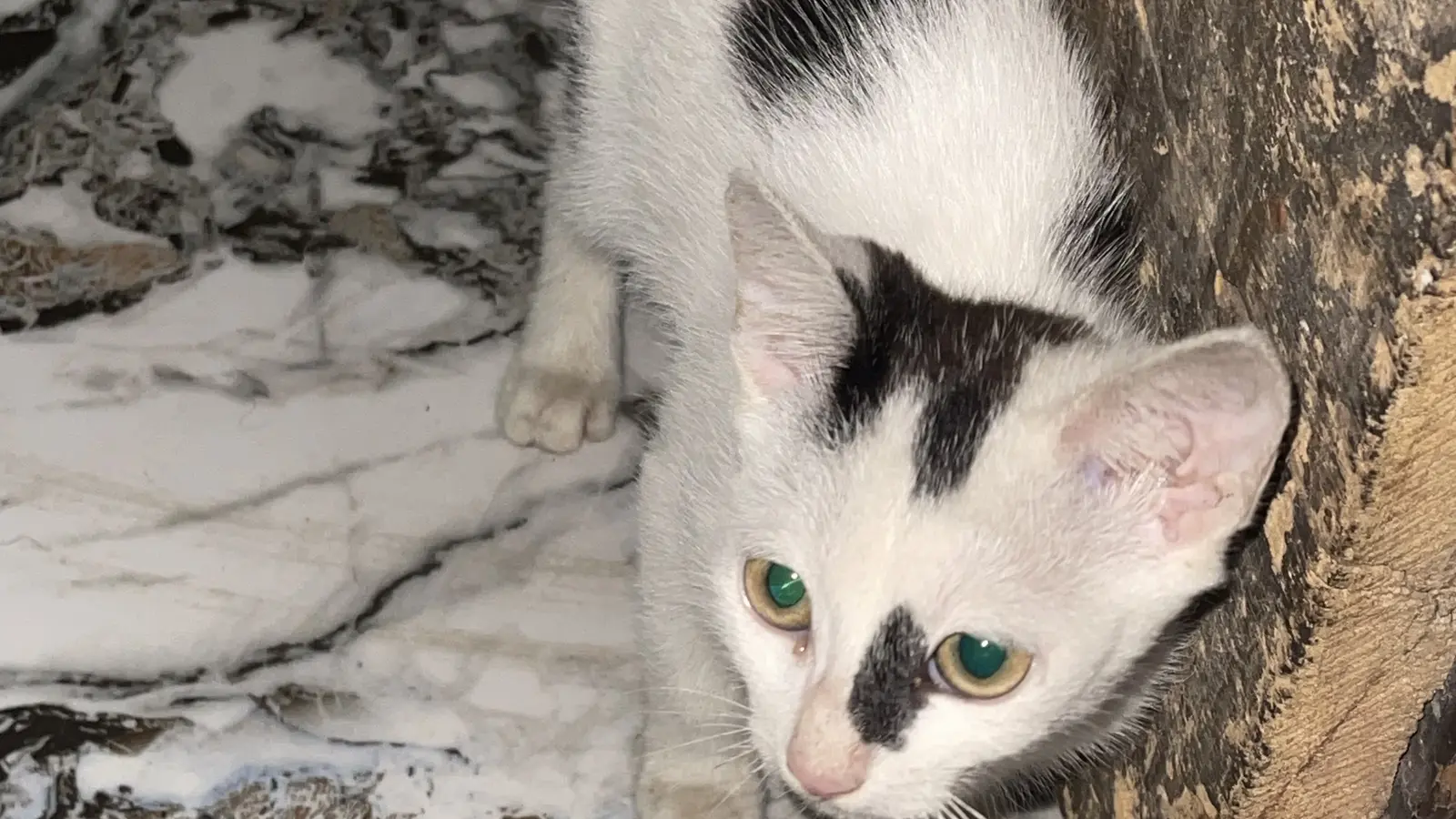
A purring cat can sound like a tiny engine, but its voice is made by living tissues and moving air. The scientific puzzle has two parts: how a small animal produces such a low-frequency vibration, and what the sound means in a particular interaction.
Those questions need different evidence. A voice-box experiment can reveal a sound-producing mechanism without explaining why a cat chooses to purr beside a person. A recording of a contented cat can establish the situation without revealing exactly how its vocal folds vibrate.
How does the voice box produce a purr?
The larynx, or voice box, contains the tissues that vibrate during vocal sound production. In many mammals, air passing through the larynx can sustain repeated tissue motion. The muscles position and regulate the system; they need not create each individual vibration with a separate contraction.
For cat purring, a long-standing explanation emphasised rapid, rhythmical muscle activation driven by the nervous system. A 2023 study by Christian Herbst and colleagues tested whether purr-frequency vibration was possible without that repeated neuromuscular drive.
What the 2023 experiment actually showed
The researchers studied eight excised domestic-cat larynges. With air supplied in a laboratory apparatus, the tissues produced self-sustaining oscillations in the low-frequency range associated with purring, around 25–30 hertz. Connective-tissue masses within the vocal folds help explain how such a small larynx can support unusually low frequencies.
This demonstrates a mechanical capacity of the tissue. It challenges the claim that repeated muscle contractions are essential for every purr-like pulse. It does not show that a living cat purrs without a brain, without muscular control of the voice box, or without control of its breathing.
The distinction also appears in David Reby and Andrey Anikin’s accompanying discussion of purr production. Producing a sound in an isolated organ is a powerful test of a physical mechanism, while observations of living animals are needed to establish how that mechanism is normally used.
Why some purrs seem especially hard to ignore
Purring can also function as communication. Work described by the University of Sussex’s mammal communication researchers examined solicitation purring directed toward people. A higher-frequency element embedded within the low purr contributed to a sense of urgency in human listeners.
That result concerns a particular acoustic feature and listeners’ responses. It does not mean every purr is a request for food or that cats consciously understand human psychology. A signal can influence a receiver without requiring that level of planning.
Does a purr tell you exactly how a cat feels?
No single sound provides a complete reading of an animal’s state. A purr heard while a cat approaches a familiar person has a different context from one heard during handling or an unfamiliar encounter. Posture, movement, willingness to interact and changes from the animal’s usual behaviour all provide information the sound alone cannot supply.
It is therefore better to describe the observation first: the cat approached, settled and purred; or the cat withdrew while purring. Calling both situations identical because the sound seems similar throws away useful information. Purring by itself is not a test of health.
What about claims that purring heals bones?
The laboratory study above did not test fracture repair, recovery from illness or treatment in people. Measuring a low sound frequency cannot establish a therapeutic effect. A healing claim would require evidence about exposure, dose, outcomes and appropriate comparison groups.
That leaves plenty to find interesting without attaching a medical promise. A small cat’s larynx has an unexpected capacity for low-frequency vibration, and some purrs contain acoustic details that change how people respond. The sound is both a physical event and part of an interaction.
Keep exploring
Animal communication also depends on what a receiver can detect. Explore why birds see colours humans cannot for a different sensory perspective.
Sources and further reading
Keep exploring.
One remarkable idea at a time—nature, science, history and beyond.
Last updated October 22, 2026.

Barnakle Editorial Team
Barnakle Editorial Team is the collective byline used for Barnakle’s editorial articles. The contributor profile explains the team identity and links to the publication’s editorial policies.
More from the editorial team →