Local heat activates individual conventional sprinkler heads; the wider system supplies water
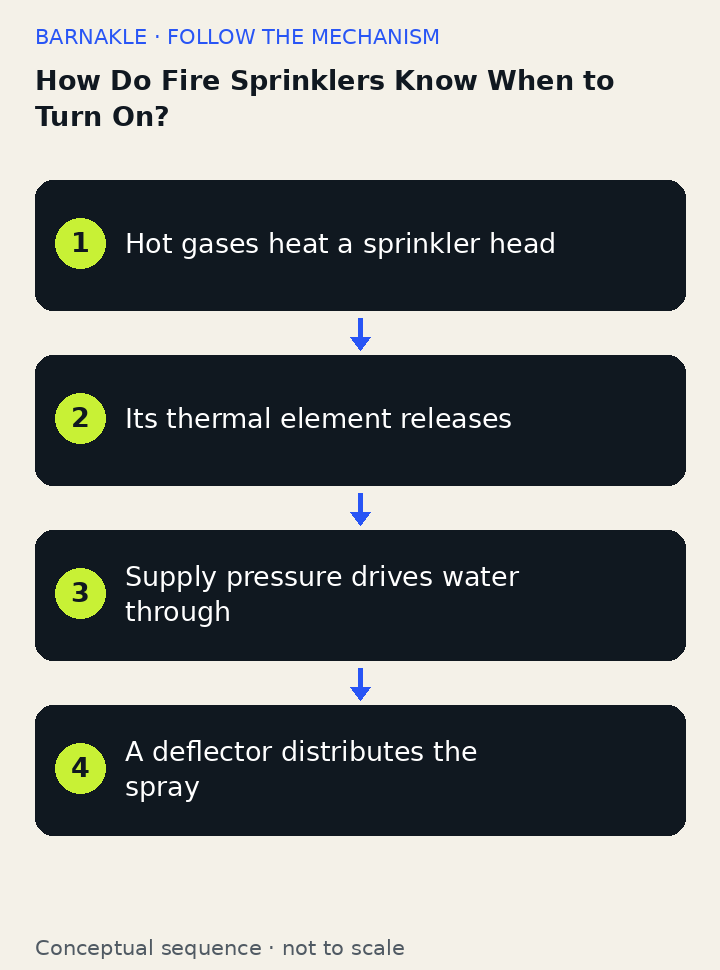
Cinema often shows every sprinkler in a building opening at once. A standard automatic sprinkler system usually responds much more locally: heat reaches a particular head, its thermal element releases and water flows there. The head is a mechanical device positioned where rising hot gases can reach it. Smoke detection and building alarms are related protections, but they perform different jobs.
The head responds to its own thermal conditions
Smoke alarms and sprinklers perform different jobs. A sprinkler responds to sustained heating near its ceiling location. Cooking smoke without enough hot gases should not activate a properly selected and maintained head.
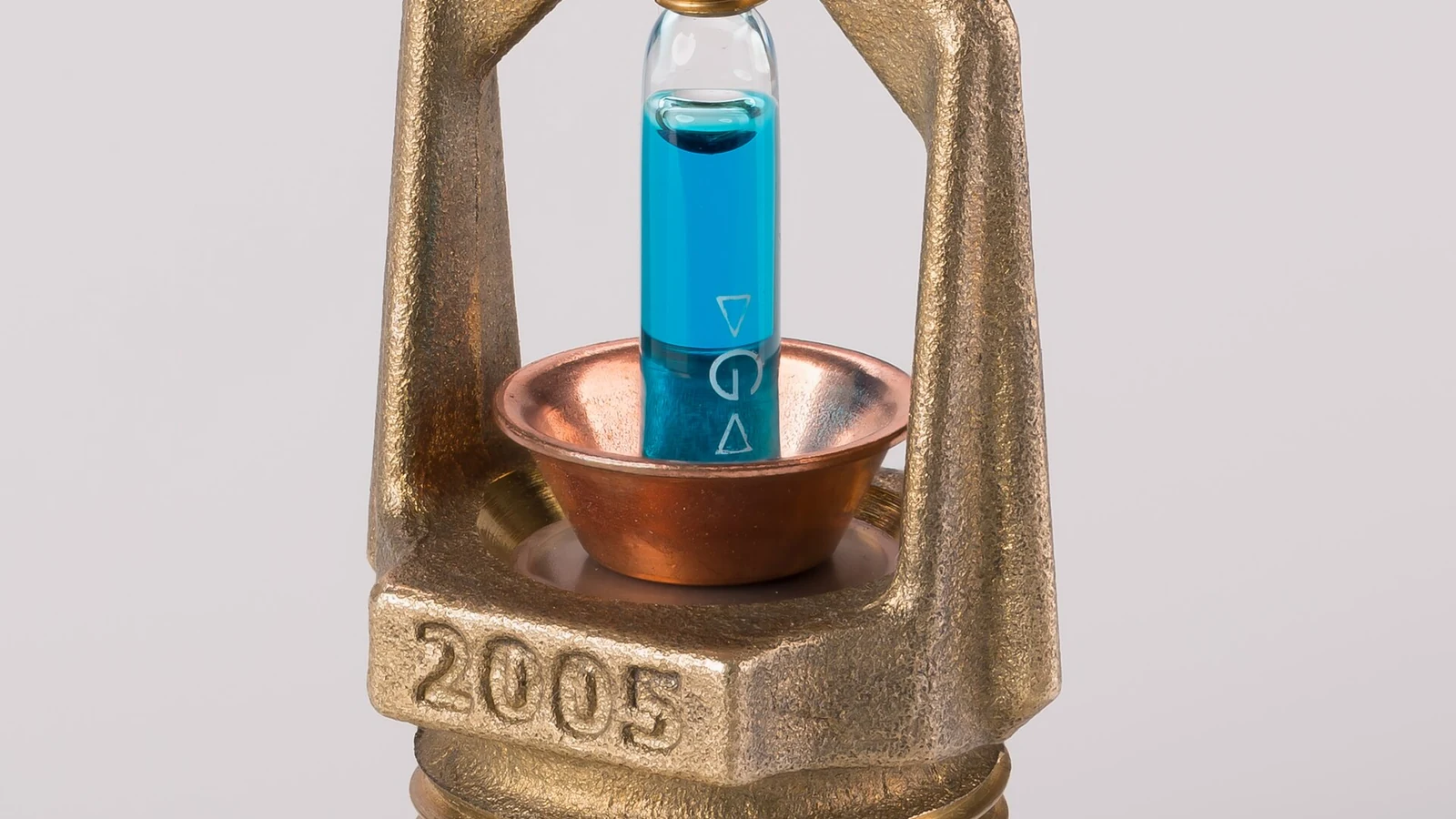
Many sprinkler heads contain a sealed bulb filled partly with coloured liquid. As the bulb heats, its fluid expands until the glass breaks and releases the sprinkler closure. A manufacturer’s rated temperature describes the element, while actual response also depends on the heating conditions.
Other designs use metal components joined by an alloy chosen for a predictable release temperature. Heating weakens the link so the waterway opens. The thermal element acts mechanically. That does not mean every part of a fire-protection installation is independent of electricity: pumps, detection equipment and control systems may need power.
Sprinklers come in temperature classes for expected environments. A head near an oven, ceiling heater or industrial process must be selected so normal conditions do not approach its rating while dangerous fire heating still produces timely response.
The focus here is a conventional automatic sprinkler with its own heat-sensitive element. Not every fire-suppression installation uses that arrangement. Open-head deluge systems and other specialized designs follow different control strategies. Keeping that scope clear avoids replacing one misleading movie image with an equally misleading claim that every sprinkler everywhere must work independently.
A released closure turns pressure into spray
Water leaving the orifice hits a carefully designed metal deflector. Its geometry divides the stream into droplets and distributes them across a tested coverage pattern rather than allowing one narrow jet to fall straight down.
The element holds a closure in place; it does not manufacture the water pressure. When it releases, the waterway opens and the available supply drives water through the orifice. The deflector changes that jet into a designed distribution. A sprinkler's placement and unobstructed spray path are therefore part of its function, not cosmetic installation details.
Sources: [2]
The surrounding system determines the water supply
In a wet-pipe system, water fills the branch piping up to each closed sprinkler. Opening one head creates flow immediately. Dry-pipe and preaction systems use different arrangements where freezing or accidental discharge presents special concerns.
Water motion can operate a switch, gong or monitored alarm connection. Detection and notification help occupants and emergency services respond. In a conventional wet-pipe system, the head does not need an alarm message to open, although suppression still depends on the available water supply.
Wet-pipe systems already contain water up to the closed heads. Other arrangements address conditions such as freezing or the need for additional control of water admission. Those differences belong to professional design. They should not be reduced to an instruction that a building occupant can safely diagnose or modify a valve arrangement from a general explainer.
Sources: [2]
What local operation means for fire safety
The flow of hot gases, the ceiling geometry and the location of the fire determine how each head is heated. Heads open when their individual thermal elements respond; several can operate during the same fire. This differs from a central alarm commanding every closed head to open at once.
Closed valves, painted heads, corrosion, damaged bulbs, blocked spray patterns or inadequate water supply can defeat the system. Qualified inspection, testing and maintenance address parts that are invisible during everyday occupancy.
Operation of a sprinkler does not replace evacuation or the work of smoke alarms. Fire conditions can change, and suppression depends on a functioning supply and suitable system design. Keep heads clear of paint, damage and obstructions; let qualified professionals inspect and service the installation under the requirements that apply to that building.
Sources: [2]
Why a smoke alarm can sound before sprinklers open
A smoke alarm may sound while ordinary automatic sprinkler heads remain closed. That is not evidence of a contradiction: the alarm detects a different condition and can warn people before a nearby head becomes hot enough to operate. Equally, the first head opening is not a signal to stay and watch whether it controls the fire.
Alarms and sprinkler heads have different roles
| Term or component | What it means here |
|---|---|
| Smoke alarm | Warns occupants about a detected condition. |
| Manual fire alarm | Lets a person initiate an alarm signal. |
| Automatic sprinkler head | A local thermal element can release a waterway. |
Ordinary sprinklers do not all open together
Pulling a fire alarm normally does not cause all sprinklers to discharge, and smoke alone does not open a standard sprinkler head. Sprinklers are not reusable after activation and should never be painted, decorated, struck or tested with an open flame. Fire safety work belongs to qualified professionals.
How sprinkler response and spray patterns are tested
Fire-protection engineers expose sprinklers to controlled heat plumes, measure response time, pressure, flow, droplet distribution and fire control, and test complete systems under standards that specify installation, water supply and obstruction conditions.
Fire-sprinkler questions
Will burnt toast set off a sprinkler?
Smoke may trigger an alarm, but a sprinkler requires sufficient local heat at the head.
Why are bulbs different colours?
The colour identifies a temperature rating under applicable standards; it is not decoration.
Should water be shut off after activation?
Evacuate, call emergency services and follow fire-department direction; do not compromise suppression while fire may remain.
Local heat starts a system that needs reliable water
The mechanism is elegantly direct: local heat releases a closure, water flows and a deflector distributes it. Its reliability still depends on design, supply, inspection and clear space around the head. During a fire, evacuate and follow emergency-service instructions rather than attempting to test, stop or supervise the suppression system.
Continue exploring
Sources and further reading
Keep exploring.
One remarkable idea at a time—nature, science, history and beyond.
Last updated November 6, 2026.

Barnakle Editorial Team
Barnakle Editorial Team is the collective byline used for Barnakle’s editorial articles. The contributor profile explains the team identity and links to the publication’s editorial policies.
More from the editorial team →