A retractor senses rapid webbing motion or vehicle deceleration and engages a toothed spool within milliseconds
The short answer
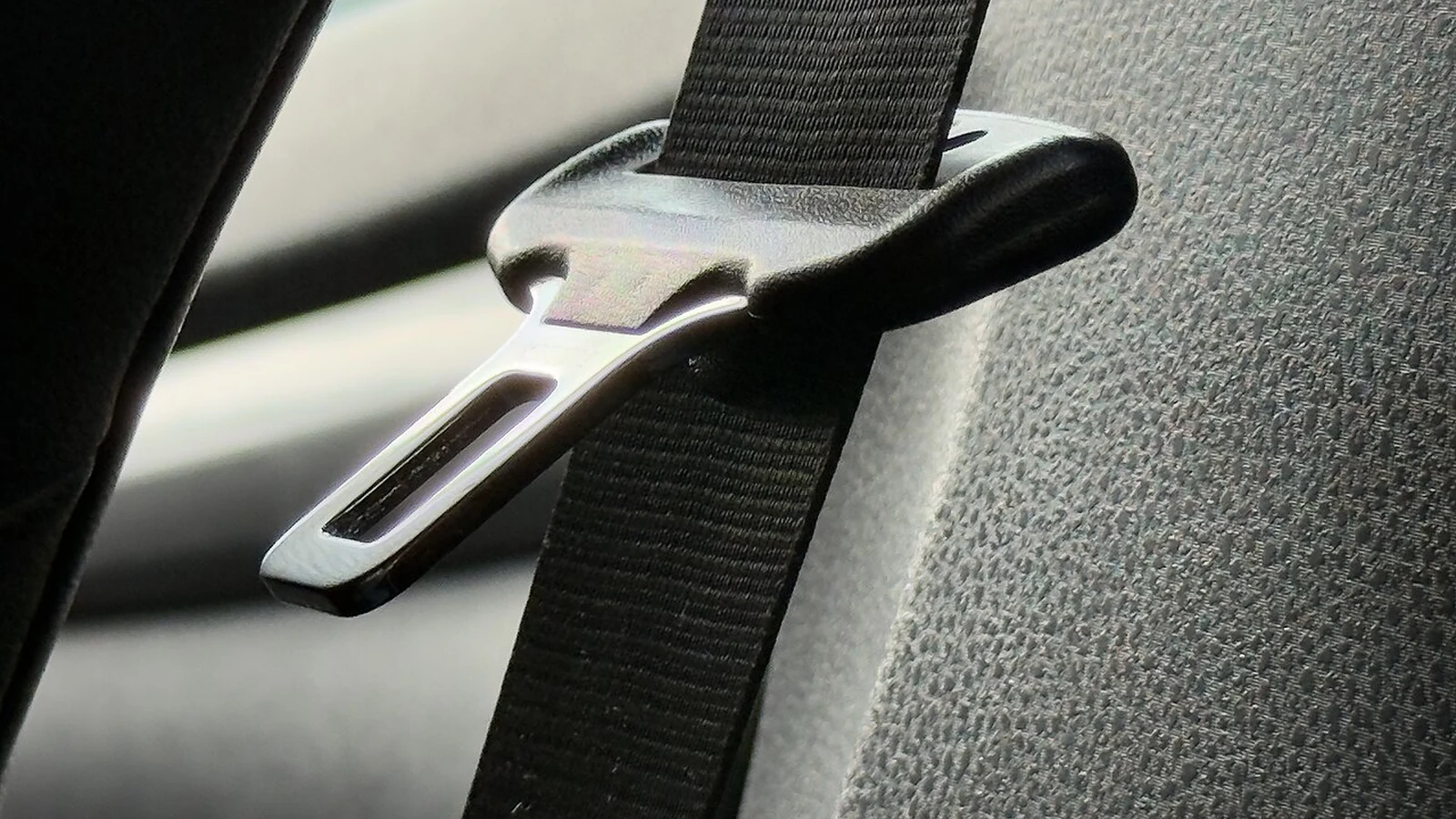
A three-point seat belt stores webbing on a spring-loaded retractor so it can extend slowly during normal movement. Emergency-locking mechanisms respond either to rapid spool rotation, vehicle deceleration or both. A centrifugal pawl, pendulum or weighted sensor engages teeth that stop the spool. In a severe crash, a pretensioner may tighten the belt using a pyrotechnic or mechanical actuator, while a load limiter later permits controlled payout to reduce chest force. The belt then spreads restraint across the pelvis and rib cage.
Comfort and emergency restraint come from different operating modes in the same assembly: free, spring-controlled motion during ordinary use and fast mechanical locking when acceleration crosses a designed threshold.
The spool stores the webbing
Strong woven polyester wraps around a reel. A clock spring applies gentle rewind torque, taking up slack while allowing the occupant to lean or reach when the webbing moves gradually.
The important distinction is between the visible result and the chain of physical events that produces it. Researchers follow forces, energy, matter or information through each stage and test those transitions instead of treating a familiar outcome as its own explanation.
Measurements separate the main mechanism from conditions that only change timing, scale or intensity. Investigators vary one factor at a time, compare controlled tests with everyday operation and ask whether the proposed explanation predicts a new observation.
Material, temperature, geometry, manufacturing tolerances, wear and environment all matter. They can change performance without overturning the underlying principle, so an accurate account states both the normal pattern and the limits around it.
Direct observation establishes what happens, instruments quantify changes too small or fast to see, and models test whether established scientific rules reproduce the pattern. Agreement among independent methods is stronger than one memorable demonstration.
Similar-looking cases may end differently when one link in the causal chain changes. Tracing that link explains both the ordinary result and the exceptions more effectively than memorising a label.
A strong explanation makes testable predictions, identifies failure modes and changes when better evidence reveals a missing variable. Those qualifications refine the mechanism rather than weakening it.
Webbing-sensitive locks detect rapid pull
Fast spool rotation moves inertial masses or centrifugal levers relative to the reel. Their motion drives a pawl into a ratchet, stopping further payout even if the vehicle itself is stationary.
The important distinction is between the visible result and the chain of physical events that produces it. Researchers follow forces, energy, matter or information through each stage and test those transitions instead of treating a familiar outcome as its own explanation.
Measurements separate the main mechanism from conditions that only change timing, scale or intensity. Investigators vary one factor at a time, compare controlled tests with everyday operation and ask whether the proposed explanation predicts a new observation.
Material, temperature, geometry, manufacturing tolerances, wear and environment all matter. They can change performance without overturning the underlying principle, so an accurate account states both the normal pattern and the limits around it.
Direct observation establishes what happens, instruments quantify changes too small or fast to see, and models test whether established scientific rules reproduce the pattern. Agreement among independent methods is stronger than one memorable demonstration.
Similar-looking cases may end differently when one link in the causal chain changes. Tracing that link explains both the ordinary result and the exceptions more effectively than memorising a label.
A strong explanation makes testable predictions, identifies failure modes and changes when better evidence reveals a missing variable. Those qualifications refine the mechanism rather than weakening it.
Vehicle-sensitive locks detect deceleration
A pendulum, ball or weighted sensor responds when the retractor housing changes velocity or orientation. It tips a lever into the locking mechanism, useful when crash motion begins before large belt extraction.
The important distinction is between the visible result and the chain of physical events that produces it. Researchers follow forces, energy, matter or information through each stage and test those transitions instead of treating a familiar outcome as its own explanation.
Measurements separate the main mechanism from conditions that only change timing, scale or intensity. Investigators vary one factor at a time, compare controlled tests with everyday operation and ask whether the proposed explanation predicts a new observation.
Material, temperature, geometry, manufacturing tolerances, wear and environment all matter. They can change performance without overturning the underlying principle, so an accurate account states both the normal pattern and the limits around it.
Direct observation establishes what happens, instruments quantify changes too small or fast to see, and models test whether established scientific rules reproduce the pattern. Agreement among independent methods is stronger than one memorable demonstration.
Similar-looking cases may end differently when one link in the causal chain changes. Tracing that link explains both the ordinary result and the exceptions more effectively than memorising a label.
A strong explanation makes testable predictions, identifies failure modes and changes when better evidence reveals a missing variable. Those qualifications refine the mechanism rather than weakening it.
Ratchet teeth carry the locked load
Once engaged, a pawl transfers spool torque into the retractor frame and vehicle anchorage. Components must withstand high transient force without skipping or releasing.
The important distinction is between the visible result and the chain of physical events that produces it. Researchers follow forces, energy, matter or information through each stage and test those transitions instead of treating a familiar outcome as its own explanation.
Measurements separate the main mechanism from conditions that only change timing, scale or intensity. Investigators vary one factor at a time, compare controlled tests with everyday operation and ask whether the proposed explanation predicts a new observation.
Material, temperature, geometry, manufacturing tolerances, wear and environment all matter. They can change performance without overturning the underlying principle, so an accurate account states both the normal pattern and the limits around it.
Direct observation establishes what happens, instruments quantify changes too small or fast to see, and models test whether established scientific rules reproduce the pattern. Agreement among independent methods is stronger than one memorable demonstration.
Similar-looking cases may end differently when one link in the causal chain changes. Tracing that link explains both the ordinary result and the exceptions more effectively than memorising a label.
A strong explanation makes testable predictions, identifies failure modes and changes when better evidence reveals a missing variable. Those qualifications refine the mechanism rather than weakening it.
Pretensioners remove slack early
Crash sensors can ignite a small gas generator or release stored mechanical energy. A piston or rotor pulls the buckle, cable or spool, positioning the occupant earlier in the restraint event.
The important distinction is between the visible result and the chain of physical events that produces it. Researchers follow forces, energy, matter or information through each stage and test those transitions instead of treating a familiar outcome as its own explanation.
Measurements separate the main mechanism from conditions that only change timing, scale or intensity. Investigators vary one factor at a time, compare controlled tests with everyday operation and ask whether the proposed explanation predicts a new observation.
Material, temperature, geometry, manufacturing tolerances, wear and environment all matter. They can change performance without overturning the underlying principle, so an accurate account states both the normal pattern and the limits around it.
Direct observation establishes what happens, instruments quantify changes too small or fast to see, and models test whether established scientific rules reproduce the pattern. Agreement among independent methods is stronger than one memorable demonstration.
Similar-looking cases may end differently when one link in the causal chain changes. Tracing that link explains both the ordinary result and the exceptions more effectively than memorising a label.
A strong explanation makes testable predictions, identifies failure modes and changes when better evidence reveals a missing variable. Those qualifications refine the mechanism rather than weakening it.
Load limiters manage chest force
After locking and pretensioning, a calibrated torsion bar or tear element allows limited controlled webbing payout above a force threshold. This lengthens stopping distance and works with airbags to reduce injury risk.
The important distinction is between the visible result and the chain of physical events that produces it. Researchers follow forces, energy, matter or information through each stage and test those transitions instead of treating a familiar outcome as its own explanation.
Measurements separate the main mechanism from conditions that only change timing, scale or intensity. Investigators vary one factor at a time, compare controlled tests with everyday operation and ask whether the proposed explanation predicts a new observation.
Material, temperature, geometry, manufacturing tolerances, wear and environment all matter. They can change performance without overturning the underlying principle, so an accurate account states both the normal pattern and the limits around it.
Direct observation establishes what happens, instruments quantify changes too small or fast to see, and models test whether established scientific rules reproduce the pattern. Agreement among independent methods is stronger than one memorable demonstration.
Similar-looking cases may end differently when one link in the causal chain changes. Tracing that link explains both the ordinary result and the exceptions more effectively than memorising a label.
A strong explanation makes testable predictions, identifies failure modes and changes when better evidence reveals a missing variable. Those qualifications refine the mechanism rather than weakening it.
The lap portion must engage the pelvis
Correct belt geometry directs load to the strong pelvic bones rather than the abdomen. The shoulder portion manages upper-body motion and helps prevent contact with the cabin.
The important distinction is between the visible result and the chain of physical events that produces it. Researchers follow forces, energy, matter or information through each stage and test those transitions instead of treating a familiar outcome as its own explanation.
Measurements separate the main mechanism from conditions that only change timing, scale or intensity. Investigators vary one factor at a time, compare controlled tests with everyday operation and ask whether the proposed explanation predicts a new observation.
Material, temperature, geometry, manufacturing tolerances, wear and environment all matter. They can change performance without overturning the underlying principle, so an accurate account states both the normal pattern and the limits around it.
Direct observation establishes what happens, instruments quantify changes too small or fast to see, and models test whether established scientific rules reproduce the pattern. Agreement among independent methods is stronger than one memorable demonstration.
Similar-looking cases may end differently when one link in the causal chain changes. Tracing that link explains both the ordinary result and the exceptions more effectively than memorising a label.
A strong explanation makes testable predictions, identifies failure modes and changes when better evidence reveals a missing variable. Those qualifications refine the mechanism rather than weakening it.
Airbags and belts work together
Airbags cushion a restrained occupant after the belt begins controlling motion. They are supplemental restraints, not substitutes, and deployment timing assumes correct seating and belt use.
The important distinction is between the visible result and the chain of physical events that produces it. Researchers follow forces, energy, matter or information through each stage and test those transitions instead of treating a familiar outcome as its own explanation.
Measurements separate the main mechanism from conditions that only change timing, scale or intensity. Investigators vary one factor at a time, compare controlled tests with everyday operation and ask whether the proposed explanation predicts a new observation.
Material, temperature, geometry, manufacturing tolerances, wear and environment all matter. They can change performance without overturning the underlying principle, so an accurate account states both the normal pattern and the limits around it.
Direct observation establishes what happens, instruments quantify changes too small or fast to see, and models test whether established scientific rules reproduce the pattern. Agreement among independent methods is stronger than one memorable demonstration.
Similar-looking cases may end differently when one link in the causal chain changes. Tracing that link explains both the ordinary result and the exceptions more effectively than memorising a label.
A strong explanation makes testable predictions, identifies failure modes and changes when better evidence reveals a missing variable. Those qualifications refine the mechanism rather than weakening it.
Damage can be hidden after a crash
Webbing fibres, stitching, pretensioners and retractors may have experienced loads or deployment even when they look normal. Manufacturer and repair guidance determine required replacement.
The important distinction is between the visible result and the chain of physical events that produces it. Researchers follow forces, energy, matter or information through each stage and test those transitions instead of treating a familiar outcome as its own explanation.
Measurements separate the main mechanism from conditions that only change timing, scale or intensity. Investigators vary one factor at a time, compare controlled tests with everyday operation and ask whether the proposed explanation predicts a new observation.
Material, temperature, geometry, manufacturing tolerances, wear and environment all matter. They can change performance without overturning the underlying principle, so an accurate account states both the normal pattern and the limits around it.
Direct observation establishes what happens, instruments quantify changes too small or fast to see, and models test whether established scientific rules reproduce the pattern. Agreement among independent methods is stronger than one memorable demonstration.
Similar-looking cases may end differently when one link in the causal chain changes. Tracing that link explains both the ordinary result and the exceptions more effectively than memorising a label.
A strong explanation makes testable predictions, identifies failure modes and changes when better evidence reveals a missing variable. Those qualifications refine the mechanism rather than weakening it.
Common misconceptions
A seat belt does not lock because the buckle senses fear or body weight, and holding an airbag-equipped steering wheel does not replace wearing it. Pulling sharply can demonstrate a webbing-sensitive mechanism, but it does not test every crash sensor, pretensioner, anchorage or load limiter.
Everyday shorthand becomes misleading when it confuses a contributing condition with the main cause, treats a signal as an energy source or assumes that every design and material behaves identically.
How we know
Safety engineers use sled tests, crash dummies, high-speed cameras and instrumented vehicles to measure webbing force, payout, occupant motion and timing. Regulatory tests evaluate strength, locking, durability and crash performance.
Laboratory measurements reveal mechanism, standards make comparisons reproducible and field records show how wear, weather and human use affect performance over time.
Frequently asked questions
Why can I lean forward slowly?
Slow spool movement stays below the inertial locking threshold.
Why does the belt lock on a hill?
A vehicle-sensitive pendulum can respond to retractor orientation as well as acceleration.
What is a pretensioner?
It rapidly removes slack at crash onset, often through a one-time pyrotechnic actuator.
Why can the belt give slightly after locking?
A load limiter may permit controlled payout to manage chest force.
Should a belt be replaced after a crash?
Follow the vehicle manufacturer and qualified repair guidance; hidden load or deployment damage may require replacement.
Key takeaways
- The retractor permits slow normal movement.
- Inertial sensors engage a pawl during rapid motion.
- Pretensioners tighten early and load limiters manage force.
- Correct fit lets the pelvis and chest share restraint loads.
Continue exploring
Sources and further reading
Keep exploring.
One remarkable idea at a time—nature, science, history and beyond.
Sources and further reading
Barnakle uses credible primary and authoritative sources wherever possible.
- NHTSA — Seat belts
- https://www.nhtsa.gov/vehicle-safety/seat-belts
- NHTSA — Federal motor vehicle safety standards
- https://www.nhtsa.gov/laws-regulations/fmvss
- Transport Canada — Seat belts
- https://tc.canada.ca/en/road-transportation/road-safety/seat-belts
Last reviewed October 15, 2026.

Barnakle Editorial Team
A member of the Barnakle editorial team, exploring remarkable ideas with clarity, curiosity and care.
More from this author →