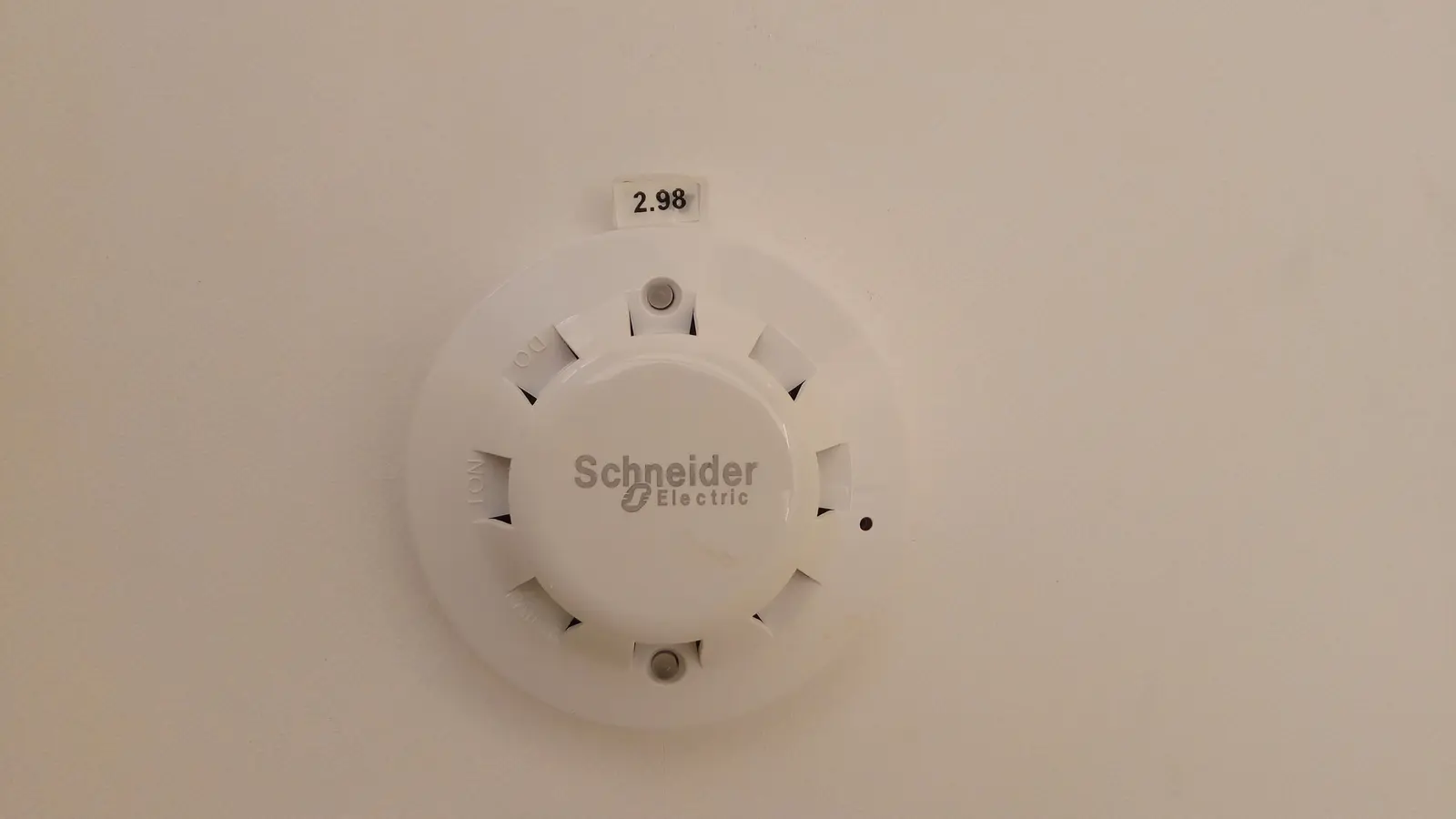
Smoke changes light or electrical current inside a sensing chamber, triggering an alarm before flames fill a room
The short answer
Smoke alarms detect airborne products of combustion rather than heat alone. Photoelectric alarms use a light source and sensor arranged so smoke particles scatter light into the detector. Ionization alarms monitor a tiny electrical current through ionized air; smoke disrupts that current. Modern guidance often favours using both sensing approaches or listed multi-sensor alarms because different fires produce different smoke.
The alarm on a ceiling is a small laboratory that repeatedly samples the surrounding air. Its value comes from early warning: it can react while a fire is still developing, giving occupants time to escape.
Combustion produces airborne particles
Smouldering and flaming materials release particles and droplets spanning many sizes. Air currents carry some of this aerosol into the detector chamber.
Understanding Combustion produces airborne particles means separating the immediate mechanism from the conditions that change its strength, timing or visibility. Researchers measure those variables independently, compare real examples and test whether the explanation predicts new observations. That turns a plausible story into an evidence-based account.
The evidence comes from methods that fail in different ways. Direct observation establishes what occurs, instruments quantify structure or timing, experiments isolate candidate causes and models test whether known physical, chemical or biological rules reproduce the pattern. Agreement among methods is stronger than repetition of one memorable example.
Context also matters. Scale, material, temperature, geometry, environment and measurement limits can change an outcome without overturning the underlying process. Accurate reporting preserves this variation, states uncertainty and avoids turning a useful explanation into a universal rule.
A practical explanation should identify what would change the observation. Following that question reveals the limits of present evidence and the next measurement needed.
This mechanism connects a familiar question with a broader scientific principle. Following matter, energy or information through each stage shows where the explanation is established, where natural variation enters and why a superficially similar event may have another cause.
Scientists also test alternatives rather than stopping at the first plausible account. A strong explanation predicts several linked observations, survives controlled comparison and specifies where it should fail. That approach keeps a clear answer accurate without hiding complexity.
Photoelectric alarms measure scattered light
A light-emitting diode points away from a photosensor in normal conditions. Smoke entering the chamber scatters part of the beam toward the sensor, increasing its signal.
Understanding Photoelectric alarms measure scattered light means separating the immediate mechanism from the conditions that change its strength, timing or visibility. Researchers measure those variables independently, compare real examples and test whether the explanation predicts new observations. That turns a plausible story into an evidence-based account.
The evidence comes from methods that fail in different ways. Direct observation establishes what occurs, instruments quantify structure or timing, experiments isolate candidate causes and models test whether known physical, chemical or biological rules reproduce the pattern. Agreement among methods is stronger than repetition of one memorable example.
Context also matters. Scale, material, temperature, geometry, environment and measurement limits can change an outcome without overturning the underlying process. Accurate reporting preserves this variation, states uncertainty and avoids turning a useful explanation into a universal rule.
A practical explanation should identify what would change the observation. Following that question reveals the limits of present evidence and the next measurement needed.
This mechanism connects a familiar question with a broader scientific principle. Following matter, energy or information through each stage shows where the explanation is established, where natural variation enters and why a superficially similar event may have another cause.
Scientists also test alternatives rather than stopping at the first plausible account. A strong explanation predicts several linked observations, survives controlled comparison and specifies where it should fail. That approach keeps a clear answer accurate without hiding complexity.
Ionization alarms monitor a small current
A tiny radioactive source ionizes molecules between electrodes, allowing a weak current to flow. Smoke particles capture ions and reduce the current enough to trigger the circuit.
Understanding Ionization alarms monitor a small current means separating the immediate mechanism from the conditions that change its strength, timing or visibility. Researchers measure those variables independently, compare real examples and test whether the explanation predicts new observations. That turns a plausible story into an evidence-based account.
The evidence comes from methods that fail in different ways. Direct observation establishes what occurs, instruments quantify structure or timing, experiments isolate candidate causes and models test whether known physical, chemical or biological rules reproduce the pattern. Agreement among methods is stronger than repetition of one memorable example.
Context also matters. Scale, material, temperature, geometry, environment and measurement limits can change an outcome without overturning the underlying process. Accurate reporting preserves this variation, states uncertainty and avoids turning a useful explanation into a universal rule.
A practical explanation should identify what would change the observation. Following that question reveals the limits of present evidence and the next measurement needed.
This mechanism connects a familiar question with a broader scientific principle. Following matter, energy or information through each stage shows where the explanation is established, where natural variation enters and why a superficially similar event may have another cause.
Scientists also test alternatives rather than stopping at the first plausible account. A strong explanation predicts several linked observations, survives controlled comparison and specifies where it should fail. That approach keeps a clear answer accurate without hiding complexity.
Fire type affects response
Slow smouldering fires often create larger visible particles that photoelectric sensors detect effectively. Fast flaming fires can generate smaller particles to which ionization designs may respond sooner under some conditions.
Understanding Fire type affects response means separating the immediate mechanism from the conditions that change its strength, timing or visibility. Researchers measure those variables independently, compare real examples and test whether the explanation predicts new observations. That turns a plausible story into an evidence-based account.
The evidence comes from methods that fail in different ways. Direct observation establishes what occurs, instruments quantify structure or timing, experiments isolate candidate causes and models test whether known physical, chemical or biological rules reproduce the pattern. Agreement among methods is stronger than repetition of one memorable example.
Context also matters. Scale, material, temperature, geometry, environment and measurement limits can change an outcome without overturning the underlying process. Accurate reporting preserves this variation, states uncertainty and avoids turning a useful explanation into a universal rule.
A practical explanation should identify what would change the observation. Following that question reveals the limits of present evidence and the next measurement needed.
This mechanism connects a familiar question with a broader scientific principle. Following matter, energy or information through each stage shows where the explanation is established, where natural variation enters and why a superficially similar event may have another cause.
Scientists also test alternatives rather than stopping at the first plausible account. A strong explanation predicts several linked observations, survives controlled comparison and specifies where it should fail. That approach keeps a clear answer accurate without hiding complexity.
Electronics distinguish signal from background
Amplifiers, thresholds and timing logic evaluate sensor output. Designs try to respond early without alarming constantly from dust, steam, cooking aerosols or insects.
Understanding Electronics distinguish signal from background means separating the immediate mechanism from the conditions that change its strength, timing or visibility. Researchers measure those variables independently, compare real examples and test whether the explanation predicts new observations. That turns a plausible story into an evidence-based account.
The evidence comes from methods that fail in different ways. Direct observation establishes what occurs, instruments quantify structure or timing, experiments isolate candidate causes and models test whether known physical, chemical or biological rules reproduce the pattern. Agreement among methods is stronger than repetition of one memorable example.
Context also matters. Scale, material, temperature, geometry, environment and measurement limits can change an outcome without overturning the underlying process. Accurate reporting preserves this variation, states uncertainty and avoids turning a useful explanation into a universal rule.
A practical explanation should identify what would change the observation. Following that question reveals the limits of present evidence and the next measurement needed.
This mechanism connects a familiar question with a broader scientific principle. Following matter, energy or information through each stage shows where the explanation is established, where natural variation enters and why a superficially similar event may have another cause.
Scientists also test alternatives rather than stopping at the first plausible account. A strong explanation predicts several linked observations, survives controlled comparison and specifies where it should fail. That approach keeps a clear answer accurate without hiding complexity.
The alarm sound must reach sleeping occupants
Detection is only the first step. Sounders, interconnected alarms and accessibility devices must communicate danger throughout the home, especially near bedrooms.
Understanding The alarm sound must reach sleeping occupants means separating the immediate mechanism from the conditions that change its strength, timing or visibility. Researchers measure those variables independently, compare real examples and test whether the explanation predicts new observations. That turns a plausible story into an evidence-based account.
The evidence comes from methods that fail in different ways. Direct observation establishes what occurs, instruments quantify structure or timing, experiments isolate candidate causes and models test whether known physical, chemical or biological rules reproduce the pattern. Agreement among methods is stronger than repetition of one memorable example.
Context also matters. Scale, material, temperature, geometry, environment and measurement limits can change an outcome without overturning the underlying process. Accurate reporting preserves this variation, states uncertainty and avoids turning a useful explanation into a universal rule.
A practical explanation should identify what would change the observation. Following that question reveals the limits of present evidence and the next measurement needed.
This mechanism connects a familiar question with a broader scientific principle. Following matter, energy or information through each stage shows where the explanation is established, where natural variation enters and why a superficially similar event may have another cause.
Scientists also test alternatives rather than stopping at the first plausible account. A strong explanation predicts several linked observations, survives controlled comparison and specifies where it should fail. That approach keeps a clear answer accurate without hiding complexity.
Placement changes what reaches the chamber
Smoke rises and moves with ceilings, walls, ventilation and temperature layers. Codes and manufacturer instructions account for dead-air spaces, kitchens, bathrooms and room geometry.
Understanding Placement changes what reaches the chamber means separating the immediate mechanism from the conditions that change its strength, timing or visibility. Researchers measure those variables independently, compare real examples and test whether the explanation predicts new observations. That turns a plausible story into an evidence-based account.
The evidence comes from methods that fail in different ways. Direct observation establishes what occurs, instruments quantify structure or timing, experiments isolate candidate causes and models test whether known physical, chemical or biological rules reproduce the pattern. Agreement among methods is stronger than repetition of one memorable example.
Context also matters. Scale, material, temperature, geometry, environment and measurement limits can change an outcome without overturning the underlying process. Accurate reporting preserves this variation, states uncertainty and avoids turning a useful explanation into a universal rule.
A practical explanation should identify what would change the observation. Following that question reveals the limits of present evidence and the next measurement needed.
This mechanism connects a familiar question with a broader scientific principle. Following matter, energy or information through each stage shows where the explanation is established, where natural variation enters and why a superficially similar event may have another cause.
Scientists also test alternatives rather than stopping at the first plausible account. A strong explanation predicts several linked observations, survives controlled comparison and specifies where it should fail. That approach keeps a clear answer accurate without hiding complexity.
Power and maintenance determine reliability
Battery-only, sealed-battery and hardwired units all require testing and eventual replacement. Dust, depleted power and ageing sensors can prevent a working-looking alarm from protecting anyone.
Understanding Power and maintenance determine reliability means separating the immediate mechanism from the conditions that change its strength, timing or visibility. Researchers measure those variables independently, compare real examples and test whether the explanation predicts new observations. That turns a plausible story into an evidence-based account.
The evidence comes from methods that fail in different ways. Direct observation establishes what occurs, instruments quantify structure or timing, experiments isolate candidate causes and models test whether known physical, chemical or biological rules reproduce the pattern. Agreement among methods is stronger than repetition of one memorable example.
Context also matters. Scale, material, temperature, geometry, environment and measurement limits can change an outcome without overturning the underlying process. Accurate reporting preserves this variation, states uncertainty and avoids turning a useful explanation into a universal rule.
A practical explanation should identify what would change the observation. Following that question reveals the limits of present evidence and the next measurement needed.
This mechanism connects a familiar question with a broader scientific principle. Following matter, energy or information through each stage shows where the explanation is established, where natural variation enters and why a superficially similar event may have another cause.
Scientists also test alternatives rather than stopping at the first plausible account. A strong explanation predicts several linked observations, survives controlled comparison and specifies where it should fail. That approach keeps a clear answer accurate without hiding complexity.
Carbon monoxide alarms detect a different hazard
CO is an invisible gas produced by incomplete combustion. Combination units may include both functions, but a smoke sensor alone does not necessarily detect dangerous carbon monoxide.
Understanding Carbon monoxide alarms detect a different hazard means separating the immediate mechanism from the conditions that change its strength, timing or visibility. Researchers measure those variables independently, compare real examples and test whether the explanation predicts new observations. That turns a plausible story into an evidence-based account.
The evidence comes from methods that fail in different ways. Direct observation establishes what occurs, instruments quantify structure or timing, experiments isolate candidate causes and models test whether known physical, chemical or biological rules reproduce the pattern. Agreement among methods is stronger than repetition of one memorable example.
Context also matters. Scale, material, temperature, geometry, environment and measurement limits can change an outcome without overturning the underlying process. Accurate reporting preserves this variation, states uncertainty and avoids turning a useful explanation into a universal rule.
A practical explanation should identify what would change the observation. Following that question reveals the limits of present evidence and the next measurement needed.
This mechanism connects a familiar question with a broader scientific principle. Following matter, energy or information through each stage shows where the explanation is established, where natural variation enters and why a superficially similar event may have another cause.
Scientists also test alternatives rather than stopping at the first plausible account. A strong explanation predicts several linked observations, survives controlled comparison and specifies where it should fail. That approach keeps a clear answer accurate without hiding complexity.
Common misconceptions
Smoke alarms do not wait for visible flames, and they do not all sense smoke in the same way. Painting over a detector, removing its battery after nuisance alarms or placing it randomly can defeat the safety system. A test button checks electronics and sounder but does not reproduce every real-fire condition.
Clear shorthand is valuable only when it preserves the causal chain. It becomes misleading when it substitutes a label for a mechanism, confuses association with cause or extends evidence beyond tested conditions.
How scientists know
Fire laboratories generate controlled smouldering and flaming sources, measure aerosol size and concentration, record detector response times and test nuisance resistance. Full-scale room experiments evaluate airflow, placement, audibility and escape time under repeatable conditions.
No single measurement carries the conclusion. Observations, experiments, theory and repeated records provide independent checks, while disagreement can reveal an uncontrolled variable or a question requiring a better test.
Frequently asked questions
Which type should I buy?
Follow local fire-code and fire-service guidance; listed dual-sensor or appropriately placed photoelectric alarms are common recommendations.
Why does cooking trigger an alarm?
Cooking aerosols can scatter light or disturb ion currents much like fire particles.
How often should alarms be tested?
Follow the manufacturer and local fire authority; monthly button testing is widely recommended.
Do alarms expire?
Yes. Sensors and electronics age, so replace units at the interval marked by the manufacturer.
Is a smoke alarm also a CO alarm?
Only if it is specifically labelled as a combination device.
Key takeaways
- Photoelectric sensors detect light scattered by smoke.
- Ionization sensors detect changes in a tiny electrical current.
- Different fires create different aerosols and response patterns.
- Correct placement, power, testing and replacement are essential.
Continue exploring
Sources and further reading
Keep exploring.
One remarkable idea at a time—nature, science, history and beyond.
Sources and further reading
Barnakle uses credible primary and authoritative sources wherever possible.
- U.S. Fire Administration — Smoke alarms
- https://www.usfa.fema.gov/prevention/home-fires/prepare-for-fire/smoke-alarms/
- NIST — Performance of home smoke alarms
- https://www.nist.gov/el/fire-research-division-73300/firegov-fire-service/performance-home-smoke-alarms-analysis-response
- NIST — Smoke alarm research
- https://www.nist.gov/topics/fire/smoke-alarms
Last reviewed October 14, 2026.

Barnakle Editorial Team
A member of the Barnakle editorial team, exploring remarkable ideas with clarity, curiosity and care.
More from this author →