
Cities below cities
Ancient cities are often not hidden in untouched wilderness. They survive beneath plazas, transit lines and later buildings because people repeatedly build on strategic, sacred and useful places. Urban archaeology reconstructs those layers through controlled excavation, dating, objects, architecture and historical records.
- A buried wall is evidence, not a complete story; context establishes when and how it was used.
- Construction projects can expose archaeology, but rescue excavation works under severe time and access limits.
- Tenochtitlan, Rome and Constantinople/Istanbul show different kinds of urban continuity.
- Preservation decisions balance research, living communities, infrastructure and cultural authority.
A city rarely begins on empty ground. Water, defensible terrain, trade routes and sacred places draw people back. Walls are repaired, temples dismantled, streets raised, harbors filled and foundations reused. Centuries later, the past may sit only a few meters below a café, station or apartment block.
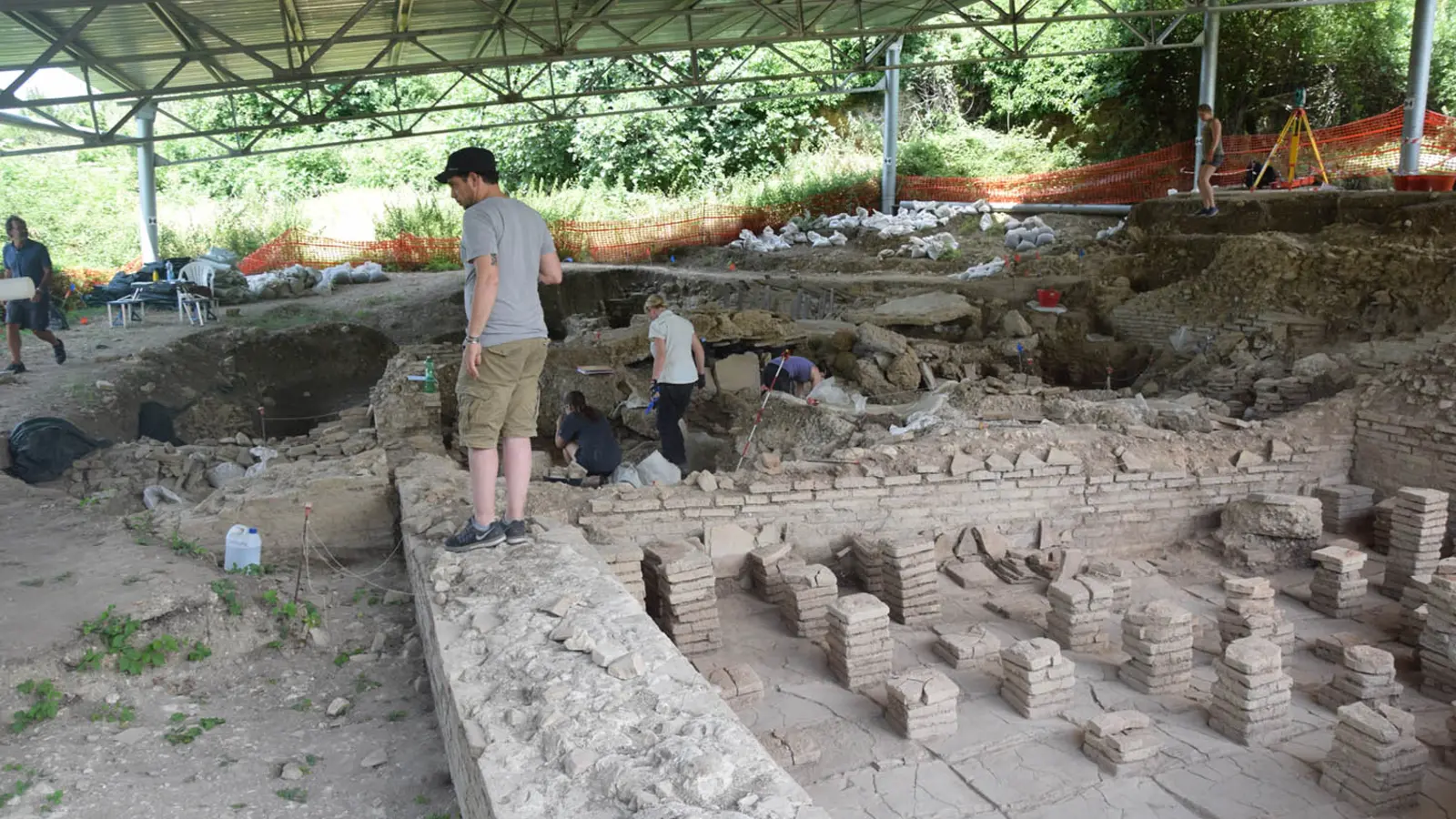
That makes urban archaeology a science of interruption. Researchers seldom get an open field and unlimited time. They work in shafts, basements and construction corridors while a living city continues overhead. The prize is not simply treasure. It is context: the precise relationship among a surface, a posthole, a floor, an object and everything above and below it.
Tenochtitlan beneath Mexico City
The Mexica capital of Tenochtitlan was founded on islands in Lake Texcoco and grew through causeways, canals, temples, palaces, markets and engineered land. Spanish forces and Indigenous allies captured it in 1521. The colonial capital that followed reused stone, altered water systems and built directly across the former ceremonial center. Modern Mexico City developed over both.
Near the Metropolitan Cathedral, the Templo Mayor project has revealed successive building phases of the principal temple precinct. Each enlargement enclosed earlier construction, preserving a nested architectural sequence. Offerings recovered in controlled contexts connect animals, plants, minerals and crafted objects to exchange networks and ritual practice across Mesoamerica.
The key word is beneath, but not “gone.” Mexico City’s Indigenous histories persist in language, communities, place names and public memory. Archaeology adds material evidence; it does not replace descendants or reduce a living heritage to ruins.
Rome’s many ground levels
Rome is an extreme example of accumulation. Republican structures, imperial monuments, early Christian buildings, medieval houses and modern infrastructure overlap. The present street is not a universal reference point. In some places, ancient pavements lie well below it; elsewhere, later builders cut into or reused older fabric.
Churches can preserve this vertical history. Later sanctuaries were sometimes constructed above earlier buildings, leaving accessible spaces below. Archaeologists combine masonry styles, inscriptions, coins, ceramics, radiocarbon dates and stratigraphic relationships. No single clue carries the whole chronology.
Reuse complicates the picture. A marble block might be moved from a monument into a later wall. Its inscription dates the block’s original use, not automatically the wall. Archaeologists call this residual or redeposited material and interpret it through context.
Constantinople beneath Istanbul
When rail construction at Yenikapı opened a large window into Istanbul’s buried shoreline, archaeologists encountered the harbor of Theodosius and numerous shipwrecks. Sediments had recorded changes in a working port that once connected Constantinople to the wider Mediterranean and Black Sea worlds.
Ship timbers can preserve construction details rarely visible in texts. Cargo, anchors and harbor deposits help reconstruct trade and daily activity. At the same time, the excavation existed because a modern transport project needed to proceed. This is a defining tension of rescue archaeology: development creates access to evidence while also setting deadlines and physical limits.
How does a city become buried?
| Process | What accumulates | What archaeologists look for |
|---|---|---|
| Rebuilding | New floors and foundations above old ones | Wall joints, floor sequences, reused stone |
| Flooding and sediment | Silt, sand and harbor deposits | Sediment layers, organisms, dated material |
| Demolition and fire | Collapse, ash and rubble | Burn patterns, sealed deposits, structural failure |
| Changing infrastructure | Raised roads, drains and filled canals | Engineering cuts and chronological relationships |
Popular accounts often imagine one catastrophic day sealing an entire city. That happens in exceptional cases, but gradual accumulation is common. Waste, repairs, imported soil and repeated construction raise surfaces. Materials sink or are compressed. Rivers move. Coastlines advance or retreat. What looks like one buried city may be a stack of many changing neighborhoods.
Stratigraphy: reading relationships
Stratigraphy applies a simple principle carefully: unless disturbed, a layer below another is generally older. But cities are full of disturbances. A foundation trench cuts earlier deposits. A pipe slices through several centuries. An animal burrow moves small objects. Archaeologists record these relationships in plans, photographs, drawings and digital models before removing each layer.
Dating methods provide different resolutions. A coin supplies an earliest possible date for the deposit containing it. Pottery styles can narrow a period. Radiocarbon dating estimates when an organism stopped exchanging carbon with its environment. Dendrochronology can match tree-ring patterns. Written records may identify a named building, but only if the text and material remains truly correspond.
Why ground-penetrating radar is not an X-ray
Geophysical tools can detect contrasts beneath the surface. Ground-penetrating radar sends electromagnetic pulses and measures reflections; magnetometry records magnetic variation. These methods can suggest walls, voids or ditches, but the images require interpretation. Moisture, soil chemistry, utilities and modern debris create confusing signals.
A striking scan is therefore a lead, not proof of a lost palace. Researchers test interpretations against other evidence and, where responsible and permitted, excavation. Good archaeology preserves uncertainty until the evidence supports a narrower claim.
Who owns the layered city?
Urban discoveries immediately raise decisions. Should remains stay in place? Can a station be redesigned around them? Who has authority to study sacred objects? What should be returned? Laws differ, but ethical work involves descendant communities, local residents, heritage professionals and public agencies—not only the excavating team.
Preservation in place can protect context but may limit public access. Removal may allow conservation or construction yet sever an object from its setting. Digital recording helps, but a model is not the physical site. There is rarely a frictionless answer.
The city is an archive that people inhabit
The most important lesson from archaeology beneath modern landscapes is not that the present has covered the past. It is that the two remain entangled. Foundations guide later property lines. Water engineering shapes growth. Ruins become quarries, landmarks or sacred places. Names survive even when buildings do not.
Every construction trench is a sample, not a complete cross-section. Each discovery changes a map whose blank spaces still matter. The responsible headline is not “a lost city found.” It is more precise and more interesting: a new piece of a continuously occupied place has returned to view.
Sources and further reading
- UNESCO: Historic Centre of Mexico City and Xochimilco
- INAH: Museo del Templo Mayor
- UNESCO: Historic Areas of Istanbul
- Parco archeologico del Colosseo: research and monuments
How Barnakle selects and verifies sources · Corrections and updates
Keep exploring.
One remarkable idea at a time—nature, science, history and beyond.
Sources and further reading
Barnakle uses credible primary and authoritative sources wherever possible.
- UNESCO Mexico City; INAH Templo Mayor; UNESCO Istanbul; Parco archeologico del Colosseo
Last reviewed September 16, 2026.

Barnakle Editorial Team
A member of the Barnakle editorial team, exploring remarkable ideas with clarity, curiosity and care.
More from this author →