Ultrasonic calls return as precisely timed echoes that reveal distance, direction, texture and motion
The short answer
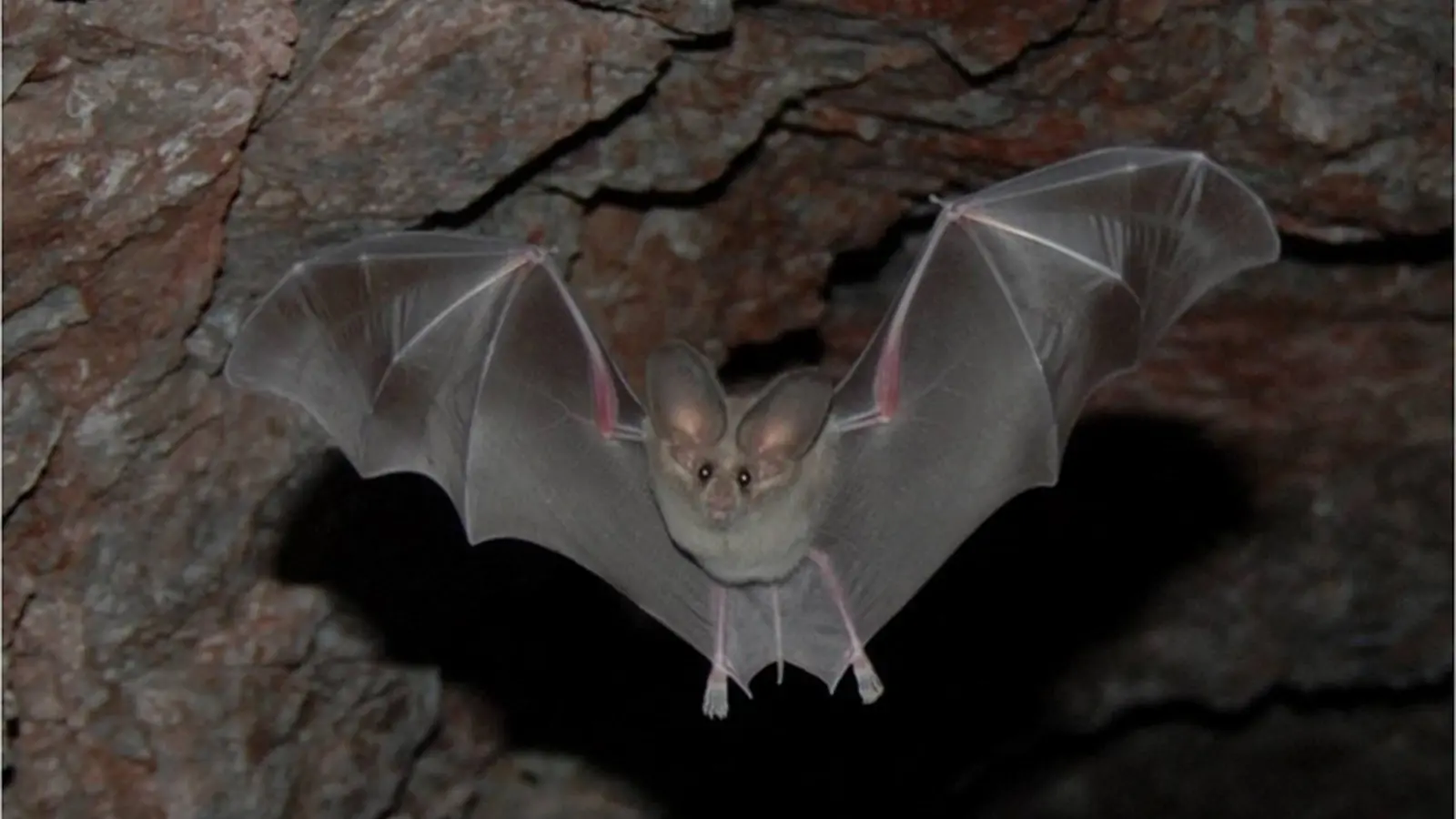
A flying bat turns sound into a rapidly updated spatial model while moving through darkness. It produces a call, listens for faint reflections and decides how to steer within milliseconds. Different lineages and habitats have evolved strikingly different acoustic strategies.
Calls begin in the larynx or mouth
Most echolocating bats generate sound with the larynx and emit it through the mouth or nostrils. Nose leaves and facial structures shape the outgoing beam.
Ultrasound offers fine detail
Short wavelengths reflect from small insects and surface features. Higher frequencies improve detail but fade faster in air, creating a tradeoff between resolution and range.
Echo delay measures distance
Sound travels at a predictable speed. The interval between a call and its returning echo provides round-trip travel time and therefore target range.
Two ears reveal direction
Differences in arrival time and loudness between the ears provide angle cues. Outer-ear shapes also filter frequencies according to elevation and direction.
Frequency sweeps separate objects
Frequency-modulated calls span a band of pitches. Their returning patterns help distinguish echoes close together in time, valuable in cluttered forests and near vegetation.
Constant frequencies reveal motion
Some bats sustain narrow frequencies and detect Doppler shifts from moving wings or relative motion. They may compensate for their own flight speed.
Attack calls accelerate
A searching bat emits spaced calls. As prey nears, intervals shorten into a terminal buzz that updates position many times per second.
Bats regulate loudness
Open-air hunters can emit intense long-range calls and reduce output near a target. In clutter, quieter calls limit distracting reflections.
Neural circuits preserve timing
Specialized auditory pathways compare tiny differences in frequency, delay and amplitude, combining them with vision, memory and vestibular information.
Prey species fight back
Some moths hear ultrasound and dive or turn. Tiger moths can produce warning or jamming clicks, creating an evolutionary contest with bats.
Groups share acoustic space
Nearby bats create interference. Individuals adjust timing, frequency or flight path, though evidence for one universal deliberate jamming strategy remains debated.
Species use different systems
Open sky, forest edge and dense foliage impose different problems. Call structure reflects habitat, body size, prey and evolutionary history.
Common misconceptions
Bats are not blind, and echolocation is not a crude replacement for vision. Many see well and combine visual and acoustic information. They emit adaptive pulses rather than one continuous radar-like tone.
How scientists know
Researchers use ultrasonic microphones, infrared cameras and microphone arrays to reconstruct calls, beams and flight. Playback experiments alter echoes, neurophysiology records auditory responses and miniature tags capture sound and motion from the bat’s perspective.
Can people hear bat calls?
Most are ultrasonic, though detectors can shift them into human hearing.
Do all bats echolocate?
Most do, but signal production and sensory reliance vary substantially.
How far can bats detect prey?
Range depends on frequency, loudness, target size, weather and clutter.
Can bats collide?
They can, but rapid sensing and vision usually help avoid neighbours and obstacles.
Do bats use the same call all night?
No. They continually change timing, duration, frequency and intensity.
Key takeaways
- Echo delay reveals distance.
- Ear and spectral differences reveal direction and structure.
- Calls accelerate during prey capture.
- Echolocation varies among habitats and species.
Continue exploring
Sources and further reading
Keep exploring.
One remarkable idea at a time—nature, science, history and beyond.
Last updated October 29, 2026.

Barnakle Editorial Team
Barnakle Editorial Team is the collective byline used for Barnakle’s editorial articles. The contributor profile explains the team identity and links to the publication’s editorial policies.
More from the editorial team →