

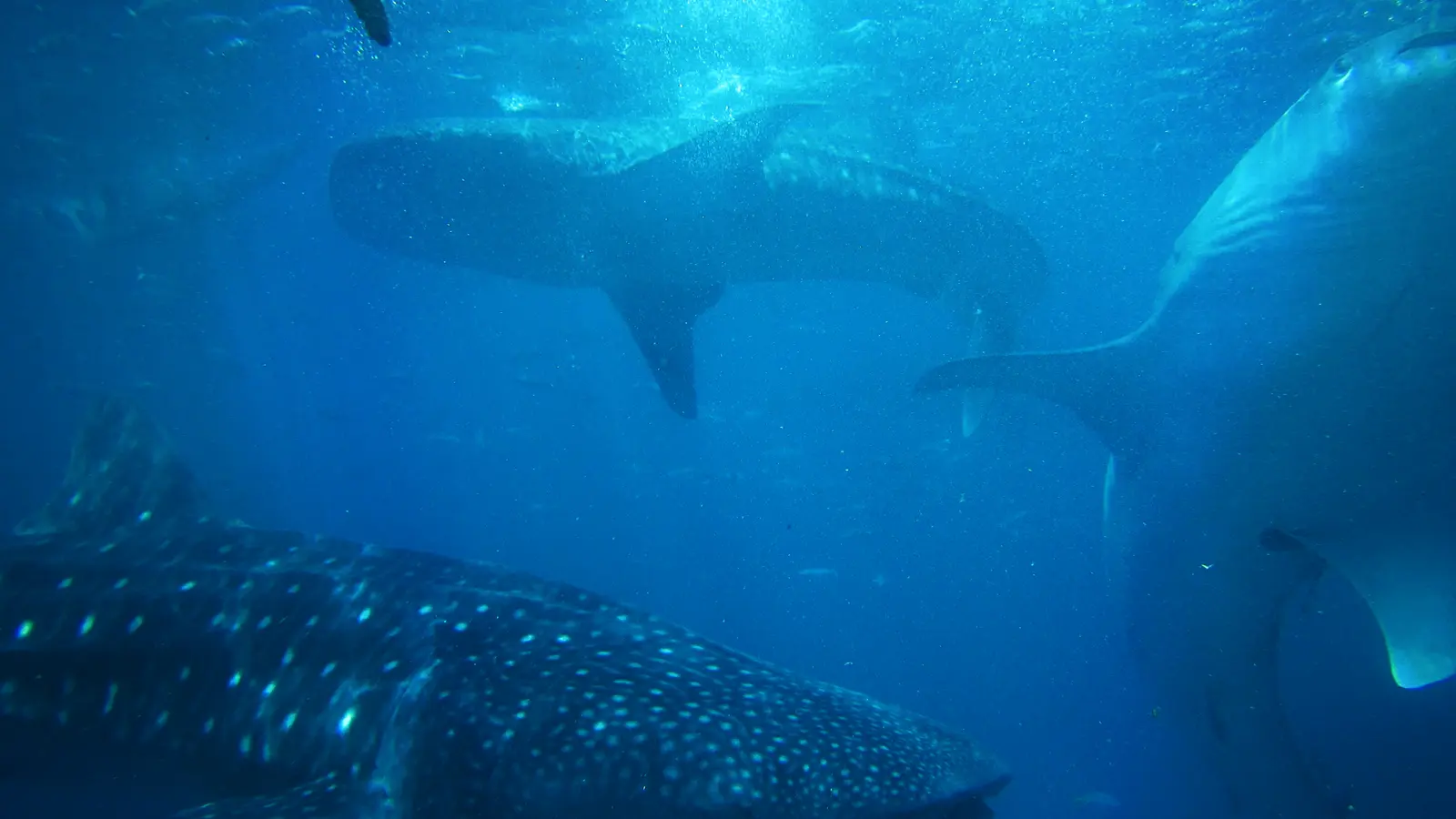
Gills extract dissolved oxygen through thin surfaces and countercurrent blood flow
The short answer
Most fish breathe by moving water across gills. Oxygen dissolved in water diffuses through thin gill surfaces into blood, while carbon dioxide diffuses out. In many bony fish, blood moves opposite to the water, preserving an oxygen gradient across much of the exchange surface.
Water contains oxygen molecules even though its oxygen concentration is far below that of air. A fish therefore needs a large, delicate exchange surface, continuous water flow and circulation that delivers absorbed oxygen to tissues. Gills combine all three while also helping regulate salts, acidity and waste.
Water contains dissolved oxygen
Atmospheric exchange and photosynthesis supply oxygen to water. Temperature, salinity, pressure, mixing and biological activity determine how much remains available.
Understanding Water contains dissolved oxygen means separating the immediate mechanism from the conditions that change its strength, timing or visibility. Researchers measure those variables independently, compare natural examples and test whether the same explanation predicts new observations. That turns a plausible story into an evidence-based account.
The evidence comes from methods that fail in different ways. Direct observation establishes what occurs, instruments quantify structure or timing, experiments isolate candidate causes and models test whether known physical or biological rules reproduce the pattern. Agreement among methods is stronger than repetition of one memorable example.
Context also matters. Species, scale, temperature, geometry, environment and measurement limits can change an outcome without overturning the underlying process. Accurate reporting preserves this variation, states uncertainty and avoids turning a useful explanation into a universal rule.
A practical explanation should identify what would change the observation. Following that question reveals the limits of present evidence and the next measurement needed.
This mechanism also connects a reader-level question with a broader scientific principle. Following matter, energy or information through each stage shows where the explanation is well established, where natural variation enters and why a superficially similar event may have a different cause. Those distinctions support accurate comparisons and useful follow-up questions.
Gill arches carry filaments
Gill arches bear rows of filaments, each carrying many microscopic lamellae. This folded architecture creates enormous surface area in a compact space.
Understanding Gill arches carry filaments means separating the immediate mechanism from the conditions that change its strength, timing or visibility. Researchers measure those variables independently, compare natural examples and test whether the same explanation predicts new observations. That turns a plausible story into an evidence-based account.
The evidence comes from methods that fail in different ways. Direct observation establishes what occurs, instruments quantify structure or timing, experiments isolate candidate causes and models test whether known physical or biological rules reproduce the pattern. Agreement among methods is stronger than repetition of one memorable example.
Context also matters. Species, scale, temperature, geometry, environment and measurement limits can change an outcome without overturning the underlying process. Accurate reporting preserves this variation, states uncertainty and avoids turning a useful explanation into a universal rule.
A practical explanation should identify what would change the observation. Following that question reveals the limits of present evidence and the next measurement needed.
This mechanism also connects a reader-level question with a broader scientific principle. Following matter, energy or information through each stage shows where the explanation is well established, where natural variation enters and why a superficially similar event may have a different cause. Those distinctions support accurate comparisons and useful follow-up questions.
Diffusion crosses a thin barrier
Only a short distance separates water from capillary blood. Oxygen follows its partial-pressure gradient inward while carbon dioxide generally moves outward.
Understanding Diffusion crosses a thin barrier means separating the immediate mechanism from the conditions that change its strength, timing or visibility. Researchers measure those variables independently, compare natural examples and test whether the same explanation predicts new observations. That turns a plausible story into an evidence-based account.
The evidence comes from methods that fail in different ways. Direct observation establishes what occurs, instruments quantify structure or timing, experiments isolate candidate causes and models test whether known physical or biological rules reproduce the pattern. Agreement among methods is stronger than repetition of one memorable example.
Context also matters. Species, scale, temperature, geometry, environment and measurement limits can change an outcome without overturning the underlying process. Accurate reporting preserves this variation, states uncertainty and avoids turning a useful explanation into a universal rule.
A practical explanation should identify what would change the observation. Following that question reveals the limits of present evidence and the next measurement needed.
This mechanism also connects a reader-level question with a broader scientific principle. Following matter, energy or information through each stage shows where the explanation is well established, where natural variation enters and why a superficially similar event may have a different cause. Those distinctions support accurate comparisons and useful follow-up questions.
Countercurrent flow preserves the gradient
Water and blood moving in opposite directions continually meet fluid with a favourable oxygen difference, allowing efficient extraction along the lamella.
Understanding Countercurrent flow preserves the gradient means separating the immediate mechanism from the conditions that change its strength, timing or visibility. Researchers measure those variables independently, compare natural examples and test whether the same explanation predicts new observations. That turns a plausible story into an evidence-based account.
The evidence comes from methods that fail in different ways. Direct observation establishes what occurs, instruments quantify structure or timing, experiments isolate candidate causes and models test whether known physical or biological rules reproduce the pattern. Agreement among methods is stronger than repetition of one memorable example.
Context also matters. Species, scale, temperature, geometry, environment and measurement limits can change an outcome without overturning the underlying process. Accurate reporting preserves this variation, states uncertainty and avoids turning a useful explanation into a universal rule.
A practical explanation should identify what would change the observation. Following that question reveals the limits of present evidence and the next measurement needed.
This mechanism also connects a reader-level question with a broader scientific principle. Following matter, energy or information through each stage shows where the explanation is well established, where natural variation enters and why a superficially similar event may have a different cause. Those distinctions support accurate comparisons and useful follow-up questions.
The mouth and operculum pump water
Many bony fish coordinate mouth and gill-cover movements. Pressure changes draw water in, drive it across gills and release it behind the head.
Understanding The mouth and operculum pump water means separating the immediate mechanism from the conditions that change its strength, timing or visibility. Researchers measure those variables independently, compare natural examples and test whether the same explanation predicts new observations. That turns a plausible story into an evidence-based account.
The evidence comes from methods that fail in different ways. Direct observation establishes what occurs, instruments quantify structure or timing, experiments isolate candidate causes and models test whether known physical or biological rules reproduce the pattern. Agreement among methods is stronger than repetition of one memorable example.
Context also matters. Species, scale, temperature, geometry, environment and measurement limits can change an outcome without overturning the underlying process. Accurate reporting preserves this variation, states uncertainty and avoids turning a useful explanation into a universal rule.
A practical explanation should identify what would change the observation. Following that question reveals the limits of present evidence and the next measurement needed.
This mechanism also connects a reader-level question with a broader scientific principle. Following matter, energy or information through each stage shows where the explanation is well established, where natural variation enters and why a superficially similar event may have a different cause. Those distinctions support accurate comparisons and useful follow-up questions.
Some species use ram ventilation
Tunas and some sharks push water over gills by swimming. Dependence varies, so it is false that every shark must swim continuously.
Understanding Some species use ram ventilation means separating the immediate mechanism from the conditions that change its strength, timing or visibility. Researchers measure those variables independently, compare natural examples and test whether the same explanation predicts new observations. That turns a plausible story into an evidence-based account.
The evidence comes from methods that fail in different ways. Direct observation establishes what occurs, instruments quantify structure or timing, experiments isolate candidate causes and models test whether known physical or biological rules reproduce the pattern. Agreement among methods is stronger than repetition of one memorable example.
Context also matters. Species, scale, temperature, geometry, environment and measurement limits can change an outcome without overturning the underlying process. Accurate reporting preserves this variation, states uncertainty and avoids turning a useful explanation into a universal rule.
A practical explanation should identify what would change the observation. Following that question reveals the limits of present evidence and the next measurement needed.
This mechanism also connects a reader-level question with a broader scientific principle. Following matter, energy or information through each stage shows where the explanation is well established, where natural variation enters and why a superficially similar event may have a different cause. Those distinctions support accurate comparisons and useful follow-up questions.
Warm water can cause stress
Warm water generally holds less oxygen while metabolism may demand more. Crowding, blooms and decomposition can intensify hypoxia.
Understanding Warm water can cause stress means separating the immediate mechanism from the conditions that change its strength, timing or visibility. Researchers measure those variables independently, compare natural examples and test whether the same explanation predicts new observations. That turns a plausible story into an evidence-based account.
The evidence comes from methods that fail in different ways. Direct observation establishes what occurs, instruments quantify structure or timing, experiments isolate candidate causes and models test whether known physical or biological rules reproduce the pattern. Agreement among methods is stronger than repetition of one memorable example.
Context also matters. Species, scale, temperature, geometry, environment and measurement limits can change an outcome without overturning the underlying process. Accurate reporting preserves this variation, states uncertainty and avoids turning a useful explanation into a universal rule.
A practical explanation should identify what would change the observation. Following that question reveals the limits of present evidence and the next measurement needed.
This mechanism also connects a reader-level question with a broader scientific principle. Following matter, energy or information through each stage shows where the explanation is well established, where natural variation enters and why a superficially similar event may have a different cause. Those distinctions support accurate comparisons and useful follow-up questions.
Haemoglobin carries oxygen
Oxygen binds to haemoglobin in red blood cells and circulates to tissues, where cellular respiration releases usable energy from nutrients.
Understanding Haemoglobin carries oxygen means separating the immediate mechanism from the conditions that change its strength, timing or visibility. Researchers measure those variables independently, compare natural examples and test whether the same explanation predicts new observations. That turns a plausible story into an evidence-based account.
The evidence comes from methods that fail in different ways. Direct observation establishes what occurs, instruments quantify structure or timing, experiments isolate candidate causes and models test whether known physical or biological rules reproduce the pattern. Agreement among methods is stronger than repetition of one memorable example.
Context also matters. Species, scale, temperature, geometry, environment and measurement limits can change an outcome without overturning the underlying process. Accurate reporting preserves this variation, states uncertainty and avoids turning a useful explanation into a universal rule.
A practical explanation should identify what would change the observation. Following that question reveals the limits of present evidence and the next measurement needed.
This mechanism also connects a reader-level question with a broader scientific principle. Following matter, energy or information through each stage shows where the explanation is well established, where natural variation enters and why a superficially similar event may have a different cause. Those distinctions support accurate comparisons and useful follow-up questions.
Gills do more than gas exchange
Ion-transport cells help maintain water and salt balance. Gills also contribute to acid-base control and ammonia excretion.
Understanding Gills do more than gas exchange means separating the immediate mechanism from the conditions that change its strength, timing or visibility. Researchers measure those variables independently, compare natural examples and test whether the same explanation predicts new observations. That turns a plausible story into an evidence-based account.
The evidence comes from methods that fail in different ways. Direct observation establishes what occurs, instruments quantify structure or timing, experiments isolate candidate causes and models test whether known physical or biological rules reproduce the pattern. Agreement among methods is stronger than repetition of one memorable example.
Context also matters. Species, scale, temperature, geometry, environment and measurement limits can change an outcome without overturning the underlying process. Accurate reporting preserves this variation, states uncertainty and avoids turning a useful explanation into a universal rule.
A practical explanation should identify what would change the observation. Following that question reveals the limits of present evidence and the next measurement needed.
This mechanism also connects a reader-level question with a broader scientific principle. Following matter, energy or information through each stage shows where the explanation is well established, where natural variation enters and why a superficially similar event may have a different cause. Those distinctions support accurate comparisons and useful follow-up questions.
Some fish breathe air too
Lungfish, labyrinth fish and some catfish use lungs, swim bladders, intestines or other surfaces to supplement gills in oxygen-poor habitats.
Understanding Some fish breathe air too means separating the immediate mechanism from the conditions that change its strength, timing or visibility. Researchers measure those variables independently, compare natural examples and test whether the same explanation predicts new observations. That turns a plausible story into an evidence-based account.
The evidence comes from methods that fail in different ways. Direct observation establishes what occurs, instruments quantify structure or timing, experiments isolate candidate causes and models test whether known physical or biological rules reproduce the pattern. Agreement among methods is stronger than repetition of one memorable example.
Context also matters. Species, scale, temperature, geometry, environment and measurement limits can change an outcome without overturning the underlying process. Accurate reporting preserves this variation, states uncertainty and avoids turning a useful explanation into a universal rule.
A practical explanation should identify what would change the observation. Following that question reveals the limits of present evidence and the next measurement needed.
This mechanism also connects a reader-level question with a broader scientific principle. Following matter, energy or information through each stage shows where the explanation is well established, where natural variation enters and why a superficially similar event may have a different cause. Those distinctions support accurate comparisons and useful follow-up questions.
Common misconceptions
Fish do not split water molecules to obtain oxygen. Ventilation, diffusion and circulation must work together. Gills are not interchangeable with lungs: their delicate filaments are supported by water and can collapse or dry in air.
Clear shorthand is valuable only when it preserves the causal chain. It becomes misleading when it substitutes a familiar label for a mechanism, confuses association with cause or extends evidence beyond the conditions actually tested.
How scientists know
Physiologists measure oxygen before and after water passes the gills, record blood gases and visualize capillary flow. Microscopy reveals lamellae and ion cells, respirometry measures whole-animal oxygen use, and field sensors connect laboratory mechanisms with hypoxia events.
No single measurement carries the conclusion. Observations, experiments, physical theory and repeated records provide independent checks, while disagreement can reveal an uncontrolled variable or a question requiring a better test.
Frequently asked questions
Can fish drown?
Yes. Fish can suffocate when oxygen is low, flow is blocked or gills are damaged.
Why do fish open their mouths?
The motion often pumps water across gills and speeds up during exertion or low oxygen.
Must every shark keep swimming?
No. Many sharks can actively pump water while resting.
Why can most fish not breathe air?
Gill filaments collapse and dry, sharply reducing exchange area.
Do plants provide oxygen?
Photosynthesis adds oxygen in light, but plants and microbes also consume it by respiration.
Key takeaways
- Gills extract oxygen already dissolved in water.
- Lamellae create a large exchange surface.
- Countercurrent flow sustains diffusion.
- Gills also regulate ions, acidity and waste.
Continue exploring
Sources and further reading
Keep exploring.
One remarkable idea at a time—nature, science, history and beyond.
Sources and further reading
Barnakle uses credible primary and authoritative sources wherever possible.
- NOAA Fisheries — Fish anatomy
- https://www.fisheries.noaa.gov/insight/fish-anatomy
- Britannica — Fish respiration
- https://www.britannica.com/animal/fish/Respiratory-system
- PubMed — Functional morphology of fish gills
- https://pubmed.ncbi.nlm.nih.gov/21451143/
- USGS — Dissolved oxygen
- https://www.usgs.gov/special-topics/water-science-school/science/dissolved-oxygen-and-water
Last reviewed October 5, 2026.

Barnakle Editorial Team
A member of the Barnakle editorial team, exploring remarkable ideas with clarity, curiosity and care.
More from this author →