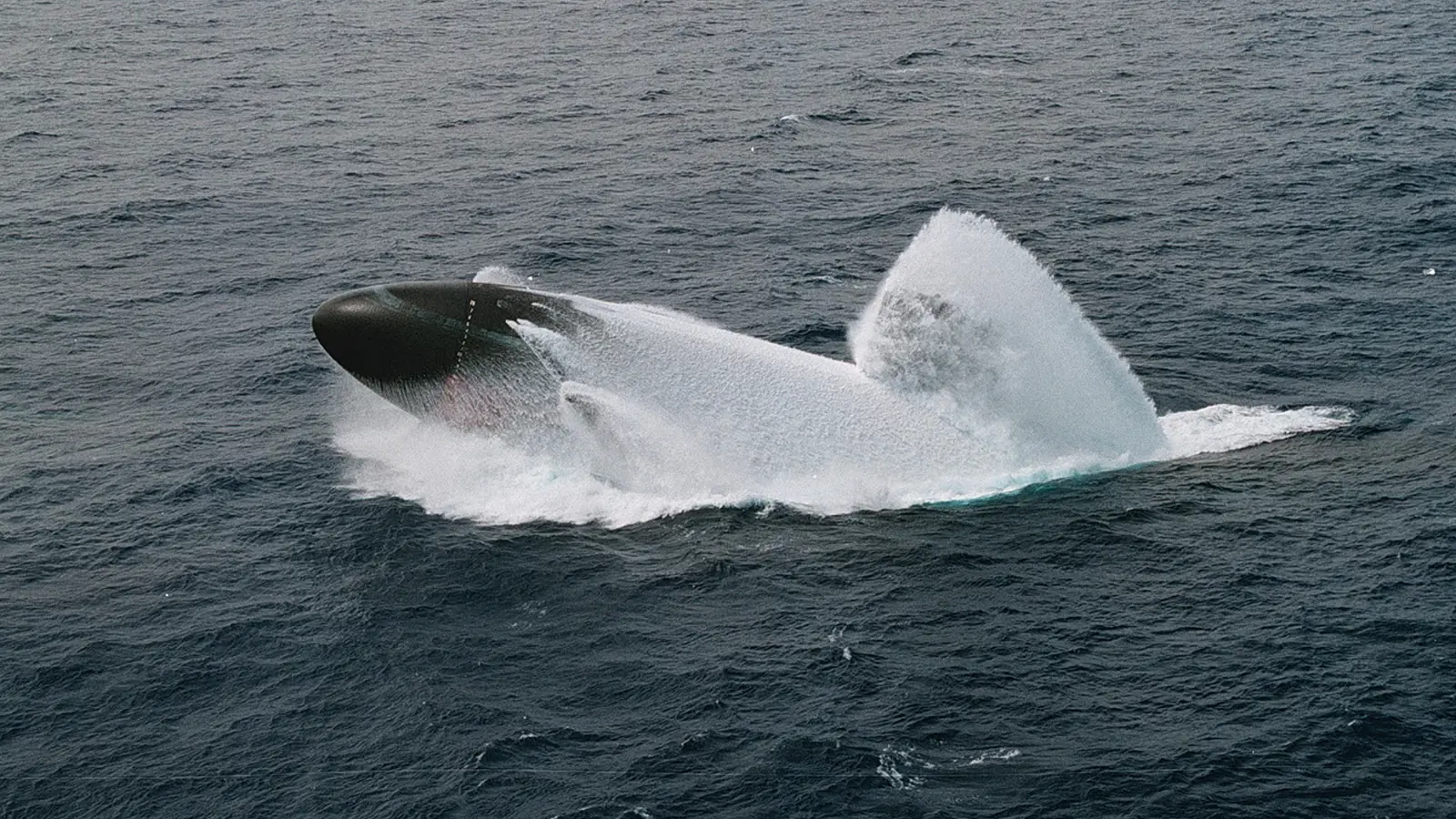
Ballast tanks change average density while control surfaces and propulsion guide movement through the water
The short answer
A submarine does not simply become heavy, fall, become light and float. Safe depth control combines Archimedes’ principle, careful weight distribution, compressed-air systems, propulsion and movable control surfaces. Water density changes with salinity, temperature and depth, so crews continuously manage trim and buoyancy rather than relying on one switch.
Buoyancy equals displaced-water weight
Archimedes’ principle says the upward force equals the weight of water displaced. A submarine floats when buoyancy balances its total weight and rises when upward force is greater.
Main ballast tanks control broad buoyancy
These tanks sit between or around hull structures and can flood through openings. Replacing air with seawater increases total mass without greatly changing external volume.
Vents allow trapped air to escape
Opening top vents lets air leave as water enters through flood ports. With less air in the ballast tanks, the vessel loses reserve buoyancy and settles lower.
Compressed air drives water out
To surface, high-pressure air enters ballast tanks and pushes seawater through the lower openings. The reduced mass gives the submarine positive buoyancy.
Neutral buoyancy supports level cruising
Variable ballast tanks make finer adjustments for people, stores, fuel use, salinity and collected equipment. Near-neutral buoyancy reduces the control effort needed to hold depth.
Trim controls fore-and-aft balance
Water can be shifted among trim tanks so the bow and stern have the desired relationship. Poor trim would make level depth control inefficient or unstable.
Diving planes work like underwater wings
Movable hydroplanes create lift forces as water flows around them. They pitch the vessel and help it change or maintain depth while moving.
Pressure increases rapidly with depth
External water pressure rises by roughly one atmosphere every ten metres. The strong pressure hull protects crew and systems, and design depth limits provide critical safety margins.
Emergency surfacing uses rapid buoyancy
A submarine can blow main ballast tanks quickly during an emergency. Momentum and hydrodynamic control assist the ascent, but procedures must protect the vessel and crew.
Common misconceptions
Submarines do not normally dive only by pointing their noses downward, and ballast tanks do not need to be sealed empty pressure vessels at all times. Main ballast tanks can be open to the sea at the bottom. Compressed air displaces water when surfacing; it does not inflate the pressure hull like a balloon.
How scientists know
Naval architects calculate displacement, stability, pressure loads and control forces, then verify them with scale models, tow tanks and sea trials. Crews perform trim dives, record tank states and measure depth, pitch, speed and water density. Qualification testing confirms emergency and normal operating behaviour.
Can a submarine hover without moving?
With very accurate neutral buoyancy and control systems it can hold depth, although currents and density changes require correction.
Why does salinity matter?
Saltier water is denser and supplies more buoyant force for the same displaced volume.
What are diving planes?
They are movable underwater surfaces that generate forces to change pitch or depth.
How does an emergency blow work?
High-pressure gas rapidly expels water from main ballast tanks to create strong positive buoyancy.
Can submarines go to any depth?
No. Hull strength and systems impose tested operating and collapse-depth limits.
Key takeaways
- Ballast changes average vessel density.
- Compressed air expels ballast water for surfacing.
- Trim tanks refine balance and neutral buoyancy.
- Hydroplanes steer depth while the submarine moves.
Continue exploring
Sources and further reading
Keep exploring.
We’ll email you when the first edition is ready.
Last updated October 29, 2026.

Barnakle Editorial Team
Barnakle Editorial Team is the collective byline used for Barnakle’s editorial articles. The contributor profile explains the team identity and links to the publication’s editorial policies.
More from the editorial team →