
Evaporation from leaves places continuous columns of xylem water under tension
The short answer
Trees move most water upward through xylem using cohesion–tension. Water evaporating from leaves lowers pressure in the xylem. Cohesion between water molecules transmits that pull down continuous columns toward roots, while adhesion and narrow conduits stabilize flow. The Sun supplies the energy for evaporation.
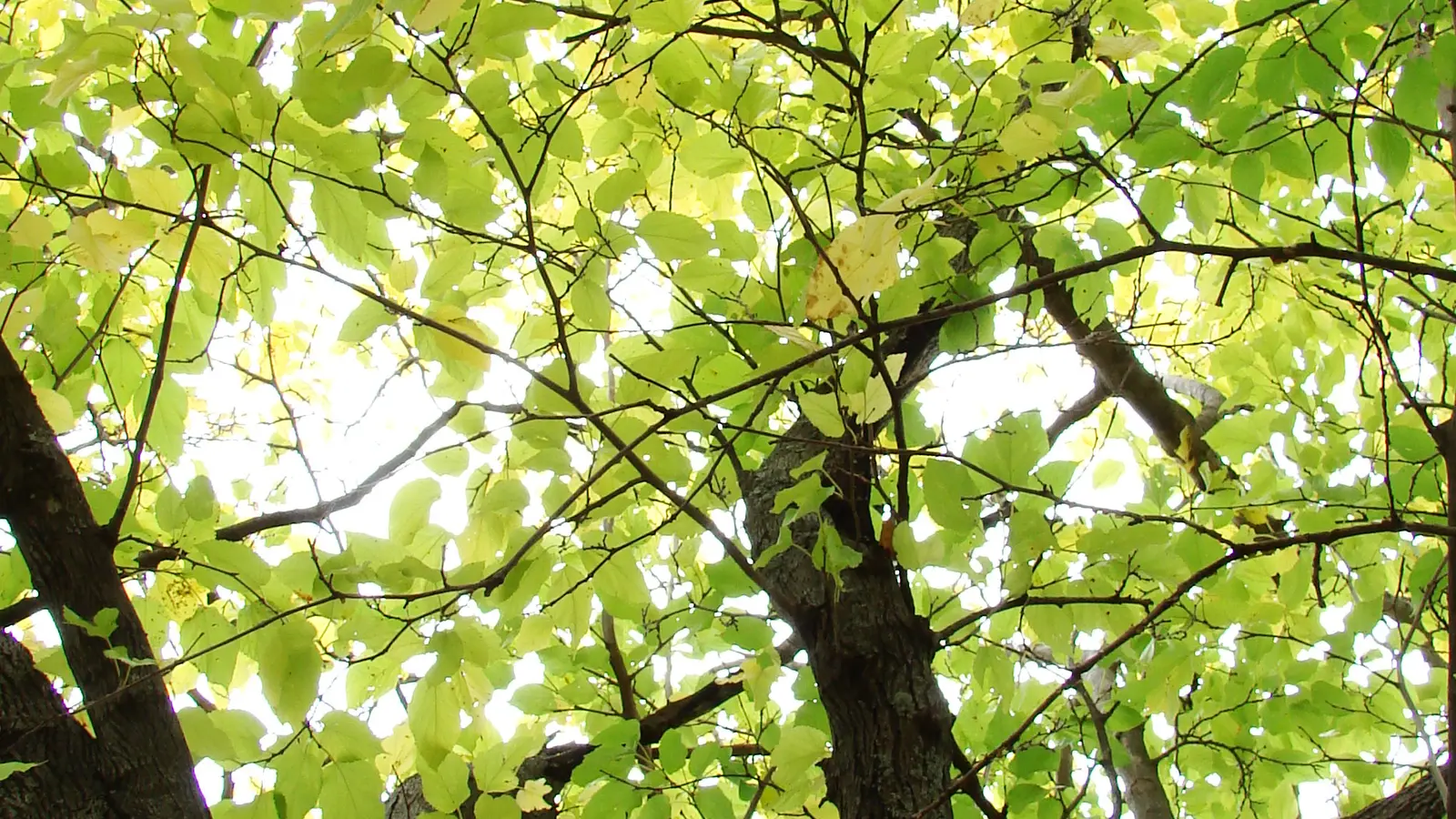
A tall tree has no mechanical pump at its base powerful enough to push water to the canopy. Instead, thousands of leaves act as evaporative endpoints. By losing water vapour through stomata, they create tension that draws replacement water through microscopic conduits from roots to crown.
Roots absorb water from soil
Fine roots and root hairs contact moist pores. Differences in water potential move water into living tissues and toward the vascular system.
Understanding Roots absorb water from soil means separating the immediate mechanism from the conditions that change its strength, timing or visibility. Researchers measure those variables independently, compare natural examples and test whether the explanation predicts new observations. That turns a plausible story into an evidence-based account.
The evidence comes from methods that fail in different ways. Direct observation establishes what occurs, instruments quantify structure or timing, experiments isolate candidate causes and models test whether known physical or biological rules reproduce the pattern. Agreement among methods is stronger than repetition of one memorable example.
Context also matters. Species, scale, temperature, geometry, environment and measurement limits can change an outcome without overturning the underlying process. Accurate reporting preserves this variation, states uncertainty and avoids turning a useful explanation into a universal rule.
A practical explanation should identify what would change the observation. Following that question reveals the limits of present evidence and the next measurement needed.
This mechanism connects a reader-level question with a broader scientific principle. Following matter, energy or information through each stage shows where the explanation is established, where natural variation enters and why a superficially similar event may have another cause. Those distinctions support accurate comparisons and useful follow-up questions.
Xylem forms the pathway
Dead, hollow vessel elements and tracheids connect into conduits. Reinforced walls resist collapse while carrying water and minerals.
Understanding Xylem forms the pathway means separating the immediate mechanism from the conditions that change its strength, timing or visibility. Researchers measure those variables independently, compare natural examples and test whether the explanation predicts new observations. That turns a plausible story into an evidence-based account.
The evidence comes from methods that fail in different ways. Direct observation establishes what occurs, instruments quantify structure or timing, experiments isolate candidate causes and models test whether known physical or biological rules reproduce the pattern. Agreement among methods is stronger than repetition of one memorable example.
Context also matters. Species, scale, temperature, geometry, environment and measurement limits can change an outcome without overturning the underlying process. Accurate reporting preserves this variation, states uncertainty and avoids turning a useful explanation into a universal rule.
A practical explanation should identify what would change the observation. Following that question reveals the limits of present evidence and the next measurement needed.
This mechanism connects a reader-level question with a broader scientific principle. Following matter, energy or information through each stage shows where the explanation is established, where natural variation enters and why a superficially similar event may have another cause. Those distinctions support accurate comparisons and useful follow-up questions.
Leaves lose water through stomata
Water evaporates from cell walls into internal air spaces and diffuses through pores. This is transpiration.
Understanding Leaves lose water through stomata means separating the immediate mechanism from the conditions that change its strength, timing or visibility. Researchers measure those variables independently, compare natural examples and test whether the explanation predicts new observations. That turns a plausible story into an evidence-based account.
The evidence comes from methods that fail in different ways. Direct observation establishes what occurs, instruments quantify structure or timing, experiments isolate candidate causes and models test whether known physical or biological rules reproduce the pattern. Agreement among methods is stronger than repetition of one memorable example.
Context also matters. Species, scale, temperature, geometry, environment and measurement limits can change an outcome without overturning the underlying process. Accurate reporting preserves this variation, states uncertainty and avoids turning a useful explanation into a universal rule.
A practical explanation should identify what would change the observation. Following that question reveals the limits of present evidence and the next measurement needed.
This mechanism connects a reader-level question with a broader scientific principle. Following matter, energy or information through each stage shows where the explanation is established, where natural variation enters and why a superficially similar event may have another cause. Those distinctions support accurate comparisons and useful follow-up questions.
Evaporation creates negative pressure
As curved water surfaces retreat inside leaves, surface tension pulls on the remaining liquid. Xylem sap is placed under tension rather than pushed upward.
Understanding Evaporation creates negative pressure means separating the immediate mechanism from the conditions that change its strength, timing or visibility. Researchers measure those variables independently, compare natural examples and test whether the explanation predicts new observations. That turns a plausible story into an evidence-based account.
The evidence comes from methods that fail in different ways. Direct observation establishes what occurs, instruments quantify structure or timing, experiments isolate candidate causes and models test whether known physical or biological rules reproduce the pattern. Agreement among methods is stronger than repetition of one memorable example.
Context also matters. Species, scale, temperature, geometry, environment and measurement limits can change an outcome without overturning the underlying process. Accurate reporting preserves this variation, states uncertainty and avoids turning a useful explanation into a universal rule.
A practical explanation should identify what would change the observation. Following that question reveals the limits of present evidence and the next measurement needed.
This mechanism connects a reader-level question with a broader scientific principle. Following matter, energy or information through each stage shows where the explanation is established, where natural variation enters and why a superficially similar event may have another cause. Those distinctions support accurate comparisons and useful follow-up questions.
Cohesion links molecules
Hydrogen bonding makes water molecules attract. Cohesion transmits tension through a connected column from leaves toward roots.
Understanding Cohesion links molecules means separating the immediate mechanism from the conditions that change its strength, timing or visibility. Researchers measure those variables independently, compare natural examples and test whether the explanation predicts new observations. That turns a plausible story into an evidence-based account.
The evidence comes from methods that fail in different ways. Direct observation establishes what occurs, instruments quantify structure or timing, experiments isolate candidate causes and models test whether known physical or biological rules reproduce the pattern. Agreement among methods is stronger than repetition of one memorable example.
Context also matters. Species, scale, temperature, geometry, environment and measurement limits can change an outcome without overturning the underlying process. Accurate reporting preserves this variation, states uncertainty and avoids turning a useful explanation into a universal rule.
A practical explanation should identify what would change the observation. Following that question reveals the limits of present evidence and the next measurement needed.
This mechanism connects a reader-level question with a broader scientific principle. Following matter, energy or information through each stage shows where the explanation is established, where natural variation enters and why a superficially similar event may have another cause. Those distinctions support accurate comparisons and useful follow-up questions.
Adhesion stabilizes flow
Water interacts with xylem walls. Adhesion and conduit geometry help, although capillary rise alone cannot explain tall-tree transport.
Understanding Adhesion stabilizes flow means separating the immediate mechanism from the conditions that change its strength, timing or visibility. Researchers measure those variables independently, compare natural examples and test whether the explanation predicts new observations. That turns a plausible story into an evidence-based account.
The evidence comes from methods that fail in different ways. Direct observation establishes what occurs, instruments quantify structure or timing, experiments isolate candidate causes and models test whether known physical or biological rules reproduce the pattern. Agreement among methods is stronger than repetition of one memorable example.
Context also matters. Species, scale, temperature, geometry, environment and measurement limits can change an outcome without overturning the underlying process. Accurate reporting preserves this variation, states uncertainty and avoids turning a useful explanation into a universal rule.
A practical explanation should identify what would change the observation. Following that question reveals the limits of present evidence and the next measurement needed.
This mechanism connects a reader-level question with a broader scientific principle. Following matter, energy or information through each stage shows where the explanation is established, where natural variation enters and why a superficially similar event may have another cause. Those distinctions support accurate comparisons and useful follow-up questions.
Stomata balance carbon and water
Opening pores admits carbon dioxide for photosynthesis but lets water escape. Guard cells respond to light, humidity, carbon dioxide and plant signals.
Understanding Stomata balance carbon and water means separating the immediate mechanism from the conditions that change its strength, timing or visibility. Researchers measure those variables independently, compare natural examples and test whether the explanation predicts new observations. That turns a plausible story into an evidence-based account.
The evidence comes from methods that fail in different ways. Direct observation establishes what occurs, instruments quantify structure or timing, experiments isolate candidate causes and models test whether known physical or biological rules reproduce the pattern. Agreement among methods is stronger than repetition of one memorable example.
Context also matters. Species, scale, temperature, geometry, environment and measurement limits can change an outcome without overturning the underlying process. Accurate reporting preserves this variation, states uncertainty and avoids turning a useful explanation into a universal rule.
A practical explanation should identify what would change the observation. Following that question reveals the limits of present evidence and the next measurement needed.
This mechanism connects a reader-level question with a broader scientific principle. Following matter, energy or information through each stage shows where the explanation is established, where natural variation enters and why a superficially similar event may have another cause. Those distinctions support accurate comparisons and useful follow-up questions.
Drought increases risk
Dry soil and hot air make pressure more negative. Air bubbles can enter or expand, creating embolisms that block conduits.
Understanding Drought increases risk means separating the immediate mechanism from the conditions that change its strength, timing or visibility. Researchers measure those variables independently, compare natural examples and test whether the explanation predicts new observations. That turns a plausible story into an evidence-based account.
The evidence comes from methods that fail in different ways. Direct observation establishes what occurs, instruments quantify structure or timing, experiments isolate candidate causes and models test whether known physical or biological rules reproduce the pattern. Agreement among methods is stronger than repetition of one memorable example.
Context also matters. Species, scale, temperature, geometry, environment and measurement limits can change an outcome without overturning the underlying process. Accurate reporting preserves this variation, states uncertainty and avoids turning a useful explanation into a universal rule.
A practical explanation should identify what would change the observation. Following that question reveals the limits of present evidence and the next measurement needed.
This mechanism connects a reader-level question with a broader scientific principle. Following matter, energy or information through each stage shows where the explanation is established, where natural variation enters and why a superficially similar event may have another cause. Those distinctions support accurate comparisons and useful follow-up questions.
Trees limit hydraulic damage
Networks provide redundancy. Plants close stomata, isolate blocked pathways, grow new xylem and sometimes restore function.
Understanding Trees limit hydraulic damage means separating the immediate mechanism from the conditions that change its strength, timing or visibility. Researchers measure those variables independently, compare natural examples and test whether the explanation predicts new observations. That turns a plausible story into an evidence-based account.
The evidence comes from methods that fail in different ways. Direct observation establishes what occurs, instruments quantify structure or timing, experiments isolate candidate causes and models test whether known physical or biological rules reproduce the pattern. Agreement among methods is stronger than repetition of one memorable example.
Context also matters. Species, scale, temperature, geometry, environment and measurement limits can change an outcome without overturning the underlying process. Accurate reporting preserves this variation, states uncertainty and avoids turning a useful explanation into a universal rule.
A practical explanation should identify what would change the observation. Following that question reveals the limits of present evidence and the next measurement needed.
This mechanism connects a reader-level question with a broader scientific principle. Following matter, energy or information through each stage shows where the explanation is established, where natural variation enters and why a superficially similar event may have another cause. Those distinctions support accurate comparisons and useful follow-up questions.
Root pressure contributes sometimes
Ion accumulation can create positive root pressure, especially in small plants or at night. It cannot lift most water in tall trees.
Understanding Root pressure contributes sometimes means separating the immediate mechanism from the conditions that change its strength, timing or visibility. Researchers measure those variables independently, compare natural examples and test whether the explanation predicts new observations. That turns a plausible story into an evidence-based account.
The evidence comes from methods that fail in different ways. Direct observation establishes what occurs, instruments quantify structure or timing, experiments isolate candidate causes and models test whether known physical or biological rules reproduce the pattern. Agreement among methods is stronger than repetition of one memorable example.
Context also matters. Species, scale, temperature, geometry, environment and measurement limits can change an outcome without overturning the underlying process. Accurate reporting preserves this variation, states uncertainty and avoids turning a useful explanation into a universal rule.
A practical explanation should identify what would change the observation. Following that question reveals the limits of present evidence and the next measurement needed.
This mechanism connects a reader-level question with a broader scientific principle. Following matter, energy or information through each stage shows where the explanation is established, where natural variation enters and why a superficially similar event may have another cause. Those distinctions support accurate comparisons and useful follow-up questions.
Common misconceptions
Roots do not simply pump water to the crown, and capillary action alone cannot explain large trees. Movement is not cost-free: solar energy and the atmospheric gradient drive evaporation, while the plant pays through water loss and hydraulic risk.
Clear shorthand is valuable only when it preserves the causal chain. It becomes misleading when it substitutes a familiar label for a mechanism, confuses association with cause or extends evidence beyond the conditions tested.
How scientists know
Physiologists use pressure chambers, sap-flow sensors, tracers, isotopes, acoustic emissions and X-ray imaging to measure tension, velocity and embolism. Experiments alter humidity, light, soil water and stomatal behaviour.
No single measurement carries the conclusion. Observations, experiments, physical theory and repeated records provide independent checks, while disagreement can reveal an uncontrolled variable or a question requiring a better test.
Frequently asked questions
How fast does water move?
Rates vary greatly with species, weather, size and time of day.
Does it climb at night?
Flow usually slows, though storage refilling and root pressure can continue.
Why do leaves wilt?
Cells lose turgor when water loss exceeds supply.
Can a tree be too tall?
Hydraulic resistance and drought risk help limit height.
Why does maple sap rise?
Freeze–thaw gas-pressure processes differ from ordinary summer transpiration.
Key takeaways
- Transpiration creates xylem tension.
- Cohesion transmits the pull.
- Xylem resists collapse and channels flow.
- Stomata trade water for carbon dioxide.
Continue exploring
Sources and further reading
Keep exploring.
One remarkable idea at a time—nature, science, history and beyond.
Sources and further reading
Barnakle uses credible primary and authoritative sources wherever possible.
- USGS — Evapotranspiration
- https://www.usgs.gov/special-topics/water-science-school/science/evapotranspiration-and-water-cycle
- NCBI Bookshelf — Water transport in plants
- https://www.ncbi.nlm.nih.gov/books/NBK234940/
- Plant Physiology — Xylem transport
- https://academic.oup.com/plphys/article/141/1/3/6100265
- USDA Forest Service — Drought and forests
- https://research.fs.usda.gov/treesearch/
Last reviewed October 7, 2026.

Barnakle Editorial Team
A member of the Barnakle editorial team, exploring remarkable ideas with clarity, curiosity and care.
More from this author →