
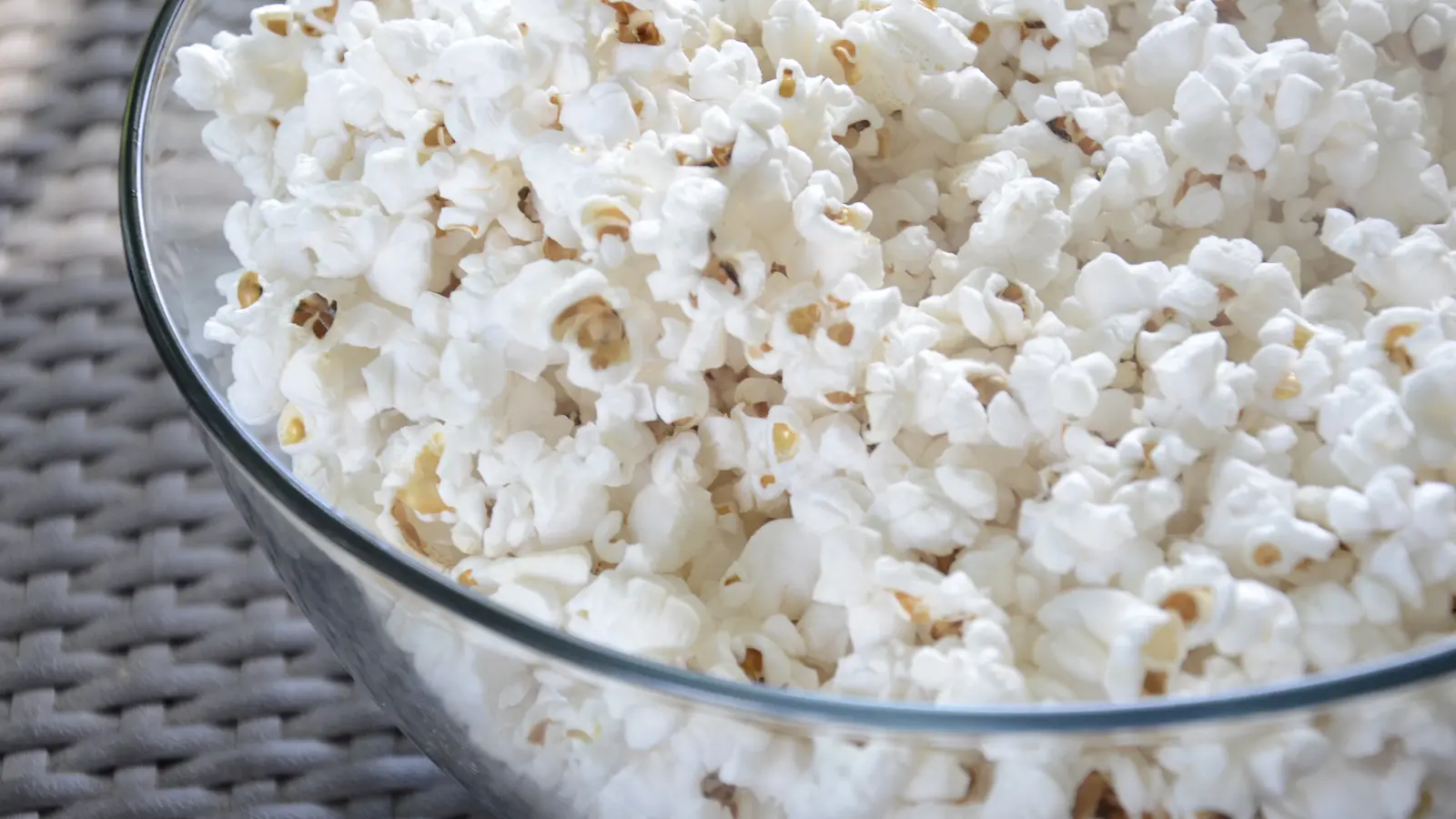
Water trapped inside a strong kernel becomes pressurized steam until the shell ruptures
The short answer
A popcorn kernel contains water and dense starch sealed inside a hard hull. Heating turns the water into pressurized vapour and softens the starch. When pressure exceeds the hull’s strength, the shell ruptures, pressure falls suddenly and the hot starch expands into a foam that cools into the familiar white flake.
Popcorn is a small pressure vessel engineered by a plant. Other maize kernels can heat, dry or crack, but popcorn varieties combine a strong, low-permeability outer layer with the right moisture and internal starch structure to produce dramatic expansion.
Popcorn is a particular maize
Popcorn belongs to Zea mays everta and has kernels selected for popping performance. Its hard pericarp and dense endosperm differ from ordinary sweet corn.
Understanding Popcorn is a particular maize means separating the immediate mechanism from the conditions that change its strength, timing or visibility. Researchers measure those variables independently, compare natural examples and test whether the explanation predicts new observations. That turns a plausible story into an evidence-based account.
The evidence comes from methods that fail in different ways. Direct observation establishes what occurs, instruments quantify structure or timing, experiments isolate candidate causes and models test whether known physical or biological rules reproduce the pattern. Agreement among methods is stronger than repetition of one memorable example.
Context also matters. Species, scale, temperature, geometry, environment and measurement limits can change an outcome without overturning the underlying process. Accurate reporting preserves this variation, states uncertainty and avoids turning a useful explanation into a universal rule.
A practical explanation should identify what would change the observation. Following that question reveals the limits of present evidence and the next measurement needed.
This mechanism connects a reader-level question with a broader scientific principle. Following matter, energy or information through each stage shows where the explanation is established, where natural variation enters and why a superficially similar event may have another cause. Those distinctions support accurate comparisons and useful follow-up questions.
Every kernel contains water
Moisture is distributed through the starchy endosperm. Too little water produces inadequate vapour pressure, while excess or uneven moisture harms expansion.
Understanding Every kernel contains water means separating the immediate mechanism from the conditions that change its strength, timing or visibility. Researchers measure those variables independently, compare natural examples and test whether the explanation predicts new observations. That turns a plausible story into an evidence-based account.
The evidence comes from methods that fail in different ways. Direct observation establishes what occurs, instruments quantify structure or timing, experiments isolate candidate causes and models test whether known physical or biological rules reproduce the pattern. Agreement among methods is stronger than repetition of one memorable example.
Context also matters. Species, scale, temperature, geometry, environment and measurement limits can change an outcome without overturning the underlying process. Accurate reporting preserves this variation, states uncertainty and avoids turning a useful explanation into a universal rule.
A practical explanation should identify what would change the observation. Following that question reveals the limits of present evidence and the next measurement needed.
This mechanism connects a reader-level question with a broader scientific principle. Following matter, energy or information through each stage shows where the explanation is established, where natural variation enters and why a superficially similar event may have another cause. Those distinctions support accurate comparisons and useful follow-up questions.
The hull acts as a seal
The pericarp resists leakage as temperature rises. Cracks, insect damage or poor handling let steam escape and create unpopped old maids.
Understanding The hull acts as a seal means separating the immediate mechanism from the conditions that change its strength, timing or visibility. Researchers measure those variables independently, compare natural examples and test whether the explanation predicts new observations. That turns a plausible story into an evidence-based account.
The evidence comes from methods that fail in different ways. Direct observation establishes what occurs, instruments quantify structure or timing, experiments isolate candidate causes and models test whether known physical or biological rules reproduce the pattern. Agreement among methods is stronger than repetition of one memorable example.
Context also matters. Species, scale, temperature, geometry, environment and measurement limits can change an outcome without overturning the underlying process. Accurate reporting preserves this variation, states uncertainty and avoids turning a useful explanation into a universal rule.
A practical explanation should identify what would change the observation. Following that question reveals the limits of present evidence and the next measurement needed.
This mechanism connects a reader-level question with a broader scientific principle. Following matter, energy or information through each stage shows where the explanation is established, where natural variation enters and why a superficially similar event may have another cause. Those distinctions support accurate comparisons and useful follow-up questions.
Heating softens the starch
Heat and moisture gelatinize tightly packed starch and proteins into a flexible, superheated mass. This must happen before the hull fails.
Understanding Heating softens the starch means separating the immediate mechanism from the conditions that change its strength, timing or visibility. Researchers measure those variables independently, compare natural examples and test whether the explanation predicts new observations. That turns a plausible story into an evidence-based account.
The evidence comes from methods that fail in different ways. Direct observation establishes what occurs, instruments quantify structure or timing, experiments isolate candidate causes and models test whether known physical or biological rules reproduce the pattern. Agreement among methods is stronger than repetition of one memorable example.
Context also matters. Species, scale, temperature, geometry, environment and measurement limits can change an outcome without overturning the underlying process. Accurate reporting preserves this variation, states uncertainty and avoids turning a useful explanation into a universal rule.
A practical explanation should identify what would change the observation. Following that question reveals the limits of present evidence and the next measurement needed.
This mechanism connects a reader-level question with a broader scientific principle. Following matter, energy or information through each stage shows where the explanation is established, where natural variation enters and why a superficially similar event may have another cause. Those distinctions support accurate comparisons and useful follow-up questions.
Pressure rises inside
Water vapour occupies more volume than liquid water. Confined inside the kernel, it raises pressure while temperature climbs beyond ordinary boiling.
Understanding Pressure rises inside means separating the immediate mechanism from the conditions that change its strength, timing or visibility. Researchers measure those variables independently, compare natural examples and test whether the explanation predicts new observations. That turns a plausible story into an evidence-based account.
The evidence comes from methods that fail in different ways. Direct observation establishes what occurs, instruments quantify structure or timing, experiments isolate candidate causes and models test whether known physical or biological rules reproduce the pattern. Agreement among methods is stronger than repetition of one memorable example.
Context also matters. Species, scale, temperature, geometry, environment and measurement limits can change an outcome without overturning the underlying process. Accurate reporting preserves this variation, states uncertainty and avoids turning a useful explanation into a universal rule.
A practical explanation should identify what would change the observation. Following that question reveals the limits of present evidence and the next measurement needed.
This mechanism connects a reader-level question with a broader scientific principle. Following matter, energy or information through each stage shows where the explanation is established, where natural variation enters and why a superficially similar event may have another cause. Those distinctions support accurate comparisons and useful follow-up questions.
Rupture occurs at a threshold
Near 180 degrees Celsius, depending on conditions, pressure can exceed hull strength. A crack spreads rapidly and releases the interior.
Understanding Rupture occurs at a threshold means separating the immediate mechanism from the conditions that change its strength, timing or visibility. Researchers measure those variables independently, compare natural examples and test whether the explanation predicts new observations. That turns a plausible story into an evidence-based account.
The evidence comes from methods that fail in different ways. Direct observation establishes what occurs, instruments quantify structure or timing, experiments isolate candidate causes and models test whether known physical or biological rules reproduce the pattern. Agreement among methods is stronger than repetition of one memorable example.
Context also matters. Species, scale, temperature, geometry, environment and measurement limits can change an outcome without overturning the underlying process. Accurate reporting preserves this variation, states uncertainty and avoids turning a useful explanation into a universal rule.
A practical explanation should identify what would change the observation. Following that question reveals the limits of present evidence and the next measurement needed.
This mechanism connects a reader-level question with a broader scientific principle. Following matter, energy or information through each stage shows where the explanation is established, where natural variation enters and why a superficially similar event may have another cause. Those distinctions support accurate comparisons and useful follow-up questions.
Decompression drives expansion
The sudden pressure drop lets water flash into steam. Soft starch is pushed outward, inflates into bubbles and turns the kernel largely inside out.
Understanding Decompression drives expansion means separating the immediate mechanism from the conditions that change its strength, timing or visibility. Researchers measure those variables independently, compare natural examples and test whether the explanation predicts new observations. That turns a plausible story into an evidence-based account.
The evidence comes from methods that fail in different ways. Direct observation establishes what occurs, instruments quantify structure or timing, experiments isolate candidate causes and models test whether known physical or biological rules reproduce the pattern. Agreement among methods is stronger than repetition of one memorable example.
Context also matters. Species, scale, temperature, geometry, environment and measurement limits can change an outcome without overturning the underlying process. Accurate reporting preserves this variation, states uncertainty and avoids turning a useful explanation into a universal rule.
A practical explanation should identify what would change the observation. Following that question reveals the limits of present evidence and the next measurement needed.
This mechanism connects a reader-level question with a broader scientific principle. Following matter, energy or information through each stage shows where the explanation is established, where natural variation enters and why a superficially similar event may have another cause. Those distinctions support accurate comparisons and useful follow-up questions.
The flake is a solid foam
As expanded starch cools, bubble walls become rigid. Butterfly or mushroom shape depends on variety, structure and fracture pattern.
Understanding The flake is a solid foam means separating the immediate mechanism from the conditions that change its strength, timing or visibility. Researchers measure those variables independently, compare natural examples and test whether the explanation predicts new observations. That turns a plausible story into an evidence-based account.
The evidence comes from methods that fail in different ways. Direct observation establishes what occurs, instruments quantify structure or timing, experiments isolate candidate causes and models test whether known physical or biological rules reproduce the pattern. Agreement among methods is stronger than repetition of one memorable example.
Context also matters. Species, scale, temperature, geometry, environment and measurement limits can change an outcome without overturning the underlying process. Accurate reporting preserves this variation, states uncertainty and avoids turning a useful explanation into a universal rule.
A practical explanation should identify what would change the observation. Following that question reveals the limits of present evidence and the next measurement needed.
This mechanism connects a reader-level question with a broader scientific principle. Following matter, energy or information through each stage shows where the explanation is established, where natural variation enters and why a superficially similar event may have another cause. Those distinctions support accurate comparisons and useful follow-up questions.
Oil is not essential
Hot oil transfers heat evenly and carries flavour, but hot air also works. Water already inside the kernel supplies the expanding vapour.
Understanding Oil is not essential means separating the immediate mechanism from the conditions that change its strength, timing or visibility. Researchers measure those variables independently, compare natural examples and test whether the explanation predicts new observations. That turns a plausible story into an evidence-based account.
The evidence comes from methods that fail in different ways. Direct observation establishes what occurs, instruments quantify structure or timing, experiments isolate candidate causes and models test whether known physical or biological rules reproduce the pattern. Agreement among methods is stronger than repetition of one memorable example.
Context also matters. Species, scale, temperature, geometry, environment and measurement limits can change an outcome without overturning the underlying process. Accurate reporting preserves this variation, states uncertainty and avoids turning a useful explanation into a universal rule.
A practical explanation should identify what would change the observation. Following that question reveals the limits of present evidence and the next measurement needed.
This mechanism connects a reader-level question with a broader scientific principle. Following matter, energy or information through each stage shows where the explanation is established, where natural variation enters and why a superficially similar event may have another cause. Those distinctions support accurate comparisons and useful follow-up questions.
Old kernels may fail
Moisture escapes during poor storage, while hulls develop defects. Airtight storage protects quality; adding random water cannot reliably repair structural damage.
Understanding Old kernels may fail means separating the immediate mechanism from the conditions that change its strength, timing or visibility. Researchers measure those variables independently, compare natural examples and test whether the explanation predicts new observations. That turns a plausible story into an evidence-based account.
The evidence comes from methods that fail in different ways. Direct observation establishes what occurs, instruments quantify structure or timing, experiments isolate candidate causes and models test whether known physical or biological rules reproduce the pattern. Agreement among methods is stronger than repetition of one memorable example.
Context also matters. Species, scale, temperature, geometry, environment and measurement limits can change an outcome without overturning the underlying process. Accurate reporting preserves this variation, states uncertainty and avoids turning a useful explanation into a universal rule.
A practical explanation should identify what would change the observation. Following that question reveals the limits of present evidence and the next measurement needed.
This mechanism connects a reader-level question with a broader scientific principle. Following matter, energy or information through each stage shows where the explanation is established, where natural variation enters and why a superficially similar event may have another cause. Those distinctions support accurate comparisons and useful follow-up questions.
Common misconceptions
Popcorn does not pop because trapped air expands, and butter is not required. Water vapour drives heat-softened starch through a ruptured hull. An unpopped kernel may be too dry, cracked, heated unevenly or unable to hold pressure.
Clear shorthand is valuable only when it preserves the causal chain. It becomes misleading when it substitutes a familiar label for a mechanism, confuses association with cause or extends evidence beyond the conditions tested.
How scientists know
Food scientists measure moisture, temperature, pressure, hull strength, expansion volume and fracture patterns. High-speed cameras capture opening, microscopy examines starch and breeding trials compare varieties under controlled heating.
No single measurement carries the conclusion. Observations, experiments, physical theory and repeated records provide independent checks, while disagreement can reveal an uncontrolled variable or a question requiring a better test.
Frequently asked questions
Why do kernels remain unpopped?
They may have lost moisture, suffered hull damage or received uneven heat.
Can any corn pop?
Many grains puff, but popcorn maize has the structure needed for large expansion.
Why does it jump?
Rapid steam release and asymmetric fracture create forces that launch it.
Butterfly or mushroom?
These are branching versus rounder expansion shapes.
Is microwave popcorn different corn?
No; it is popping maize packaged for microwave heating.
Key takeaways
- Water and starch are sealed by a hard hull.
- Heating raises vapour pressure.
- Rupture causes rapid starch expansion.
- Moisture and hull integrity control success.
Continue exploring
Sources and further reading
Keep exploring.
One remarkable idea at a time—nature, science, history and beyond.
Sources and further reading
Barnakle uses credible primary and authoritative sources wherever possible.
- USDA — How does popcorn pop?
- https://www.nal.usda.gov/exhibits/speccoll/exhibits/show/popcorn/how-does-popcorn-pop-
- USDA NRCS — Kernel moisture and popping
- https://nrcs.usda.gov/plantmaterials/idpmcrj10865.pdf
- USDA ARS — Popcorn kernel quality
- https://www.ars.usda.gov/news-events/news/research-news/2009/sorter-detects-and-removes-damaged-popcorn-kernels/
- American Chemical Society — Popcorn chemistry
- https://www.acs.org/education/chemmatters/past-issues/archive-2013-2014/popcorn.html
Last reviewed October 7, 2026.

Barnakle Editorial Team
A member of the Barnakle editorial team, exploring remarkable ideas with clarity, curiosity and care.
More from this author →