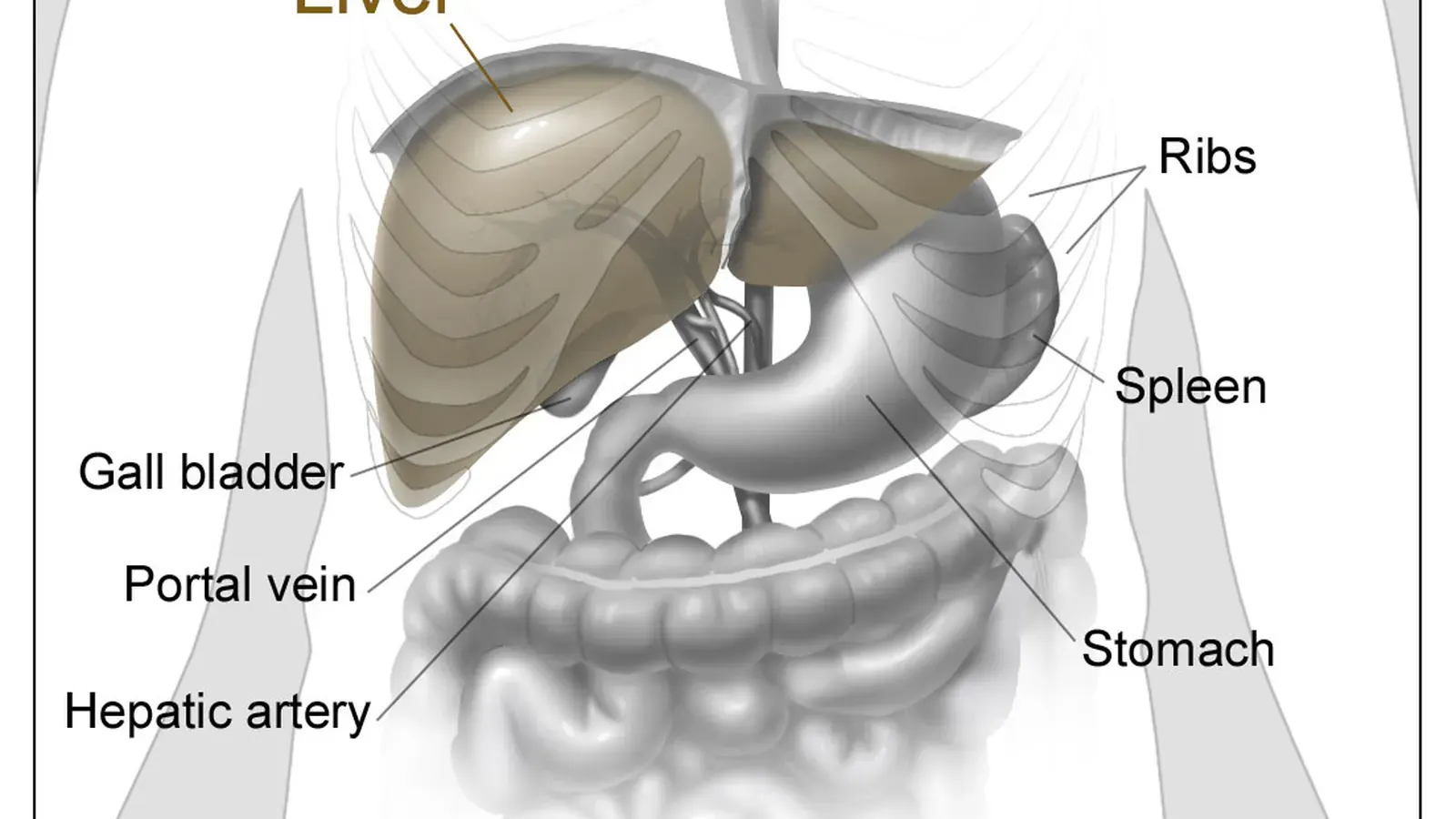
Liver regeneration
Regeneration is coordinated growth of living tissue
Hepatocytes perform many metabolic functions, but blood vessels, bile ducts, immune cells and supporting cells are also essential. After partial removal, the remaining liver responds to altered circulation and signalling. It does not normally recreate the exact missing lobe like a replacement part. Instead, the remaining tissue grows in ways that can restore much of the required mass and function.
Signals recruit cells into a growth programme
Inflammatory and growth-factor signals change gene activity and help otherwise quiescent cells enter the cell cycle. At the same time, the organ must maintain essential metabolic work. Cell enlargement and cell division can contribute differently depending on the type and extent of injury. Findings from controlled animal experiments establish mechanisms but cannot be transferred unchanged into a prediction for every patient.
Blood vessels and the surrounding tissue matter
New or expanding tissue needs oxygen, nutrients and correctly organized circulation. Communication among hepatocytes, endothelial cells, stellate cells and immune cells helps coordinate repair. The response also needs to stop as an appropriate organ size is restored. Researchers study interacting feedback networks rather than one isolated regeneration switch that can safely be turned on without consequences.
Chronic injury can replace repair with scarring
Persistent inflammation and fibrosis alter the tissue environment and can limit healthy regeneration. Cirrhosis, fat accumulation, infection, toxins and other conditions change both function and the response to injury. Regenerative capacity does not mean repeated damage can be ignored or that a product can reliably detox or regrow a liver. Clinical decisions require assessment of the cause of injury and the condition of the remaining organ.
Sources and further reading
Keep exploring.
We’ll email you when the first edition is ready.
Last updated October 27, 2026.

Barnakle Editorial Team
Barnakle Editorial Team is the collective byline used for Barnakle’s editorial articles. The contributor profile explains the team identity and links to the publication’s editorial policies.
More from the editorial team →