
Wind transfers energy to the sea while gravity, depth and coastlines shape it
The short answer
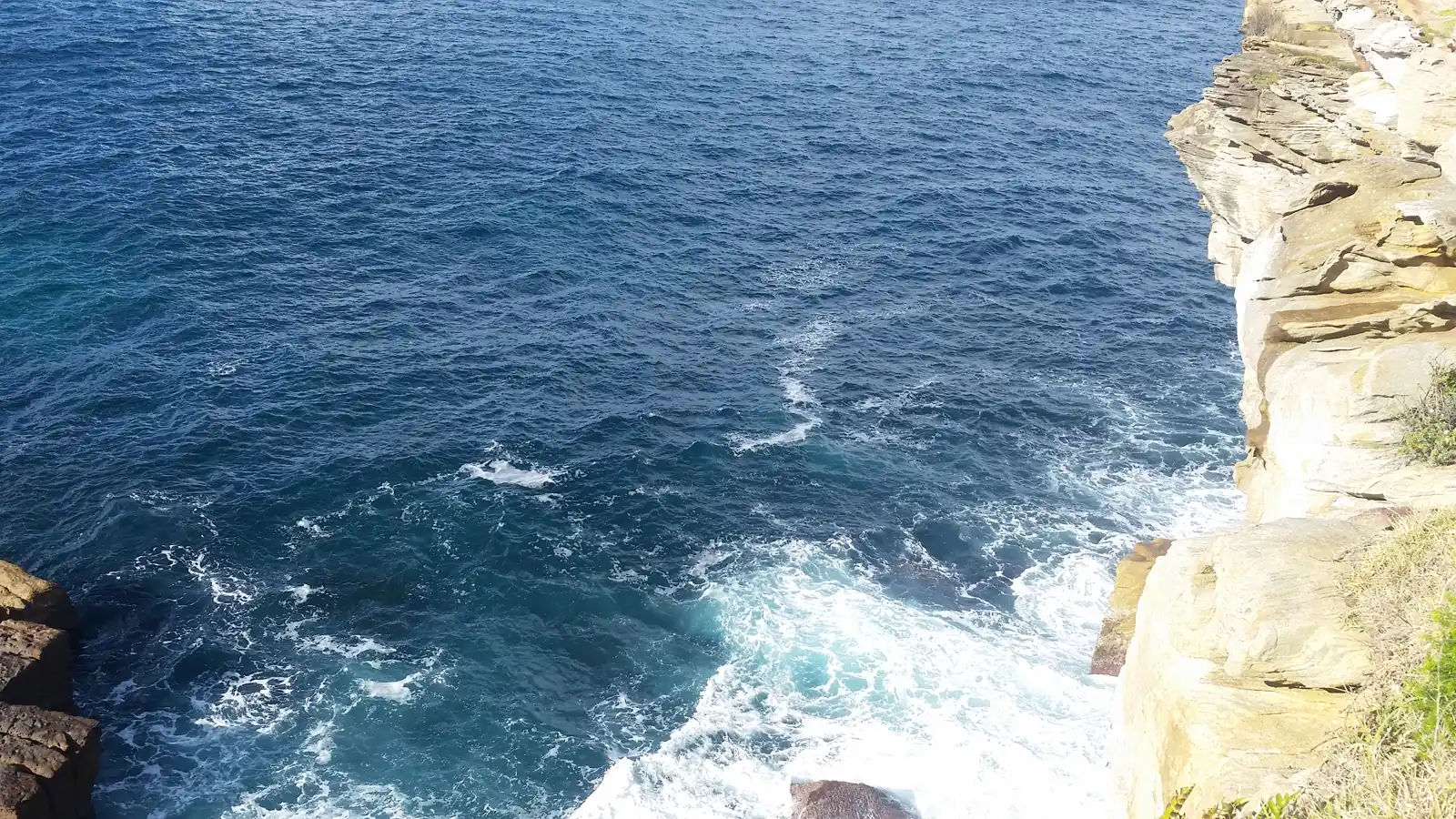
Most everyday ocean waves form when wind transfers energy to the surface. Size depends mainly on wind speed, duration and fetch—the uninterrupted distance across water. Gravity restores the displaced surface, allowing energy to travel. Near shore, decreasing depth slows, steepens and eventually breaks waves.
A wave is not one parcel of water racing intact across an ocean. Water particles mostly move in repeating orbits while energy and the pattern advance. This is why a distant storm can send organized swell to a quiet coast days later.
Tiny ripples give wind a grip
Pressure fluctuations and friction disturb a smooth surface. Surface tension restores the smallest ripples, whose slopes let wind transfer energy more effectively.
Understanding Tiny ripples give wind a grip means separating the immediate mechanism from the conditions that change its strength, timing or visibility. Researchers measure those variables independently, compare natural examples and test whether the same explanation predicts new observations. That turns a plausible story into an evidence-based account.
The evidence comes from methods that fail in different ways. Direct observation establishes what occurs, instruments quantify structure or timing, experiments isolate candidate causes and models test whether known physical or biological rules reproduce the pattern. Agreement among methods is stronger than repetition of one memorable example.
Context also matters. Species, scale, temperature, geometry, environment and measurement limits can change an outcome without overturning the underlying process. Accurate reporting preserves this variation, states uncertainty and avoids turning a useful explanation into a universal rule.
A practical explanation should identify what would change the observation. Following that question reveals the limits of present evidence and the next measurement needed.
This mechanism also connects a reader-level question with a broader scientific principle. Following matter, energy or information through each stage shows where the explanation is well established, where natural variation enters and why a superficially similar event may have a different cause. Those distinctions support accurate comparisons and useful follow-up questions.
Wind speed controls input
Faster wind exerts more stress and can support larger waves. Gusts and direction changes create a spectrum rather than one regular wave.
Understanding Wind speed controls input means separating the immediate mechanism from the conditions that change its strength, timing or visibility. Researchers measure those variables independently, compare natural examples and test whether the same explanation predicts new observations. That turns a plausible story into an evidence-based account.
The evidence comes from methods that fail in different ways. Direct observation establishes what occurs, instruments quantify structure or timing, experiments isolate candidate causes and models test whether known physical or biological rules reproduce the pattern. Agreement among methods is stronger than repetition of one memorable example.
Context also matters. Species, scale, temperature, geometry, environment and measurement limits can change an outcome without overturning the underlying process. Accurate reporting preserves this variation, states uncertainty and avoids turning a useful explanation into a universal rule.
A practical explanation should identify what would change the observation. Following that question reveals the limits of present evidence and the next measurement needed.
This mechanism also connects a reader-level question with a broader scientific principle. Following matter, energy or information through each stage shows where the explanation is well established, where natural variation enters and why a superficially similar event may have a different cause. Those distinctions support accurate comparisons and useful follow-up questions.
Duration determines development
A brief wind event cannot build the same sea as sustained wind. Waves grow until energy, area or time limits further development.
Understanding Duration determines development means separating the immediate mechanism from the conditions that change its strength, timing or visibility. Researchers measure those variables independently, compare natural examples and test whether the same explanation predicts new observations. That turns a plausible story into an evidence-based account.
The evidence comes from methods that fail in different ways. Direct observation establishes what occurs, instruments quantify structure or timing, experiments isolate candidate causes and models test whether known physical or biological rules reproduce the pattern. Agreement among methods is stronger than repetition of one memorable example.
Context also matters. Species, scale, temperature, geometry, environment and measurement limits can change an outcome without overturning the underlying process. Accurate reporting preserves this variation, states uncertainty and avoids turning a useful explanation into a universal rule.
A practical explanation should identify what would change the observation. Following that question reveals the limits of present evidence and the next measurement needed.
This mechanism also connects a reader-level question with a broader scientific principle. Following matter, energy or information through each stage shows where the explanation is well established, where natural variation enters and why a superficially similar event may have a different cause. Those distinctions support accurate comparisons and useful follow-up questions.
Fetch sets the working distance
Fetch is the uninterrupted distance over which wind blows in a similar direction. Large oceans and long storm tracks allow greater development.
Understanding Fetch sets the working distance means separating the immediate mechanism from the conditions that change its strength, timing or visibility. Researchers measure those variables independently, compare natural examples and test whether the same explanation predicts new observations. That turns a plausible story into an evidence-based account.
The evidence comes from methods that fail in different ways. Direct observation establishes what occurs, instruments quantify structure or timing, experiments isolate candidate causes and models test whether known physical or biological rules reproduce the pattern. Agreement among methods is stronger than repetition of one memorable example.
Context also matters. Species, scale, temperature, geometry, environment and measurement limits can change an outcome without overturning the underlying process. Accurate reporting preserves this variation, states uncertainty and avoids turning a useful explanation into a universal rule.
A practical explanation should identify what would change the observation. Following that question reveals the limits of present evidence and the next measurement needed.
This mechanism also connects a reader-level question with a broader scientific principle. Following matter, energy or information through each stage shows where the explanation is well established, where natural variation enters and why a superficially similar event may have a different cause. Those distinctions support accurate comparisons and useful follow-up questions.
Gravity restores the surface
Beyond capillary scales, gravity pulls elevated water down. Inertia carries it past equilibrium, producing oscillation and propagation.
Understanding Gravity restores the surface means separating the immediate mechanism from the conditions that change its strength, timing or visibility. Researchers measure those variables independently, compare natural examples and test whether the same explanation predicts new observations. That turns a plausible story into an evidence-based account.
The evidence comes from methods that fail in different ways. Direct observation establishes what occurs, instruments quantify structure or timing, experiments isolate candidate causes and models test whether known physical or biological rules reproduce the pattern. Agreement among methods is stronger than repetition of one memorable example.
Context also matters. Species, scale, temperature, geometry, environment and measurement limits can change an outcome without overturning the underlying process. Accurate reporting preserves this variation, states uncertainty and avoids turning a useful explanation into a universal rule.
A practical explanation should identify what would change the observation. Following that question reveals the limits of present evidence and the next measurement needed.
This mechanism also connects a reader-level question with a broader scientific principle. Following matter, energy or information through each stage shows where the explanation is well established, where natural variation enters and why a superficially similar event may have a different cause. Those distinctions support accurate comparisons and useful follow-up questions.
Particles move in orbits
In deep water, particles trace approximately circular paths that shrink with depth. Energy advances much farther than the same molecules.
Understanding Particles move in orbits means separating the immediate mechanism from the conditions that change its strength, timing or visibility. Researchers measure those variables independently, compare natural examples and test whether the same explanation predicts new observations. That turns a plausible story into an evidence-based account.
The evidence comes from methods that fail in different ways. Direct observation establishes what occurs, instruments quantify structure or timing, experiments isolate candidate causes and models test whether known physical or biological rules reproduce the pattern. Agreement among methods is stronger than repetition of one memorable example.
Context also matters. Species, scale, temperature, geometry, environment and measurement limits can change an outcome without overturning the underlying process. Accurate reporting preserves this variation, states uncertainty and avoids turning a useful explanation into a universal rule.
A practical explanation should identify what would change the observation. Following that question reveals the limits of present evidence and the next measurement needed.
This mechanism also connects a reader-level question with a broader scientific principle. Following matter, energy or information through each stage shows where the explanation is well established, where natural variation enters and why a superficially similar event may have a different cause. Those distinctions support accurate comparisons and useful follow-up questions.
Swell sorts by speed
Longer-period waves travel faster in deep water and separate from shorter waves, so distant swell can arrive in organized sets.
Understanding Swell sorts by speed means separating the immediate mechanism from the conditions that change its strength, timing or visibility. Researchers measure those variables independently, compare natural examples and test whether the same explanation predicts new observations. That turns a plausible story into an evidence-based account.
The evidence comes from methods that fail in different ways. Direct observation establishes what occurs, instruments quantify structure or timing, experiments isolate candidate causes and models test whether known physical or biological rules reproduce the pattern. Agreement among methods is stronger than repetition of one memorable example.
Context also matters. Species, scale, temperature, geometry, environment and measurement limits can change an outcome without overturning the underlying process. Accurate reporting preserves this variation, states uncertainty and avoids turning a useful explanation into a universal rule.
A practical explanation should identify what would change the observation. Following that question reveals the limits of present evidence and the next measurement needed.
This mechanism also connects a reader-level question with a broader scientific principle. Following matter, energy or information through each stage shows where the explanation is well established, where natural variation enters and why a superficially similar event may have a different cause. Those distinctions support accurate comparisons and useful follow-up questions.
The seabed transforms waves
As depth becomes small relative to wavelength, waves slow, shorten and often grow taller as their energy is compressed.
Understanding The seabed transforms waves means separating the immediate mechanism from the conditions that change its strength, timing or visibility. Researchers measure those variables independently, compare natural examples and test whether the same explanation predicts new observations. That turns a plausible story into an evidence-based account.
The evidence comes from methods that fail in different ways. Direct observation establishes what occurs, instruments quantify structure or timing, experiments isolate candidate causes and models test whether known physical or biological rules reproduce the pattern. Agreement among methods is stronger than repetition of one memorable example.
Context also matters. Species, scale, temperature, geometry, environment and measurement limits can change an outcome without overturning the underlying process. Accurate reporting preserves this variation, states uncertainty and avoids turning a useful explanation into a universal rule.
A practical explanation should identify what would change the observation. Following that question reveals the limits of present evidence and the next measurement needed.
This mechanism also connects a reader-level question with a broader scientific principle. Following matter, energy or information through each stage shows where the explanation is well established, where natural variation enters and why a superficially similar event may have a different cause. Those distinctions support accurate comparisons and useful follow-up questions.
Breaking releases energy
A wave becomes unstable when too steep or shallow. Its crest outruns support and collapses, driving turbulence and sediment movement.
Understanding Breaking releases energy means separating the immediate mechanism from the conditions that change its strength, timing or visibility. Researchers measure those variables independently, compare natural examples and test whether the same explanation predicts new observations. That turns a plausible story into an evidence-based account.
The evidence comes from methods that fail in different ways. Direct observation establishes what occurs, instruments quantify structure or timing, experiments isolate candidate causes and models test whether known physical or biological rules reproduce the pattern. Agreement among methods is stronger than repetition of one memorable example.
Context also matters. Species, scale, temperature, geometry, environment and measurement limits can change an outcome without overturning the underlying process. Accurate reporting preserves this variation, states uncertainty and avoids turning a useful explanation into a universal rule.
A practical explanation should identify what would change the observation. Following that question reveals the limits of present evidence and the next measurement needed.
This mechanism also connects a reader-level question with a broader scientific principle. Following matter, energy or information through each stage shows where the explanation is well established, where natural variation enters and why a superficially similar event may have a different cause. Those distinctions support accurate comparisons and useful follow-up questions.
Not every wave comes from wind
Earthquakes can create tsunamis; gravity drives tides; storms create surge; interference helps produce rogue waves. Each process is distinct.
Understanding Not every wave comes from wind means separating the immediate mechanism from the conditions that change its strength, timing or visibility. Researchers measure those variables independently, compare natural examples and test whether the same explanation predicts new observations. That turns a plausible story into an evidence-based account.
The evidence comes from methods that fail in different ways. Direct observation establishes what occurs, instruments quantify structure or timing, experiments isolate candidate causes and models test whether known physical or biological rules reproduce the pattern. Agreement among methods is stronger than repetition of one memorable example.
Context also matters. Species, scale, temperature, geometry, environment and measurement limits can change an outcome without overturning the underlying process. Accurate reporting preserves this variation, states uncertainty and avoids turning a useful explanation into a universal rule.
A practical explanation should identify what would change the observation. Following that question reveals the limits of present evidence and the next measurement needed.
This mechanism also connects a reader-level question with a broader scientific principle. Following matter, energy or information through each stage shows where the explanation is well established, where natural variation enters and why a superficially similar event may have a different cause. Those distinctions support accurate comparisons and useful follow-up questions.
Common misconceptions
Waves do not carry the same water from a distant storm to shore, and tides are not simply long wind waves. A tsunami involves the whole water column and exceptionally long wavelengths. Wind speed alone also cannot predict height without duration, fetch and depth.
Clear shorthand is valuable only when it preserves the causal chain. It becomes misleading when it substitutes a familiar label for a mechanism, confuses association with cause or extends evidence beyond the conditions actually tested.
How scientists know
Wave buoys, pressure sensors, radar, satellites and ships measure height, period and direction. Tanks isolate wind and depth effects, while spectral models combine weather forecasts with observations to predict seas and swell.
No single measurement carries the conclusion. Observations, experiments, physical theory and repeated records provide independent checks, while disagreement can reveal an uncontrolled variable or a question requiring a better test.
Frequently asked questions
Why do waves arrive in sets?
Wave components interfere, alternately reinforcing and reducing one another.
Why bigger in storms?
Stronger, longer winds over a large fetch transfer more energy.
What is swell?
Organized wave energy travelling beyond the wind region that generated it.
Why bend near shore?
Shallower sections slow first, refracting crests toward the coast.
Are rogue waves real?
Yes; interference, currents and nonlinear effects can produce unusually large waves.
Key takeaways
- Wind creates most familiar ocean waves.
- Speed, duration and fetch control growth.
- Energy travels farther than water particles.
- Depth steepens and breaks waves near shore.
Continue exploring
Sources and further reading
Keep exploring.
One remarkable idea at a time—nature, science, history and beyond.
Sources and further reading
Barnakle uses credible primary and authoritative sources wherever possible.
- NOAA — What causes ocean waves?
- https://oceanservice.noaa.gov/facts/wavesinocean.html
- NWS — Wave basics
- https://www.weather.gov/jetstream/wave
- USGS — Coastal change hazards
- https://www.usgs.gov/programs/cmhrp/science/coastal-change-hazards
- NOAA — Tsunami facts
- https://oceanservice.noaa.gov/facts/tsunami.html
Last reviewed October 5, 2026.

Barnakle Editorial Team
A member of the Barnakle editorial team, exploring remarkable ideas with clarity, curiosity and care.
More from this author →