
Stress builds along faults until friction can no longer hold the rocks still
The short answer
Most earthquakes happen when tectonic forces slowly deform rock on opposite sides of a fault. Friction keeps the fault locked while elastic strain accumulates. When stress exceeds the fault’s resistance, part of it slips suddenly and releases energy as seismic waves. Aftershocks follow as the crust adjusts to the new stress pattern.
Plate motion supplies the long-term loading, but an earthquake is the rupture itself: a moving front of failure that begins at a focus underground and spreads across part of a fault. Its effects depend on magnitude, depth, distance, local geology, rupture direction and the vulnerability of structures above it.
Faults are fractures that move
A fault is a surface or zone where blocks of crust have slipped relative to one another. Strike-slip, normal and reverse faults reflect different directions of stress and motion.
Understanding Faults are fractures that move requires separating the immediate physical mechanism from the conditions that make it stronger, weaker or easier to observe. Researchers measure those variables independently, compare natural examples and test whether the same explanation predicts a new result. This approach turns a plausible story into an evidence-based account.
The evidence for Faults are fractures that move comes from methods that fail in different ways. Direct observation establishes what occurs, instruments quantify timing or structure, experiments isolate candidate causes and models test whether known rules reproduce the pattern. Agreement across those methods is more persuasive than repetition of one dramatic example.
Context also matters for Faults are fractures that move. Scale, species, location, temperature, geometry and measurement limits can change the result without overturning the underlying mechanism. Careful reporting preserves that variation, states uncertainty and prevents a useful explanation from becoming an exaggerated universal rule.
Plate motion loads many faults
Earth’s plates move centimetres per year, but boundaries are not smooth seams. Their motion distributes stress across networks of faults, including structures far from the most obvious plate edge.
Understanding Plate motion loads many faults requires separating the immediate physical mechanism from the conditions that make it stronger, weaker or easier to observe. Researchers measure those variables independently, compare natural examples and test whether the same explanation predicts a new result. This approach turns a plausible story into an evidence-based account.
The evidence for Plate motion loads many faults comes from methods that fail in different ways. Direct observation establishes what occurs, instruments quantify timing or structure, experiments isolate candidate causes and models test whether known rules reproduce the pattern. Agreement across those methods is more persuasive than repetition of one dramatic example.
Context also matters for Plate motion loads many faults. Scale, species, location, temperature, geometry and measurement limits can change the result without overturning the underlying mechanism. Careful reporting preserves that variation, states uncertainty and prevents a useful explanation from becoming an exaggerated universal rule.
Friction can lock a fault
Rough rock surfaces and pressure resist sliding. While deeper or nearby material continues moving, a locked section bends elastically and stores energy rather than creeping freely.
Understanding Friction can lock a fault requires separating the immediate physical mechanism from the conditions that make it stronger, weaker or easier to observe. Researchers measure those variables independently, compare natural examples and test whether the same explanation predicts a new result. This approach turns a plausible story into an evidence-based account.
The evidence for Friction can lock a fault comes from methods that fail in different ways. Direct observation establishes what occurs, instruments quantify timing or structure, experiments isolate candidate causes and models test whether known rules reproduce the pattern. Agreement across those methods is more persuasive than repetition of one dramatic example.
Context also matters for Friction can lock a fault. Scale, species, location, temperature, geometry and measurement limits can change the result without overturning the underlying mechanism. Careful reporting preserves that variation, states uncertainty and prevents a useful explanation from becoming an exaggerated universal rule.
Rupture begins at the hypocentre
Failure starts at a point underground called the hypocentre or focus. The epicentre is the point on the surface directly above it, not necessarily the place of strongest damage.
Understanding Rupture begins at the hypocentre requires separating the immediate physical mechanism from the conditions that make it stronger, weaker or easier to observe. Researchers measure those variables independently, compare natural examples and test whether the same explanation predicts a new result. This approach turns a plausible story into an evidence-based account.
The evidence for Rupture begins at the hypocentre comes from methods that fail in different ways. Direct observation establishes what occurs, instruments quantify timing or structure, experiments isolate candidate causes and models test whether known rules reproduce the pattern. Agreement across those methods is more persuasive than repetition of one dramatic example.
Context also matters for Rupture begins at the hypocentre. Scale, species, location, temperature, geometry and measurement limits can change the result without overturning the underlying mechanism. Careful reporting preserves that variation, states uncertainty and prevents a useful explanation from becoming an exaggerated universal rule.
Rupture can cascade across a fault
Once slip begins, stresses concentrate near the rupture edge and may drive failure into adjacent locked patches. The final rupture area and slip determine much of the earthquake’s size.
Understanding Rupture can cascade across a fault requires separating the immediate physical mechanism from the conditions that make it stronger, weaker or easier to observe. Researchers measure those variables independently, compare natural examples and test whether the same explanation predicts a new result. This approach turns a plausible story into an evidence-based account.
The evidence for Rupture can cascade across a fault comes from methods that fail in different ways. Direct observation establishes what occurs, instruments quantify timing or structure, experiments isolate candidate causes and models test whether known rules reproduce the pattern. Agreement across those methods is more persuasive than repetition of one dramatic example.
Context also matters for Rupture can cascade across a fault. Scale, species, location, temperature, geometry and measurement limits can change the result without overturning the underlying mechanism. Careful reporting preserves that variation, states uncertainty and prevents a useful explanation from becoming an exaggerated universal rule.
Seismic waves carry energy
P waves compress material, S waves shear it and surface waves travel along the exterior. Their speeds and motions differ, allowing seismologists to locate events and infer Earth’s interior.
Understanding Seismic waves carry energy requires separating the immediate physical mechanism from the conditions that make it stronger, weaker or easier to observe. Researchers measure those variables independently, compare natural examples and test whether the same explanation predicts a new result. This approach turns a plausible story into an evidence-based account.
The evidence for Seismic waves carry energy comes from methods that fail in different ways. Direct observation establishes what occurs, instruments quantify timing or structure, experiments isolate candidate causes and models test whether known rules reproduce the pattern. Agreement across those methods is more persuasive than repetition of one dramatic example.
Context also matters for Seismic waves carry energy. Scale, species, location, temperature, geometry and measurement limits can change the result without overturning the underlying mechanism. Careful reporting preserves that variation, states uncertainty and prevents a useful explanation from becoming an exaggerated universal rule.
Magnitude is not intensity
Magnitude estimates the event’s size from recorded waves and source properties. Intensity describes shaking and damage at a particular place, which change with distance, soil and buildings.
Understanding Magnitude is not intensity requires separating the immediate physical mechanism from the conditions that make it stronger, weaker or easier to observe. Researchers measure those variables independently, compare natural examples and test whether the same explanation predicts a new result. This approach turns a plausible story into an evidence-based account.
The evidence for Magnitude is not intensity comes from methods that fail in different ways. Direct observation establishes what occurs, instruments quantify timing or structure, experiments isolate candidate causes and models test whether known rules reproduce the pattern. Agreement across those methods is more persuasive than repetition of one dramatic example.
Context also matters for Magnitude is not intensity. Scale, species, location, temperature, geometry and measurement limits can change the result without overturning the underlying mechanism. Careful reporting preserves that variation, states uncertainty and prevents a useful explanation from becoming an exaggerated universal rule.
Shallow events can be destructive
A moderate shallow earthquake beneath a city may shake structures strongly, while a larger deep or distant event may cause less local damage. Exposure and construction are central to risk.
Understanding Shallow events can be destructive requires separating the immediate physical mechanism from the conditions that make it stronger, weaker or easier to observe. Researchers measure those variables independently, compare natural examples and test whether the same explanation predicts a new result. This approach turns a plausible story into an evidence-based account.
The evidence for Shallow events can be destructive comes from methods that fail in different ways. Direct observation establishes what occurs, instruments quantify timing or structure, experiments isolate candidate causes and models test whether known rules reproduce the pattern. Agreement across those methods is more persuasive than repetition of one dramatic example.
Context also matters for Shallow events can be destructive. Scale, species, location, temperature, geometry and measurement limits can change the result without overturning the underlying mechanism. Careful reporting preserves that variation, states uncertainty and prevents a useful explanation from becoming an exaggerated universal rule.
Soft sediment can amplify shaking
Loose basins may trap and strengthen certain wave frequencies. Water-saturated sediment can lose strength during liquefaction, damaging foundations, roads and buried infrastructure.
Understanding Soft sediment can amplify shaking requires separating the immediate physical mechanism from the conditions that make it stronger, weaker or easier to observe. Researchers measure those variables independently, compare natural examples and test whether the same explanation predicts a new result. This approach turns a plausible story into an evidence-based account.
The evidence for Soft sediment can amplify shaking comes from methods that fail in different ways. Direct observation establishes what occurs, instruments quantify timing or structure, experiments isolate candidate causes and models test whether known rules reproduce the pattern. Agreement across those methods is more persuasive than repetition of one dramatic example.
Context also matters for Soft sediment can amplify shaking. Scale, species, location, temperature, geometry and measurement limits can change the result without overturning the underlying mechanism. Careful reporting preserves that variation, states uncertainty and prevents a useful explanation from becoming an exaggerated universal rule.
Aftershocks reflect readjustment
The main rupture changes stress around the fault. Numerous smaller events commonly follow, generally declining with time but sometimes damaging already weakened structures.
Understanding Aftershocks reflect readjustment requires separating the immediate physical mechanism from the conditions that make it stronger, weaker or easier to observe. Researchers measure those variables independently, compare natural examples and test whether the same explanation predicts a new result. This approach turns a plausible story into an evidence-based account.
The evidence for Aftershocks reflect readjustment comes from methods that fail in different ways. Direct observation establishes what occurs, instruments quantify timing or structure, experiments isolate candidate causes and models test whether known rules reproduce the pattern. Agreement across those methods is more persuasive than repetition of one dramatic example.
Context also matters for Aftershocks reflect readjustment. Scale, species, location, temperature, geometry and measurement limits can change the result without overturning the underlying mechanism. Careful reporting preserves that variation, states uncertainty and prevents a useful explanation from becoming an exaggerated universal rule.
Prediction remains out of reach
Scientists map hazards and estimate probabilities, but they cannot reliably specify the exact time, place and magnitude of a future earthquake. Short-term claims require extraordinary evidence.
Understanding Prediction remains out of reach requires separating the immediate physical mechanism from the conditions that make it stronger, weaker or easier to observe. Researchers measure those variables independently, compare natural examples and test whether the same explanation predicts a new result. This approach turns a plausible story into an evidence-based account.
The evidence for Prediction remains out of reach comes from methods that fail in different ways. Direct observation establishes what occurs, instruments quantify timing or structure, experiments isolate candidate causes and models test whether known rules reproduce the pattern. Agreement across those methods is more persuasive than repetition of one dramatic example.
Context also matters for Prediction remains out of reach. Scale, species, location, temperature, geometry and measurement limits can change the result without overturning the underlying mechanism. Careful reporting preserves that variation, states uncertainty and prevents a useful explanation from becoming an exaggerated universal rule.
Early warning is not prediction
Sensors can detect fast P waves and send alerts before stronger shaking reaches more distant locations. The lead time may be seconds, but it can trigger protective actions.
Understanding Early warning is not prediction requires separating the immediate physical mechanism from the conditions that make it stronger, weaker or easier to observe. Researchers measure those variables independently, compare natural examples and test whether the same explanation predicts a new result. This approach turns a plausible story into an evidence-based account.
The evidence for Early warning is not prediction comes from methods that fail in different ways. Direct observation establishes what occurs, instruments quantify timing or structure, experiments isolate candidate causes and models test whether known rules reproduce the pattern. Agreement across those methods is more persuasive than repetition of one dramatic example.
Context also matters for Early warning is not prediction. Scale, species, location, temperature, geometry and measurement limits can change the result without overturning the underlying mechanism. Careful reporting preserves that variation, states uncertainty and prevents a useful explanation from becoming an exaggerated universal rule.
Common misconceptions
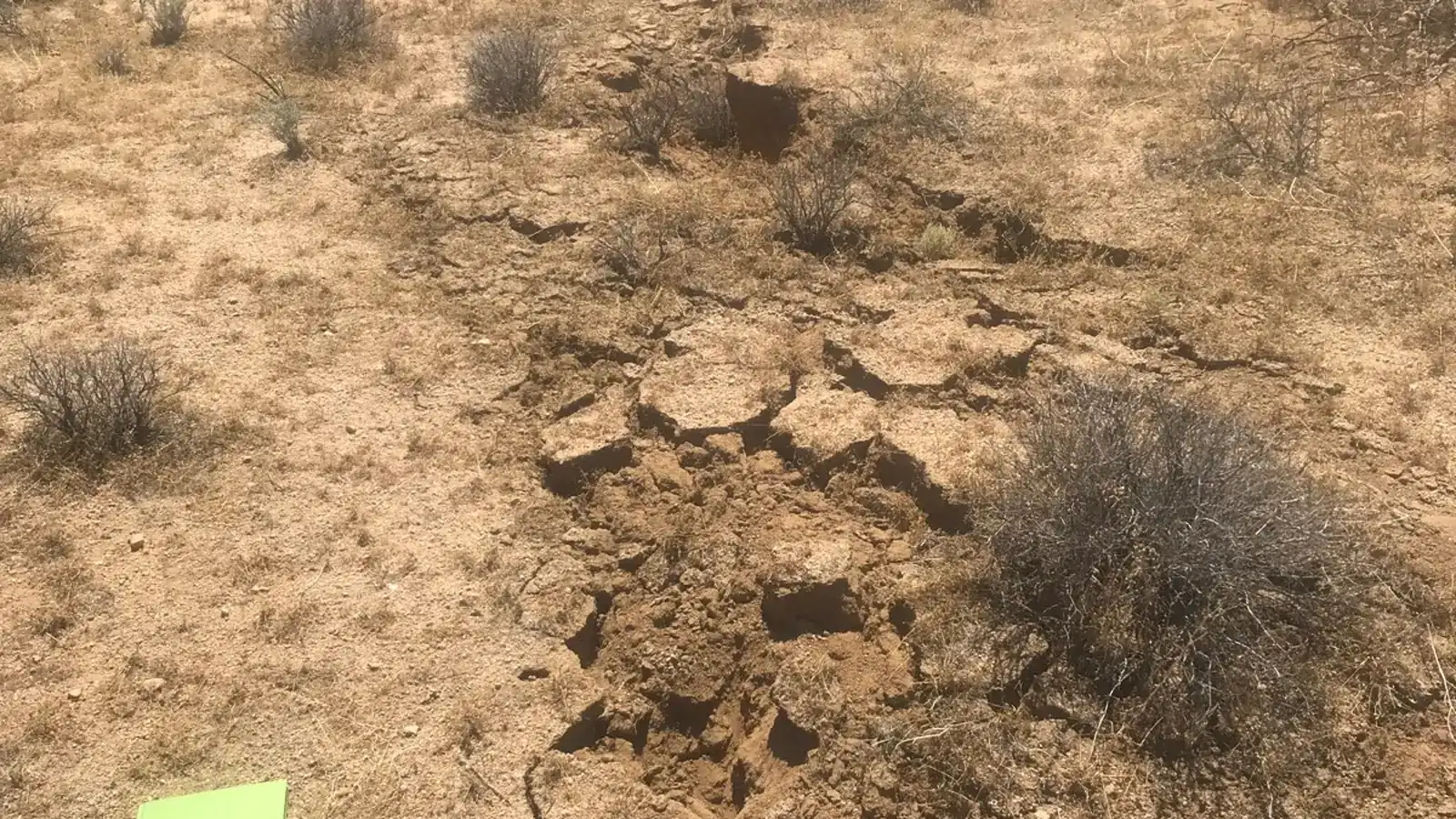
Hot weather, ordinary cloud patterns and unusual animal behaviour do not provide a reproducible earthquake forecast. Faults do not usually open into vast chasms, and small earthquakes do not safely release enough energy to prevent larger ones.
A concise explanation is valuable only when it preserves the causal chain. It becomes misleading when it substitutes a memorable label for a mechanism, confuses association with cause or extends evidence beyond the conditions actually studied.
How scientists know
Seismometer networks locate ruptures from wave arrival times and amplitudes. GPS and satellite radar measure crustal deformation, geologists map displaced landforms, laboratories test rock friction, and numerical models examine how stress transfers along fault systems.
No single measurement carries the conclusion. Observations, experiments, physical theory and repeated records provide independent checks, while disagreement points to an uncontrolled variable or a question that still needs a better test.
Frequently asked questions
Can humans cause earthquakes?
Fluid injection, reservoir loading, mining and geothermal activity can alter stress and trigger induced seismicity in some settings.
What is the biggest possible magnitude?
Magnitude depends on available fault area and slip; USGS notes that magnitude 10 events are not physically plausible on Earth’s known faults.
Do all earthquakes cause tsunamis?
No. A damaging tsunami usually requires substantial rapid displacement of the seafloor or another large movement of water.
Why do earthquakes happen inside continents?
Ancient faults can be reactivated when broad plate stresses reach weaknesses far from present boundaries.
What should people do during shaking?
Follow local emergency guidance; in many indoor settings the standard advice is Drop, Cover and Hold On.
Key takeaways
- Locked faults store elastic strain.
- Sudden fault slip radiates seismic waves.
- Magnitude and local intensity are different quantities.
- Hazard probabilities and early warnings are not exact predictions.
Continue exploring
Sources and further reading
Keep exploring.
One remarkable idea at a time—nature, science, history and beyond.
Sources and further reading
Barnakle uses credible primary and authoritative sources wherever possible.
- USGS — What is an earthquake?
- https://www.usgs.gov/faqs/what-earthquake-and-what-causes-them-happen
- USGS — The Science of Earthquakes
- https://www.usgs.gov/programs/earthquake-hazards/science-earthquakes
- USGS — Earthquake Facts and Fantasy
- https://www.usgs.gov/programs/earthquake-hazards/earthquake-facts-earthquake-fantasy
- USGS — Faults and earthquakes
- https://www.usgs.gov/faqs/what-relationship-between-faults-and-earthquakes-what-happens-fault-when-earthquake-occurs
Last reviewed October 3, 2026.

Barnakle Editorial Team
A member of the Barnakle editorial team, exploring remarkable ideas with clarity, curiosity and care.
More from this author →