
The isotope clock behind thousands of archaeological timelines
What to know
- Radiocarbon dates once-living carbon, not every ancient object.
- Half-life converts isotope ratios into conventional radiocarbon ages.
- Calibration turns those ages into calendar-year probability ranges.
- Context and contamination can matter as much as measurement precision.
Carbon has several isotopes
Carbon atoms share six protons but can contain different numbers of neutrons. The mechanism matters because carbon-12 and carbon-13 are stable while carbon-14 is radioactive. Researchers examine it with mass spectrometry and decay counting. A useful explanation must connect the observation to a process that makes testable predictions rather than merely attaching a memorable label.
Isotope notation can obscure that all forms participate in chemistry. That limitation does not erase the result, but it narrows what can responsibly be claimed. The strongest interpretation compares independent methods, reports uncertainty and distinguishes a measured outcome from a broader inference. The nuclear difference creates the clock.
Scale and context are essential. A process demonstrated in one specimen, instrument, event or model may be real without controlling every case. Replication asks whether the underlying pattern survives reasonable changes in method. When results disagree, the disagreement can reveal hidden variables and improve the next experiment.
Carbon-14 begins in the atmosphere
Cosmic-ray interactions help create carbon-14 in the upper atmosphere. The mechanism matters because oxidation and atmospheric mixing place it into carbon dioxide. Researchers examine it with atmospheric sampling and production models. A useful explanation must connect the observation to a process that makes testable predictions rather than merely attaching a memorable label.
Production varies with solar and geomagnetic conditions. That limitation does not erase the result, but it narrows what can responsibly be claimed. The strongest interpretation compares independent methods, reports uncertainty and distinguishes a measured outcome from a broader inference. The starting concentration is not perfectly constant.
Scale and context are essential. A process demonstrated in one specimen, instrument, event or model may be real without controlling every case. Replication asks whether the underlying pattern survives reasonable changes in method. When results disagree, the disagreement can reveal hidden variables and improve the next experiment.
Life exchanges carbon
Plants take in carbon dioxide and food webs redistribute its carbon. The mechanism matters because ongoing exchange keeps living tissues broadly connected to environmental isotope ratios. Researchers examine it with modern tissue and atmospheric comparisons. A useful explanation must connect the observation to a process that makes testable predictions rather than merely attaching a memorable label.
Marine and freshwater reservoirs can differ from the atmosphere. That limitation does not erase the result, but it narrows what can responsibly be claimed. The strongest interpretation compares independent methods, reports uncertainty and distinguishes a measured outcome from a broader inference. Ecological source matters before dating begins.
Scale and context are essential. A process demonstrated in one specimen, instrument, event or model may be real without controlling every case. Replication asks whether the underlying pattern survives reasonable changes in method. When results disagree, the disagreement can reveal hidden variables and improve the next experiment.
Death closes the main exchange
Once tissue stops exchanging carbon, its carbon-14 inventory begins declining without replacement. The mechanism matters because radioactive decay follows a statistical exponential law. Researchers examine it with measurements of known-age material. A useful explanation must connect the observation to a process that makes testable predictions rather than merely attaching a memorable label.
Some materials can absorb later carbon. That limitation does not erase the result, but it narrows what can responsibly be claimed. The strongest interpretation compares independent methods, reports uncertainty and distinguishes a measured outcome from a broader inference. Closure is a sample-specific assumption.
Scale and context are essential. A process demonstrated in one specimen, instrument, event or model may be real without controlling every case. Replication asks whether the underlying pattern survives reasonable changes in method. When results disagree, the disagreement can reveal hidden variables and improve the next experiment.
Half-life describes the rate
A half-life is the time in which half the radioactive atoms in a large population are expected to decay. The mechanism matters because decay probability remains constant through time. Researchers examine it with nuclear measurements and repeated standards. A useful explanation must connect the observation to a process that makes testable predictions rather than merely attaching a memorable label.
A half-life does not mean every atom changes at the halfway point. That limitation does not erase the result, but it narrows what can responsibly be claimed. The strongest interpretation compares independent methods, reports uncertainty and distinguishes a measured outcome from a broader inference. Large populations make the law predictable.
Scale and context are essential. A process demonstrated in one specimen, instrument, event or model may be real without controlling every case. Replication asks whether the underlying pattern survives reasonable changes in method. When results disagree, the disagreement can reveal hidden variables and improve the next experiment.
What a conventional age means
Laboratories convert measured activity or isotope ratio using agreed conventions. The mechanism matters because standard assumptions allow results from different laboratories to be compared. Researchers examine it with reference materials and quality-control programs. A useful explanation must connect the observation to a process that makes testable predictions rather than merely attaching a memorable label.
A conventional radiocarbon age is not yet a direct calendar date. That limitation does not erase the result, but it narrows what can responsibly be claimed. The strongest interpretation compares independent methods, reports uncertainty and distinguishes a measured outcome from a broader inference. Calibration is a separate essential step.
Scale and context are essential. A process demonstrated in one specimen, instrument, event or model may be real without controlling every case. Replication asks whether the underlying pattern survives reasonable changes in method. When results disagree, the disagreement can reveal hidden variables and improve the next experiment.
Decay counting and AMS
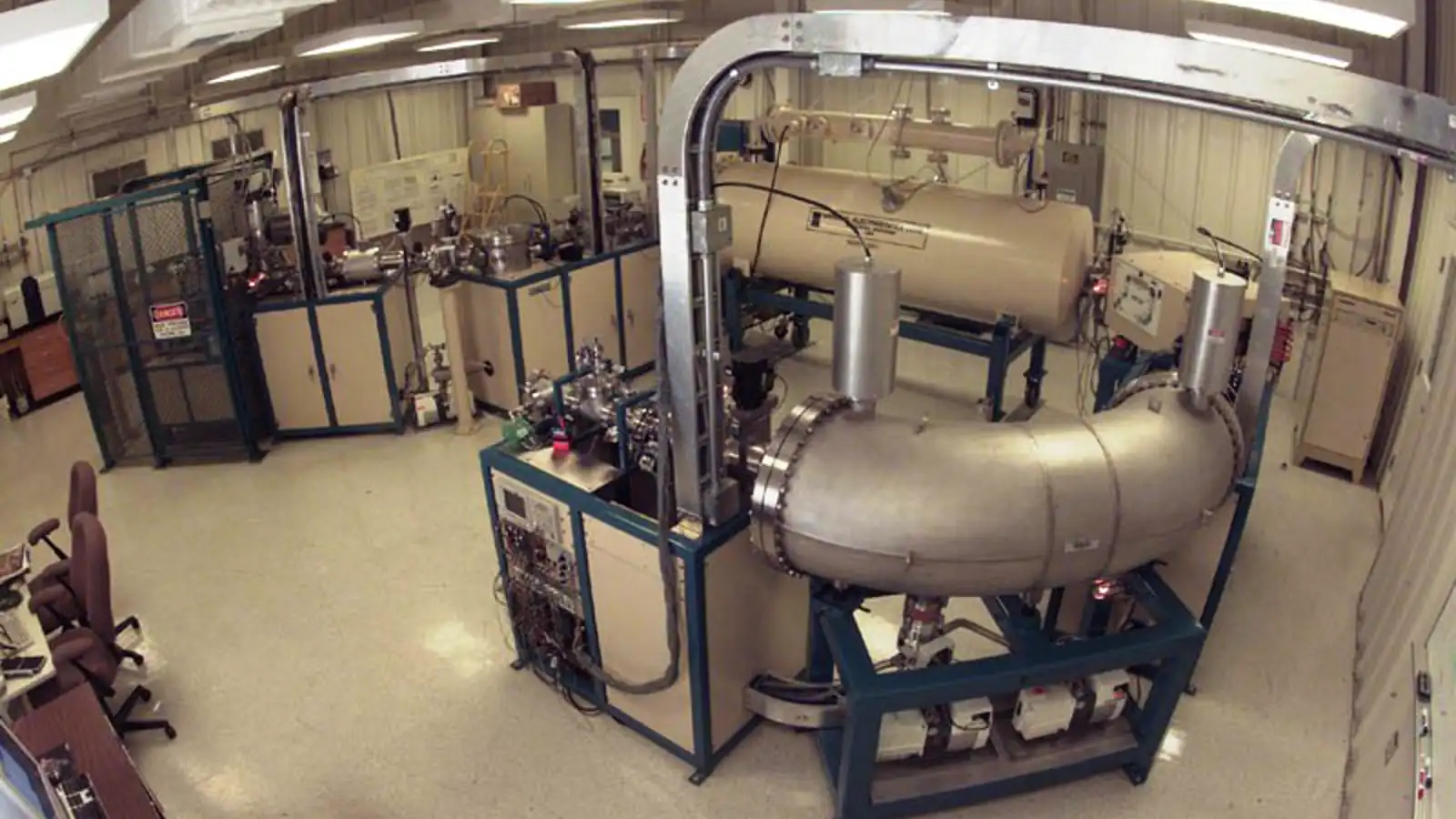
Early laboratories counted radioactive emissions; accelerator mass spectrometry counts isotope ratios. The mechanism matters because AMS can work with smaller samples and separates rare carbon-14 ions. Researchers examine it with standards, blanks and instrument calibration. A useful explanation must connect the observation to a process that makes testable predictions rather than merely attaching a memorable label.
Small samples can be more vulnerable to contamination. That limitation does not erase the result, but it narrows what can responsibly be claimed. The strongest interpretation compares independent methods, reports uncertainty and distinguishes a measured outcome from a broader inference. Precision depends on preparation as well as machinery.
Scale and context are essential. A process demonstrated in one specimen, instrument, event or model may be real without controlling every case. Replication asks whether the underlying pattern survives reasonable changes in method. When results disagree, the disagreement can reveal hidden variables and improve the next experiment.
Pretreatment removes unwanted carbon
Samples may contain soil compounds, conservation materials or younger rootlets. The mechanism matters because chemical and physical cleaning isolates the target fraction. Researchers examine it with process blanks and split-sample tests. A useful explanation must connect the observation to a process that makes testable predictions rather than merely attaching a memorable label.
Aggressive treatment can reduce sample yield. That limitation does not erase the result, but it narrows what can responsibly be claimed. The strongest interpretation compares independent methods, reports uncertainty and distinguishes a measured outcome from a broader inference. The chosen fraction must match the archaeological question.
Scale and context are essential. A process demonstrated in one specimen, instrument, event or model may be real without controlling every case. Replication asks whether the underlying pattern survives reasonable changes in method. When results disagree, the disagreement can reveal hidden variables and improve the next experiment.
Wood has an inbuilt-age problem
A beam can contain heartwood formed long before the tree was cut. The mechanism matters because radiocarbon dates formation of the sampled growth, not construction automatically. Researchers examine it with tree anatomy and archaeological context. A useful explanation must connect the observation to a process that makes testable predictions rather than merely attaching a memorable label.
Reused timber adds another gap. That limitation does not erase the result, but it narrows what can responsibly be claimed. The strongest interpretation compares independent methods, reports uncertainty and distinguishes a measured outcome from a broader inference. Material history connects laboratory age to human events.
Scale and context are essential. A process demonstrated in one specimen, instrument, event or model may be real without controlling every case. Replication asks whether the underlying pattern survives reasonable changes in method. When results disagree, the disagreement can reveal hidden variables and improve the next experiment.
Charcoal can move
Charcoal may be redeposited from older layers or produced from long-lived wood. The mechanism matters because sediment disturbance breaks the simple link between sample and layer. Researchers examine it with micromorphology and stratigraphic recording. A useful explanation must connect the observation to a process that makes testable predictions rather than merely attaching a memorable label.
A precise assay cannot repair poor provenance. That limitation does not erase the result, but it narrows what can responsibly be claimed. The strongest interpretation compares independent methods, reports uncertainty and distinguishes a measured outcome from a broader inference. Excavation context remains indispensable.
Scale and context are essential. A process demonstrated in one specimen, instrument, event or model may be real without controlling every case. Replication asks whether the underlying pattern survives reasonable changes in method. When results disagree, the disagreement can reveal hidden variables and improve the next experiment.
Reservoir effects shift starting ratios
Ocean and lake carbon can appear older than contemporary atmosphere. The mechanism matters because slow mixing or dissolved ancient carbon lowers carbon-14 activity. Researchers examine it with paired terrestrial and aquatic samples. A useful explanation must connect the observation to a process that makes testable predictions rather than merely attaching a memorable label.
Offsets vary by location and time. That limitation does not erase the result, but it narrows what can responsibly be claimed. The strongest interpretation compares independent methods, reports uncertainty and distinguishes a measured outcome from a broader inference. Regional corrections require evidence.
Scale and context are essential. A process demonstrated in one specimen, instrument, event or model may be real without controlling every case. Replication asks whether the underlying pattern survives reasonable changes in method. When results disagree, the disagreement can reveal hidden variables and improve the next experiment.
Fractionation changes isotope ratios
Physical and biological processes favor isotopes slightly differently. The mechanism matters because carbon-13 measurements help normalize mass-dependent fractionation. Researchers examine it with stable-isotope analysis alongside carbon-14. A useful explanation must connect the observation to a process that makes testable predictions rather than merely attaching a memorable label.
Correction conventions must be reported. That limitation does not erase the result, but it narrows what can responsibly be claimed. The strongest interpretation compares independent methods, reports uncertainty and distinguishes a measured outcome from a broader inference. Normalization prevents chemistry from masquerading as age.
Scale and context are essential. A process demonstrated in one specimen, instrument, event or model may be real without controlling every case. Replication asks whether the underlying pattern survives reasonable changes in method. When results disagree, the disagreement can reveal hidden variables and improve the next experiment.
Calibration curves use independent archives
Tree rings, corals and other records connect measured carbon-14 with known or independently dated calendar ages. The mechanism matters because many points build a curve through changing atmospheric concentration. Researchers examine it with international calibration datasets. A useful explanation must connect the observation to a process that makes testable predictions rather than merely attaching a memorable label.
Different environments require appropriate curves. That limitation does not erase the result, but it narrows what can responsibly be claimed. The strongest interpretation compares independent methods, reports uncertainty and distinguishes a measured outcome from a broader inference. Calibration is empirical, not a cosmetic adjustment.
Scale and context are essential. A process demonstrated in one specimen, instrument, event or model may be real without controlling every case. Replication asks whether the underlying pattern survives reasonable changes in method. When results disagree, the disagreement can reveal hidden variables and improve the next experiment.
A calibrated date is a distribution
One measured age can intersect a wavy calibration curve in several places. The mechanism matters because measurement uncertainty and curve shape produce probability ranges. Researchers examine it with Bayesian calibration software and published curves. A useful explanation must connect the observation to a process that makes testable predictions rather than merely attaching a memorable label.
A range is not proof that every year is equally likely. That limitation does not erase the result, but it narrows what can responsibly be claimed. The strongest interpretation compares independent methods, reports uncertainty and distinguishes a measured outcome from a broader inference. Reports should state probability and curve version.
Scale and context are essential. A process demonstrated in one specimen, instrument, event or model may be real without controlling every case. Replication asks whether the underlying pattern survives reasonable changes in method. When results disagree, the disagreement can reveal hidden variables and improve the next experiment.
Sequences can sharpen estimates
Stratigraphic order and historical constraints can be combined with radiocarbon likelihoods. The mechanism matters because Bayesian models rule out chronologies inconsistent with known ordering. Researchers examine it with multiple samples from securely ordered layers. A useful explanation must connect the observation to a process that makes testable predictions rather than merely attaching a memorable label.
Bad prior assumptions can bias a model. That limitation does not erase the result, but it narrows what can responsibly be claimed. The strongest interpretation compares independent methods, reports uncertainty and distinguishes a measured outcome from a broader inference. Constraints must be independently justified.
Scale and context are essential. A process demonstrated in one specimen, instrument, event or model may be real without controlling every case. Replication asks whether the underlying pattern survives reasonable changes in method. When results disagree, the disagreement can reveal hidden variables and improve the next experiment.
The modern atmosphere changed
Fossil-fuel carbon diluted atmospheric carbon-14 while nuclear testing produced a large bomb pulse. The mechanism matters because industrial and nuclear activity altered isotope ratios. Researchers examine it with direct atmospheric records. A useful explanation must connect the observation to a process that makes testable predictions rather than merely attaching a memorable label.
Modern samples require specialized calibration. That limitation does not erase the result, but it narrows what can responsibly be claimed. The strongest interpretation compares independent methods, reports uncertainty and distinguishes a measured outcome from a broader inference. The bomb pulse can also date recent tissues.
Scale and context are essential. A process demonstrated in one specimen, instrument, event or model may be real without controlling every case. Replication asks whether the underlying pattern survives reasonable changes in method. When results disagree, the disagreement can reveal hidden variables and improve the next experiment.
The practical age limit
After many half-lives, so little carbon-14 remains that background contamination becomes comparable to signal. The mechanism matters because instrument and preparation blanks set detection limits. Researchers examine it with old standards and background materials. A useful explanation must connect the observation to a process that makes testable predictions rather than merely attaching a memorable label.
There is no universal exact cutoff. That limitation does not erase the result, but it narrows what can responsibly be claimed. The strongest interpretation compares independent methods, reports uncertainty and distinguishes a measured outcome from a broader inference. Very old claims demand exceptional control.
Scale and context are essential. A process demonstrated in one specimen, instrument, event or model may be real without controlling every case. Replication asks whether the underlying pattern survives reasonable changes in method. When results disagree, the disagreement can reveal hidden variables and improve the next experiment.
Dating is an argument, not a number
A strong chronology joins sample identity, context, pretreatment, measurement and calibration. The mechanism matters because each link answers a different source of uncertainty. Researchers examine it with replicate samples and independent dating methods. A useful explanation must connect the observation to a process that makes testable predictions rather than merely attaching a memorable label.
Agreement can still hide a shared bias. That limitation does not erase the result, but it narrows what can responsibly be claimed. The strongest interpretation compares independent methods, reports uncertainty and distinguishes a measured outcome from a broader inference. Transparent records make future reanalysis possible.
Scale and context are essential. A process demonstrated in one specimen, instrument, event or model may be real without controlling every case. Replication asks whether the underlying pattern survives reasonable changes in method. When results disagree, the disagreement can reveal hidden variables and improve the next experiment.
How to read the evidence
This feature combines primary research with institutional background. Primary studies provide methods and measurements; agencies and research institutions explain established context. Neither should be treated as infallible. Dates, samples, calibrations and definitions determine how far a conclusion travels.
Barnakle keeps the specialist-review requirement open because a clear explanation can still miss a technical qualification. The source list lets reviewers check the original evidence, and the evidence boundary prevents an engaging headline from becoming a promise the research did not make.
Sources and further reading
- University of Oxford Radiocarbon Accelerator Unit
- Reimer et al., IntCal20 calibration curve
- NIST, Radiocarbon dating metrology
- Beta Analytic, Radiocarbon dating overview
How Barnakle selects and verifies sources · Corrections and updates
Keep exploring.
One remarkable idea at a time—nature, science, history and beyond.
Sources and further reading
Barnakle uses credible primary and authoritative sources wherever possible.
- University of Oxford Radiocarbon Accelerator Unit
- https://www.arch.ox.ac.uk/ou-archaeological-science/radiocarbon-accelerator-unit
- Reimer et al., IntCal20 calibration curve
- https://doi.org/10.1017/RDC.2020.41
- NIST, Radiocarbon dating metrology
- https://www.nist.gov/
- Beta Analytic, Radiocarbon dating overview
- https://www.radiocarbon.com/about-carbon-dating.htm
Last reviewed September 21, 2026.

Barnakle Editorial Team
A member of the Barnakle editorial team, exploring remarkable ideas with clarity, curiosity and care.
More from this author →