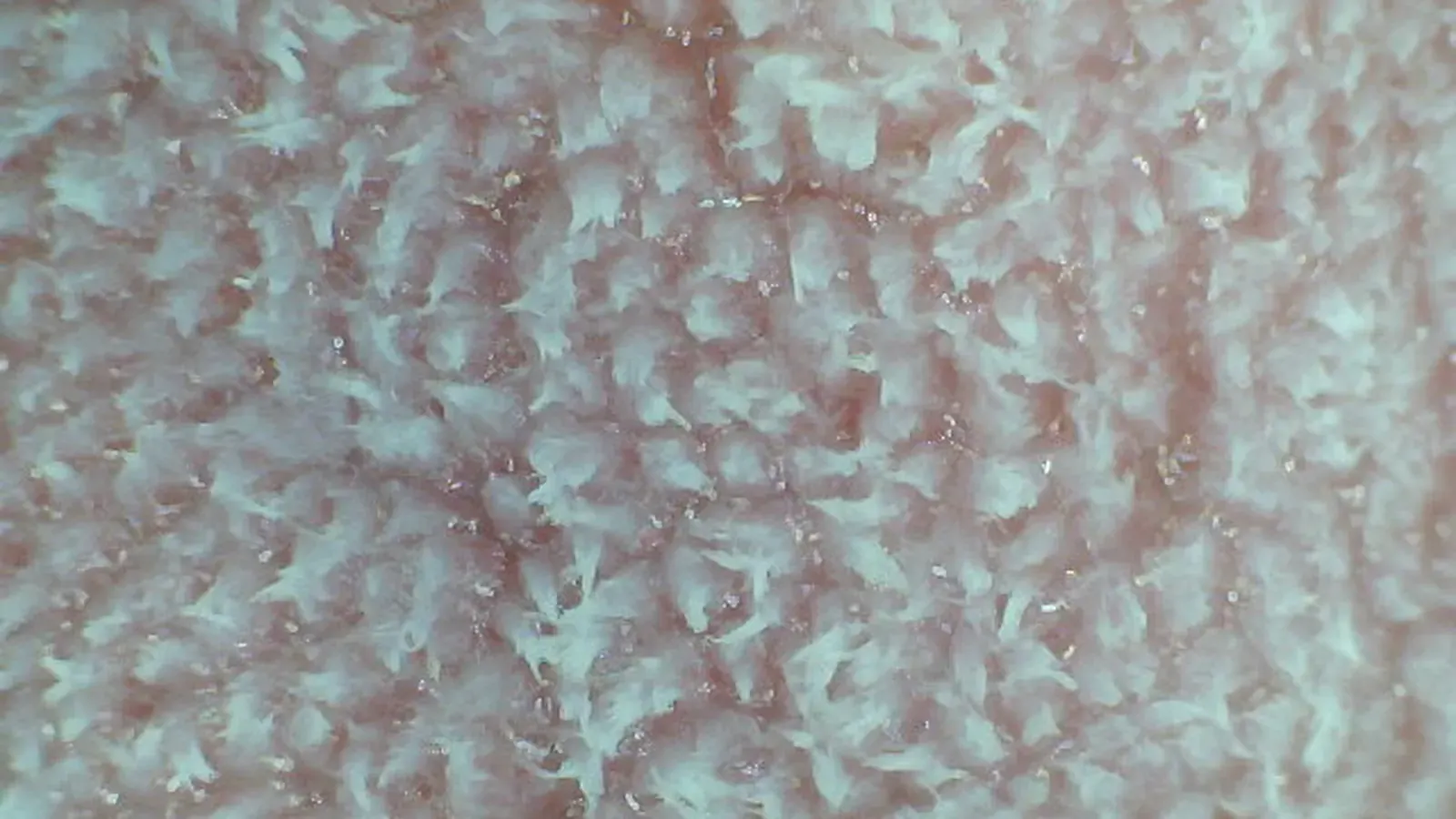
Taste is supported by a sensory tissue that continually renews itself. Individual taste-bud cells have limited lifespans, while replacement cells develop and join the functioning system. The familiar experience of tasting food therefore depends on a structure that changes at the cellular level.
A taste bud is a small sensory organ containing several cell types, not a single bump visible on the tongue. Understanding renewal requires distinguishing the organ from the cells inside it.
What taste cells contribute
Cells in taste buds respond to chemical stimuli associated with basic taste qualities, including sweet, bitter, sour, salty and umami. Signals pass into neural pathways that carry information towards the brain.
Taste is also only part of flavour. Smell, temperature and texture contribute to the experience of eating. Explaining the renewal of taste cells does not mean all of those sensory components are replaced by the same process.
Replacement comes from progenitor cells
Studies use lineage tracing to follow the descendants of marked cells. Instead of inferring ancestry from appearance alone, researchers label a cell population and examine which mature cells later carry that label.
Mouse experiments identifying Lgr5-expressing progenitors in parts of the posterior tongue found descendants among the major taste-cell classes. Other work has identified additional markers and populations. A marker useful in one location or experimental condition should not automatically be treated as the sole source of every taste cell throughout the mouth.
There is no single replacement day
Different studies and cell classes give different lifespan estimates. The important feature is ongoing turnover, not a scheduled event in which every taste bud is replaced at once. Reviews describe a mixture of shorter- and longer-lived cells.
This distinction prevents an appealing but inaccurate claim: the tongue does not acquire a completely new set of tastes on a universal weekly countdown. Renewal happens within an existing tissue and neural system.
New cells must connect appropriately
A replacement sensory cell has to communicate with a suitable neural partner. Researchers at Columbia investigated molecular signals involved in matching sweet and bitter taste cells with their corresponding pathways.
In genetically modified mice, changing semaphorin signalling altered connectivity and responses to taste stimuli. This experiment addressed a mechanism of maintaining organised connections despite turnover. It was not a demonstration that people can safely reprogramme their own taste preferences or restore lost taste with a home treatment.
What renewal teaches biologists
A functioning sensory organ must coordinate cell production, differentiation, connection and removal. Studying taste buds lets researchers investigate those processes in a system that remains active while renewing.
Animal experiments provide detailed mechanistic evidence, while applying a finding to human disorders requires further work. The supported conclusion is already striking: continuity of sensation does not require every participating receptor cell to remain in place for life.
Explore a related question
Sources and further reading
Keep exploring.
One remarkable idea at a time—nature, science, history and beyond.
Last updated October 27, 2026.

Barnakle Editorial Team
Barnakle Editorial Team is the collective byline used for Barnakle’s editorial articles. The contributor profile explains the team identity and links to the publication’s editorial policies.
More from the editorial team →