
Distance from the Sun is only part of a planet’s temperature
The short answer
Mercury is closer to the Sun, but Venus is hotter because its massive carbon-dioxide atmosphere traps outgoing infrared energy. Venus averages about 464°C at the surface, while airless Mercury swings between extreme daytime heat and deep nighttime cold.
The explanation of why is Venus hotter than Mercury becomes clearer when the process is followed in order: initial conditions establish what is possible, interactions change matter or energy, and the resulting structure leaves measurements that can be compared with predictions. That sequence is more reliable than a single slogan because it explains both the familiar result and the exceptions.
Scientists test claims about why is Venus hotter than Mercury at several scales. Direct observations establish what happens, laboratory or computational models isolate mechanisms, and comparisons across environments reveal which factors matter most. Where evidence remains incomplete, this article distinguishes a working explanation from a settled measurement.
The surprising temperature ranking
Planetary distance sets the sunlight available, not the final surface temperature by itself. Mercury receives far more solar energy per square metre than Venus, yet Venus has the hottest average surface of any planet. The missing variable is what happens to energy after it arrives.
In the context of the surprising temperature ranking, this evidence matters because it links an observable feature to a process that can be tested independently. A useful explanation also makes a prediction: changing the relevant condition should change the outcome in a specific direction.
For readers evaluating the surprising temperature ranking, the best question is not merely whether the claim sounds plausible, but what observation would distinguish it from a competing explanation. Here, the combination of structure, environment and measured response provides that test. The conclusion remains open to refinement without making the core evidence arbitrary.
Mercury has almost no insulating atmosphere
Mercury possesses an extremely thin exosphere rather than a substantial atmosphere. Sunlit rock heats intensely, but little gas exists to absorb, circulate and return infrared radiation. After sunset the surface can radiate energy to space efficiently, producing one of the Solar System’s largest day-night temperature ranges.
In the context of mercury has almost no insulating atmosphere, the important qualification is that one pattern can have several contributing causes, so context and scale must be recorded. Natural variation is informative rather than inconvenient, because limits and exceptions reveal which part of the mechanism is essential.
For readers evaluating mercury has almost no insulating atmosphere, the best question is not merely whether the claim sounds plausible, but what observation would distinguish it from a competing explanation. Here, the combination of structure, environment and measured response provides that test. The conclusion remains open to refinement without making the core evidence arbitrary.
Venus wears a massive atmosphere
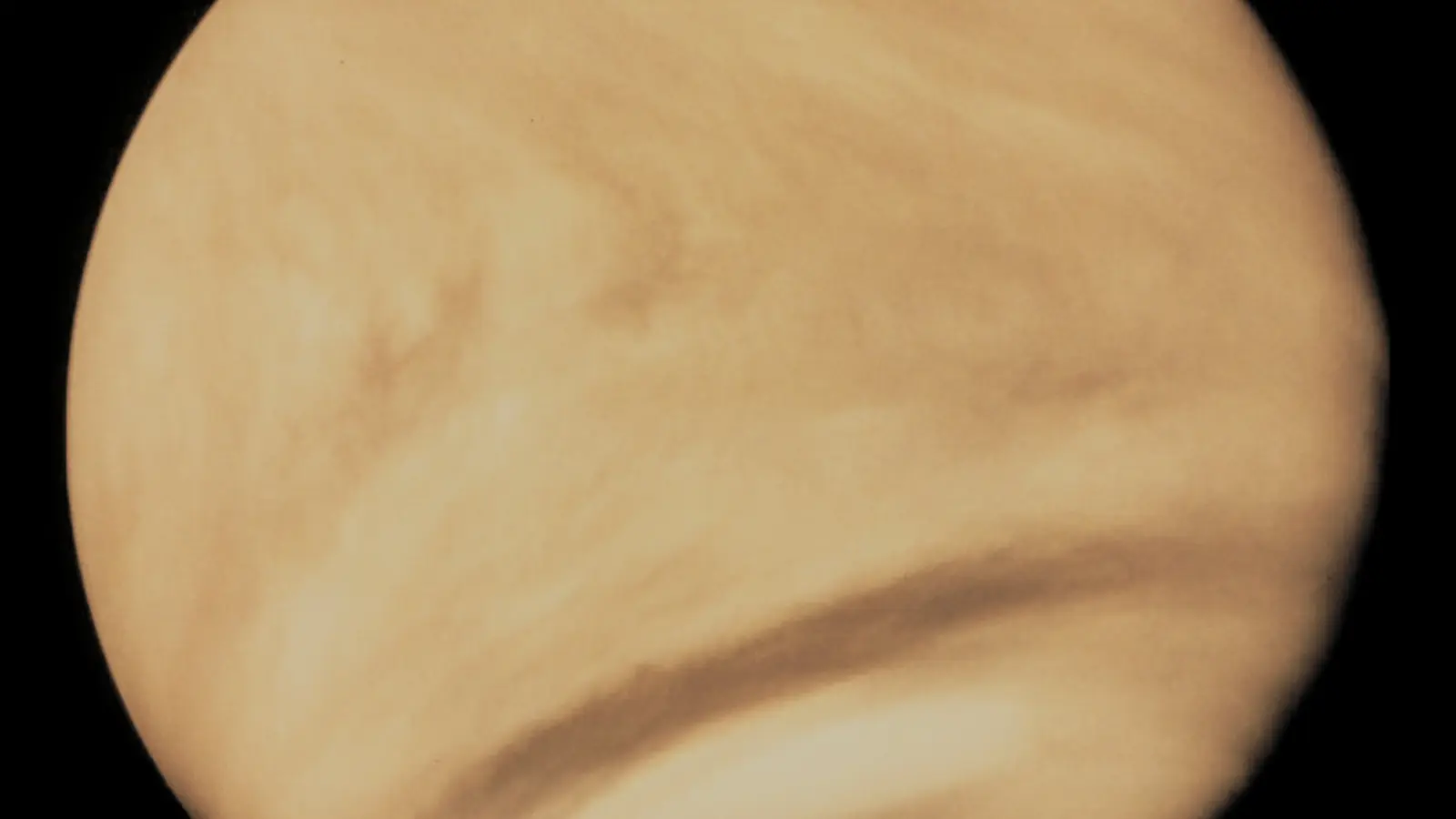
Venus is wrapped in carbon dioxide at a surface pressure roughly 90 times Earth’s sea-level pressure. The atmosphere has enormous mass and optical depth. Incoming sunlight can reach and warm the lower system, while outgoing thermal radiation is repeatedly absorbed and emitted before energy finally escapes from high, cold layers.
In the context of venus wears a massive atmosphere, researchers therefore compare multiple lines of evidence rather than treating one striking example as the whole story. The chronology matters. Similar-looking endpoints can arise by different routes, and only dated or time-resolved evidence can separate them.
For readers evaluating venus wears a massive atmosphere, the best question is not merely whether the claim sounds plausible, but what observation would distinguish it from a competing explanation. Here, the combination of structure, environment and measured response provides that test. The conclusion remains open to refinement without making the core evidence arbitrary.
The greenhouse effect is an energy bottleneck
A warm surface emits infrared radiation. Greenhouse gases absorb selected infrared wavelengths and emit radiation in all directions. Because the effective level from which Venus loses heat to space is high and cold, the lower atmosphere and surface must become much warmer until outgoing energy again balances absorbed sunlight.
In the context of the greenhouse effect is an energy bottleneck, seen this way, the feature is not an isolated curiosity but the outcome of physical and biological constraints acting together. Measurements are strongest when sampling, calibration and uncertainty are reported, allowing another team to check the inference.
For readers evaluating the greenhouse effect is an energy bottleneck, the best question is not merely whether the claim sounds plausible, but what observation would distinguish it from a competing explanation. Here, the combination of structure, environment and measured response provides that test. The conclusion remains open to refinement without making the core evidence arbitrary.
Why pressure alone is not the explanation
Compression and pressure affect temperature profiles, but pressure is not a permanent energy source. The sustained heat requires radiative physics: solar energy enters, thermal energy struggles to escape, and atmospheric circulation redistributes it. A high-pressure atmosphere made of gases transparent to infrared would behave differently.
In the context of why pressure alone is not the explanation, this evidence matters because it links an observable feature to a process that can be tested independently. A useful explanation also makes a prediction: changing the relevant condition should change the outcome in a specific direction.
For readers evaluating why pressure alone is not the explanation, the best question is not merely whether the claim sounds plausible, but what observation would distinguish it from a competing explanation. Here, the combination of structure, environment and measured response provides that test. The conclusion remains open to refinement without making the core evidence arbitrary.
Clouds both reflect and complicate
Venus’s sulfuric-acid cloud deck reflects most incident sunlight, giving the planet a high albedo. That cooling influence is real. Nevertheless, the thick atmosphere’s infrared opacity overwhelms it at the surface. Clouds also absorb and scatter radiation, making the complete energy balance more complicated than a one-gas slogan.
In the context of clouds both reflect and complicate, the important qualification is that one pattern can have several contributing causes, so context and scale must be recorded. Natural variation is informative rather than inconvenient, because limits and exceptions reveal which part of the mechanism is essential.
For readers evaluating clouds both reflect and complicate, the best question is not merely whether the claim sounds plausible, but what observation would distinguish it from a competing explanation. Here, the combination of structure, environment and measured response provides that test. The conclusion remains open to refinement without making the core evidence arbitrary.
A nearly uniform furnace
Venus rotates very slowly, yet its dense atmosphere transports heat efficiently. Surface temperatures vary much less between day and night than Mercury’s do. Winds and convection move energy through the atmosphere, while the huge thermal reservoir resists rapid local cooling.
In the context of a nearly uniform furnace, researchers therefore compare multiple lines of evidence rather than treating one striking example as the whole story. The chronology matters. Similar-looking endpoints can arise by different routes, and only dated or time-resolved evidence can separate them.
For readers evaluating a nearly uniform furnace, the best question is not merely whether the claim sounds plausible, but what observation would distinguish it from a competing explanation. Here, the combination of structure, environment and measured response provides that test. The conclusion remains open to refinement without making the core evidence arbitrary.
Mercury’s noon is not its average
Some points near Mercury’s equator become extremely hot in daylight, though still generally below Venus’s surface temperature. Polar craters that never receive sunlight can preserve water ice. Quoting one maximum without location and time creates a misleading comparison with Venus’s planet-wide average.
In the context of mercury’s noon is not its average, seen this way, the feature is not an isolated curiosity but the outcome of physical and biological constraints acting together. Measurements are strongest when sampling, calibration and uncertainty are reported, allowing another team to check the inference.
For readers evaluating mercury’s noon is not its average, the best question is not merely whether the claim sounds plausible, but what observation would distinguish it from a competing explanation. Here, the combination of structure, environment and measured response provides that test. The conclusion remains open to refinement without making the core evidence arbitrary.
How spacecraft measure temperature
Landers have measured Venus directly for brief periods before failing in the heat and pressure. Orbiters infer atmospheric temperatures and composition using spectroscopy, radio occultations and thermal emission. Mercury missions combine infrared measurements, imaging and models of illumination and surface properties.
In the context of how spacecraft measure temperature, this evidence matters because it links an observable feature to a process that can be tested independently. A useful explanation also makes a prediction: changing the relevant condition should change the outcome in a specific direction.
For readers evaluating how spacecraft measure temperature, the best question is not merely whether the claim sounds plausible, but what observation would distinguish it from a competing explanation. Here, the combination of structure, environment and measured response provides that test. The conclusion remains open to refinement without making the core evidence arbitrary.
Why Venus became so different from Earth
Venus and Earth are similar in size, but their climates diverged. Water availability, solar input, volcanism, atmospheric loss and carbon cycling all matter. Researchers investigate whether early Venus once had milder conditions, but the duration and extent of any temperate interval remain debated.
In the context of why venus became so different from earth, the important qualification is that one pattern can have several contributing causes, so context and scale must be recorded. Natural variation is informative rather than inconvenient, because limits and exceptions reveal which part of the mechanism is essential.
For readers evaluating why venus became so different from earth, the best question is not merely whether the claim sounds plausible, but what observation would distinguish it from a competing explanation. Here, the combination of structure, environment and measured response provides that test. The conclusion remains open to refinement without making the core evidence arbitrary.
Runaway greenhouse needs careful wording
A runaway greenhouse occurs when warming increases atmospheric water vapour until outgoing radiation reaches a limit and surface water is lost. Venus is the endpoint of profound greenhouse evolution, but reconstructing each historical step requires models and geochemical constraints that remain uncertain.
In the context of runaway greenhouse needs careful wording, researchers therefore compare multiple lines of evidence rather than treating one striking example as the whole story. The chronology matters. Similar-looking endpoints can arise by different routes, and only dated or time-resolved evidence can separate them.
For readers evaluating runaway greenhouse needs careful wording, the best question is not merely whether the claim sounds plausible, but what observation would distinguish it from a competing explanation. Here, the combination of structure, environment and measured response provides that test. The conclusion remains open to refinement without making the core evidence arbitrary.
Carbon dioxide does not block visible light the same way
A greenhouse atmosphere need not look opaque to human eyes. Molecules interact with particular wavelength bands. Much visible sunlight penetrates, while carbon dioxide and clouds make it harder for the system’s longer-wavelength heat radiation to leave from the warm lower atmosphere.
In the context of carbon dioxide does not block visible light the same way, seen this way, the feature is not an isolated curiosity but the outcome of physical and biological constraints acting together. Measurements are strongest when sampling, calibration and uncertainty are reported, allowing another team to check the inference.
For readers evaluating carbon dioxide does not block visible light the same way, the best question is not merely whether the claim sounds plausible, but what observation would distinguish it from a competing explanation. Here, the combination of structure, environment and measured response provides that test. The conclusion remains open to refinement without making the core evidence arbitrary.
What the comparison teaches about exoplanets
A planet’s orbit, atmosphere, albedo, rotation, clouds and surface all influence climate. Astronomers cannot rank exoplanet habitability from distance alone. Spectra that reveal atmospheric gases and clouds are essential, and even then degeneracies can allow several climate explanations.
In the context of what the comparison teaches about exoplanets, this evidence matters because it links an observable feature to a process that can be tested independently. A useful explanation also makes a prediction: changing the relevant condition should change the outcome in a specific direction.
For readers evaluating what the comparison teaches about exoplanets, the best question is not merely whether the claim sounds plausible, but what observation would distinguish it from a competing explanation. Here, the combination of structure, environment and measured response provides that test. The conclusion remains open to refinement without making the core evidence arbitrary.
A planetary energy budget
In long-term equilibrium, absorbed solar power must approximately equal outgoing thermal power. Atmospheres change the temperature required at the surface to achieve that balance. Venus demonstrates how the same conservation law can produce radically different surface conditions when radiation escapes from high above the ground.
In the context of a planetary energy budget, the important qualification is that one pattern can have several contributing causes, so context and scale must be recorded. Natural variation is informative rather than inconvenient, because limits and exceptions reveal which part of the mechanism is essential.
For readers evaluating a planetary energy budget, the best question is not merely whether the claim sounds plausible, but what observation would distinguish it from a competing explanation. Here, the combination of structure, environment and measured response provides that test. The conclusion remains open to refinement without making the core evidence arbitrary.
How to evaluate new claims about why is Venus hotter than Mercury
New discoveries about why is Venus hotter than Mercury are often announced with a dramatic headline, but the durable question is whether the new result changes the mechanism described above. Check what was actually measured, how large and representative the sample was, whether the work passed expert review, and whether the uncertainty is visible. A result can be interesting without overturning everything previously known. Replication, improved instruments and a better chronological or environmental record usually strengthen knowledge by degrees.
For why is Venus hotter than Mercury, source type matters as well. A research paper reports methods and results, an institution may provide accessible context, and a news story interprets the work for a broad audience. These roles are useful but not interchangeable. Barnakle links to the most authoritative available records so readers can follow the evidence beyond the summary. When later measurements disagree, the responsible response is to examine methods and scope—not to choose whichever claim sounds more surprising.
Frequently asked questions
What is the simplest accurate explanation?
In brief: Mercury is closer to the Sun, but Venus is hotter because its massive carbon-dioxide atmosphere traps outgoing infrared energy. Venus averages about 464°C at the surface, while airless Mercury swings between extreme daytime heat and deep nighttime cold.
Is there one cause?
Usually not. For why is Venus hotter than Mercury, the central mechanism operates within a system whose history, environment and geometry affect the result. A good explanation names the dominant cause without pretending that secondary influences disappear.
How do scientists know?
Researchers studying why is Venus hotter than Mercury combine observation with measurements that test specific predictions. Independent methods have different sources of error, so agreement among them is more persuasive than repetition of the same method.
Can photographs be misleading?
A photograph related to why is Venus hotter than Mercury records a particular place, time, scale and processing choice. It can document real evidence while still omitting motion, depth, invisible wavelengths or surrounding conditions. Captions and source records provide essential context.
What remains uncertain?
For why is Venus hotter than Mercury, fine details, boundary cases and historical reconstruction remain active research areas. Uncertainty is not equivalent to ignorance: well-supported mechanisms can coexist with unanswered questions about timing, variation or relative importance.
Key takeaways
- Mercury is closer to the Sun, but Venus is hotter because its massive carbon-dioxide atmosphere traps outgoing infrared energy. Venus averages about 464°C at the surface, while airless Mercury swings between extreme daytime heat and deep nighttime cold.
- The mechanism is supported by multiple forms of evidence rather than appearance alone.
- Variation and exceptions help researchers test where simplified explanations stop working.
- Source quality, scale and uncertainty should travel with every scientific claim.
Continue exploring
What researchers will test next
Progress now depends on measurements that connect controlled experiments with the complexity of the wider world. Researchers need observations collected across different locations, instruments and timescales, with methods described clearly enough for independent teams to repeat them. Larger samples can reveal whether an apparent pattern is widespread or driven by a few unusual cases. Longer records can separate temporary variation from a durable change.
New instruments may improve precision, but precision alone does not guarantee a better explanation. Scientists must still test alternative causes, disclose uncertainty and check whether an analysis gives the same answer when reasonable assumptions change. Open data and carefully documented methods allow other researchers to find errors, reproduce results and combine evidence that was gathered for different purposes.
The most useful future studies will make competing explanations face distinct predictions. When several independent tests agree, confidence can grow. When they disagree, the mismatch becomes evidence about what the original account was missing. Barnakle treats this process as a strength of science: conclusions can be reliable without being final, and responsible reporting should explain both what is known and what observation could change the picture.
Sources and further reading
Keep exploring.
One remarkable idea at a time—nature, science, history and beyond.
Sources and further reading
Barnakle uses credible primary and authoritative sources wherever possible.
- NASA — Venus facts
- https://science.nasa.gov/venus/venus-facts/
- NASA — Mercury facts
- https://science.nasa.gov/mercury/facts/
- NASA — The greenhouse effect and Venus
- https://science.nasa.gov/climate-change/faq/what-is-the-greenhouse-effect/
- ESA — Venus Express
- https://www.esa.int/Science_Exploration/Space_Science/Venus_Express
- NASA Planetary Data System
- https://pds.nasa.gov/
Last reviewed October 1, 2026.

Barnakle Editorial Team
A member of the Barnakle editorial team, exploring remarkable ideas with clarity, curiosity and care.
More from this author →