Surfactant molecules connect oily dirt to water so it can be lifted, suspended and rinsed away
The short answer
Water and cooking oil separate because their molecules interact differently. Soap does not make that chemical difference disappear; it creates a molecular bridge across the boundary. This lowers surface tension, helps water wet a dirty surface and stabilizes droplets that would otherwise merge back into a greasy layer.
Soap molecules have two personalities
A soap ion contains a charged hydrophilic head and a long hydrocarbon tail that avoids water and associates with oils. This amphiphilic structure is the key to cleaning.
Water alone leaves grease behind
Water molecules form strong networks with one another, while nonpolar oils cannot participate effectively. The two liquids minimize contact and separate into phases.
Surfactants gather at interfaces
Soap molecules orient at boundaries between water, oil and air. Their tails enter grease while their heads remain hydrated, lowering interfacial tension.
Agitation breaks grease into droplets
Rubbing, stirring or machine motion deforms an oily layer and exposes new surface. Surfactant rapidly covers that surface and slows droplets from joining again.
Micelles can carry oily material
Above a concentration threshold, surfactants assemble with tails inward and heads outward. Grease and hydrophobic molecules can be incorporated into these dynamic aggregates.
Rinsing removes the suspension
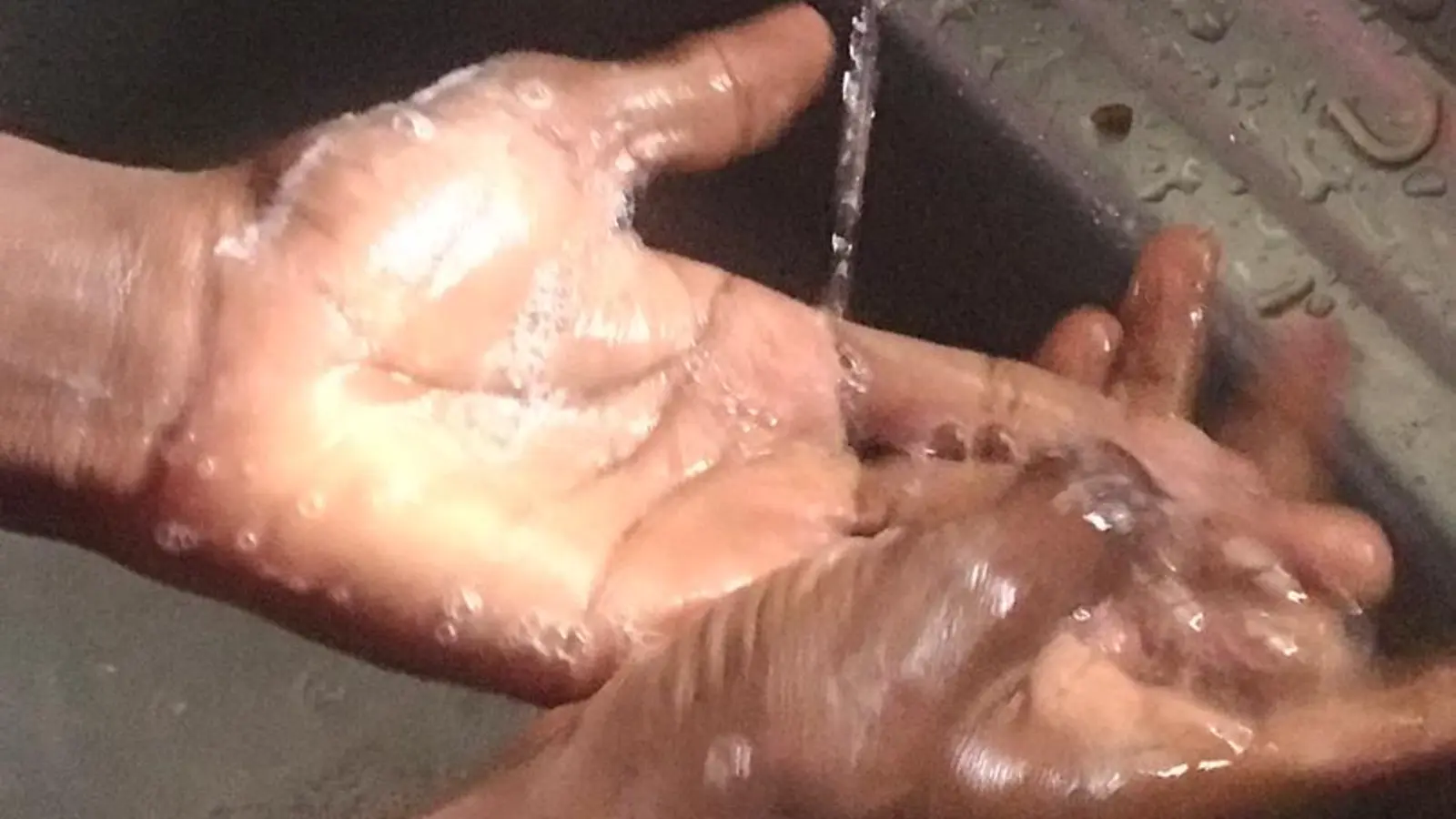
Flowing water transports surfactant-coated droplets away. Sufficient water matters because concentrated dirty solution can redeposit material on a surface.
Traditional soap reacts with hard water
Calcium and magnesium ions can form insoluble deposits with fatty-acid soaps. Many synthetic detergents are designed to remain effective in mineral-rich water.
Warmth can improve cleaning
Heat may soften fats, speed molecular motion and help detergent dissolve, but excessive heat can set some stains, damage materials or create safety risks.
Soap also disrupts many microbes
Surfactants loosen organisms from skin and can disrupt lipid membranes of some enveloped viruses and bacteria. Mechanical washing and thorough rinsing remain essential.
Common misconceptions
Soap does not turn grease into water, and bubbles are not the substance doing the cleaning. Foam can show that air is being incorporated, but low-foaming formulations may clean very well. More detergent is not always better; excess can be hard to rinse and leave residue.
How scientists know
Chemists measure surface and interfacial tension, critical micelle concentration, droplet size and removal from standardized soiled surfaces. Microscopy and spectroscopy track molecular organization, while laundering and handwashing studies test real materials, water hardness, temperature and motion.
Why does hot water often help?
It can soften fats and speed processes, but product and fabric instructions still matter.
Is detergent the same as soap?
Both are surfactants, but synthetic detergents have different head groups and often tolerate hard water better.
Do more bubbles mean cleaner?
No. Foam depends on formulation and agitation, not directly on soil removal.
Why rinse thoroughly?
Rinsing carries suspended grease and surfactant away and prevents residue.
Does soap kill every germ?
No. Washing mainly loosens and removes material; susceptibility varies among microbes.
Key takeaways
- Surfactants have water-loving heads and oil-loving tails.
- They lower interfacial tension and stabilize droplets.
- Agitation exposes grease to surfactant.
- Rinsing carries the dispersed soil away.
Continue exploring
Sources and further reading
Keep exploring.
One remarkable idea at a time—nature, science, history and beyond.
Last updated October 30, 2026.

Barnakle Editorial Team
Barnakle Editorial Team is the collective byline used for Barnakle’s editorial articles. The contributor profile explains the team identity and links to the publication’s editorial policies.
More from the editorial team →