
Yeast fermentation produces carbon dioxide while a stretchy dough network traps expanding gas
The short answer
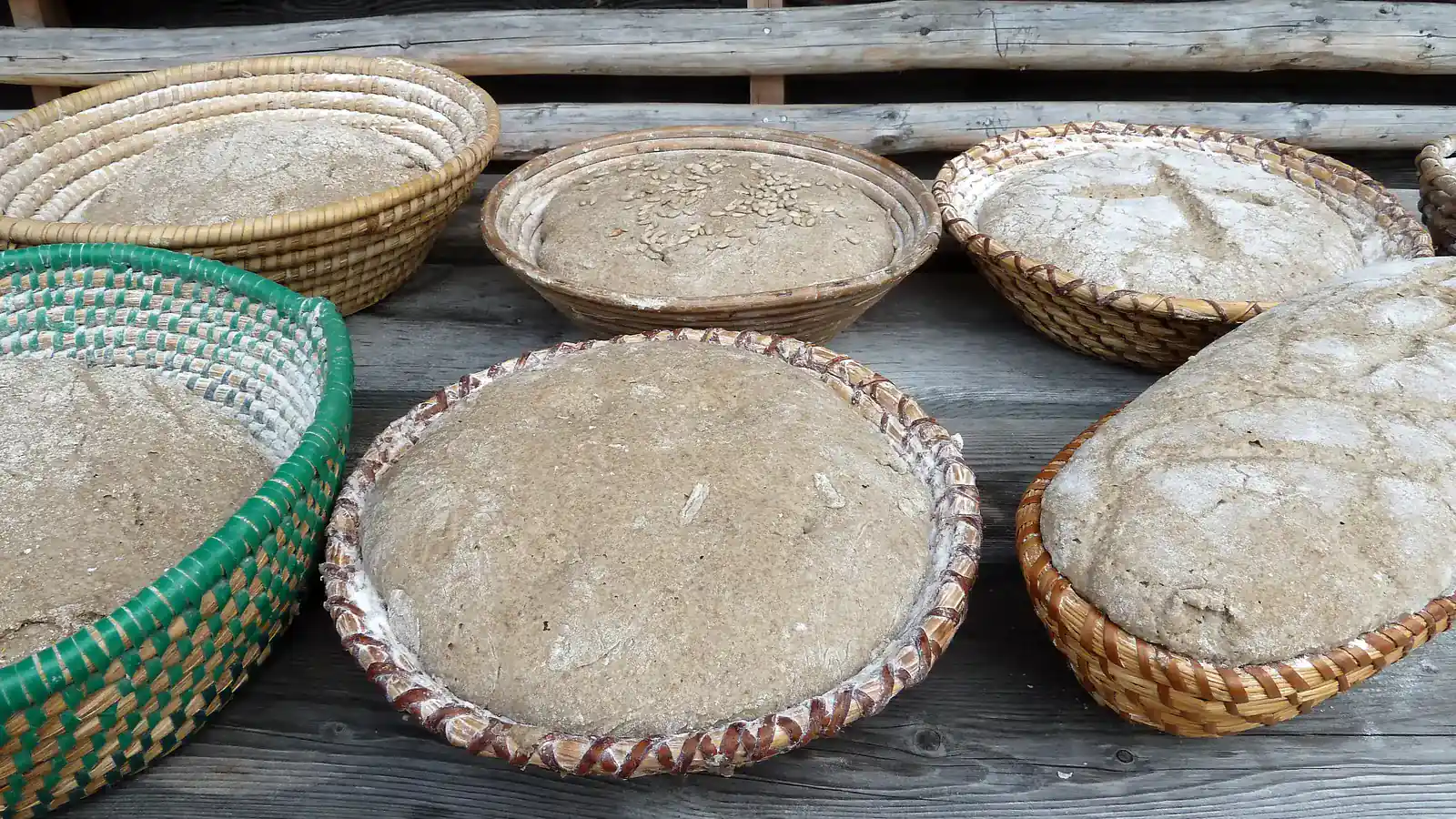
Bread rises because baker’s yeast metabolizes available sugars and releases carbon dioxide. Gas accumulates in tiny bubbles that expand inside the dough. Hydrated flour proteins form a viscoelastic gluten network that stretches around those bubbles instead of letting them escape immediately. During baking, gas and water vapour expand, yeast becomes inactive, starch gelatinizes and proteins set, preserving the loaf’s porous structure.
Yeast alone does not create a tall loaf. A successful rise is the interaction of microbiology, chemistry, mechanics and heat. Fermentation supplies gas and flavour compounds; mixing and kneading develop structure; proofing allows bubbles to grow; and baking converts a soft foam into a stable crumb. Change any one part and the final texture changes.
Yeast is a living fermenter
Baker’s yeast, usually Saccharomyces cerevisiae, uses sugars for energy. Under dough conditions it produces carbon dioxide and ethanol along with numerous flavour-active compounds.
Understanding Yeast is a living fermenter means separating the immediate mechanism from the conditions that change its strength, timing or visibility. Researchers measure those variables independently, compare natural examples and test whether the explanation predicts new observations. That turns a plausible story into an evidence-based account.
The evidence comes from methods that fail in different ways. Direct observation establishes what occurs, instruments quantify structure or timing, experiments isolate candidate causes and models test whether known physical or biological rules reproduce the pattern. Agreement among methods is stronger than repetition of one memorable example.
Context also matters. Scale, composition, temperature, geometry, environment and measurement limits can change an outcome without overturning the underlying process. Accurate reporting preserves this variation, states uncertainty and avoids turning a useful explanation into a universal rule.
A practical explanation should identify what would change the observation. Following that question reveals the limits of present evidence and the next measurement needed.
This mechanism connects a reader-level question with a broader scientific principle. Following matter, energy or information through each stage shows where the explanation is established, where natural variation enters and why a superficially similar event may have another cause.
Scientists also test alternatives rather than stopping at the first plausible account. A strong explanation predicts several linked observations, survives controlled comparison and specifies where it should fail. That approach keeps a clear answer accurate without hiding complexity.
Flour enzymes make sugars available
Amylase enzymes break damaged starch into smaller carbohydrates that yeast can use. Added sugar can speed early fermentation, but excessive sugar draws water from cells and can slow ordinary yeast.
Understanding Flour enzymes make sugars available means separating the immediate mechanism from the conditions that change its strength, timing or visibility. Researchers measure those variables independently, compare natural examples and test whether the explanation predicts new observations. That turns a plausible story into an evidence-based account.
The evidence comes from methods that fail in different ways. Direct observation establishes what occurs, instruments quantify structure or timing, experiments isolate candidate causes and models test whether known physical or biological rules reproduce the pattern. Agreement among methods is stronger than repetition of one memorable example.
Context also matters. Scale, composition, temperature, geometry, environment and measurement limits can change an outcome without overturning the underlying process. Accurate reporting preserves this variation, states uncertainty and avoids turning a useful explanation into a universal rule.
A practical explanation should identify what would change the observation. Following that question reveals the limits of present evidence and the next measurement needed.
This mechanism connects a reader-level question with a broader scientific principle. Following matter, energy or information through each stage shows where the explanation is established, where natural variation enters and why a superficially similar event may have another cause.
Scientists also test alternatives rather than stopping at the first plausible account. A strong explanation predicts several linked observations, survives controlled comparison and specifies where it should fail. That approach keeps a clear answer accurate without hiding complexity.
Carbon dioxide inflates existing bubbles
Mixing incorporates small pockets of air. Fermentation adds carbon dioxide, which dissolves in dough moisture and diffuses into bubble nuclei, increasing their pressure and volume.
Understanding Carbon dioxide inflates existing bubbles means separating the immediate mechanism from the conditions that change its strength, timing or visibility. Researchers measure those variables independently, compare natural examples and test whether the explanation predicts new observations. That turns a plausible story into an evidence-based account.
The evidence comes from methods that fail in different ways. Direct observation establishes what occurs, instruments quantify structure or timing, experiments isolate candidate causes and models test whether known physical or biological rules reproduce the pattern. Agreement among methods is stronger than repetition of one memorable example.
Context also matters. Scale, composition, temperature, geometry, environment and measurement limits can change an outcome without overturning the underlying process. Accurate reporting preserves this variation, states uncertainty and avoids turning a useful explanation into a universal rule.
A practical explanation should identify what would change the observation. Following that question reveals the limits of present evidence and the next measurement needed.
This mechanism connects a reader-level question with a broader scientific principle. Following matter, energy or information through each stage shows where the explanation is established, where natural variation enters and why a superficially similar event may have another cause.
Scientists also test alternatives rather than stopping at the first plausible account. A strong explanation predicts several linked observations, survives controlled comparison and specifies where it should fail. That approach keeps a clear answer accurate without hiding complexity.
Gluten creates a stretchable network
Water lets gliadin and glutenin proteins interact. Mixing organizes them into gluten, a network able to deform around gas while remaining cohesive enough to resist rupture.
Understanding Gluten creates a stretchable network means separating the immediate mechanism from the conditions that change its strength, timing or visibility. Researchers measure those variables independently, compare natural examples and test whether the explanation predicts new observations. That turns a plausible story into an evidence-based account.
The evidence comes from methods that fail in different ways. Direct observation establishes what occurs, instruments quantify structure or timing, experiments isolate candidate causes and models test whether known physical or biological rules reproduce the pattern. Agreement among methods is stronger than repetition of one memorable example.
Context also matters. Scale, composition, temperature, geometry, environment and measurement limits can change an outcome without overturning the underlying process. Accurate reporting preserves this variation, states uncertainty and avoids turning a useful explanation into a universal rule.
A practical explanation should identify what would change the observation. Following that question reveals the limits of present evidence and the next measurement needed.
This mechanism connects a reader-level question with a broader scientific principle. Following matter, energy or information through each stage shows where the explanation is established, where natural variation enters and why a superficially similar event may have another cause.
Scientists also test alternatives rather than stopping at the first plausible account. A strong explanation predicts several linked observations, survives controlled comparison and specifies where it should fail. That approach keeps a clear answer accurate without hiding complexity.
Kneading changes dough mechanics
Mechanical work redistributes water, aligns and links proteins and spreads bubbles. Underdeveloped dough cannot retain gas well, while excessive processing can damage some formulations.
Understanding Kneading changes dough mechanics means separating the immediate mechanism from the conditions that change its strength, timing or visibility. Researchers measure those variables independently, compare natural examples and test whether the explanation predicts new observations. That turns a plausible story into an evidence-based account.
The evidence comes from methods that fail in different ways. Direct observation establishes what occurs, instruments quantify structure or timing, experiments isolate candidate causes and models test whether known physical or biological rules reproduce the pattern. Agreement among methods is stronger than repetition of one memorable example.
Context also matters. Scale, composition, temperature, geometry, environment and measurement limits can change an outcome without overturning the underlying process. Accurate reporting preserves this variation, states uncertainty and avoids turning a useful explanation into a universal rule.
A practical explanation should identify what would change the observation. Following that question reveals the limits of present evidence and the next measurement needed.
This mechanism connects a reader-level question with a broader scientific principle. Following matter, energy or information through each stage shows where the explanation is established, where natural variation enters and why a superficially similar event may have another cause.
Scientists also test alternatives rather than stopping at the first plausible account. A strong explanation predicts several linked observations, survives controlled comparison and specifies where it should fail. That approach keeps a clear answer accurate without hiding complexity.
Proofing balances time and temperature
Warmer dough generally ferments faster, but speed is not the only goal. Time affects acidity, flavour, enzyme action and bubble structure; too much proofing can weaken the network and cause collapse.
Understanding Proofing balances time and temperature means separating the immediate mechanism from the conditions that change its strength, timing or visibility. Researchers measure those variables independently, compare natural examples and test whether the explanation predicts new observations. That turns a plausible story into an evidence-based account.
The evidence comes from methods that fail in different ways. Direct observation establishes what occurs, instruments quantify structure or timing, experiments isolate candidate causes and models test whether known physical or biological rules reproduce the pattern. Agreement among methods is stronger than repetition of one memorable example.
Context also matters. Scale, composition, temperature, geometry, environment and measurement limits can change an outcome without overturning the underlying process. Accurate reporting preserves this variation, states uncertainty and avoids turning a useful explanation into a universal rule.
A practical explanation should identify what would change the observation. Following that question reveals the limits of present evidence and the next measurement needed.
This mechanism connects a reader-level question with a broader scientific principle. Following matter, energy or information through each stage shows where the explanation is established, where natural variation enters and why a superficially similar event may have another cause.
Scientists also test alternatives rather than stopping at the first plausible account. A strong explanation predicts several linked observations, survives controlled comparison and specifies where it should fail. That approach keeps a clear answer accurate without hiding complexity.
Salt influences both yeast and structure
Salt strengthens dough and moderates fermentation while improving flavour. Too little can create weak, fast-rising dough; too much inhibits yeast and produces a dense loaf.
Understanding Salt influences both yeast and structure means separating the immediate mechanism from the conditions that change its strength, timing or visibility. Researchers measure those variables independently, compare natural examples and test whether the explanation predicts new observations. That turns a plausible story into an evidence-based account.
The evidence comes from methods that fail in different ways. Direct observation establishes what occurs, instruments quantify structure or timing, experiments isolate candidate causes and models test whether known physical or biological rules reproduce the pattern. Agreement among methods is stronger than repetition of one memorable example.
Context also matters. Scale, composition, temperature, geometry, environment and measurement limits can change an outcome without overturning the underlying process. Accurate reporting preserves this variation, states uncertainty and avoids turning a useful explanation into a universal rule.
A practical explanation should identify what would change the observation. Following that question reveals the limits of present evidence and the next measurement needed.
This mechanism connects a reader-level question with a broader scientific principle. Following matter, energy or information through each stage shows where the explanation is established, where natural variation enters and why a superficially similar event may have another cause.
Scientists also test alternatives rather than stopping at the first plausible account. A strong explanation predicts several linked observations, survives controlled comparison and specifies where it should fail. That approach keeps a clear answer accurate without hiding complexity.
The oven creates a final expansion
As dough heats, gases expand and water evaporates. Yeast briefly works faster before heat stops fermentation, producing the rapid early growth called oven spring.
Understanding The oven creates a final expansion means separating the immediate mechanism from the conditions that change its strength, timing or visibility. Researchers measure those variables independently, compare natural examples and test whether the explanation predicts new observations. That turns a plausible story into an evidence-based account.
The evidence comes from methods that fail in different ways. Direct observation establishes what occurs, instruments quantify structure or timing, experiments isolate candidate causes and models test whether known physical or biological rules reproduce the pattern. Agreement among methods is stronger than repetition of one memorable example.
Context also matters. Scale, composition, temperature, geometry, environment and measurement limits can change an outcome without overturning the underlying process. Accurate reporting preserves this variation, states uncertainty and avoids turning a useful explanation into a universal rule.
A practical explanation should identify what would change the observation. Following that question reveals the limits of present evidence and the next measurement needed.
This mechanism connects a reader-level question with a broader scientific principle. Following matter, energy or information through each stage shows where the explanation is established, where natural variation enters and why a superficially similar event may have another cause.
Scientists also test alternatives rather than stopping at the first plausible account. A strong explanation predicts several linked observations, survives controlled comparison and specifies where it should fail. That approach keeps a clear answer accurate without hiding complexity.
Heat sets the crumb and crust
Starch absorbs water and gelatinizes, proteins coagulate and the cell walls become firm. Surface drying and browning reactions form the crust while the interior retains a porous network.
Understanding Heat sets the crumb and crust means separating the immediate mechanism from the conditions that change its strength, timing or visibility. Researchers measure those variables independently, compare natural examples and test whether the explanation predicts new observations. That turns a plausible story into an evidence-based account.
The evidence comes from methods that fail in different ways. Direct observation establishes what occurs, instruments quantify structure or timing, experiments isolate candidate causes and models test whether known physical or biological rules reproduce the pattern. Agreement among methods is stronger than repetition of one memorable example.
Context also matters. Scale, composition, temperature, geometry, environment and measurement limits can change an outcome without overturning the underlying process. Accurate reporting preserves this variation, states uncertainty and avoids turning a useful explanation into a universal rule.
A practical explanation should identify what would change the observation. Following that question reveals the limits of present evidence and the next measurement needed.
This mechanism connects a reader-level question with a broader scientific principle. Following matter, energy or information through each stage shows where the explanation is established, where natural variation enters and why a superficially similar event may have another cause.
Scientists also test alternatives rather than stopping at the first plausible account. A strong explanation predicts several linked observations, survives controlled comparison and specifies where it should fail. That approach keeps a clear answer accurate without hiding complexity.
Common misconceptions
Yeast does not simply “eat gluten,” and kneading does not add yeast gas by itself. Carbon dioxide is necessary, but gas retention is equally important. The holes in bread are not empty yeast cells; they are spaces left after gases and vapour expand and later escape. Sourdough rises through yeast plus acid-producing bacteria, not bacteria alone.
Clear shorthand is valuable only when it preserves the causal chain. It becomes misleading when it substitutes a label for a mechanism, confuses association with cause or extends evidence beyond tested conditions.
How scientists know
Food scientists measure gas production, dough volume, pressure, elasticity, viscosity, temperature and moisture. Microscopy and imaging reveal bubble growth; rheometers test dough deformation; fermentation chambers control humidity and temperature; and baking trials connect ingredient changes with crumb structure.
No single measurement carries the conclusion. Observations, experiments, theory and repeated records provide independent checks, while disagreement can reveal an uncontrolled variable or a question requiring a better test.
Frequently asked questions
Why does dough rise faster when warm?
Within a safe range, warmth speeds yeast metabolism and chemical reactions. Excess heat can kill yeast.
Why did my bread collapse?
Overproofing, weak gluten, too much liquid or rough handling can rupture gas-cell walls.
Does whole-wheat bread rise differently?
Bran can interrupt gluten and absorb water, so formulation and handling often need adjustment.
What does salt do in bread?
It strengthens dough, controls fermentation and supplies flavour.
How does sourdough rise?
Wild yeasts make carbon dioxide while bacteria produce acids and flavour compounds.
Key takeaways
- Yeast fermentation supplies carbon dioxide.
- Gluten traps gas in an elastic network.
- Proofing controls bubble growth and flavour.
- Oven heat expands gas and permanently sets the crumb.
Continue exploring
Sources and further reading
Keep exploring.
One remarkable idea at a time—nature, science, history and beyond.
Sources and further reading
Barnakle uses credible primary and authoritative sources wherever possible.
- American Chemical Society — Gluten and bread structure
- https://www.acs.org/content/dam/acsorg/education/resources/highschool/chemmatters/gluten/attack-of-the-gluten.pdf
- American Chemical Society — Development of baking powder
- https://www.acs.org/education/whatischemistry/landmarks/bakingpowder.html
- ACS Journal of Chemical Education — Measuring yeast fermentation
- https://pubs.acs.org/doi/10.1021/acs.jchemed.7b00043
- USDA Agricultural Research Service — Cereal and baking research
- https://www.ars.usda.gov/research/programs-projects/project/?accnNo=440176
Last reviewed October 8, 2026.

Barnakle Editorial Team
A member of the Barnakle editorial team, exploring remarkable ideas with clarity, curiosity and care.
More from this author →