High heat transforms baked-on food into gases and wipeable ash
After a self-cleaning cycle, a stubborn spill may have become a little ash. The oven has not scrubbed the surface. A high-temperature cleaning system changes the residue itself. Understanding that distinction explains both the convenience of pyrolytic cleaning and the importance of the appliance's lock, insulation and model-specific instructions.
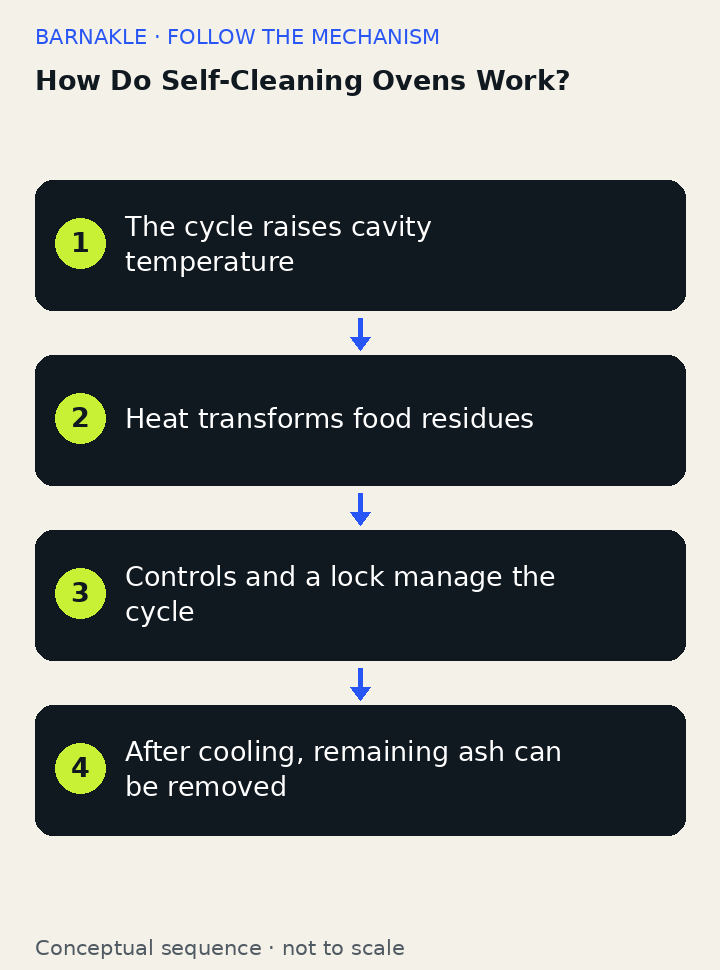
Heat changes the chemistry of the residue
Heat splits complex organic compounds into smaller volatile molecules and carbon-rich residue.
After cooling, inorganic and carbonaceous residue can be wiped away.
Food soil is a mixture, not a single substance. Heating can drive off water, release volatile products and break down organic material. In the presence of oxygen, oxidation also contributes. Mineral material does not simply disappear, which helps explain why a thin residue remains to be wiped out after the cavity has cooled.
Sources: [1]
The oven is built around the cleaning cycle
Elements follow a model-specific profile lasting through heating and cooling.
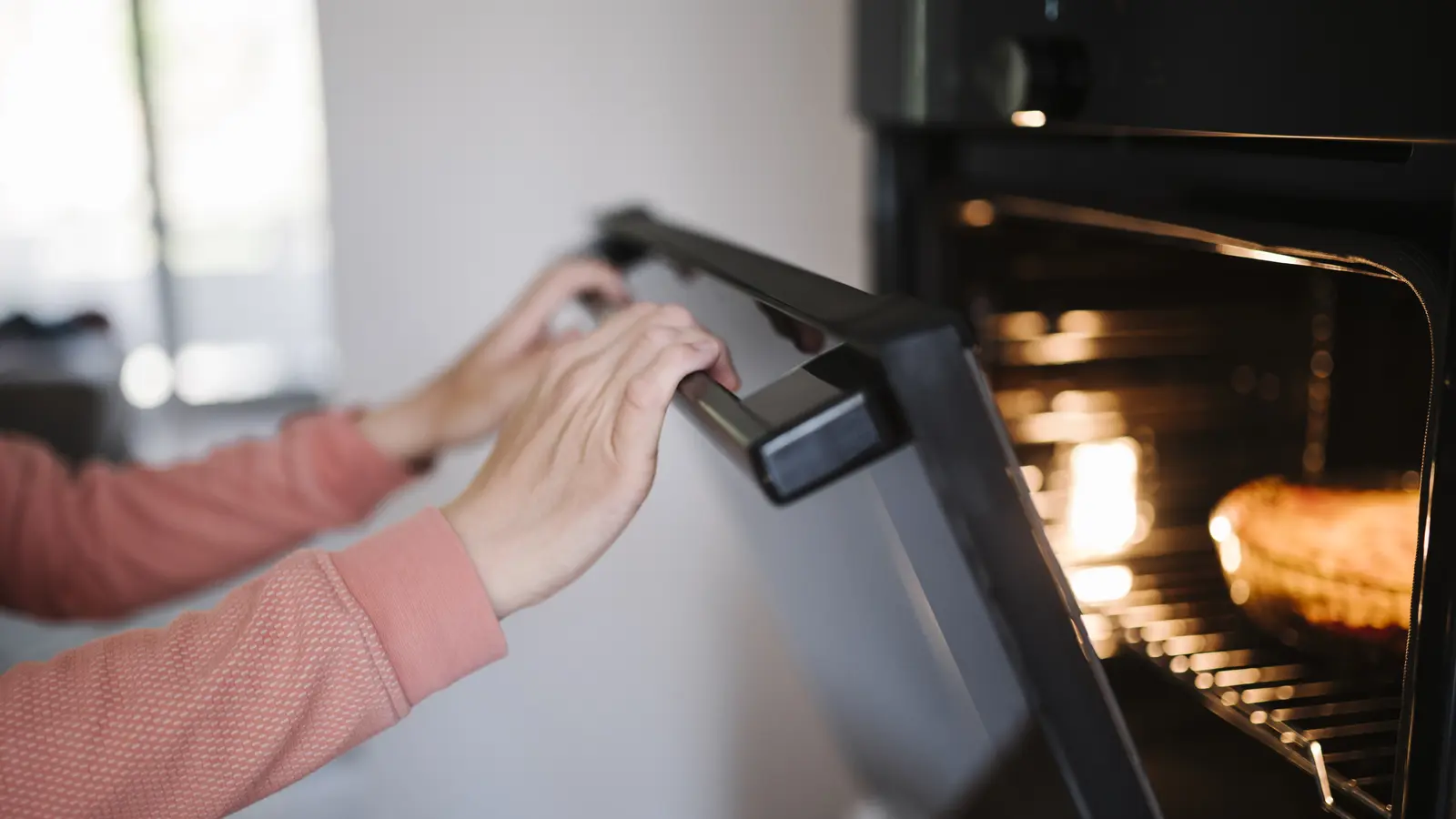
A temperature-dependent door lock keeps the cavity closed during the high-temperature stage and releases after cooling according to the model’s design.
High-temperature insulation slows heat reaching cabinets and nearby surfaces.
Temperature feedback controls heaters while limit devices provide additional protection.
Vents route vapour, odour and gases; some models add oxidation catalysts.
Normal baking and high-temperature cleaning place different demands on the same enclosure. A self-cleaning model therefore relies on the complete appliance design, including its liner, insulation, controls and door restraint. A description of one manufacturer's temperature or cycle length should never be treated as an operating instruction for every oven.
Sources: [2]
Why steam cleaning is a different process
Lower-temperature steam softens recent light soil but does not reproduce pyrolysis.
Porous treated panels promote grease oxidation during hot cooking and have specific care limits.
The word clean describes an outcome, not one universal mechanism. Steam-assisted cycles loosen comparatively light soil so it can be wiped away. Catalytic liners, where fitted, promote reactions at their treated surfaces. They differ from a pyrolytic cycle and have their own care requirements. The appliance manual determines which system is actually installed.
A feature still needs the right preparation
Heavy accumulations of food or grease are not a useful test of the system's power. GE's guidance explains that excessive soil can produce excessive smoke and recommends ventilation. Instructions about racks, cleaners and accessories vary by model. Read those instructions before the cycle rather than assuming that anything safe for baking can remain inside for cleaning. GE manuals also warn that some birds are especially sensitive to self-cleaning fumes. Bird owners should follow the manual’s precautions and keep birds away from those fumes; opening a window should not be treated as a guarantee of protection.
Additional source: [4]
Sources: [3]
Why steam cleaning leaves a different residue
A steam-clean cycle may leave a softened spill that still needs wiping, while a high-temperature cycle leaves a dry residue. That difference does not automatically mean one system malfunctioned. They are designed to transform soil in different ways. The fair comparison is between the result and the manufacturer's description of that particular feature, not between two buttons with similar names.
Pyrolytic, steam and catalytic cleaning compared
| Term or component | What it means here |
|---|---|
| Pyrolytic cleaning | High heat transforms food soil and leaves residue. |
| Steam-assisted cleaning | Moisture and gentler heat help loosen lighter soil. |
| Catalytic liners | Treated surfaces promote reactions and have specific care limits. |
Self-cleaning still requires preparation
Self-cleaning does not remove every maintenance task or permit unlimited grease. Follow the model manual, remove specified items and ventilate appropriately. Never force the lock or apply incompatible cleaner to special liners.
How oven cleaning systems are tested
Engineers measure cavity and surface temperatures, power, emissions and component durability while testing locks, sensors, insulation and abnormal conditions against safety standards.
Self-cleaning oven questions
Why can the oven stay locked after cleaning ends?
The heating stage can finish before the cavity has cooled enough for the lock to release. Follow the appliance’s instructions and never force the door open.
Why can a self-cleaning cycle produce an odour?
Heating food residues releases volatile products. The amount of soil affects smoke and odour, which is why preparation and ventilation guidance in the model’s instructions matters.
What determines a self-cleaning cycle’s energy use?
The cycle uses energy to reach and sustain its cleaning temperature. Consumption varies with the appliance, insulation and programme, so a model-specific figure is more useful than one number for every oven.
The cleaning method determines the result
The practical lesson follows directly from the mechanism: high-temperature cleaning is controlled chemical change inside an appliance designed for it. Follow the specific manual, never force a locked door and treat a malfunction as a service issue. An explanatory article cannot substitute for the operating and safety instructions of the model in your kitchen.
Continue exploring
Sources and further reading
Keep exploring.
One remarkable idea at a time—nature, science, history and beyond.
Last updated November 6, 2026.

Barnakle Editorial Team
Barnakle Editorial Team is the collective byline used for Barnakle’s editorial articles. The contributor profile explains the team identity and links to the publication’s editorial policies.
More from the editorial team →