

Reconstructing a machine from fragments, inscriptions and mathematics
What to know
- The object is archaeological evidence, not a modern replica found intact.
- X-ray imaging revealed hidden gear teeth and inscriptions.
- Its rear dials tracked cycles including the Metonic and Saros cycles.
- Reconstructions distinguish demonstrated gearing from plausible missing parts.
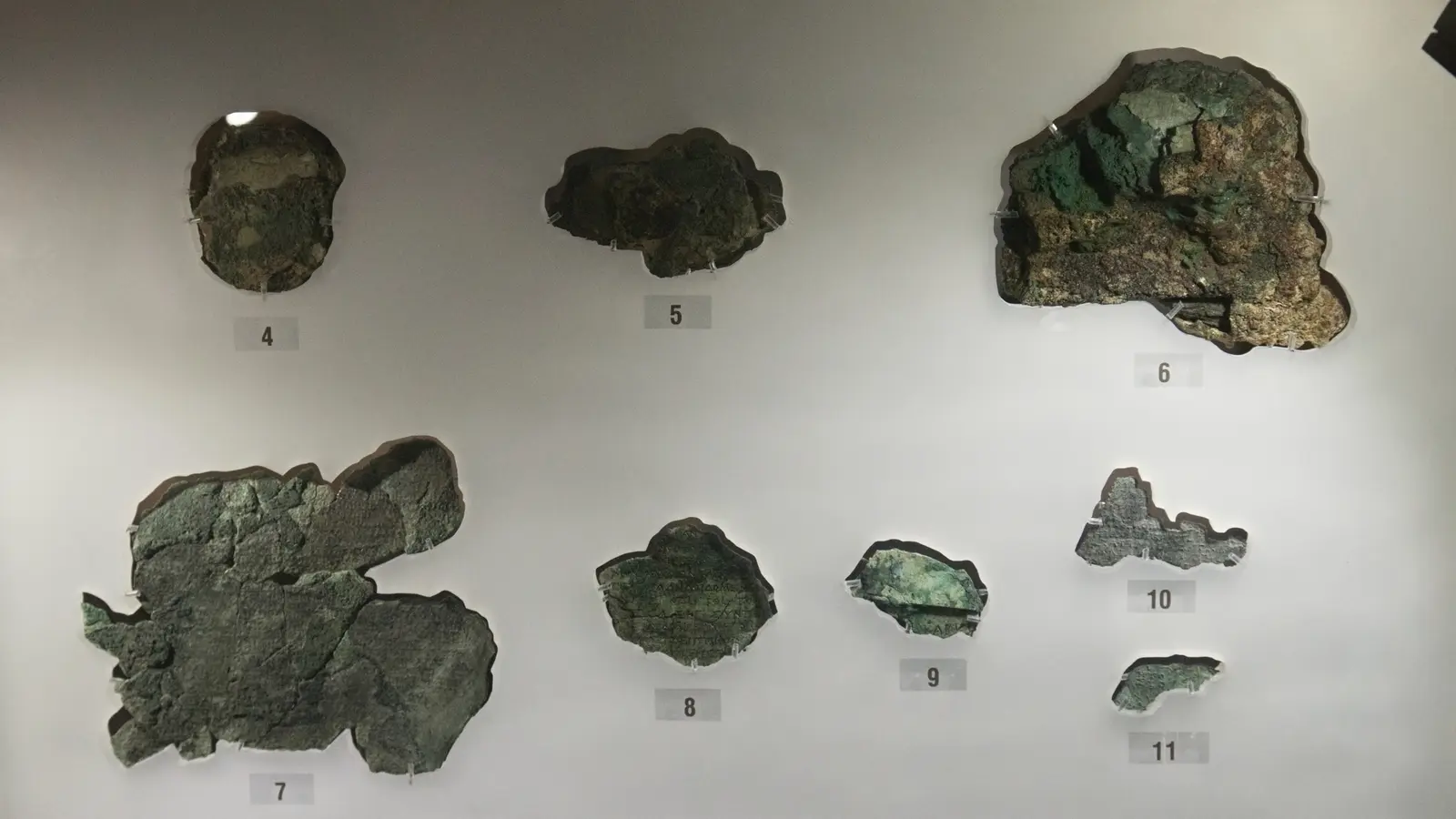
At first, the corroded bronze fragments recovered from an ancient shipwreck looked far less impressive than the statues and luxury goods around them. Only later did investigators recognize gear teeth, scales and inscriptions embedded inside the concreted mass. The object now called the Antikythera mechanism has become the most intricate geared device known from the ancient Mediterranean.
It is often described as the first analog computer. The phrase is useful if it means a machine that represented astronomical relationships through physical motion. It becomes misleading if it makes the mechanism sound electronic or programmable in the modern sense. This was a hand-driven mathematical model: carefully cut bronze gears moved pointers and dials through cycles important to Greek astronomy and calendars.
A shipwreck preserves an unlikely machine
Sponge divers discovered the wreck near the island of Antikythera around 1900. Archaeological work recovered sculptures, ceramics, coins, glass and other material from a ship that sank in the first century BCE. Among the finds were bronze fragments later recognized as parts of a mechanism. The wreck context provides a latest possible date for the device, while inscriptions and astronomical reconstruction help investigators estimate when it was designed or calibrated.
Seawater transformed the object. Bronze corroded, wooden casing disappeared and the mechanism broke into fragments. Many components are missing. Every modern reconstruction therefore begins with an incomplete evidence set rather than an intact machine.
Why early X-rays mattered
Researchers could see some gears at exposed surfaces, but much of the structure remained concealed. Radiography revealed internal wheels and encouraged Derek de Solla Price and others to treat the fragments as a connected gear system. Later imaging dramatically improved the evidence.
High-resolution X-ray computed tomography recorded slices through the fragments, allowing teams to inspect buried teeth, axles and inscriptions. Polynomial texture mapping highlighted faint surface lettering under different virtual lighting directions. These methods did not magically restore missing parts. They increased the amount of measurable information preserved in what survived.
Reading gear teeth as numbers
A gear ratio is a mathematical statement. If one wheel has a certain number of teeth and drives another, their rotations have a predictable relationship. Counting teeth and establishing which gears mesh lets researchers recover the cycles the maker intended to represent. Broken teeth and obscured edges complicate the work, so counts can carry uncertainty.
The mechanism’s ratios connect to known ancient astronomical periods. This agreement is powerful because geometry, inscriptions and historical cycles reinforce one another. A proposed reconstruction must fit inside the surviving case, align with bearing holes, match tooth counts and produce displays consistent with readable labels.
The Metonic calendar display
One rear spiral represented the Metonic cycle: 235 lunar months are close to 19 solar years. This relationship helps reconcile a lunar calendar with the seasons. A pointer moving through a multi-turn spiral could track months across the cycle, while inscriptions organized calendar information.
The mechanism also incorporated a Callippic cycle, a refinement spanning four Metonic cycles. These displays show that the device was not a simple decorative zodiac. It embodied long-period relationships used to organize time and predict recurring celestial configurations.
Predicting eclipses with the Saros cycle
Another rear spiral represented the Saros cycle, about 223 synodic months, after which the geometry of Sun, Earth and Moon produces broadly similar eclipses. Cells on the dial contained eclipse information. A smaller Exeligmos display extended the cycle and helped correct timing across three Saros periods.
The mechanism did not predict eclipses from gravitational equations. It encoded a repeating empirical cycle. The distinction reveals the sophistication of ancient astronomy: reliable prediction can emerge from carefully recorded periodicity even when the underlying physical theory differs from the modern one.
Games and civic time
Researchers identified a dial associated with cycles of major Panhellenic games, including the Olympics. That feature placed astronomical computation alongside social and civic calendars. The sky was not an isolated scientific subject; cycles helped structure festivals, agriculture, navigation and public life.
The inscriptions also provide clues about regional calendar names and possible origins. Scholars compare letter forms and month names with known Greek traditions, but the workshop and owner remain uncertain. The object may have been made for teaching, display, calculation or a combination of purposes.
The front display
The front probably carried a zodiac scale and a calendar scale, with pointers representing the Sun and Moon. A distinctive gear arrangement modeled the Moon’s variable apparent motion. A rotating black-and-white indicator likely showed lunar phase. These features combined positional and cyclical information in a compact display.
How the planets were represented is more debated. Inscriptions refer to planetary phenomena, and several reconstruction teams have proposed gearing that could fit the available clues. Because much of the front mechanism is missing, proposed planetary trains contain more inference than the well-preserved rear displays.
A mechanical model of irregular lunar motion
The Moon does not move across the sky at a perfectly uniform apparent rate. The mechanism used clever pin-and-slot gearing to vary motion through a cycle, approximating an ancient geometrical model of lunar anomaly. This is one of its most remarkable confirmed features.
The design shows that the maker could translate an abstract astronomical model into metal. It required mathematical knowledge, gear-cutting skill and spatial planning. The result was not merely a clockwork calendar but a physical argument about how celestial motions could be represented.
Who could have built it?
No signature identifies the maker. Researchers have suggested intellectual connections to traditions associated with Rhodes, Syracuse and major Hellenistic astronomers. References to figures such as Hipparchus or Archimedes express plausible contexts, not established authorship.
The surviving device may represent a broader technology rather than a unique miracle. Ancient texts mention mechanical celestial models, yet few bronze machines survived because metal was valuable and commonly recycled. The Antikythera mechanism may be exceptional mainly because a shipwreck removed it from that recycling stream.
How reconstructions are tested
Physical and digital reconstructions help researchers test whether proposed gear trains operate, fit the case and reproduce displayed cycles. Building a working model can expose collisions or impossible axle arrangements that look acceptable on paper. It can also show how a user might have turned the handle and read the dials.
A successful replica proves that a proposal is mechanically possible, not that every missing component has been recovered correctly. Strong reconstructions label which features are directly supported, which are tightly constrained and which remain speculative.
Precision without modern manufacturing
The gears were handmade, with triangular teeth and small variations. That does not make them crude. Performance depends on the whole system, and the maker could adjust spacing and design to achieve useful astronomical display. Modern replicas created with perfect machining can accidentally hide the practical choices ancient craft required.
Wear, corrosion and deformation make original tolerances difficult to infer. Researchers study tooth shapes, plate thickness, bearings and fasteners as archaeological technology. The mechanism belongs as much to the history of skilled craft as to the history of theoretical astronomy.
What the inscriptions contribute
Thousands of small Greek characters survive, many inside fragments. They include dial labels, calendar terms and explanatory text. Imaging has expanded the readable corpus, turning the case and plates into something like an instruction manual or astronomical guide.
Text constrains reconstruction by naming cycles and phenomena that hardware should display. It also reveals the intended user’s conceptual world. Translating damaged technical Greek is difficult, and restorations of missing characters must be marked as such. Epigraphy, mechanics and astronomy work together.
Why “ahead of its time” is risky
The mechanism is frequently called impossibly advanced. That framing can make ancient achievement sound like an anomaly without a culture. Hellenistic scholars had sophisticated geometry, astronomical tables and mechanical traditions. Artisans built automata, surveying devices and complex instruments. The mechanism is extraordinary evidence from that environment, not evidence that it appeared without precedent.
Its later rarity also should not be turned into a simple story of knowledge being lost overnight. Technologies survive unevenly. Texts, workshops, materials, patrons and political institutions all change. The archaeological record preserves only a fraction of what people made.
The line between evidence and imagination
The most secure claims concern visible fragments, readable inscriptions and gear systems strongly constrained by them. Less secure claims concern missing front gearing, exact pointer arrangements, external decoration and the identity of the workshop. Popular animations sometimes present one reconstruction as a photograph of the original.
A more accurate presentation uses confidence labels. It shows the object as found, the imaging evidence, the inference connecting pieces and the reconstructed result. That sequence makes the scientific reasoning more impressive, not less.
What the mechanism changed
The Antikythera mechanism expanded historians’ estimate of what ancient geared technology could accomplish. It demonstrated that a compact device could coordinate dozens of components to display long astronomical cycles and variable motion. It also showed the value of returning to old collections with new imaging techniques.
The machine remains compelling because it is both understandable and incomplete. Its gears express ratios that can be reconstructed, but its missing sections resist certainty. It stands at the meeting point of archaeology, astronomy, mathematics and craft—a rare object whose fragments still require those disciplines to move together.
Sources and further reading
- National Archaeological Museum, Antikythera Mechanism
- Antikythera Mechanism Research Project
- Freeth et al. (2006), Decoding the ancient Greek astronomical calculator
- Freeth et al. (2008), Calendars with Olympiad display and eclipse prediction
- Jones (2017), A Portable Cosmos
- University College London Antikythera research
How Barnakle selects and verifies sources · Corrections and updates
Keep exploring.
One remarkable idea at a time—nature, science, history and beyond.
Last reviewed September 15, 2026.

Barnakle Editorial Team
A member of the Barnakle editorial team, exploring remarkable ideas with clarity, curiosity and care.
More from this author →