Returning a piece of an asteroid is a mission with two destinations: the asteroid and a laboratory on Earth. A spacecraft must collect material, keep it contained through a long journey and deliver it in a form that scientists can analyse without confusing the asteroid's chemistry with contamination from the mission.
The return capsule's landing is a major event, but it is only one link in that chain.
First, the spacecraft learns the target
A small asteroid has weak gravity and an irregular surface. Before sampling, a mission maps the terrain, characterises hazards and selects a site where its collection hardware can operate.
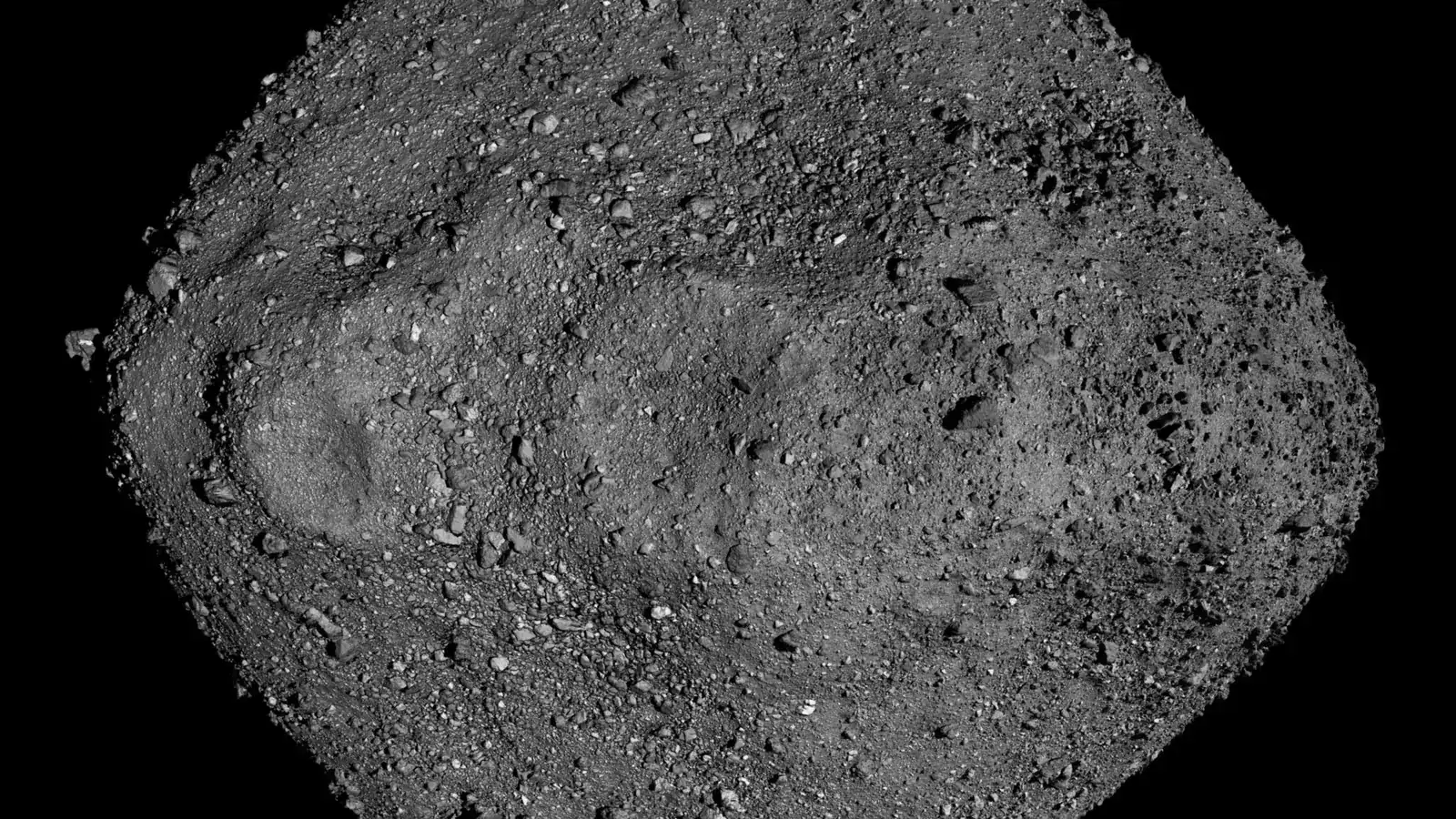
NASA's OSIRIS-REx mission spent time studying Bennu before its October 2020 collection manoeuvre. Detailed observations were essential because the target could not be treated as a smooth laboratory surface waiting at a known position.
Brief contact can collect loose material
OSIRIS-REx used a touch-and-go sampling mechanism. A burst of nitrogen disturbed loose surface material so it could enter the collection head. This approach limited the need for a prolonged landing in an environment very different from Earth.
Collection is followed by verification and secure containment. Material gathered successfully can still be lost or altered if the hardware does not close or store it as intended. Engineering decisions therefore consider the whole path from contact to sealed return.
The sample and spacecraft separate for Earth entry
Near Earth, a return capsule follows its own entry trajectory while the main spacecraft continues separately. The capsule needs a heat shield and a controlled descent system to bring its contents through the atmosphere.
OSIRIS-REx delivered Bennu material to Utah on 24 September 2023. The success of the entry and recovery preserved access to material that could then be studied using instruments too large or specialised to carry to the asteroid.
Curation begins before a scientist receives a grain
NASA's curation planning describes dedicated clean facilities, contamination monitoring and controlled handling. Nitrogen environments and carefully selected materials help limit unwanted chemical changes and introduced substances.
“Pristine” in this setting is an operational scientific goal, not a claim that no foreign atom could exist anywhere. Researchers need records of possible contaminants, witness materials and procedural blanks to distinguish a genuine asteroid constituent from something introduced during collection or analysis.
Why bring a sample home at all?
Laboratories can examine textures, minerals, isotopes and organic compounds with several complementary techniques. Some investigations consume a small part of the sample, making allocation and documentation important. Preserving material also leaves opportunities for future methods.
Early Bennu analyses confirmed hydrated minerals and other constituents suggested by spacecraft measurements while revealing additional detail. That comparison demonstrates the value of combining remote observation with direct examination. One handful of regolith cannot represent every asteroid, but it can provide unusually rich evidence about the body from which it came.
Explore a related question
How Starlight Reveals the Elements in Distant Suns
Sources and further reading
Keep exploring.
One remarkable idea at a time—nature, science, history and beyond.
Last updated October 27, 2026.

Barnakle Editorial Team
Barnakle Editorial Team is the collective byline used for Barnakle’s editorial articles. The contributor profile explains the team identity and links to the publication’s editorial policies.
More from the editorial team →