How the Kidneys Keep Water and Salts in Balance
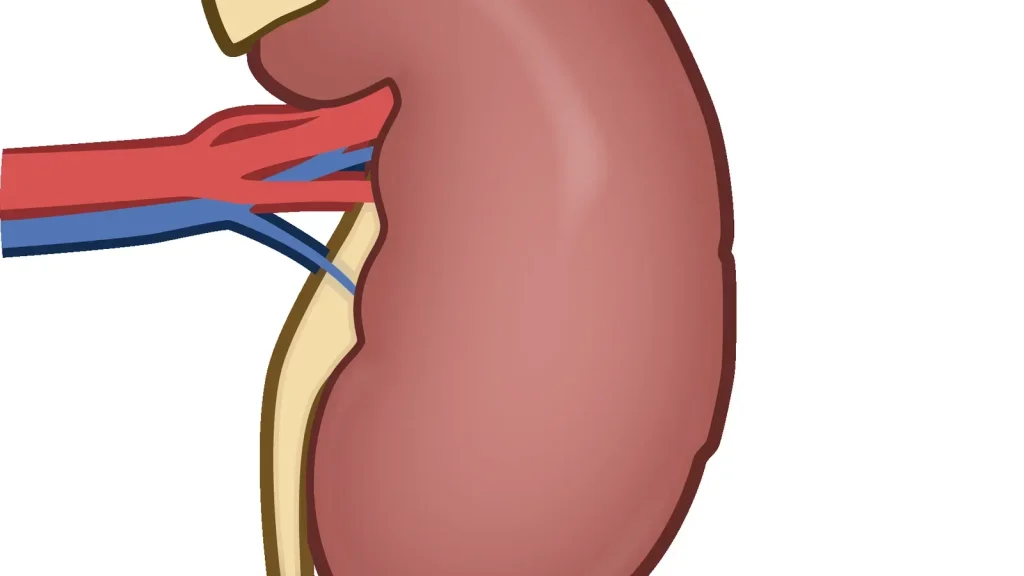
The kidneys continually filter blood and adjust how much water and dissolved material returns to the body, helping keep internal conditions within workable ranges.
Sep 29, 2026 • 12 min readExplore scientific questions, experiments and discoveries, with explanations of the evidence and methods behind what researchers conclude.

Science advances by turning questions into testable ideas, confronting them with evidence and revising what we think we know. Here is how that process really works—and why uncertainty is a strength, not a flaw.
Sep 12, 2026 • 8 min readRead the discovery →New stories, explanations and research from Science.
The kidneys continually filter blood and adjust how much water and dissolved material returns to the body, helping keep internal conditions within workable ranges.
Sep 29, 2026 • 12 min read
Magnets work through the electromagnetic interaction. Moving electric charges and intrinsic properties of electrons create magnetic moments and fields. In permanent magnets, many atomic-scale…
Sep 26, 2026 • 13 min read
The sky looks blue because air molecules scatter the shorter wavelengths of visible sunlight more strongly than the longer wavelengths. At sunrise and sunset,…
Sep 23, 2026 • 14 min read
After some infections or vaccinations, long-lived B and T cells respond more quickly when they encounter familiar molecular features again.
Sep 23, 2026 • 12 min read
Networks of clock genes create near-24-hour cycles inside cells, and light helps a brain-based master clock coordinate those rhythms with the outside world.
Sep 23, 2026 • 13 min read
Layered recognition, cellular education and regulatory brakes let immunity respond to danger without routinely attacking the body it protects.
Sep 21, 2026 • 14 min read
A programmable RNA guide, a DNA-recognizing protein and the cell’s own repair systems turn a bacterial defense mechanism into a genome-editing platform.
Sep 19, 2026 • 12 min read
Learn what statistical significance and p-values do—and do not—tell you about effect size, uncertainty, practical importance and scientific evidence.
Sep 12, 2026 • 6 min read
Discover how scientific consensus emerges from converging evidence, expert scrutiny and replication—and why responsible consensus can change.
Sep 12, 2026 • 6 min read
Learn what preprints are, why scientists use them, how they differ from peer-reviewed papers and how to evaluate or cite preliminary research.
Sep 12, 2026 • 6 min read
Layered recognition, cellular education and regulatory brakes let immunity respond to danger without routinely attacking the body it protects.
Sep 21, 2026 • 14 min read
A programmable RNA guide, a DNA-recognizing protein and the cell’s own repair systems turn a bacterial defense mechanism into a genome-editing platform.
Sep 19, 2026 • 12 min read
Learn what statistical significance and p-values do—and do not—tell you about effect size, uncertainty, practical importance and scientific evidence.
Sep 12, 2026 • 6 min read
Discover how scientific consensus emerges from converging evidence, expert scrutiny and replication—and why responsible consensus can change.
Sep 12, 2026 • 6 min readOne remarkable idea at a time—nature, science, history and beyond.