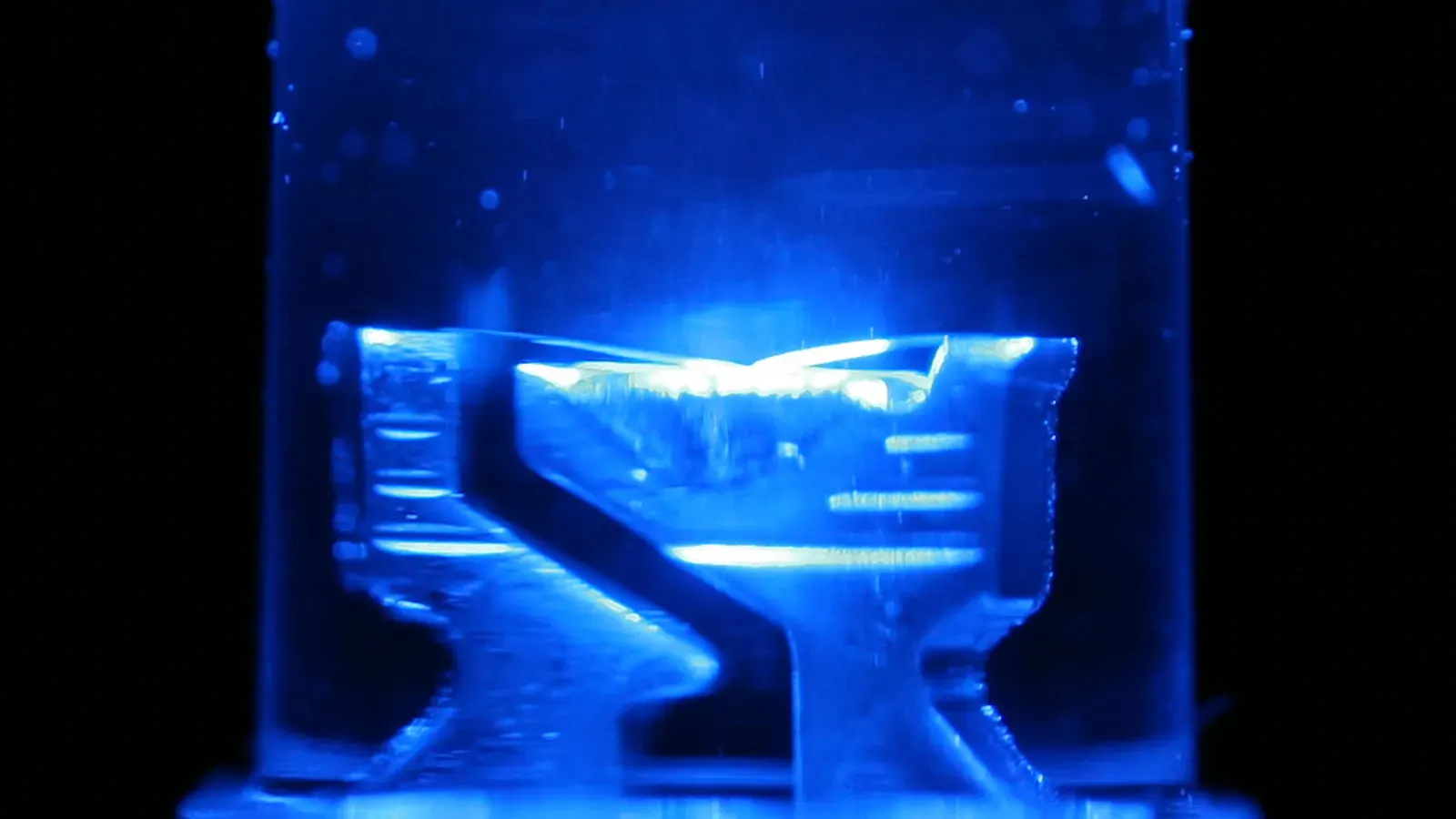
A light-emitting diode converts electrical energy into light within a semiconductor structure. It does not need to heat a wire until the wire glows, as an incandescent lamp does. The light-producing process occurs when electrons and holes recombine and release energy.
A useful LED lamp adds more than the semiconductor chip: it needs electrical control, optics and a way to manage heat.
Charge carriers meet in an active region
With an appropriate forward voltage, a diode can support the injection of charge carriers into its light-emitting region. An electron moving into an available lower-energy state can release energy as a photon.
Whether that release efficiently produces light depends on the semiconductor material and device design. Not every diode is an efficient visible light source, even though diodes and LEDs share related electrical principles.
Material energy levels help set the colour
The energy difference involved in emission is associated with the semiconductor's electronic structure. Photon energy and wavelength are related, so changing the material system can change the emitted colour.
This is different from placing a coloured filter in front of an otherwise white source. A coloured LED can produce a spectrum concentrated in a particular region because of the emission process itself.
Blue LEDs made new white-light sources possible
Efficient blue LEDs required important advances in materials and fabrication. The 2014 Nobel Prize in Physics recognised Akasaki, Amano and Nakamura for work enabling efficient blue devices and practical white-light sources.
White lighting can be produced by combining colours or by using a phosphor. In a common design, a blue LED excites a phosphor that emits across longer wavelengths. The combination is perceived as white, with the exact spectrum depending on the design.
Efficiency does not eliminate heat
Some input energy is lost through non-radiative processes and other parts of the lamp. Heat must be conducted away from the junction and managed by the surrounding structure.
A cool-looking light beam is not proof that the chip or driver remains cool. ENERGY STAR's explanation of thermal management and the Canadian Conservation Institute's lighting guidance both distinguish light output from the heat that the fitting must dissipate.
The driver is part of the light source
An LED needs appropriate electrical operating conditions. A driver regulates power for the intended arrangement, and its performance can influence dimming, flicker and reliability. The visible chip alone does not determine every property of a finished bulb.
The Department of Energy's LED overview emphasises the combination of emitter and lighting-system design. Comparing lamps therefore requires looking at delivered light, colour quality and operating conditions, rather than assuming all LEDs share one performance figure. The underlying semiconductor process is powerful, while a dependable light source remains an engineered system.
Explore a related question
How Transistors Switch and Amplify Electronic Signals
Sources and further reading
Keep exploring.
One remarkable idea at a time—nature, science, history and beyond.
Last updated October 27, 2026.

Barnakle Editorial Team
Barnakle Editorial Team is the collective byline used for Barnakle’s editorial articles. The contributor profile explains the team identity and links to the publication’s editorial policies.
More from the editorial team →