River deltas
A river delivers grains as well as water
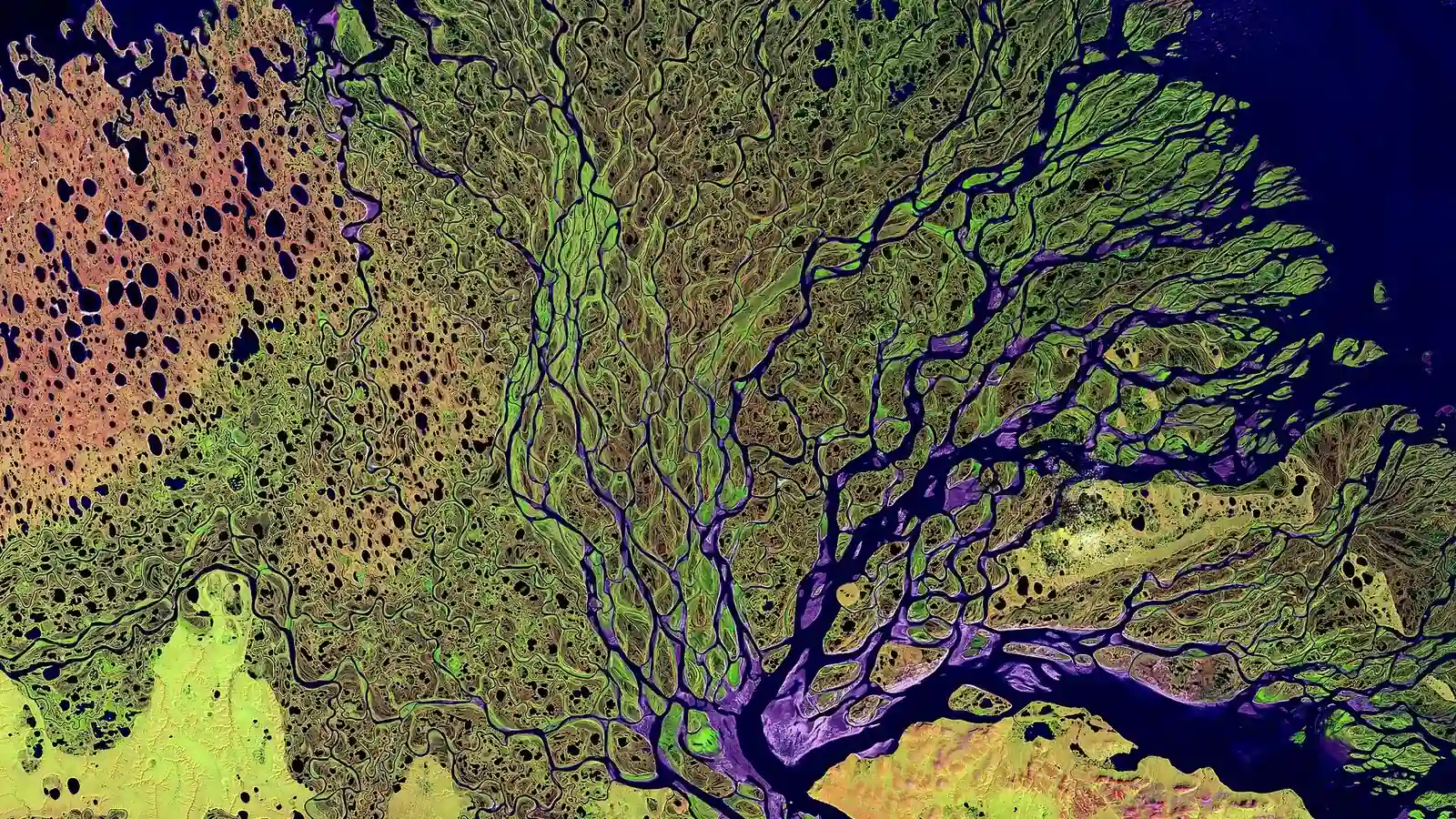
Flow carries sand, silt and clay from upstream landscapes. Near a coast or lake, changes in water speed, channel geometry and mixing encourage some of those particles to settle. Coarser and finer sediment behave differently, so a delta contains channels, bars, wetlands and offshore deposits rather than one uniform pile. Floods can deliver particularly important pulses of water and sediment.
A delta constantly rearranges its pathways
Channels migrate, split and sometimes shift abruptly into a new course. Deposition can build one area while an abandoned lobe receives less new material. Waves and tides reshape the coast and move sediment along or away from the delta. The resulting outline reflects the balance among river delivery, marine processes, vegetation and the space available for deposition.
Land can gain sediment while sinking overall
Young deposits compact, and deeper geological processes can lower the surface. Extraction of underground fluids can add to subsidence in some places. Rising sea level increases the elevation a wetland or island must maintain. A site may therefore receive sediment yet still lose elevation relative to the water. Measuring land area alone can miss important changes in height and vulnerability. Fresh sediment contains water-filled pore spaces; compaction reduces their volume. Distinguishing subsidence from changing sea level requires measuring water height relative to the land.
Upstream decisions reach the coast
Dams retain sediment, while levees can prevent floods from spreading material across wetlands. Diversions and restoration projects aim to reconnect selected areas with river sediment, but outcomes depend on delivery, elevation, salinity and ecosystem response. Scientists combine satellite mapping, field surveys, sediment cores and water measurements to estimate the budget. No single engineering intervention restores every part of a delta or removes all coastal risk. A diversion redistributes the sediment available; it does not create a new supply. Operation timing and receiving-basin depth influence where the load settles, so growth at one outlet does not prove recovery across the whole delta.
Sources and further reading
Specialist review of this explanation remains pending.
Keep exploring.
One remarkable idea at a time—nature, science, history and beyond.
Last updated October 29, 2026.

Barnakle Editorial Team
Barnakle Editorial Team is the collective byline used for Barnakle’s editorial articles. The contributor profile explains the team identity and links to the publication’s editorial policies.
More from the editorial team →