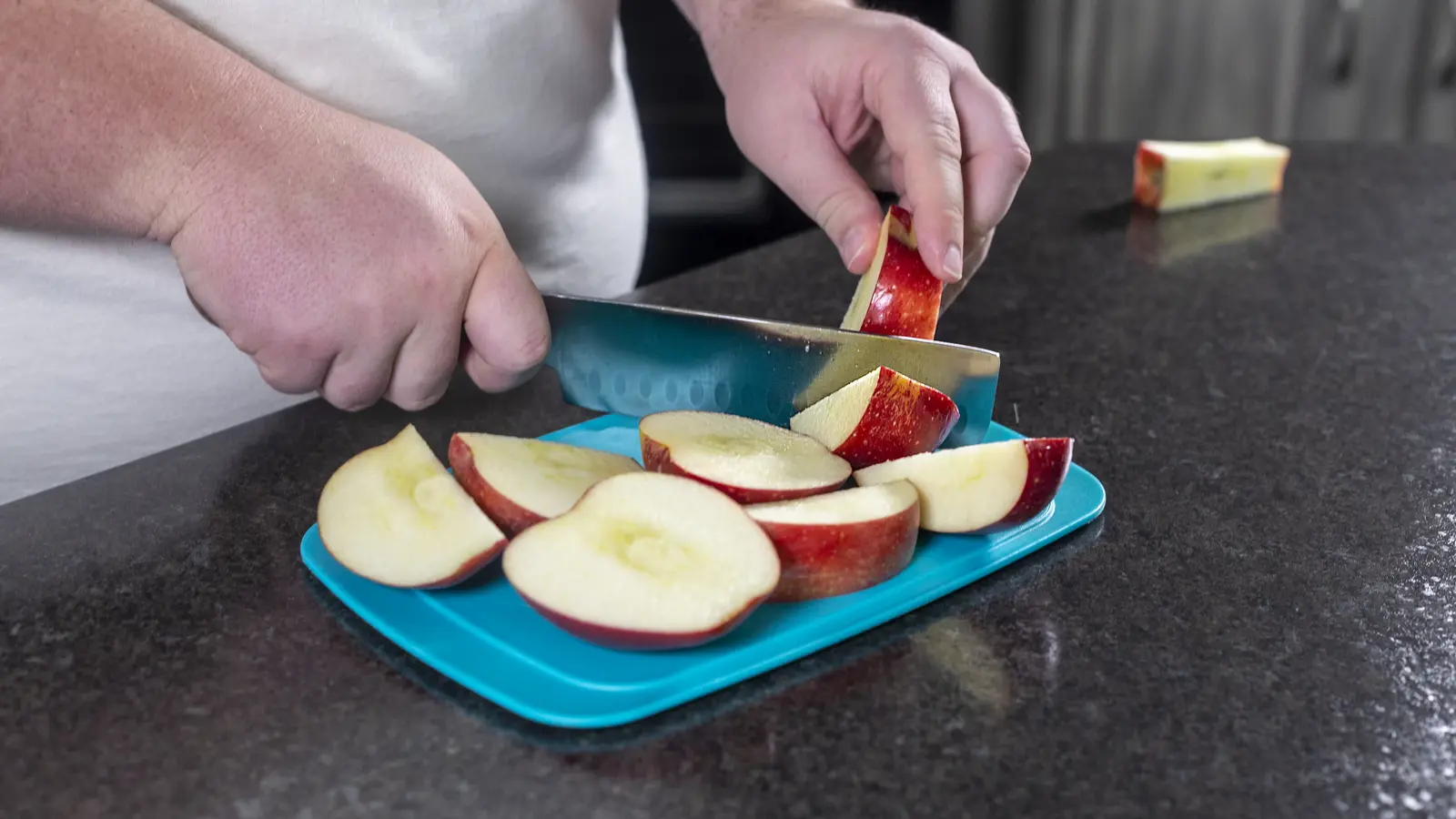
Cutting mixes oxygen with enzymes and phenolic compounds that intact apple cells normally keep apart
The short answer
Browning is a wound response rather than simple drying or dirt. An intact apple organizes enzymes and substrates in different parts of its cells. Cutting, bruising or biting destroys that separation while exposing a large moist surface to air. Chemistry then changes colour within minutes.
Cutting ruptures organized cells
A knife breaks cell walls, membranes and internal compartments. Materials that were separated in living tissue mix at the damaged surface.
Oxygen becomes a reactant
Air supplies molecular oxygen to exposed tissue. Browning slows when oxygen access is limited because the key enzyme-catalyzed oxidation cannot proceed as rapidly.
Polyphenol oxidase starts the pathway
PPO enzymes catalyze oxidation of naturally occurring phenolic compounds. Their activity varies among apple cultivars, tissues, maturity and storage conditions.
Quinones form after oxidation
The immediate products are reactive quinones rather than the final brown colour. Quinones react with one another, phenolics and amino compounds to form darker polymers.
Pigments accumulate at the cut surface
As reaction products link and rearrange, visible brown material develops. The colour can affect perceived freshness even when the apple remains safe to eat.
Acid slows enzyme activity
Lemon juice lowers surface pH beyond the enzyme’s preferred range. Its ascorbic acid can also reduce quinones back toward colourless forms until the antioxidant is consumed.
Cold slows molecular reactions
Refrigeration reduces enzyme activity and diffusion. It delays browning but does not permanently stop it, especially once slices warm again.
Water and coatings limit oxygen
Submerging slices or applying edible coatings reduces contact with air. The effectiveness depends on coverage, gas permeability and effects on flavour or texture.
Low-browning apples alter the pathway
Breeding and biotechnology can reduce PPO expression or select naturally lower activity. Less enzyme means slower colour development after tissue is cut or bruised.
Common misconceptions
Apple browning is not ordinary rust, although both involve oxidation. It is also not necessarily evidence that the fruit has spoiled. Enzymatic browning changes appearance and some flavour chemistry, while microbial spoilage is a separate process evaluated through smell, texture, time and storage conditions.
How scientists know
Food scientists measure colour with spectrophotometers, enzyme activity with controlled substrates, oxygen exposure, phenolic content, temperature and pH. Genetic studies compare PPO genes, while storage trials test acids, antioxidants, coatings and packaging against untreated slices.
Does lemon juice stop browning?
It slows browning through acidity and antioxidants, but the protection is not permanent.
Are brown apple slices safe?
Browning alone usually is not spoilage; storage time, odour, texture and contamination still matter.
Why do some varieties brown faster?
PPO activity, phenolic content, maturity and tissue structure differ among cultivars.
Does refrigeration help?
Yes. Lower temperature slows enzyme-catalyzed reactions.
Why does bruising cause brown patches?
Impact breaks internal cells even when the skin remains intact.
Key takeaways
- Tissue damage mixes enzymes and phenolic compounds.
- Oxygen enables PPO-driven oxidation.
- Reactive quinones form brown pigments.
- Acid, antioxidants, cold and oxygen barriers slow browning.
Continue exploring
Sources and further reading
Keep exploring.
One remarkable idea at a time—nature, science, history and beyond.
Last updated October 27, 2026.

Barnakle Editorial Team
Barnakle Editorial Team is the collective byline used for Barnakle’s editorial articles. The contributor profile explains the team identity and links to the publication’s editorial policies.
More from the editorial team →