
A protective reflex coordinates sensory nerves, breathing muscles and the upper airway
The short answer
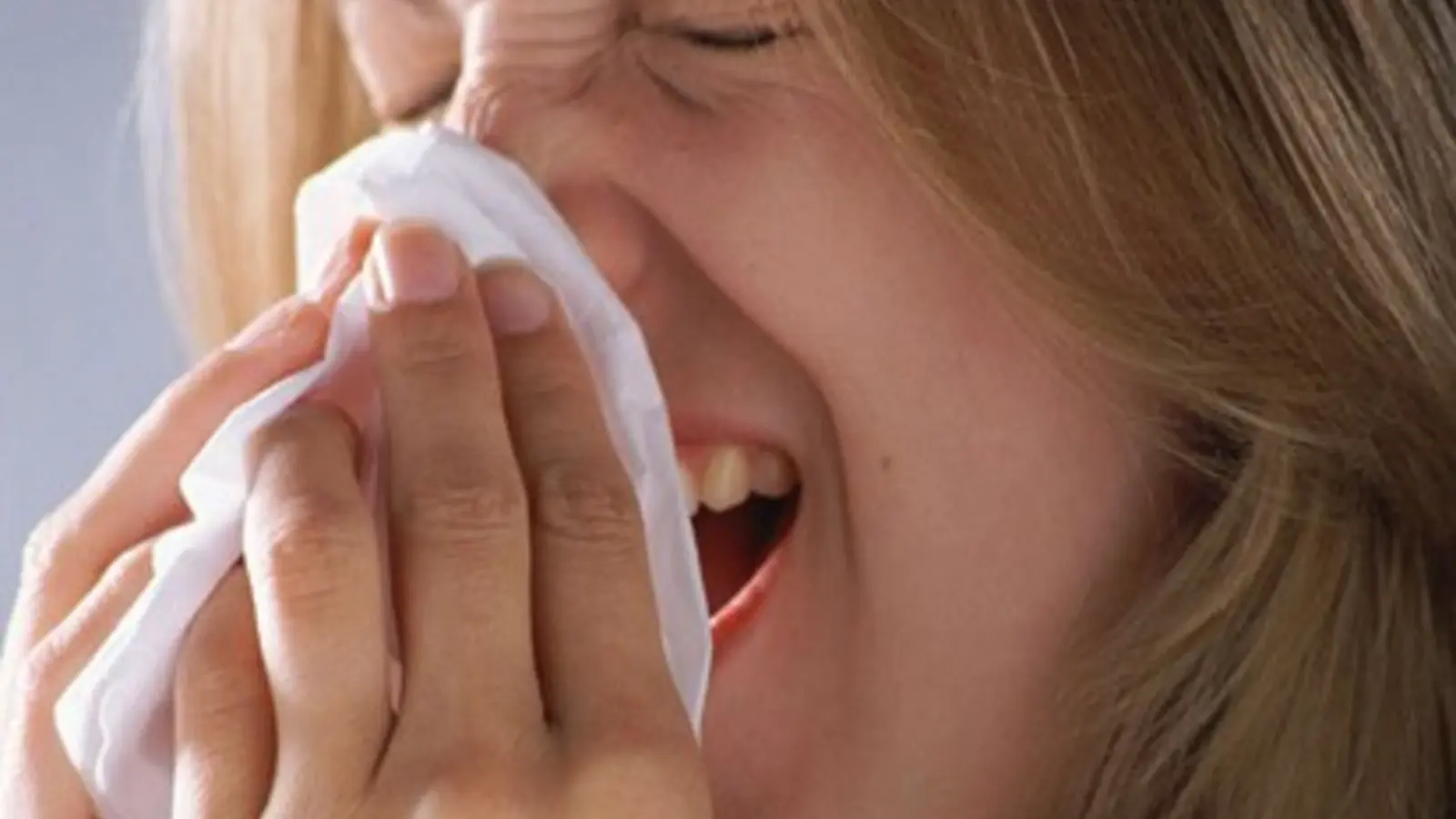
Sneezing is a protective respiratory reflex. Irritation in the nose activates sensory branches of the trigeminal nerve, brainstem circuits organize a deep breath and forceful contraction, and the resulting airflow helps expel mucus, particles and irritants through the nose and mouth. Allergies, infections, dust, spices and even bright light can trigger the pathway.
A sneeze feels instantaneous, but it is a precisely sequenced event involving the nasal lining, sensory nerves, brainstem, respiratory muscles, throat and face. The reflex can clear material from the upper airway, yet the droplets it releases can also carry respiratory pathogens.
Nasal irritation starts the reflex
Mechanical particles, inflammatory chemicals, allergens and infection can stimulate sensory endings in the nasal lining. The trigger is irritation rather than one special type of dust.
Understanding Nasal irritation starts the reflex means separating the immediate mechanism from the conditions that change its strength, timing or visibility. Researchers measure those variables independently, compare natural examples and test whether the explanation predicts new observations. That turns a plausible story into an evidence-based account.
The evidence comes from methods that fail in different ways. Direct observation establishes what occurs, instruments quantify structure or timing, experiments isolate candidate causes and models test whether known physical or biological rules reproduce the pattern. Agreement among methods is stronger than repetition of one memorable example.
Context also matters. Species, scale, temperature, geometry, environment and measurement limits can change an outcome without overturning the underlying process. Accurate reporting preserves this variation, states uncertainty and avoids turning a useful explanation into a universal rule.
A practical explanation should identify what would change the observation. Following that question reveals the limits of present evidence and the next measurement needed.
This mechanism connects a reader-level question with a broader scientific principle. Following matter, energy or information through each stage shows where the explanation is established, where natural variation enters and why a superficially similar event may have another cause. Those distinctions support accurate comparisons and useful follow-up questions.
The trigeminal nerve carries the signal
Branches of cranial nerve V transmit sensory information from the nose toward brainstem networks. Those circuits determine whether activity reaches the threshold for a sneeze.
Understanding The trigeminal nerve carries the signal means separating the immediate mechanism from the conditions that change its strength, timing or visibility. Researchers measure those variables independently, compare natural examples and test whether the explanation predicts new observations. That turns a plausible story into an evidence-based account.
The evidence comes from methods that fail in different ways. Direct observation establishes what occurs, instruments quantify structure or timing, experiments isolate candidate causes and models test whether known physical or biological rules reproduce the pattern. Agreement among methods is stronger than repetition of one memorable example.
Context also matters. Species, scale, temperature, geometry, environment and measurement limits can change an outcome without overturning the underlying process. Accurate reporting preserves this variation, states uncertainty and avoids turning a useful explanation into a universal rule.
A practical explanation should identify what would change the observation. Following that question reveals the limits of present evidence and the next measurement needed.
This mechanism connects a reader-level question with a broader scientific principle. Following matter, energy or information through each stage shows where the explanation is established, where natural variation enters and why a superficially similar event may have another cause. Those distinctions support accurate comparisons and useful follow-up questions.
The body prepares with an inhalation
A deep preparatory breath increases the air available for expulsion. The glottis and upper airway briefly adjust while coordinated muscles build pressure.
Understanding The body prepares with an inhalation means separating the immediate mechanism from the conditions that change its strength, timing or visibility. Researchers measure those variables independently, compare natural examples and test whether the explanation predicts new observations. That turns a plausible story into an evidence-based account.
The evidence comes from methods that fail in different ways. Direct observation establishes what occurs, instruments quantify structure or timing, experiments isolate candidate causes and models test whether known physical or biological rules reproduce the pattern. Agreement among methods is stronger than repetition of one memorable example.
Context also matters. Species, scale, temperature, geometry, environment and measurement limits can change an outcome without overturning the underlying process. Accurate reporting preserves this variation, states uncertainty and avoids turning a useful explanation into a universal rule.
A practical explanation should identify what would change the observation. Following that question reveals the limits of present evidence and the next measurement needed.
This mechanism connects a reader-level question with a broader scientific principle. Following matter, energy or information through each stage shows where the explanation is established, where natural variation enters and why a superficially similar event may have another cause. Those distinctions support accurate comparisons and useful follow-up questions.
Many muscles contract together
The diaphragm, chest wall, abdominal muscles, pharynx, larynx and face participate. A sneeze is a distributed motor pattern rather than a simple nasal spasm.
Understanding Many muscles contract together means separating the immediate mechanism from the conditions that change its strength, timing or visibility. Researchers measure those variables independently, compare natural examples and test whether the explanation predicts new observations. That turns a plausible story into an evidence-based account.
The evidence comes from methods that fail in different ways. Direct observation establishes what occurs, instruments quantify structure or timing, experiments isolate candidate causes and models test whether known physical or biological rules reproduce the pattern. Agreement among methods is stronger than repetition of one memorable example.
Context also matters. Species, scale, temperature, geometry, environment and measurement limits can change an outcome without overturning the underlying process. Accurate reporting preserves this variation, states uncertainty and avoids turning a useful explanation into a universal rule.
A practical explanation should identify what would change the observation. Following that question reveals the limits of present evidence and the next measurement needed.
This mechanism connects a reader-level question with a broader scientific principle. Following matter, energy or information through each stage shows where the explanation is established, where natural variation enters and why a superficially similar event may have another cause. Those distinctions support accurate comparisons and useful follow-up questions.
Air exits through nose and mouth
The tongue and soft palate shape the route, but the mouth is not always sealed. Air, mucus and droplets can leave through both openings at substantial speed.
Understanding Air exits through nose and mouth means separating the immediate mechanism from the conditions that change its strength, timing or visibility. Researchers measure those variables independently, compare natural examples and test whether the explanation predicts new observations. That turns a plausible story into an evidence-based account.
The evidence comes from methods that fail in different ways. Direct observation establishes what occurs, instruments quantify structure or timing, experiments isolate candidate causes and models test whether known physical or biological rules reproduce the pattern. Agreement among methods is stronger than repetition of one memorable example.
Context also matters. Species, scale, temperature, geometry, environment and measurement limits can change an outcome without overturning the underlying process. Accurate reporting preserves this variation, states uncertainty and avoids turning a useful explanation into a universal rule.
A practical explanation should identify what would change the observation. Following that question reveals the limits of present evidence and the next measurement needed.
This mechanism connects a reader-level question with a broader scientific principle. Following matter, energy or information through each stage shows where the explanation is established, where natural variation enters and why a superficially similar event may have another cause. Those distinctions support accurate comparisons and useful follow-up questions.
Allergy recruits immune chemistry
Pollen, dust mites or dander can activate immune cells and release histamine and other mediators. These inflame the lining and make sensory nerves easier to trigger.
Understanding Allergy recruits immune chemistry means separating the immediate mechanism from the conditions that change its strength, timing or visibility. Researchers measure those variables independently, compare natural examples and test whether the explanation predicts new observations. That turns a plausible story into an evidence-based account.
The evidence comes from methods that fail in different ways. Direct observation establishes what occurs, instruments quantify structure or timing, experiments isolate candidate causes and models test whether known physical or biological rules reproduce the pattern. Agreement among methods is stronger than repetition of one memorable example.
Context also matters. Species, scale, temperature, geometry, environment and measurement limits can change an outcome without overturning the underlying process. Accurate reporting preserves this variation, states uncertainty and avoids turning a useful explanation into a universal rule.
A practical explanation should identify what would change the observation. Following that question reveals the limits of present evidence and the next measurement needed.
This mechanism connects a reader-level question with a broader scientific principle. Following matter, energy or information through each stage shows where the explanation is established, where natural variation enters and why a superficially similar event may have another cause. Those distinctions support accurate comparisons and useful follow-up questions.
Viruses provoke inflammation
Colds, influenza and other infections irritate mucous membranes and increase secretions. Sneezing may clear the nose while also dispersing droplets and aerosols.
Understanding Viruses provoke inflammation means separating the immediate mechanism from the conditions that change its strength, timing or visibility. Researchers measure those variables independently, compare natural examples and test whether the explanation predicts new observations. That turns a plausible story into an evidence-based account.
The evidence comes from methods that fail in different ways. Direct observation establishes what occurs, instruments quantify structure or timing, experiments isolate candidate causes and models test whether known physical or biological rules reproduce the pattern. Agreement among methods is stronger than repetition of one memorable example.
Context also matters. Species, scale, temperature, geometry, environment and measurement limits can change an outcome without overturning the underlying process. Accurate reporting preserves this variation, states uncertainty and avoids turning a useful explanation into a universal rule.
A practical explanation should identify what would change the observation. Following that question reveals the limits of present evidence and the next measurement needed.
This mechanism connects a reader-level question with a broader scientific principle. Following matter, energy or information through each stage shows where the explanation is established, where natural variation enters and why a superficially similar event may have another cause. Those distinctions support accurate comparisons and useful follow-up questions.
Bright light can trigger some people
The photic sneeze reflex occurs when sudden bright light provokes sneezing in susceptible people. The precise mechanism remains debated and may involve visual–trigeminal interaction.
Understanding Bright light can trigger some people means separating the immediate mechanism from the conditions that change its strength, timing or visibility. Researchers measure those variables independently, compare natural examples and test whether the explanation predicts new observations. That turns a plausible story into an evidence-based account.
The evidence comes from methods that fail in different ways. Direct observation establishes what occurs, instruments quantify structure or timing, experiments isolate candidate causes and models test whether known physical or biological rules reproduce the pattern. Agreement among methods is stronger than repetition of one memorable example.
Context also matters. Species, scale, temperature, geometry, environment and measurement limits can change an outcome without overturning the underlying process. Accurate reporting preserves this variation, states uncertainty and avoids turning a useful explanation into a universal rule.
A practical explanation should identify what would change the observation. Following that question reveals the limits of present evidence and the next measurement needed.
This mechanism connects a reader-level question with a broader scientific principle. Following matter, energy or information through each stage shows where the explanation is established, where natural variation enters and why a superficially similar event may have another cause. Those distinctions support accurate comparisons and useful follow-up questions.
Sneezing differs from coughing
A cough usually begins with lower-airway or throat receptors and clears the tract below the nose. Both use forceful airflow but have different common triggers.
Understanding Sneezing differs from coughing means separating the immediate mechanism from the conditions that change its strength, timing or visibility. Researchers measure those variables independently, compare natural examples and test whether the explanation predicts new observations. That turns a plausible story into an evidence-based account.
The evidence comes from methods that fail in different ways. Direct observation establishes what occurs, instruments quantify structure or timing, experiments isolate candidate causes and models test whether known physical or biological rules reproduce the pattern. Agreement among methods is stronger than repetition of one memorable example.
Context also matters. Species, scale, temperature, geometry, environment and measurement limits can change an outcome without overturning the underlying process. Accurate reporting preserves this variation, states uncertainty and avoids turning a useful explanation into a universal rule.
A practical explanation should identify what would change the observation. Following that question reveals the limits of present evidence and the next measurement needed.
This mechanism connects a reader-level question with a broader scientific principle. Following matter, energy or information through each stage shows where the explanation is established, where natural variation enters and why a superficially similar event may have another cause. Those distinctions support accurate comparisons and useful follow-up questions.
Covering a sneeze reduces spread
A tissue or the inside of the elbow intercepts droplets better than an uncovered sneeze. Hand hygiene matters because contaminated hands can move pathogens onward.
Understanding Covering a sneeze reduces spread means separating the immediate mechanism from the conditions that change its strength, timing or visibility. Researchers measure those variables independently, compare natural examples and test whether the explanation predicts new observations. That turns a plausible story into an evidence-based account.
The evidence comes from methods that fail in different ways. Direct observation establishes what occurs, instruments quantify structure or timing, experiments isolate candidate causes and models test whether known physical or biological rules reproduce the pattern. Agreement among methods is stronger than repetition of one memorable example.
Context also matters. Species, scale, temperature, geometry, environment and measurement limits can change an outcome without overturning the underlying process. Accurate reporting preserves this variation, states uncertainty and avoids turning a useful explanation into a universal rule.
A practical explanation should identify what would change the observation. Following that question reveals the limits of present evidence and the next measurement needed.
This mechanism connects a reader-level question with a broader scientific principle. Following matter, energy or information through each stage shows where the explanation is established, where natural variation enters and why a superficially similar event may have another cause. Those distinctions support accurate comparisons and useful follow-up questions.
Common misconceptions
The heart does not stop during a sneeze, the eyes are not at risk of popping out and blocking both nose and mouth is not harmless. Pressure can be redirected toward the ears and sinuses. One sneeze also does not prove infection; allergy, dust, light and many other triggers exist.
Clear shorthand is valuable only when it preserves the causal chain. It becomes misleading when it substitutes a familiar label for a mechanism, confuses association with cause or extends evidence beyond the conditions tested.
How scientists know
Researchers record nasal sensory activity, breathing pressure, muscle timing and high-speed airflow. Imaging and particle tracking reveal droplets, cellular and animal experiments identify neural pathways, and clinical studies compare allergy, infection and neurological conditions.
No single measurement carries the conclusion. Observations, experiments, physical theory and repeated records provide independent checks, while disagreement can reveal an uncontrolled variable or a question requiring a better test.
Frequently asked questions
Why does sunlight make some people sneeze?
A photic sneeze reflex recruits the pathway through incompletely understood neural cross-talk.
Why do sneezes come in multiples?
One sneeze may not remove an irritant, and inflamed nerves can remain above threshold.
Can you sneeze while asleep?
Deep sleep suppresses many responses, though irritation may cause arousal first.
Is suppression dangerous?
Forcefully blocking nose and mouth can redirect pressure and occasionally cause injury.
When should it be assessed?
Seek care when persistent or severe, with breathing difficulty or a concerning allergic reaction.
Key takeaways
- Nasal sensory nerves initiate sneezing.
- Brainstem circuits coordinate many muscles.
- Allergy, infection and particles are common triggers.
- Covering sneezes and cleaning hands reduce spread.
Continue exploring
Sources and further reading
Keep exploring.
One remarkable idea at a time—nature, science, history and beyond.
Sources and further reading
Barnakle uses credible primary and authoritative sources wherever possible.
- NIH — Sneeze reflex review
- https://pmc.ncbi.nlm.nih.gov/articles/PMC12098519/
- NIH — Neural pathway for sneezing
- https://pmc.ncbi.nlm.nih.gov/articles/PMC8396370/
- MedlinePlus — Sneezing
- https://medlineplus.gov/ency/article/003060.htm
- PubMed — Photic sneeze reflex
- https://pubmed.ncbi.nlm.nih.gov/8492938/
Last reviewed October 7, 2026.

Barnakle Editorial Team
A member of the Barnakle editorial team, exploring remarkable ideas with clarity, curiosity and care.
More from this author →