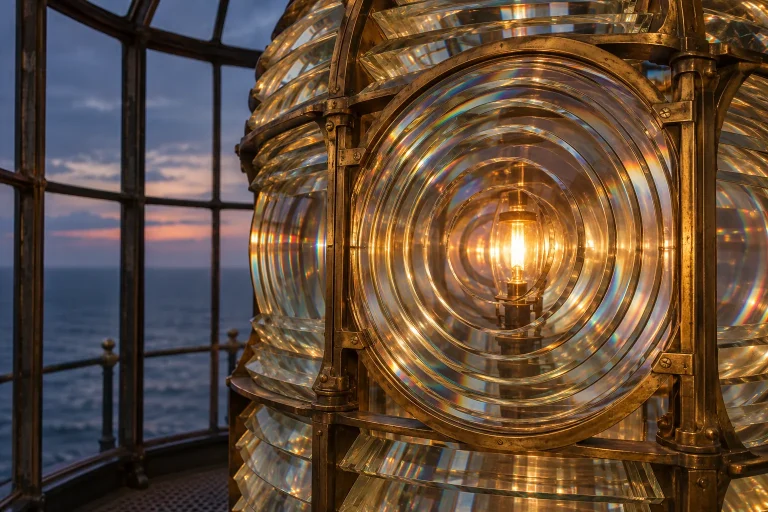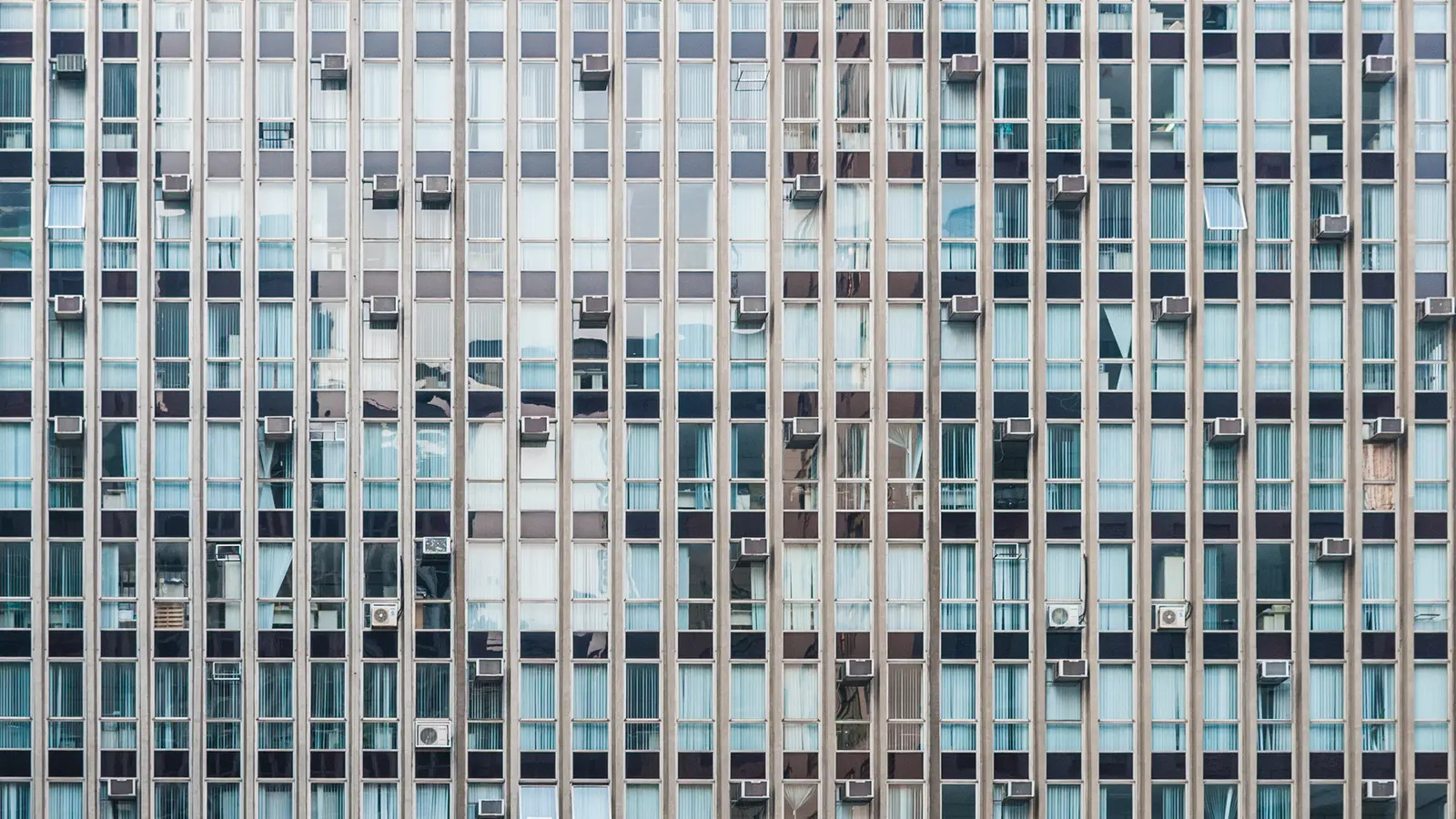
Visible-light photons usually lack the right energy to be absorbed by the electronic structure of ordinary window glass
The short answer
Transparency is not the same as invisibility. A window changes the speed and direction of light, reflects at both surfaces and may absorb ultraviolet or infrared wavelengths even while the visible scene passes through. Explaining clear glass requires both quantum energy levels and the larger-scale structure of the material.
Glass is an amorphous solid
In common silicate glass, atoms form a connected network without the long-range repeating order of a crystal. It is mechanically rigid but structurally disordered over larger distances.
Photon energy determines absorption
Matter absorbs light efficiently when photon energy can drive allowed changes in electrons or vibrations. Visible photons lie between major absorption regions for clean soda-lime and fused-silica glass.
The electronic energy gap is large
Valence electrons in silica-based glass require ultraviolet-scale energy to cross into higher electronic states. Most visible photons do not meet that threshold and are transmitted rather than absorbed.
Infrared light couples to vibrations
Atoms in the glass network vibrate. Many infrared wavelengths can excite those motions, so a pane that looks clear to human eyes may absorb substantial infrared energy.
Interfaces reflect some light
Whenever light crosses between air and glass, a refractive-index mismatch causes partial reflection. An uncoated window therefore produces glare and faint mirror images even when its bulk is highly transparent.
Refraction bends transmitted rays
Light travels more slowly through glass than through air, and its direction changes at an angled boundary according to Snell’s law. Lenses use shaped surfaces to turn this bending into images.
Uniformity limits scattering
Large pores, cracks, crystals and particles scatter light in many directions and make a material cloudy. Well-made clear glass is uniform on the scale relevant to visible wavelengths, so scattering remains low.
Impurities and additives create colour
Transition-metal ions, nanoparticles and other additives absorb selected wavelengths. Iron can produce greenish tones, while deliberate compositions create coloured glass without making every wavelength opaque.
Coatings tune transmission and reflection
Thin films can reduce glare, reflect heat, block ultraviolet radiation or control colour. Their layered optical interference modifies a window without changing the basic transparency of its glass substrate.
Common misconceptions
Glass is not transparent because its atoms are arranged with large empty holes that visible light threads through. Light interacts with the material’s electromagnetic structure throughout the pane. Glass is also not a slowly flowing liquid at room temperature; old windows vary in thickness because of historical manufacturing, not centuries of downward flow.
How scientists know
Scientists measure spectral transmittance, reflectance, refractive index and scattering from ultraviolet through infrared wavelengths. Spectroscopy identifies absorption bands, microscopy and diffraction characterize structure, and carefully calibrated reference materials let laboratories compare optical measurements worldwide.
Why can we see a reflection in clear glass?
A small part of the light reflects at each air–glass boundary because their refractive indices differ.
Why does thick glass look green at the edge?
Even weak absorption from iron impurities becomes noticeable across a longer path.
Does glass block ultraviolet light?
Common window glass blocks much UV-B and UV-C but can transmit some UV-A; composition and coatings matter.
Why is frosted glass translucent?
Its rough surface scatters transmitted light, preserving brightness but destroying a clear image.
Is every glass transparent?
No. Composition, bubbles, crystals, pigments, coatings and wavelength can make glass coloured, translucent or opaque.
Key takeaways
- Visible photons usually pass because matching absorption transitions are unavailable.
- Glass still reflects, refracts and absorbs selected wavelengths.
- Uniform structure keeps visible scattering low.
- Composition and coatings determine the exact optical window.
Continue exploring
Sources and further reading
Keep exploring.
One remarkable idea at a time—nature, science, history and beyond.
Last updated October 27, 2026.

Barnakle Editorial Team
Barnakle Editorial Team is the collective byline used for Barnakle’s editorial articles. The contributor profile explains the team identity and links to the publication’s editorial policies.
More from the editorial team →